Industry knowledge
How Cotton Candle Wick Structure Affects Flame Stability
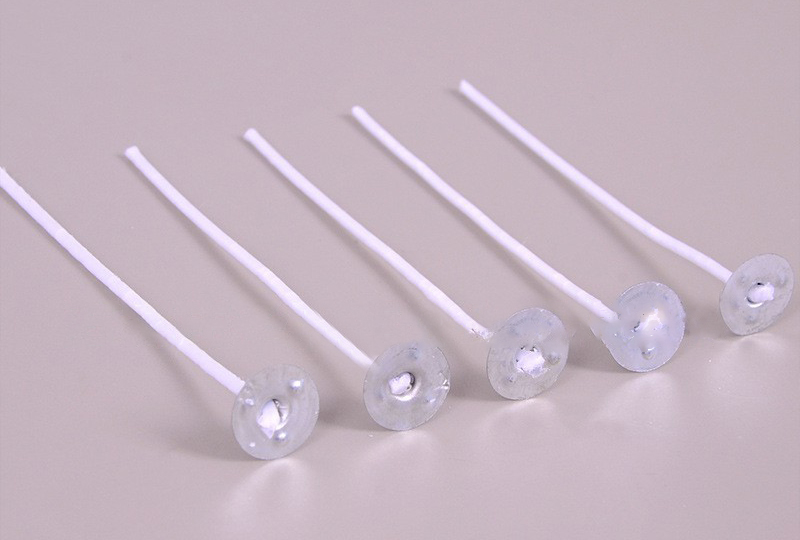
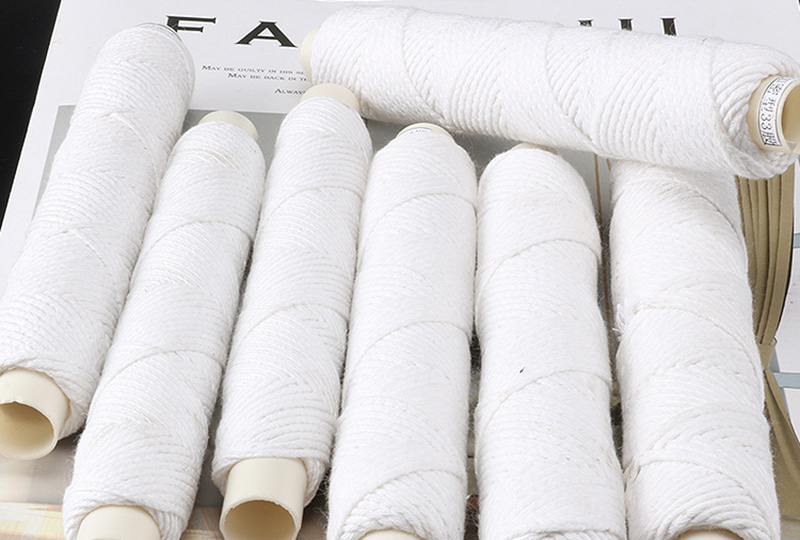
For buyers evaluating a Cotton Candle Wick, the visible braid or twist is only one part of performance. The more important factor is how evenly the cotton fibers are arranged, because fiber density influences wax absorption, flame height, burn speed, and soot control.
A well-structured cotton wick should draw melted wax upward at a stable rate. If the capillary action is too weak, the flame may shrink, tunnel, or extinguish. If it is too aggressive, the flame may become oversized and consume wax too quickly. The practical goal is not the largest flame, but a controlled flame that matches the wax system and candle diameter.
Key structure points buyers should check
- Uniform fiber distribution helps reduce unstable flickering.
- Consistent wick thickness supports repeatable burn results across batches.
- Good capillary action helps fragrance or functional additives release more evenly.
- A refined cotton structure can help minimize soot and carbon buildup when properly matched with wax.
At Leo, we pay close attention to wick consistency during sourcing and quality checks, because small variations in wick construction can create visible differences in the finished candle experience.
Matching Cotton Candle Wick to Wax Types and Candle Designs
Different wax systems place different demands on a Cotton Candle Wick. Paraffin, vegetable waxes, and blended waxes do not melt, hold fragrance, or flow in the same way, so wick selection should be tested together with the full candle formula rather than judged by wick size alone.
Practical reference for evaluating Cotton Candle Wick compatibility across common wax systems
| Wax System |
Common Wick Consideration |
Buyer Evaluation Focus |
| Paraffin Wax |
Usually offers good melt flow and stable wick feeding |
Check flame height, soot level, and full melt pool formation |
| Vegetable Wax |
May need stronger capillary performance due to wax viscosity |
Check tunneling, cold throw, hot throw, and burn consistency |
| Blended Wax |
Performance depends on the ratio of waxes and additives |
Run batch testing before confirming final wick size |
For container candles, wick selection should always consider container diameter, wax hardness, fragrance load, dye use, and expected burn time. A wick that performs well in one jar may not deliver the same result in a wider or deeper container.
We support OEM and ODM projects at Leo, so buyers can coordinate wick specifications with fragrance selection, labels, packaging, and finished candle positioning during product development.
Burn Testing Details That Help Reduce Quality Risks
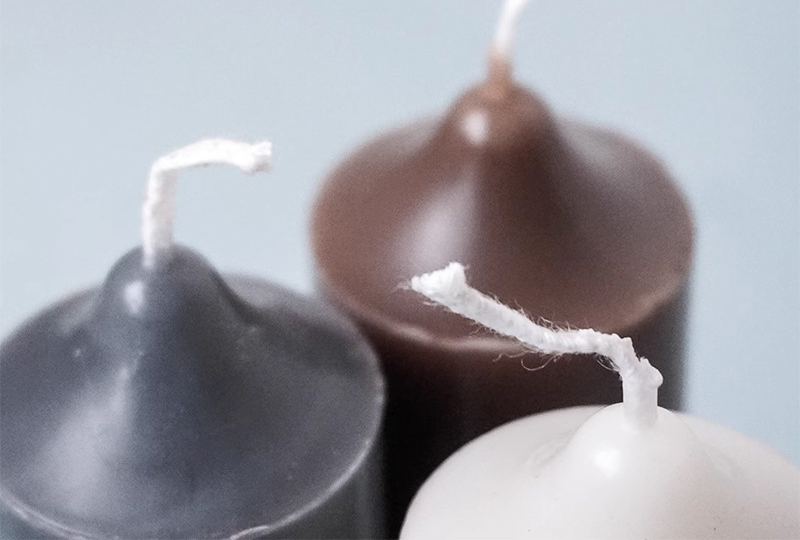
A Cotton Candle Wick should be assessed through real burn testing, not only through visual inspection. Practical testing helps identify problems such as excessive flame height, mushrooming, tunneling, uneven melt pool formation, and visible soot on the container wall.
Useful checkpoints during sample approval
- Confirm whether the flame remains steady after the initial ignition period.
- Observe whether the melt pool reaches the expected edge without overheating the container.
- Check whether carbon buildup appears at the wick tip after repeated burn cycles.
- Compare fragrance release during early, middle, and later burn stages.
- Record whether wick trimming is easy and whether the wick remains centered.
For buyers building a repeat product line, test results should be recorded by wax type, fragrance percentage, container size, wick specification, and burn duration. This makes reordering more accurate and helps prevent performance drift between production batches.
In our supply chain work, we treat finished goods inspection and raw material consistency as connected steps. This helps overseas clients reduce avoidable after-sales issues caused by unstable candle burning.
Procurement Notes for Custom Candle Wick Projects
When sourcing Cotton Candle Wick for customized candle products, buyers should define the application scenario before confirming specifications. Scented candles, decorative candles, gift sets, and everyday household candles may require different wick behavior even when the material is all natural cotton.
Information that improves quotation and sampling accuracy
- Target wax type and fragrance load.
- Candle container diameter and depth.
- Expected burn time and flame performance requirements.
- Whether the wick is for scented candles, decorative candles, or functional candle products.
- Packaging format, labeling requirements, and shipment destination.
For international buyers, wick procurement is not only a material purchase; it is part of finished candle performance control. Clear technical communication at the beginning can shorten sampling time and improve production efficiency.
Leo is based in Hangzhou, China, and we combine international trading experience with practical supply chain coordination. For home fragrance projects, we help clients connect Cotton Candle Wick selection with candle design, packaging customization, and delivery planning.

 English
 Français