 English
 Français
News
Home / Author / Sophia Lin — Product Sales Executive / Hard Jelly Candle Wax for Transparent Sculptural Candle Design
Content
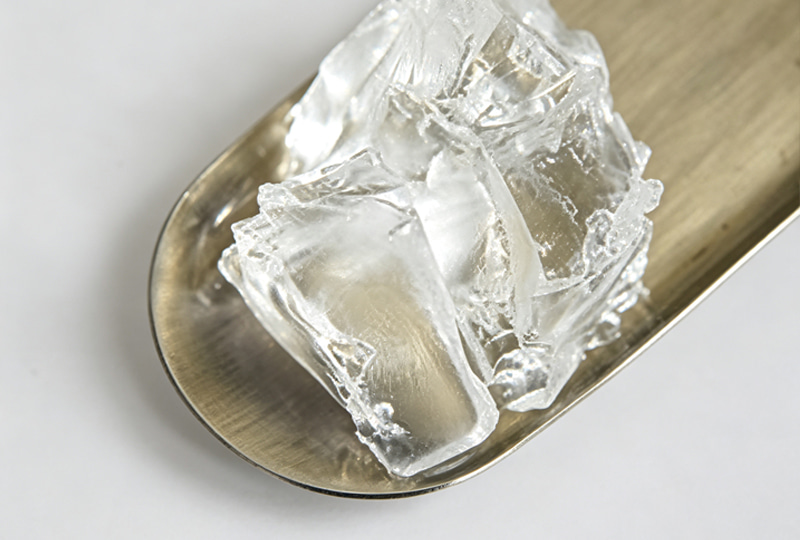
Hard jelly candle wax is a specialized transparent candle raw material created for decorative, mold-cast, and sculptural candles that require clear visual depth, stable shape retention, and a premium handcrafted appearance. Unlike ordinary container waxes or softer jelly waxes that are mainly used for simple filled jars, this harder jelly wax variant is designed to hold firmer contours after cooling. It melts at approximately 85°C and is poured at a higher working temperature range of about 130–140°C, allowing the material to achieve full clarity and flow into detailed mold shapes before setting.
For candle makers, importers, home fragrance brands, gift-set developers, and OEM/ODM buyers, the value of hard jelly candle wax lies in its combination of transparency and structure. It offers the crystal-clear visual effect associated with jelly candles while giving improved firmness for shaped products, figural candles, embedded designs, seasonal collections, and decorative home fragrance lines. Its unique composition, based on a transparent blend of mineral oil and polymer, creates a glass-like appearance that can showcase color, glitter, botanicals, seashells, miniature ornaments, or layered visual concepts when used with appropriate candle-safe decorative materials.
In a competitive home fragrance market, where consumers increasingly seek both scent and visual beauty, hard jelly candle wax enables brands to develop products that feel modern, artistic, and giftable. It supports premium candle concepts that go beyond traditional white paraffin pillars or soy wax containers. With the right manufacturing control, melting method, mold selection, fragrance compatibility testing, and packaging solution, this material can become the foundation for a distinctive candle line.
Hangzhou Leo Home Trading Co., Ltd. supports overseas clients with sourcing, customization, quality control, and export service for candle products and candle components. By integrating supply chain resources across candle factories, jar customization partners, color box factories, and in-house laboratory inspection, the company helps buyers develop stable, visually appealing, and commercially viable products. For hard jelly candle wax, this means clients receive not only a raw material, but also practical technical guidance, batch consistency support, packaging development, and supply coordination for finished candle projects.
Hard jelly candle wax is a transparent candle-making material formed from mineral oil and polymer. The polymer network gives the wax its gel-like body, while the oil phase contributes clarity, flexibility, and light transmission. The result is a material that behaves differently from paraffin wax, soy wax, beeswax, or palm wax. It is not opaque, it does not create a crystalline vegetable-wax surface, and it does not behave like a standard pillar blend. Instead, it creates a clear, elastic, jelly-like solid that can be used to make candles with a three-dimensional visual effect.
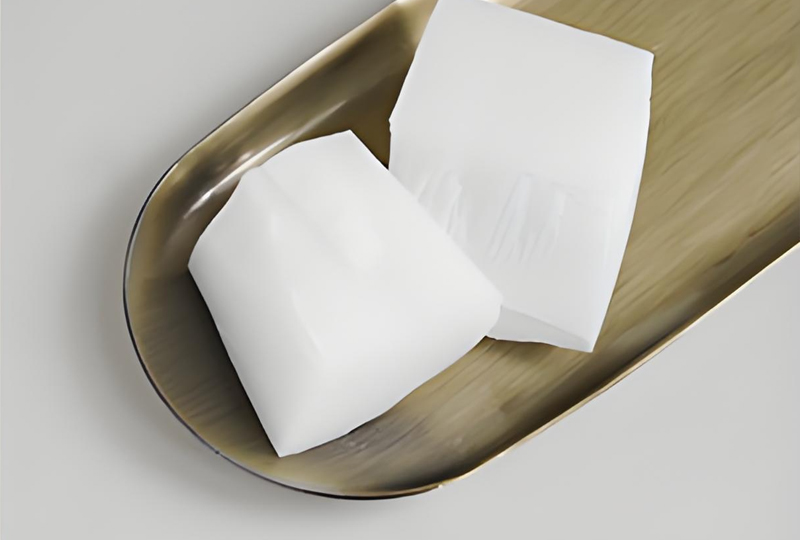
The harder version is especially important because not all jelly waxes are suitable for shaped candles. Softer jelly waxes are often excellent for container candles because the container supports the material. However, when candle makers attempt to produce freestanding shapes with soft gel wax, the product may deform, sag, or lose definition. Hard jelly candle wax solves this problem by offering firmer shape retention after cooling. It is more suitable for mold-cast decorative candles, including sculptural forms, themed pieces, and creative gift designs.
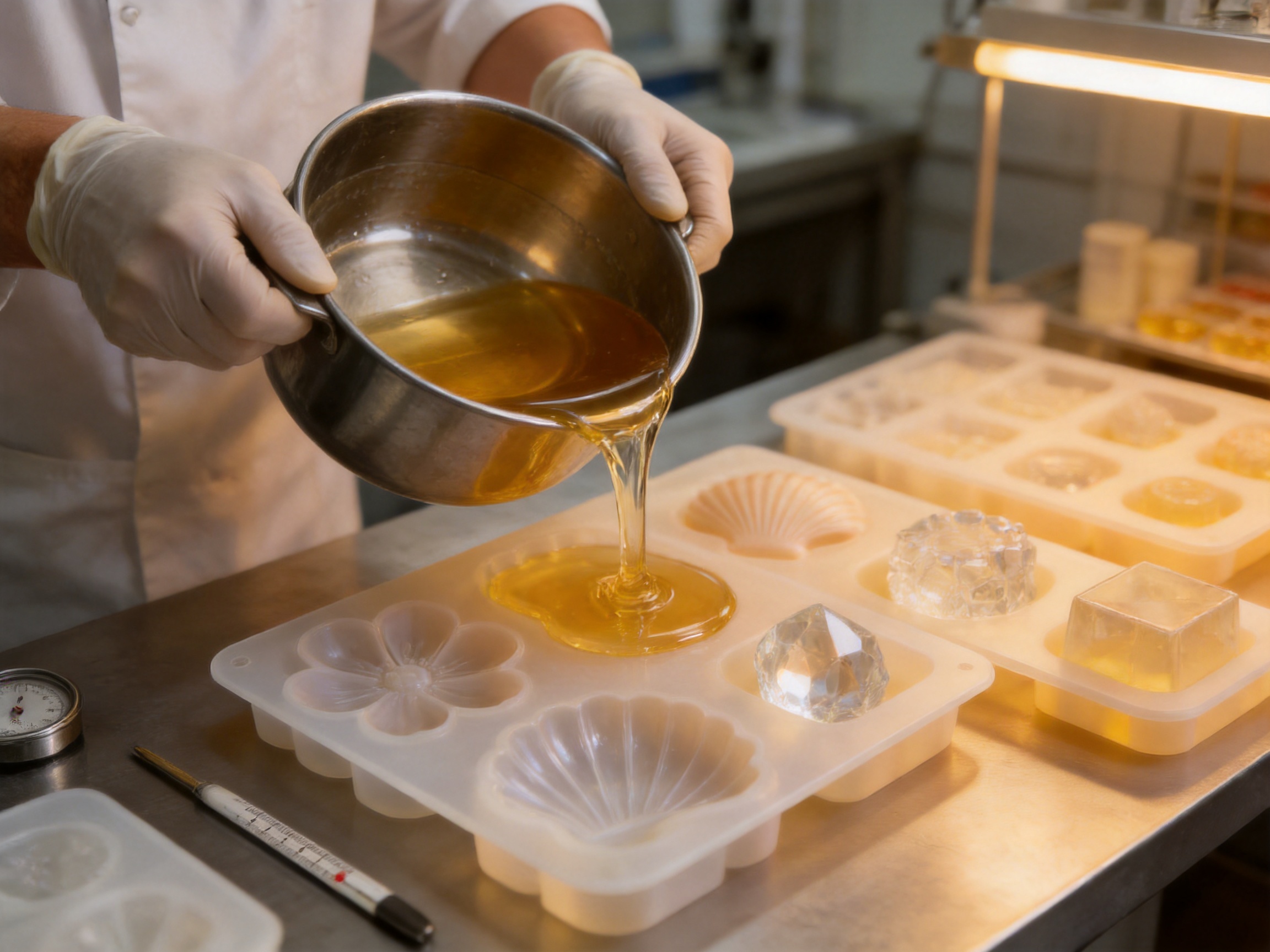
The product melts at around 85°C, but melting temperature and pouring temperature should not be confused. Although the material begins to liquefy around its melting point, full transparency and excellent flow are typically achieved at a higher pouring range of 130–140°C. This higher working temperature allows the wax to become sufficiently fluid, reduce internal cloudiness, and flow into mold details. Proper control of this range is one of the key differences between amateur processing and professional production.
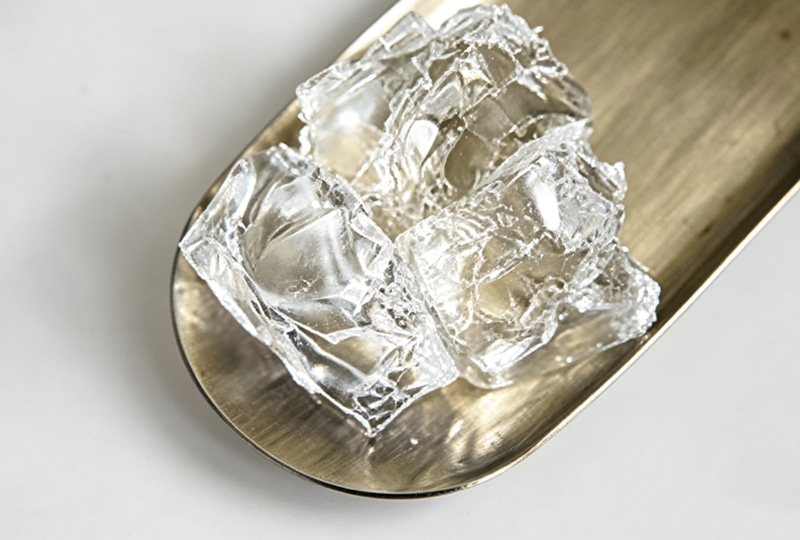
When handled correctly, hard jelly candle wax creates a clear, glossy, and visually deep candle body. The transparent quality is one of its strongest commercial advantages. It allows candle makers to create ocean themes, dessert themes, crystal-inspired designs, holiday decorations, floral arrangements, abstract art candles, and layered color effects. For retailers and home fragrance brands, these design options create strong shelf impact and high gift appeal.
Hard jelly candle wax combines functional performance with decorative freedom. Its most important features include full transparency, a firmer set texture, compatibility with soft silicone molds, and suitability for high-value decorative candle designs. Because the wax is harder than soft jelly wax, it is better suited to designs that need edges, curves, raised details, or recognizable shapes.
The material is especially well suited for mold-cast candle projects. Silicone molds are recommended because they provide flexibility during demolding. Hard jelly wax can grip the mold surface after cooling, and rigid molds such as PC plastic molds may make removal difficult or damage the finished candle. Soft silicone molds allow the candle maker to gently release the product while preserving surface gloss and shape details.
Another characteristic is the need for patient, controlled processing. Hard jelly wax should be melted slowly with low, steady heat. Excessively aggressive heating can produce smoke, discoloration, odor changes, and trapped air bubbles. Stainless steel stirring tools are recommended because they are clean, durable, heat-resistant, and less likely to react with the material. Stirring should be gentle to avoid introducing bubbles, especially when producing premium transparent candles where clarity is central to the product’s value.
The following table summarizes the core technical and application features of this material.
| Item | Specification or Recommendation | Commercial Benefit |
|---|---|---|
| Product Type | Hard transparent jelly candle wax | Suitable for decorative, shaped, and sculptural candles |
| Main Composition | Mineral oil and polymer blend | Creates clear gel structure and visual depth |
| Melting Point | Approximately 85°C | Allows controlled liquefaction before high-temperature pouring |
| Recommended Pouring Range | Approximately 130–140°C | Helps achieve full clarity and mold detail |
| Texture After Cooling | Firmer than soft jelly wax | Improves shape retention and definition |
| Recommended Mold | Soft silicone mold | Supports easier demolding and protects the finished form |
| Less Suitable Mold | Rigid PC plastic mold | May create demolding difficulty for complex shapes |
| Processing Tool | Stainless steel stirring tool | Supports clean, stable, and professional production |
| Best Applications | Figural candles, decorative shapes, embedded designs, premium gift candles | Expands product creativity and retail appeal |
The primary advantage of hard jelly candle wax over softer jelly wax is improved structural strength. Soft jelly wax can look beautiful in jars, cups, or glass containers, but it depends heavily on the container for support. When soft gel wax is used in freestanding designs, it may bend or collapse under its own weight, especially in warm environments or during transportation. Hard jelly wax offers a firmer set, making it more reliable for shaped candles and decorative products that must maintain their appearance from production to retail display.
Compared with paraffin wax, hard jelly wax provides a completely different aesthetic. Paraffin is usually opaque or semi-translucent and is widely used for pillars, votives, and container candles. It is cost-effective and versatile, but it cannot create the same aquarium-like clarity or suspended visual effect as jelly wax. Hard jelly wax enables candle makers to create transparent designs that display internal decorative elements. This provides a stronger emotional and visual connection for consumers who want candles that are both functional and ornamental.
Compared with soy wax, hard jelly wax also offers stronger decorative transparency. Soy wax is popular for natural-positioned container candles, but it is opaque and may show frosting, surface changes, or texture variations. For brands aiming to develop clean, natural, and minimalist collections, soy wax is useful. However, for brands looking to create bright, modern, novelty, transparent, or luxury gift designs, hard jelly wax gives a distinctive advantage. It helps a candle line stand out in photographs, online storefronts, holiday displays, and gift packaging.
Compared with ordinary low-grade gel wax, professionally controlled hard jelly wax offers better clarity, more consistent firmness, and improved processing reliability. Low-quality gel materials may contain impurities, inconsistent polymer content, uneven texture, or poor transparency. These issues can result in cloudy candles, weak shapes, excessive bubbles, smoking, unpleasant odor, or unstable finished goods. A properly sourced and inspected hard jelly wax helps reduce these risks and supports more consistent production outcomes.
For international buyers, the difference is not only the material itself but also the service system behind it. Hangzhou Leo Home Trading Co., Ltd. provides supply chain coordination, quality assurance, product development support, and export handling. This is important because a premium candle project often requires wax, fragrance, wick, mold, label, box, and logistics to work together. A raw material that performs well in isolation still needs to be matched with the correct production process and market positioning. The company’s cross-border trading experience helps bridge this gap.
Hardness is a critical property for shaped jelly candles because shape retention directly affects product quality. A candle may look attractive immediately after demolding, but if the wax is too soft, it can lose definition during storage, shipping, or retail display. For example, a jelly candle shaped like a flower, shell, fruit, bear, star, or geometric sculpture requires edges and details to remain visible. Hard jelly wax provides better dimensional stability, which helps preserve the designer’s intention.
Improved hardness also allows for more ambitious product concepts. Candle brands can develop seasonal collections such as Christmas trees, pumpkins, hearts, snowflakes, crystal shapes, beach scenes, or dessert-inspired candles. They can also produce decorative accessories for home fragrance gift sets. When the wax supports more defined shapes, the brand has greater freedom to develop memorable products that can command higher retail value.
Hardness can also reduce handling damage when the product is packaged and shipped correctly. Transparent jelly candles are often purchased because they look delicate and artistic. However, the finished goods still need to pass practical commercial handling. A firmer wax body helps reduce deformation during packing, inspection, and delivery. This is especially important for export orders where goods may experience long-distance shipping, temperature variation, and multiple handling stages.
At the same time, hardness must be balanced with demolding practicality. A harder jelly wax may hold shape better, but it may also grip rigid molds more strongly. This is why silicone molds are recommended. The flexibility of silicone makes it easier to release the product without tearing, scratching, or distorting the candle. For complex shapes, mold design should include appropriate release angles and avoid deep undercuts that make demolding difficult.
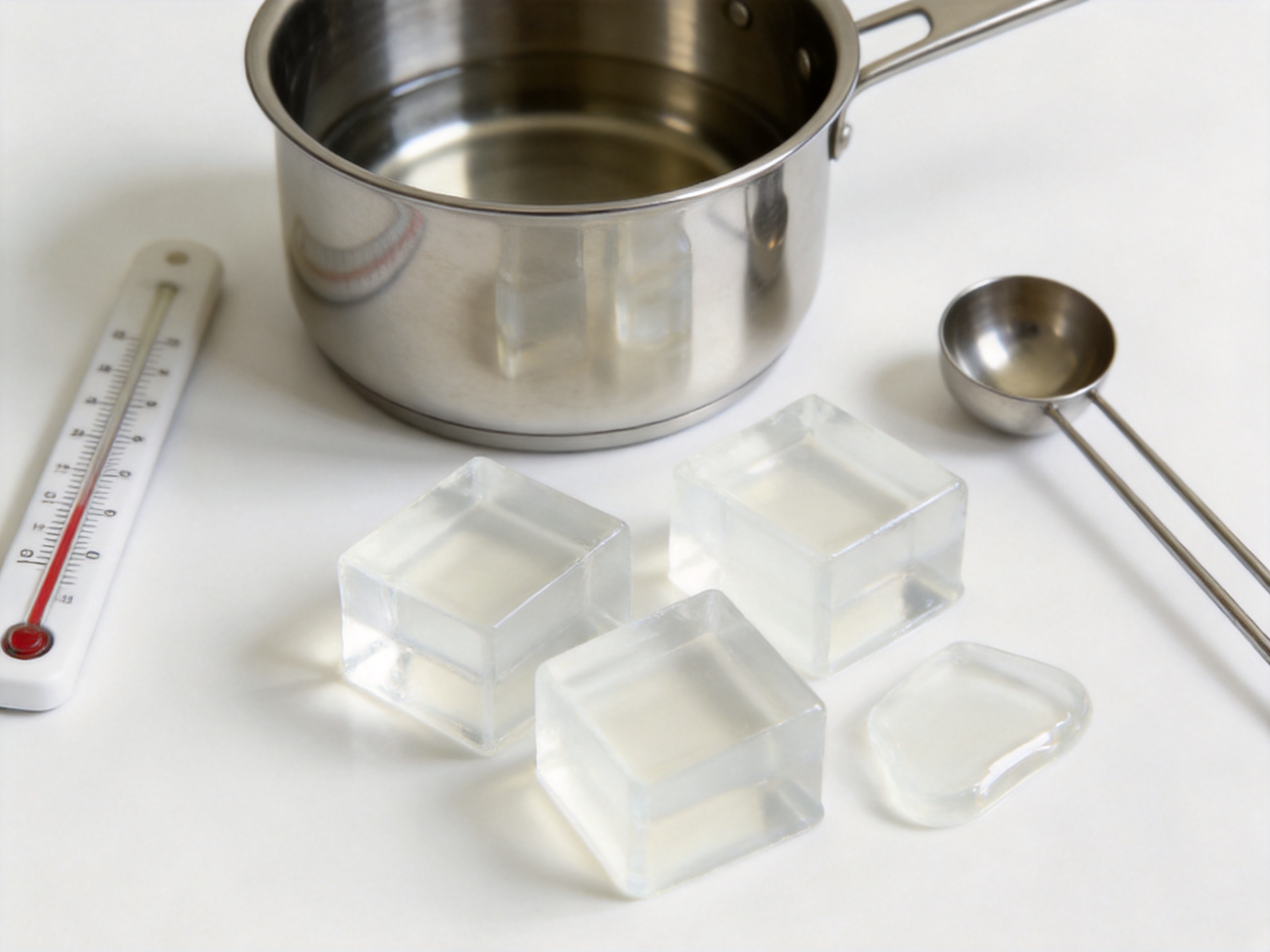
Transparency is the visual signature of jelly candle wax. In hard jelly wax, transparency is not merely an aesthetic feature; it is a value driver. Clear candles can be positioned as modern decorative objects, personalized gifts, holiday souvenirs, spa accents, or luxury home fragrance pieces. When placed near light, transparent jelly candles can reflect and refract color in ways that opaque waxes cannot. This gives the product a luminous quality that photographs well and attracts attention in online and offline retail environments.
Full clarity depends on both material quality and processing discipline. The wax should be melted slowly to avoid overheating, and the pouring temperature should reach the recommended range to achieve a clear, fluid state. If the wax is not heated sufficiently, it may remain hazy or uneven. If it is overheated or stirred aggressively, it may smoke, discolor, or trap bubbles. Therefore, professional candle makers treat temperature control as a core production parameter rather than a casual suggestion.
Transparent wax also requires careful selection of fragrance and color. Not all fragrance oils are suitable for gel wax. Fragrance must be tested for compatibility, flash point, clarity, and safe performance. Incompatible fragrance can cloud the wax, separate, or affect burning behavior. Colorants should also be selected carefully. Candle-safe liquid dyes are often preferred for transparent effects because they can provide bright color without reducing clarity. Overuse of colorant can make the wax too dark and reduce the transparent advantage.
Decorative inclusions must be chosen with safety in mind. While jelly wax is often used to create embedded scenes, only candle-safe, heat-resistant, and non-flammable decorative elements should be considered. Items that may ignite, melt unpredictably, release odor, or interfere with the wick should be avoided. In professional product development, appearance must always be balanced with safety testing.
To achieve premium results with hard jelly candle wax, the production method should be controlled from heating to cooling. The wax should be cut into smaller pieces if supplied in large blocks, because smaller pieces melt more evenly and reduce the risk of localized overheating. A clean, dry, stainless steel melting pot is recommended. The heating source should provide stable, adjustable temperature control. Direct high flame or uncontrolled heating is not recommended because jelly wax can smoke or degrade if overheated.
The wax should be heated slowly. As the material begins to soften and melt around 85°C, it should be allowed to liquefy gradually. Gentle stirring with stainless steel tools can help distribute heat evenly. Stirring should be slow and consistent, not fast or whipping. Fast stirring introduces air bubbles that may remain suspended in the transparent body after cooling. Because clarity is a major selling point, bubble prevention is much more important for jelly wax than for many opaque candle waxes.
Once the wax becomes fully liquid, the temperature can be brought into the recommended pouring range of 130–140°C. This range helps the material reach its best clarity and fluidity. At this stage, compatible fragrance and dye may be added according to tested formulas. Additives should be mixed gently and thoroughly. Every fragrance or dye adjustment should be recorded so that production batches can be repeated with consistency.
Before pouring, silicone molds should be clean, dry, and placed on a stable, level surface. If the mold is cold, sudden temperature differences may affect flow or surface finish. In some professional environments, molds may be slightly warmed depending on the product design and production conditions. The wax should be poured slowly to reduce turbulence and bubble formation. For detailed molds, a controlled thin stream may help the wax reach fine areas without trapping air pockets.
Cooling should be natural and stable. Rapid cooling may create internal stress, surface defects, or uneven appearance. The candle should be allowed to set completely before demolding. Because the wax is firmer than soft gel wax, patience during demolding is important. The silicone mold should be flexed gently around the candle, releasing edges gradually. Pulling aggressively can damage detailed shapes or create surface marks.
Advanced manufacturing for hard jelly candle wax is not only about melting and pouring. It begins with raw material selection and continues through formulation, blending, inspection, packaging, and logistics. Hangzhou Leo Home Trading Co., Ltd. supports clients through a structured supply chain system that helps ensure dependable quality and efficient order execution. The company integrates resources from candle factories, jar customization partners, and color box factories, allowing buyers to develop complete candle lines instead of sourcing each component separately.
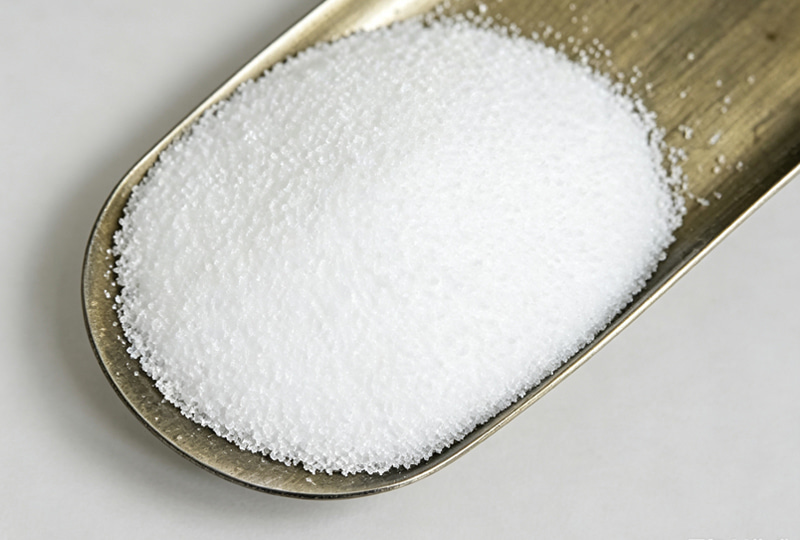
Raw material control is the first step. For jelly wax, the mineral oil and polymer system must be clean, compatible, and consistent. Impurities can reduce transparency, create odor, or affect the final texture. Professional sourcing evaluates supplier reliability, material appearance, batch documentation, and performance in actual candle-making tests. This helps prevent quality fluctuation before mass production begins.
Formulation control is equally important. The hardness, clarity, melting behavior, and pouring performance of jelly wax depend on the balance between oil and polymer. If the structure is too soft, the wax may not hold shape. If it is too rigid or improperly blended, it may become difficult to process or demold. Controlled blending under appropriate temperature conditions helps create a uniform gel structure. In professional production, time, temperature, mixing speed, and cooling conditions are monitored to support batch consistency.
Filtration and cleanliness also affect finished quality. Because jelly wax is transparent, even small contaminants can be visible. Dust, dark particles, fiber, or unmelted material may reduce the premium appearance. Clean production vessels, stainless steel tools, controlled working areas, and careful packaging help protect the wax from contamination. For export customers, this level of attention is essential because visual defects can lead to rejection, claims, or reduced consumer confidence.
Quality assurance includes practical candle tests. A laboratory may evaluate clarity, color stability, melting behavior, hardness, fragrance compatibility, burning performance, and packaging suitability. Hangzhou Leo Home Trading Co., Ltd. emphasizes strict QC from material selection to finished goods inspection. This process helps international buyers reduce risk, especially when developing customized candle collections for retail chains, e-commerce platforms, gift distributors, or private-label brands.
Supply chain integration is another strength. Candle projects often involve multiple components: wax, fragrance, dye, wick, mold, glass jar, lid, label, insert card, color box, carton, and shipping mark. If each supplier works independently, delays and mismatches can occur. By coordinating multiple factories and packaging partners, the company helps clients manage cost, consistency, and delivery time. This is particularly valuable for seasonal candle programs where launch dates are fixed and missed delivery windows can reduce sales opportunities.
Hard jelly candle wax is highly suitable for OEM and ODM development because it supports a wide range of visual styles. Buyers can customize shape, color, fragrance, embedded decoration, packaging, label design, and gift-set structure. The material can be used as a standalone shaped candle or combined with other home fragrance products such as reed diffusers, scented candles, accessories, and fragrance gift sets.
For OEM projects, clients may provide drawings, samples, packaging artwork, or brand requirements. The supplier team can help refine technical details such as mold feasibility, wax hardness, fragrance load, wick selection, and packaging protection. For ODM projects, the development team can propose product concepts based on market trends, holidays, retail channels, and target consumer preferences. This can include seasonal themes, minimalist transparent shapes, colorful novelty candles, or luxury gift collections.
Fragrance customization is especially important. A transparent sculptural candle may attract consumers visually, but scent creates the emotional experience. Popular fragrance directions include floral, fruity, woody, amber, ocean, vanilla, citrus, herbal, and festive spice notes. However, fragrance selection for jelly wax must be tested carefully. The fragrance should remain clear in the wax, maintain stable scent performance, and meet safety requirements. The company’s R&D and quality support help clients narrow options and reduce trial-and-error costs.
Packaging customization also affects commercial success. Transparent jelly candles often require protective packaging that prevents dust, surface scratches, deformation, and heat exposure. A color box, window box, blister tray, inner support, or gift-set insert may be selected depending on the product shape and sales channel. For e-commerce, drop protection and carton strength are important. For boutique retail, visual presentation and unboxing experience may matter more. Hangzhou Leo Home Trading Co., Ltd. works with color box factories and packaging partners to help match packaging design with product requirements.
Customization also allows clients to create market-specific products. European buyers may prefer refined fragrance profiles, minimalist packaging, and compliance-focused documentation. North American buyers may request seasonal lines, giftable sets, and strong e-commerce packaging. Middle Eastern buyers may prefer rich fragrance profiles and decorative presentation. A flexible supply chain helps adapt the same core wax material to different consumer expectations.
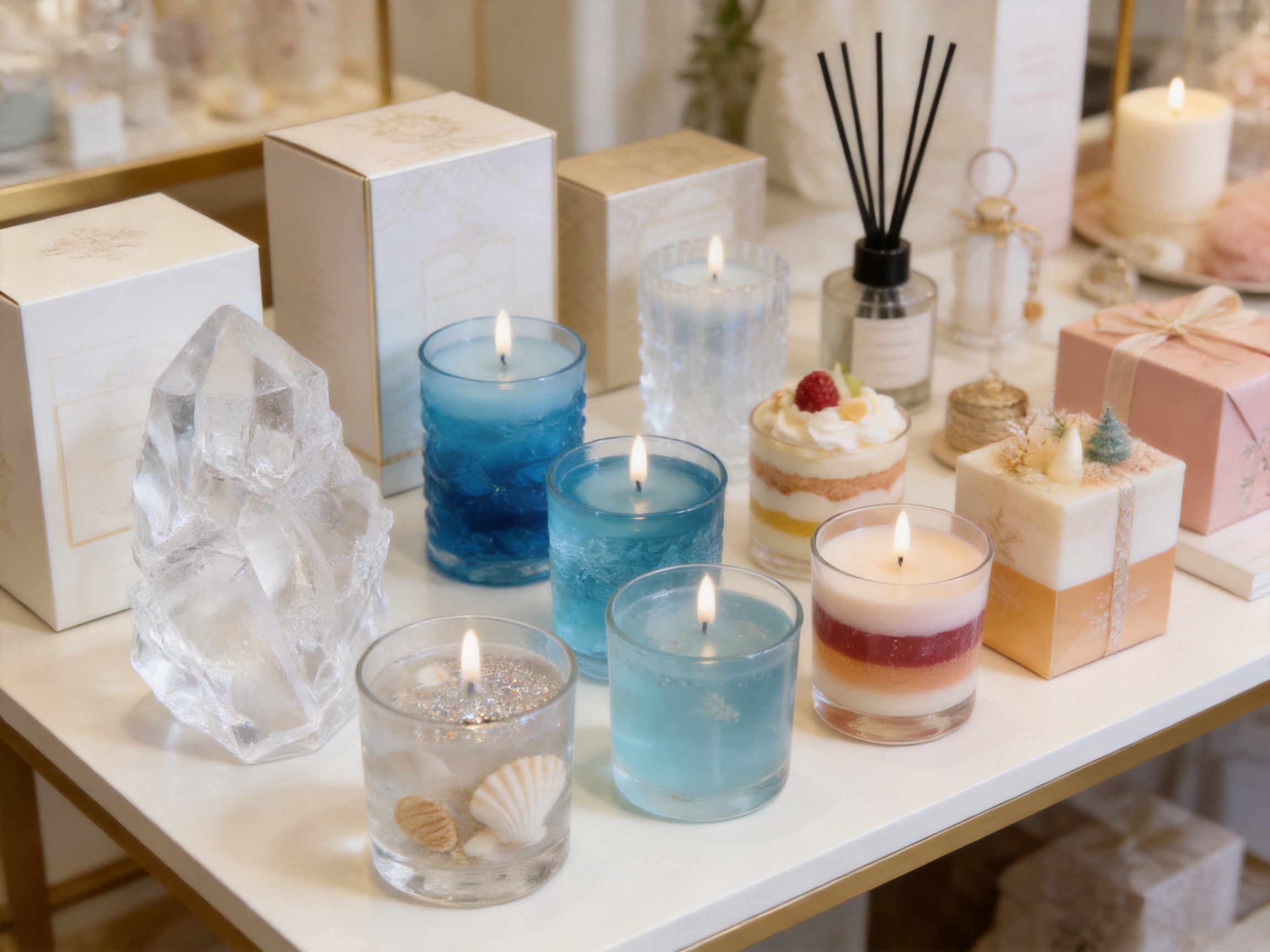
Hard jelly candle wax can be used in many decorative candle categories. One popular direction is ocean-inspired candles. Because the wax is transparent, it can imitate water, ice, crystal, or glass. Blue and turquoise dyes can create sea-like effects, while candle-safe shells, sand-like textures, or small decorative elements can create beach scenes. The firmer wax helps maintain shaped waves, shells, or marine-themed forms when mold-cast correctly.
Another application is dessert-inspired candles. Transparent jelly wax can be used to imitate jelly desserts, fruit gel, ice cubes, or glossy toppings. When combined with suitable colors and fragrance notes such as berry, citrus, vanilla, peach, or tropical fruit, the product becomes visually playful and emotionally appealing. These designs are popular for gift shops, lifestyle stores, and social media promotion.
Crystal and gemstone-inspired candles are also a strong opportunity. Hard jelly wax can be colored in jewel tones such as amber, rose, emerald, sapphire, or amethyst. Mold-cast geometric forms can resemble crystals, ice blocks, or modern art objects. With proper packaging, these candles can be positioned as luxury home decor or spiritual wellness accessories.
Holiday and seasonal products are another valuable area. Heart shapes for Valentine’s Day, stars for Christmas, pumpkins for autumn, flowers for spring, and snowflake-like forms for winter can all benefit from hard jelly wax’s shape retention. Seasonal candles often need strong visual differentiation, and transparent wax helps create a fresh alternative to standard holiday pillars or tin candles.
Hard jelly wax can also be used in premium gift sets. A set may include a shaped jelly candle, reed diffuser, scented sachet, candle accessory, or decorative tray. This aligns with the broader home fragrance category, where consumers often buy coordinated products for gifting. The material’s unique appearance helps increase perceived value and makes the set more memorable.
For any candle product, safety and performance testing are essential. Hard jelly candle wax requires special attention because gel-type waxes behave differently from traditional opaque waxes. Wick selection must match the wax type, candle diameter, fragrance load, dye concentration, and container or shape design. An oversized wick may create excessive heat, smoking, or instability. An undersized wick may produce weak burning, tunneling, or poor scent release.
For freestanding shaped jelly candles, wick placement is particularly important. The wick should remain centered and straight. If the wick is too close to the edge, the candle may melt unevenly or create localized overheating. For complex shapes, candle makers may need to test whether the design is suitable for safe burning or whether it should be positioned primarily as a decorative candle. Clear usage instructions should be provided to consumers.
Fragrance oil compatibility must be verified. The fragrance should have an appropriate flash point and should be suitable for gel wax use. Some fragrance oils may cloud the wax or separate from the gel structure. Others may affect burning behavior. A professional development process includes small-batch testing before mass production. Clarity, scent stability, cold throw, hot throw, and burn performance should be evaluated.
Colorants should be candle-safe and compatible with transparent wax. Excessive pigment, mica, or powder additives can reduce clarity or interfere with the wick. If glitter or shimmer effects are desired, materials must be selected carefully and tested for burning safety. Decorative inclusions should be non-flammable and positioned away from the wick path. In some cases, visual elements may be safer when used in non-burning decorative zones or in designs with clear burning instructions.
Consumer labeling should include proper candle safety guidance. Typical instructions may include burning on a heat-resistant surface, keeping away from drafts, trimming the wick, keeping away from children and pets, not leaving the candle unattended, and discontinuing use when appropriate. Export buyers should also consider the candle safety standards and labeling requirements of their target markets.
The quality difference between an ordinary jelly candle and a premium jelly candle often comes down to process control. Because the wax is transparent, every processing mistake can become visible. Bubbles, dust, uneven color, cloudiness, surface marks, or poor demolding are easy to notice. Professional production reduces these defects through disciplined handling.
Temperature control is the first major factor. The wax should not be overheated, but it must reach the correct pouring temperature to become fully clear and fluid. Using calibrated thermometers and controlled heating equipment helps workers maintain the proper range. Guesswork may be acceptable for hobby production, but it is not reliable for export orders or brand-level products.
Mixing control is another factor. The goal is to distribute heat, fragrance, and dye evenly without introducing air. Slow stainless steel stirring helps achieve this. Production teams should avoid wooden tools that may contain moisture, fibers, or contaminants. They should also avoid plastic tools that may deform at high temperature or contaminate the wax.
Mold control affects surface quality. Silicone molds should be clean, dry, and suitable for the design. If a mold has scratches, dust, or residue, the finished candle may show defects. If a shape has sharp undercuts or narrow deep sections, demolding may be difficult. Mold design should consider both artistic appearance and production practicality.
Cooling control affects clarity and shape. Stable cooling helps reduce internal stress and visual irregularity. Moving the mold too soon, cooling too quickly, or demolding before the wax is fully set can damage the candle. For mass production, cooling time should be standardized and verified for each candle size and mold design.
Inspection control ensures that only acceptable products are packed. Finished candles should be checked for clarity, color accuracy, bubbles, surface defects, wick position, fragrance consistency, shape integrity, and packaging fit. For international orders, random inspection or full inspection may be applied depending on customer requirements and order size.
Hangzhou Leo Home Trading Co., Ltd. is based in Hangzhou, China, and specializes in international trading and supply chain solutions for household and daily necessities. Although the company was founded in January 2025, its team brings strong market awareness, cross-border service capability, and supply chain integration experience. Its product scope includes personal care, home and garden products, daily tools, and a strong focus on home fragrance categories such as scented candles, LED candles, reed diffusers, accessories, candle raw materials, and related gift sets.
For buyers of hard jelly candle wax, the company’s greatest strength is its one-stop service model. Instead of only selling a wax material, it can support the complete development path from raw material selection to finished product delivery. This includes product specification discussion, fragrance selection, mold feasibility, packaging options, label customization, quality inspection, and logistics coordination.
The company integrates ten candle factories, eight jar customization partners, and eight color box factories. This supply network helps manage cost and maintain flexible production capacity. For clients, this means more options for design, price level, order quantity, and delivery planning. It also helps support both trial orders and larger bulk orders. Daily capacity can reach up to 50,000 units through the integrated network, providing stability for replenishment and seasonal campaigns.
Quality assurance is another key advantage. The company emphasizes an in-house laboratory and strict QC across critical stages, from raw materials to finished goods. This is especially important for jelly wax products because clarity, hardness, fragrance compatibility, and safety performance must be verified. A transparent candle leaves little room for hidden defects. Through testing and inspection, the company helps protect brand reputation for overseas clients.
Customization is also central to the company’s service. Professional R&D support can help clients refine product specifications, scent direction, packaging structure, and market positioning. Whether a buyer wants a simple wax raw material supply, a custom shaped jelly candle, or a complete home fragrance gift set, the company can coordinate development across multiple suppliers. This is valuable for brands that want to move quickly from idea to product launch.
Logistics support is strengthened by the company’s location and export experience. Convenient access to Ningbo Port helps improve shipping efficiency. The company mainly exports to Europe and North America and has delivered products to more than ten countries and regions across North America, Europe, and the Middle East. For international buyers, reliable export documentation, packing control, and shipping coordination are essential parts of a successful order.
Hard jelly candle wax gives importers and home fragrance brands a way to differentiate in a crowded market. Many candle shelves are filled with similar glass jars, tin candles, soy wax containers, and standard pillars. While these products remain important, consumers are increasingly attracted to candles that are visually distinctive and suitable for gifting. Transparent sculptural candles meet this demand by combining fragrance, decoration, and novelty.
For e-commerce sellers, the visual impact of hard jelly candles is especially valuable. Products that photograph well can improve click-through rates and social media engagement. Clear wax, bright colors, embedded scenes, and sculptural forms create strong image appeal. When paired with attractive packaging, the product can be positioned for holidays, birthdays, weddings, home decor, self-care, or collectible gifts.
For retailers, jelly candles can create display interest. Transparent candles catch light and color in a way that draws attention. A display of ocean-blue jelly candles, crystal-shaped candles, or colorful dessert-themed candles can break the monotony of ordinary candle shelves. This increases the chance that consumers will stop, touch, and consider the product.
For private-label brands, hard jelly candle wax supports brand storytelling. A brand can build a collection around themes such as clarity, calm, ocean mood, crystal energy, playful desserts, floral art, or seasonal celebration. Because the wax itself has a distinctive appearance, the product story becomes easier to communicate through packaging, photography, and product descriptions.
For gift-set developers, the material can raise perceived value. A shaped transparent candle often looks more complex and artistic than a simple filled container. When combined with reed diffusers, candle accessories, or matching fragrance items, it can create a premium home fragrance set suitable for supermarkets, boutiques, department stores, and online platforms.
Packaging for hard jelly candle wax and finished jelly candles should protect clarity, shape, and cleanliness. For raw wax material, packaging should prevent dust, moisture, and contamination. The wax should be stored in a cool, dry, clean area away from direct sunlight and heat sources. Excessive heat during storage may soften the material or affect handling. Clean packaging also helps preserve transparency before production.
For finished shaped candles, packaging should prevent surface damage and deformation. Because transparent wax shows scratches and dust easily, protective inner packaging is important. Depending on the product shape, options may include individual wrapping, molded trays, paper inserts, PET windows, gift boxes, or separated compartments. If the candle has delicate edges or raised details, the packaging must hold it securely without pressing too hard.
Temperature awareness is important during transportation. Jelly wax products should not be exposed to extreme heat for long periods. Export cartons should be designed to reduce movement and protect against compression. For high-value gift items, drop testing and packing trials may be recommended before mass shipment. This is especially important for e-commerce channels where parcels may be handled roughly.
Labels and instruction cards should be clear and professional. Besides branding and fragrance information, candle safety instructions should be included. If the candle is mainly decorative, this should be communicated. If it is intended for burning, the recommended burning conditions and precautions should be stated. Clear instructions help improve consumer satisfaction and reduce misuse.
One common challenge is bubble formation. Bubbles may appear if the wax is stirred too quickly, poured too aggressively, or processed with moisture contamination. The solution is slow heating, gentle stainless steel stirring, careful pouring, dry molds, and stable temperature control. In some cases, allowing the molten wax to rest briefly before pouring can help bubbles rise, but the process must still maintain proper temperature.
Another challenge is cloudiness. Cloudiness can result from insufficient heating, incompatible fragrance, contamination, or poor raw material quality. The solution is to use tested wax, maintain the recommended pouring range, choose gel-compatible fragrance, and keep tools and molds clean. Small trial batches are useful before bulk production.
Demolding difficulty is also common with hard jelly wax. Because this version is firmer, it may hold mold details strongly. Rigid PC plastic molds are not recommended for complex shapes because the candle may be difficult to remove completely. Soft silicone molds are better because they can flex during release. Mold design should avoid excessive undercuts, and demolding should be done only after full cooling.
Surface defects may occur if the mold is dirty, scratched, or moved during cooling. Clean mold preparation and stable cooling surfaces help prevent these problems. For premium products, mold maintenance should be treated as part of quality control.
Fragrance separation can occur when fragrance oil is not compatible with gel wax or when too much fragrance is added. The solution is compatibility testing and controlled fragrance loading. Buyers should not assume that a fragrance used in soy wax or paraffin wax will automatically work in jelly wax. Each formula should be verified.
Shape deformation may occur if the wax grade is too soft, the candle design is too thin, the storage temperature is too high, or packaging applies pressure. Hard jelly candle wax reduces this risk compared with soft jelly wax, but product design and storage still matter. For tall or thin shapes, structural testing should be performed.
Hard jelly candle wax is a transparent blend of mineral oil and polymer. The mineral oil provides clarity and gel-like visual depth, while the polymer structure gives the wax body and firmness.
Hard jelly candle wax sets firmer than soft jelly wax. Soft jelly wax is generally better for container candles, while the harder version is more suitable for shaped, mold-cast, sculptural, or figural candles that need better definition and shape retention.
The wax melts at approximately 85°C. However, for full clarity and good pouring performance, the recommended working pour temperature is usually about 130–140°C.
The melting point indicates when the wax begins to liquefy, but the wax needs a higher temperature to become fully fluid and clear. Pouring at 130–140°C helps achieve better transparency and mold detail when properly controlled.
Soft silicone molds are recommended because they flex during demolding and help protect detailed shapes. Rigid PC plastic molds may make complete demolding difficult, especially for complex designs.
Yes, it can be used for some container candle designs, but its main advantage is in shaped and decorative candles. If the project is a simple container fill, a softer jelly wax may be more economical and easier to handle.
Fragrance can be added, but it must be compatible with gel wax. Fragrance oils should be tested for clarity, stability, flash point, scent performance, and safe burning behavior before mass production.
Bubbles can be reduced by slow low-heat melting, gentle stainless steel stirring, careful pouring, dry molds, and stable temperature control. Avoid whipping the wax or pouring too quickly.
Yes. Its transparent appearance, sculptural potential, and ability to showcase color and decorative effects make it suitable for premium candles, gift sets, seasonal collections, and modern home fragrance products.
Hangzhou Leo Home Trading Co., Ltd. supports customization through product development, fragrance selection, mold and packaging coordination, quality control, and export logistics. The company integrates candle factories, jar partners, and color box factories to provide one-stop service for international buyers.
Hard jelly candle wax is a high-value raw material for candle makers and home fragrance brands that want to create transparent, decorative, and structurally stable candle products. Its firmer texture gives it a clear advantage over softer jelly wax when used for sculptural or mold-cast designs. Its full transparency gives it a visual advantage over traditional opaque waxes such as soy, paraffin, and beeswax. When processed at the recommended temperature range of 130–140°C, stirred gently with stainless steel tools, and poured into soft silicone molds, it can produce clear, glossy, and visually striking candles.
The product’s advantages are strongest when supported by professional manufacturing and quality control. Raw material selection, formulation consistency, clean processing, fragrance compatibility testing, mold design, packaging protection, and export inspection all influence final commercial success. Hangzhou Leo Home Trading Co., Ltd. strengthens the value of this material by offering supply chain integration, customization support, in-house laboratory quality assurance, flexible delivery capability, and international trading service.
For importers, private-label brands, retailers, and gift-set developers, hard jelly candle wax opens the door to creative product lines with strong shelf appeal and online visual impact. It can be used for crystal shapes, ocean themes, dessert candles, holiday gifts, decorative sculptures, and coordinated home fragrance sets. With the right process and reliable supply partner, this transparent hard jelly wax can help transform candle concepts into distinctive market-ready products.
1. Candle Manufacturing and Quality Control Handbook, Home Fragrance Production Series.
2. Gel Wax Candle Processing Guidelines, Specialty Candle Materials Technical Notes.
3. Fragrance Compatibility Testing for Transparent Candle Systems, Applied Home Fragrance Laboratory Reference.
4. Mold-Cast Candle Design and Demolding Principles, Decorative Candle Production Manual.
5. International Candle Safety and Labeling Practices, Consumer Home Fragrance Standards Review.

Room 1701, Building C1, Wangjing, Xiaoshan District, Hangzhou City, Zhejiang Province, China.

+86-15937257616

Copyright© 2026 Hangzhou Leo Home Trading Co., Ltd. All Rights Reserved.

Luxury Candles Home Fragrance Manufacturers Modern Candles Factory