 English
 Français
News
Home / Author / Sophia Lin — Product Sales Executive / Volcanic Texture Mini Cement Jar Candle Container for Modern Home Fragrance
Content
In the evolving world of home fragrance, packaging is no longer a silent container. It has become part of the sensory experience, the decorative value, and the purchasing decision. The Volcanic Texture Mini Cement Jar Candle Container is designed for this modern market, where candle buyers want products that feel crafted, authentic, durable, and visually distinctive. With its porous cement surface inspired by natural volcanic stone, this mini candle vessel offers a raw yet refined appearance that helps scented candles stand out in boutique collections, seasonal gift sets, home décor ranges, and private-label fragrance lines.
Unlike ordinary glass jars, metal tins, or plain ceramic containers, this cement candle vessel communicates texture and atmosphere before the candle is even lit. Its surface features subtle pits, handcrafted variation, and a stone-like character that gives every piece a unique identity. The result is a candle container that looks artisanal while still supporting reliable production, customization, and commercial distribution.
For candle brands, wholesalers, lifestyle retailers, and importers, the container provides a practical balance between aesthetic value and supply chain dependability. It is compact enough for tea lights, mini scented candles, decorative wax products, and sample-size fragrance collections, yet strong enough to create a premium impression. Supported by Hangzhou Leo Home Trading Co., Ltd.’s sourcing, customization, quality control, and export capabilities, the Volcanic Texture Mini Cement Jar Candle Container is positioned as a competitive choice for companies seeking a modern, earthy, and market-ready candle component.
Volcanic Texture Mini Cement Jar Candle Container
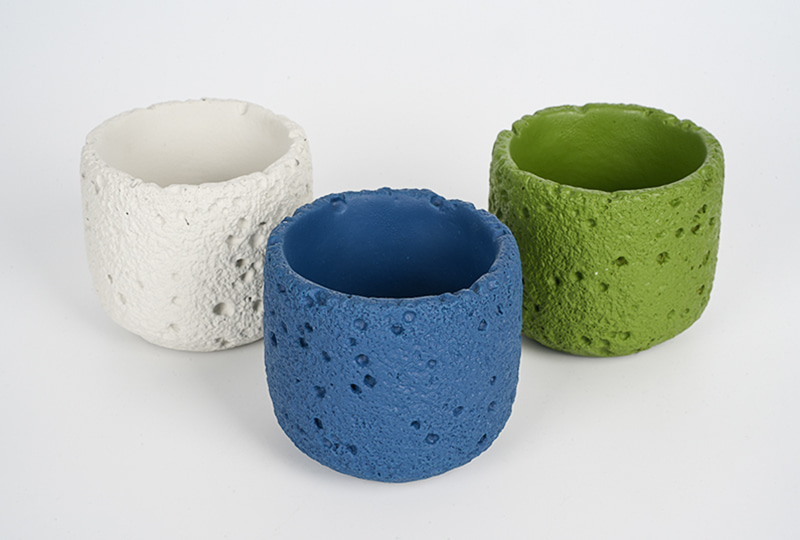
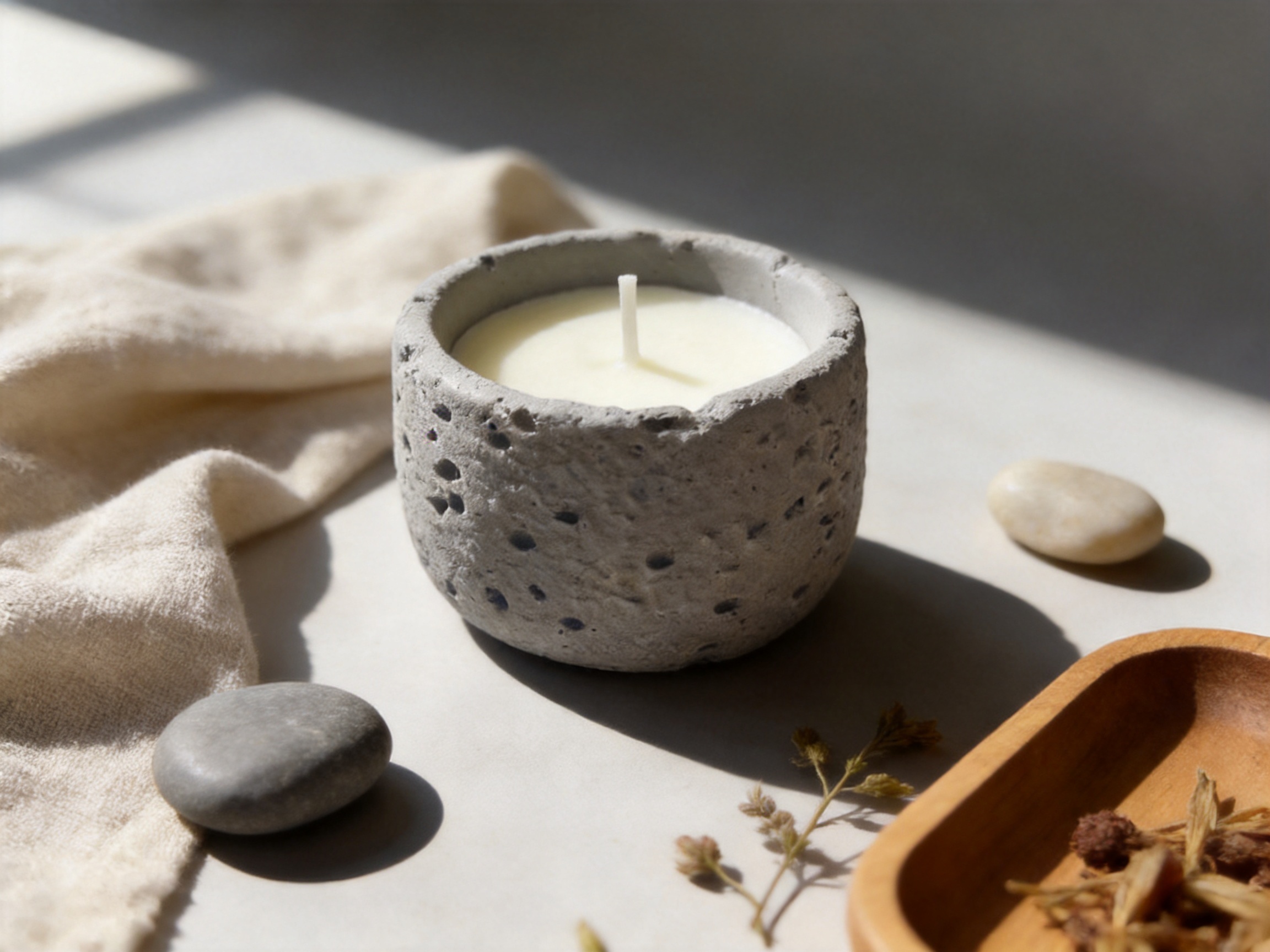
The Volcanic Texture Mini Cement Jar Candle Container is a small cylindrical candle vessel made from cement, designed with a distinctive porous surface that resembles volcanic stone. The visual language is simple, organic, and contemporary. Rather than relying on bright decoration or complicated patterns, the product uses material texture itself as the core design element. This makes it suitable for brands that want a minimalist but memorable candle presentation.
Its cement body creates a grounded, architectural feeling that fits well in modern interiors. The natural gray tone and textured surface allow it to blend with various décor styles, including Scandinavian, industrial, wabi-sabi, modern rustic, minimalist, and urban apartment aesthetics. On a coffee table, shelf, bedside cabinet, bathroom tray, or retail display, the vessel gives a calm and tactile impression.
The compact size makes it especially useful for mini scented candles, tea lights, travel-size candles, sample fragrance launches, promotional gift sets, hotel amenity concepts, and decorative wax creations. Many fragrance brands need small vessels that look more premium than standard tealight cups or basic glass jars. This cement jar offers that upgrade by combining small proportions with a strong material identity.
Because the vessel is handcrafted, small variations are part of its appeal. The pits, surface texture, and subtle imperfections create a naturally artistic appearance. In a marketplace full of uniform mass-produced containers, this slight individuality helps a candle line feel warmer and more personal. For customers who appreciate craft, natural materials, and understated luxury, the volcanic cement texture becomes an important selling point.
Cement has become increasingly popular in home décor because it expresses stability, simplicity, and raw elegance. In candle packaging, cement offers an alternative to traditional vessels such as glass, metal, and ceramic. While glass remains popular for transparency and broad compatibility, cement provides a more sculptural and tactile experience. Consumers can feel its weight, texture, and handcrafted presence.
Modern consumers often look for home fragrance products that do more than release scent. They want objects that improve the atmosphere of a room and remain decorative even after the wax has burned. A cement vessel can be repurposed as a small holder for jewelry, matches, incense cones, desk accessories, or decorative stones. This reuse potential supports sustainable thinking by extending the life of the container beyond the candle’s burn time.
The Volcanic Texture Mini Cement Jar Candle Container aligns with this trend by offering a surface that feels natural rather than overly polished. The volcanic texture suggests earth, mineral, fire, and handmade artistry. These associations are highly compatible with fragrance themes such as sandalwood, amber, cedar, vetiver, mineral musk, rain, smoky woods, coffee, fig, sage, and spa-inspired blends.
Another reason cement is attractive is its visual neutrality. It can match many label styles, wax colors, and packaging concepts. A brand can create a masculine fragrance line, a wellness collection, a luxury spa series, a minimalist home set, or a handmade artisan candle range using the same base vessel. This flexibility helps businesses simplify sourcing while expanding product storytelling.
Compared with ordinary glass candle jars, the Volcanic Texture Mini Cement Jar Candle Container has a more tactile and distinctive appearance. Clear glass is useful, but it is also widely used, making it harder for new candle products to stand out on crowded shelves. Frosted glass and colored glass can improve presentation, but they still often communicate a familiar commercial look. Cement, by contrast, immediately communicates craft, texture, and natural material value.
Compared with metal tins, the cement vessel feels more decorative and stable. Metal tins are lightweight, cost-effective, and practical for travel candles, but they can appear casual or promotional. The cement jar creates a stronger home décor impression and feels more permanent. Its weight gives customers the sensation of quality, which is important for premium positioning.
Compared with ceramic containers, cement offers a rawer, more architectural character. Ceramic can be elegant and colorful, but it often has a smoother, more refined surface. The volcanic texture of this cement jar provides a rugged natural look that is difficult to achieve with standard ceramics. This makes it especially suitable for brands wanting earthy minimalism rather than polished luxury.
Compared with plastic containers, cement clearly provides a more premium and heat-resistant impression. Plastic is rarely ideal for candle vessels because of heat concerns and perceived low value. A cement container helps reinforce safety, durability, and decorative quality. For candle buyers who care about home aesthetics, the difference in material perception is significant.
A candle container must look good, but it must also perform reliably during production and use. The Volcanic Texture Mini Cement Jar Candle Container is designed with durability and stability in mind. Cement is a sturdy material that can tolerate heat better than many decorative packaging materials. Its weight helps keep the candle stable during burning, reducing the likelihood of tipping when placed on a flat surface.
The small cylindrical shape is practical for wax pouring. The balanced proportions support a neat fill line and a clean finished appearance. For mini scented candles, the shape allows efficient use of wax while still creating enough visual presence for retail display. Candle makers can pair the container with different wax types, such as soy wax, paraffin blends, coconut wax blends, or other customized formulations, depending on the project requirements.
The vessel’s minimalist exterior also supports multiple branding methods. A brand may choose a simple adhesive label, a paper belly band, a hang tag, a kraft box, a color box, or a gift set sleeve. The surface texture already provides visual interest, so packaging can remain clean and cost-efficient. This is useful for businesses that want a premium look without overly complex decoration.
Because each vessel has slight textural differences, it pairs well with small-batch and artisan candle positioning. At the same time, the product can be integrated into bulk supply planning through Leo Home’s supply chain network. This combination of handmade visual appeal and commercial scalability is one of the strongest advantages of the item.
The product’s identity comes from its volcanic texture. Natural volcanic stone often contains pores, pits, and irregular surfaces created through geological processes. The candle container translates this natural impression into a cement vessel suitable for home fragrance products. The result is visually calm but not plain, rough but not unfinished, and modern but not cold.
The porous surface helps the container feel connected to nature. This is valuable because many fragrance products are marketed through natural themes, including botanical extracts, essential oil inspiration, forest notes, mineral accords, and spa rituals. A container that visually supports these themes strengthens the entire product concept.
Texture also plays an important role in retail psychology. Consumers often respond to products they want to touch. A smooth glass jar can be attractive, but a textured cement surface invites closer inspection. When a shopper picks up the candle, the weight and surface sensation can reinforce the feeling that the product is special. This tactile experience can help increase perceived value.
In digital commerce, the texture is also important. Product photos of simple candle jars can look similar online, but the volcanic surface creates shadows, depth, and detail. This helps improve visual differentiation in product listings, social media posts, lifestyle photography, and catalog presentations. For brands selling through online channels, a photogenic vessel can improve first impressions.
The Volcanic Texture Mini Cement Jar Candle Container can be used across multiple candle and home fragrance applications. Its compact size is ideal for mini candles, which are increasingly popular because they allow customers to try different scents before buying larger candles. A brand can use the vessel to create discovery sets featuring several fragrances in a coordinated cement container series.
It is also suitable for tea light upgrades. Traditional tea lights are often simple aluminum cups, which are functional but not decorative. By placing tea light-style wax into a cement vessel, a brand can offer a more elevated product that works for dinner tables, spa settings, boutique hotels, and gift boxes.
For seasonal launches, the cement vessel can be paired with themed wax colors and fragrances. A winter collection might use cedarwood, smoke, cinnamon, and amber scents. A spring collection might feature lavender, green tea, cotton, and fig. A summer line might use sea salt, coconut, citrus, or basil. The neutral cement body allows these fragrance stories to change without requiring a completely new container.
The vessel is also suitable for decorative wax creations, such as layered wax, botanical wax tops, embedded stones, dried flower accents, or sculpted wax surfaces. The raw exterior contrasts beautifully with refined wax decoration, giving the finished candle a handcrafted and artistic appearance.
| Feature | Benefit for Candle Brands | Competitive Advantage |
|---|---|---|
| Volcanic textured cement surface | Creates a natural, handcrafted, and modern appearance | More distinctive than plain glass, metal tins, or standard ceramic jars |
| Mini cylindrical shape | Suitable for tea lights, mini scented candles, samples, and gift sets | Supports flexible product development and low-risk fragrance testing |
| Sturdy cement material | Provides stability and heat-resistant performance during candle use | Feels more durable and premium than lightweight containers |
| Subtle handmade variation | Gives each piece a unique artistic identity | Strengthens artisan and boutique positioning |
| Minimalist neutral tone | Works with many scent themes, labels, wax colors, and packaging styles | Reduces the need for frequent container redesigns |
| Customization support | Allows development of specifications, fragrances, labels, and packaging | Helps buyers build private-label and OEM/ODM product lines efficiently |
| Integrated supply chain | Connects candle factories, jar partners, and packaging suppliers | Improves cost control, coordination, and delivery reliability |
A candle is a combination of fragrance, flame, wax, and vessel. The container influences how customers interpret the scent before and during use. A fragrance poured into a plain container may be judged mainly by its label, but a fragrance poured into a volcanic cement vessel gains an additional layer of meaning. The container suggests earthiness, warmth, calm, and natural design.
For woody scents, the cement jar reinforces mineral and grounded notes. For herbal scents, it adds a spa-like simplicity. For smoky or amber scents, it creates a feeling of warmth and depth. For clean fragrances, it provides contrast, making the scent feel modern and architectural. This makes the vessel a versatile foundation for multiple fragrance families.
The warm glow of candlelight also interacts beautifully with the cement texture. When the flame is lit, the raw exterior creates a quiet contrast with the soft light. The result is a calm decorative object that can support relaxation, meditation, reading, dining, or evening routines. This atmospheric quality is important because customers often buy candles not only for scent but also for emotional comfort.
The mini size supports intimate fragrance moments. Instead of filling a large room aggressively, mini candles can create subtle scent experiences in smaller spaces. They are ideal for bedside tables, bathrooms, desks, and cozy corners. The cement vessel makes these small candles feel intentional rather than secondary.
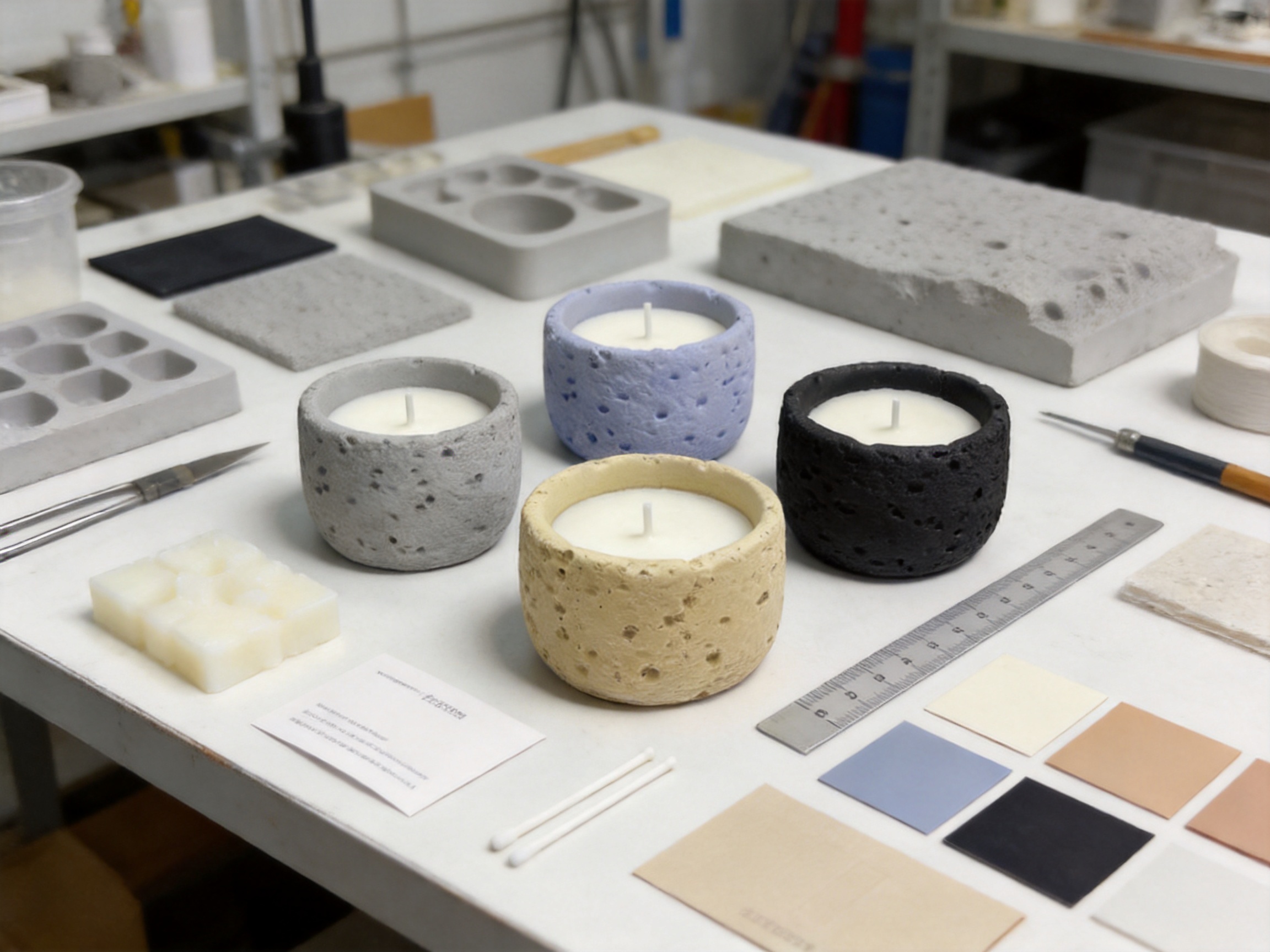
Behind a successful candle vessel is a structured development and manufacturing process. Hangzhou Leo Home Trading Co., Ltd. supports customers through professional sourcing, customization, and quality coordination. The company integrates multiple candle factories, jar customization partners, and color box factories, enabling buyers to develop complete candle products rather than source each component separately.
For a cement jar candle project, the process may begin with design confirmation. Buyers can provide drawings, reference samples, target dimensions, desired surface texture, color direction, packaging concept, and fragrance plan. The development team can help refine specifications so that the vessel aligns with candle performance, shipping requirements, target market preferences, and cost expectations.
The cement vessel manufacturing process requires careful control of material mixing, mold forming, curing, surface finishing, and inspection. The volcanic texture must look natural while maintaining structural consistency. If the surface is too rough, it may feel unfinished; if it is too smooth, it may lose its volcanic identity. Skilled production control helps maintain the balance between handmade character and commercial uniformity.
After the vessel is formed and cured, inspection focuses on shape, stability, visible cracks, surface quality, inner finish, and dimensional consistency. For candle filling, the inner surface must support wax placement and safe use. Depending on the final candle design, additional treatments may be considered to improve compatibility with wax and fragrance oil. The goal is to create a finished container that is attractive, stable, and suitable for the intended candle application.
Leo Home’s supply chain approach is valuable because candle projects often involve many linked components: vessels, wax, fragrance, wick, labels, dust covers, gift boxes, cartons, and export documentation. Coordinating these elements through experienced project management helps reduce delays, communication gaps, and inconsistent quality.
Quality assurance is essential for candle containers because a vessel must perform safely and look attractive at the same time. Leo Home emphasizes strict quality control from raw material selection to finished goods inspection. For a cement candle vessel, this includes reviewing cement composition, texture consistency, curing results, surface condition, and packaging protection.
Raw material control affects strength, texture, and appearance. Cement vessels must be properly formulated to reduce weakness, excessive brittleness, or surface defects. The company’s quality approach helps ensure that products are not only visually appealing but also dependable for production and customer use.
In-process inspection is also important. During forming and curing, defects can occur if material ratios, mold conditions, drying time, or handling are not properly managed. By monitoring key stages, the production team can reduce the risk of cracks, uneven walls, unstable bases, or inconsistent surface textures.
Finished goods inspection evaluates the vessel as a market-ready product. Inspectors may check the overall shape, surface appearance, interior cleanliness, bottom stability, edge finish, and packing condition. For export orders, carton strength and protective packing are also important because cement containers are heavier than some alternatives and require suitable logistics planning.
For buyers, this structured QC process reduces uncertainty. It helps ensure that products received in bulk match the approved sample as closely as possible. This is especially important for brands building repeat collections, where consistency supports consumer trust and retail replenishment.
One of the major strengths supporting this product is customization. Many candle companies need more than an existing container; they need a product line that reflects their brand identity. Leo Home provides OEM/ODM support across specifications, fragrance selection, labels, and packaging, making it easier for buyers to create tailored candle collections.
For the Volcanic Texture Mini Cement Jar Candle Container, customization may include size adjustment, color tone variation, surface texture refinement, label design, wax color, fragrance selection, wick selection, and packaging format. A brand may choose a natural gray cement tone for minimalist design, a warmer beige tone for spa collections, or a darker charcoal tone for masculine or luxury fragrance lines.
Packaging customization can transform the same vessel into different market positions. A kraft paper box may create an eco-friendly handmade feeling. A rigid gift box may elevate the product for premium gifting. A printed color box may support retail shelf display. A window box may allow customers to see the volcanic texture directly. A multi-piece set can be designed for discovery collections or seasonal gift programs.
Fragrance customization is equally important. Because Leo Home focuses strongly on home fragrance products, the company can support scent development based on target markets. European and North American consumers may prefer different fragrance profiles, intensities, and seasonal concepts. Custom fragrance planning helps buyers build collections that match regional expectations.
Label and branding support helps buyers create a coherent final product. The cement vessel works well with minimalist labels, embossed paper, natural fiber tags, metallic foil details, or understated monochrome designs. Because the vessel already has a strong texture, branding can remain elegant and restrained.
A beautiful candle vessel is only commercially valuable if it can be sourced reliably. Leo Home’s supply chain strength is a key advantage for buyers who need stable production, cost control, and export support. The company integrates ten candle factories, eight jar customization partners, and eight color box factories. This network allows projects to be matched with suitable production resources based on quantity, budget, timeline, and technical requirements.
For candle brands, this integrated model reduces the difficulty of managing many separate suppliers. Instead of coordinating vessel production, candle filling, packaging printing, and inspection independently, buyers can work through a more centralized support structure. This improves communication and reduces project complexity.
Cost control is another advantage. By working with a broad supplier network, the company can compare production options, optimize component selection, and help buyers maintain competitive pricing. This is especially useful for private-label candle programs, where margins are influenced by vessel cost, fragrance cost, packaging cost, labor, and shipping.
Delivery flexibility also matters. Leo Home supports both bulk delivery and smaller trial runs. This is important because not every buyer wants to commit to large orders immediately. A brand may test a new mini candle line before expanding into larger quantities. If the market response is positive, daily capacity reaching up to 50,000 units across supported production resources helps provide stable replenishment.
Logistics strength is supported by proximity to Ningbo Port, one of the major shipping gateways in China. Efficient access to port infrastructure helps overseas buyers manage export schedules and international shipping. For customers in Europe, North America, and the Middle East, reliable logistics planning can significantly affect product launch timing.
The candle components and raw materials market includes many container options, but not all vessels offer the same combination of design distinction, functional stability, customization flexibility, and supply support. The Volcanic Texture Mini Cement Jar Candle Container competes strongly because it is not just a container; it is a design-driven candle component that can help define an entire product line.
Many competitors offer generic glass jars in standard shapes. These jars are easy to source, but they may not help a brand stand out unless additional decoration is added. Decoration increases cost and complexity. The volcanic cement vessel already has a memorable surface, allowing brands to achieve a distinctive look with simpler labeling and packaging.
Some competitors offer handmade ceramic vessels, but ceramic items can be more expensive, heavier, and sometimes more fragile depending on production methods. Cement provides a robust, earthy alternative with a modern architectural character. It can communicate a similar handcrafted value while offering a different aesthetic direction.
Metal tins remain common for mini candles, but they often lack the decorative after-use value that today’s lifestyle consumers appreciate. A cement jar can remain on display after burning, increasing the perceived value of the purchase. This supports premium pricing and stronger customer satisfaction.
Another competitive advantage comes from Leo Home’s ability to support complete product development. Buyers are not limited to purchasing empty vessels; they can explore finished candles, scented sets, packaging, and related home fragrance solutions. This one-stop approach is useful for retailers and importers who want efficient category development.
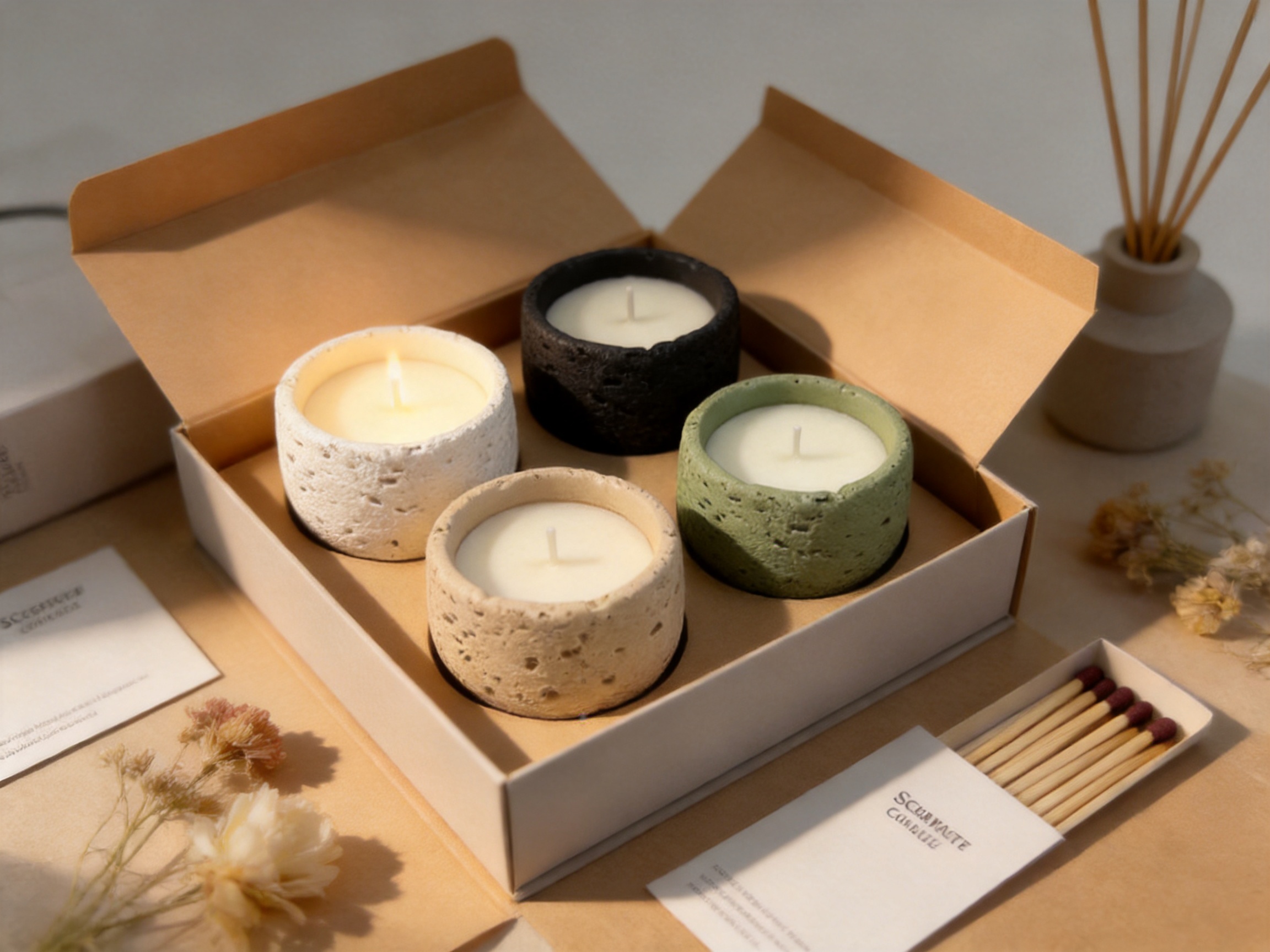
The mini cement vessel is especially suitable for gift-oriented products. Its compact size makes it easy to include in sets, and its premium tactile appearance makes small candles feel more valuable. A set of three or four mini cement jar candles can become a fragrance discovery kit, a seasonal gift, a wellness box, or a boutique hotel amenity.
For retailers, mini candle sets offer several advantages. They are easier for consumers to purchase as gifts because they feel complete and thoughtful. They also allow customers to experience multiple scents, increasing the chance of repeat purchases in larger formats. The volcanic texture gives each piece enough visual weight to feel special, even at a smaller size.
The vessel also works well in mixed home fragrance sets. It can be paired with reed diffusers, diffuser accessories, wax melts, incense, or decorative matches. Since the user’s product category includes scented candles, reed diffuser accessories, diffusers, candle components, raw materials, and scented sets, this container can become part of a broader home fragrance collection.
For holiday markets, the neutral cement design can be adapted with packaging rather than changing the vessel itself. A brand can create Christmas, Valentine’s Day, Mother’s Day, autumn, spa, or wedding gift packaging while keeping the core container consistent. This improves operational efficiency and lowers the risk of excess inventory.
Interior design trends increasingly favor natural textures, neutral colors, and objects that feel handcrafted. The Volcanic Texture Mini Cement Jar Candle Container fits these trends precisely. Its rough surface and minimalist shape align with the desire for quiet luxury, where value is expressed through material, proportion, and sensory quality rather than excessive decoration.
In Scandinavian-inspired spaces, the cement vessel works with pale wood, linen, ceramic, and soft neutral colors. In industrial interiors, it complements metal, concrete, exposed brick, and dark furniture. In wabi-sabi environments, its imperfections become part of its beauty. In spa and wellness spaces, its natural appearance supports relaxation and simplicity.
The vessel’s scale makes it easy to place in small areas. Consumers living in apartments or compact homes may not always want large decorative candles. A mini cement candle provides atmosphere without taking up too much space. This makes it suitable for urban lifestyles and modern retail environments.
Its understated appearance also makes it gender-neutral and broadly marketable. Some candle packaging leans heavily feminine through florals, pastels, or ornate designs. This cement container can appeal to a wider customer group, including buyers who prefer clean, minimal, earthy, or masculine styling.
Sustainability is an important consideration in modern consumer goods. While every product must be evaluated according to its full material lifecycle, one practical advantage of a durable cement candle vessel is its potential for reuse. After the candle has burned, customers can clean and repurpose the jar as a small decorative container.
Possible reuse applications include holding rings, earrings, paper clips, incense cones, matches, small stones, dried botanicals, or bathroom accessories. This after-use function gives the container a second life and helps customers feel that they are purchasing a decorative object rather than disposable packaging.
For brands, communicating reuse potential can strengthen product storytelling. A mini candle in a cement jar can be positioned as a small home décor piece with fragrance benefits. This is more compelling than selling a candle as a temporary consumable only.
The neutral design also increases reuse likelihood because it can fit into many spaces after the wax is gone. Highly seasonal or heavily branded containers may be discarded when the occasion passes, but a simple cement vessel can remain useful year-round. This supports long-term customer satisfaction and brand memory.
When developing candles with cement vessels, brands should consider wax compatibility, wick selection, fragrance load, burn behavior, and safety testing. Although cement is sturdy and heat-resistant, every finished candle design should be tested according to relevant market expectations and internal quality standards. The vessel, wax, wick, and fragrance must work together as a system.
Wick selection is particularly important for mini candles. A wick that is too large may create excessive heat, soot, or fast wax consumption. A wick that is too small may tunnel and fail to melt the wax evenly. The cylindrical shape of the Volcanic Texture Mini Cement Jar Candle Container supports controlled testing, but proper wick matching remains essential.
Wax selection affects appearance and burn quality. Soy wax may support natural positioning, while blended waxes may improve fragrance throw or surface finish. The neutral cement exterior can match many wax colors, from natural ivory to charcoal, beige, botanical green, or seasonal shades.
Fragrance selection should align with the vessel’s design language. Earthy, woody, smoky, herbal, and spa fragrances are natural fits, but clean floral or citrus scents can also work if the brand wants contrast. The important point is to create a coherent relationship between scent, vessel, label, and packaging.
Brands should also consider care instructions and warning labels. Even premium decorative candles require clear safety communication. Proper labeling helps protect consumers and supports compliance in export markets.
Hangzhou Leo Home Trading Co., Ltd. is based in Hangzhou, China, and specializes in international trading and supply chain solutions for household and daily necessities. Founded in January 2025, the company uses digital tools and efficient supply chain management to provide reliable sourcing, customization, and delivery support for overseas clients.
The company’s product scope includes personal care, home and garden, daily tools, and a strong focus on home fragrance products such as scented candles, LED candles, candle containers, and related gift sets. This category focus allows the company to understand the needs of fragrance buyers, including design, scent selection, packaging, safety, and retail positioning.
A major strength is the company’s ability to combine product development, international sourcing, cross-border marketing, and quality control. Many overseas buyers need a partner that can do more than quote prices. They need guidance on specifications, packaging, market trends, factory coordination, inspection, and shipping. Leo Home’s model is designed to provide this broader support.
The company has delivered products to more than ten countries and regions across North America, Europe, and the Middle East. This export experience is valuable because different markets have different expectations for packaging quality, fragrance style, documentation, and delivery timing. By supporting international buyers, the company helps reduce sourcing risk.
Its commitment to OEM/ODM services is especially relevant for the Volcanic Texture Mini Cement Jar Candle Container. Buyers can use the vessel as the foundation for customized candle lines, adjusting fragrance, label, packaging, and set configuration to match local market demand.
A successful candle project requires a workflow that connects creativity with execution. Leo Home’s process can support buyers from initial concept to finished shipment. This begins with understanding the buyer’s target market, price level, aesthetic direction, and sales channel. A candle intended for a boutique gift shop may need different packaging than one intended for e-commerce or hotel amenities.
After concept confirmation, the team can assist with product specification. For the volcanic cement vessel, this may include size, weight, color, texture level, packaging protection, label area, wax volume, and set configuration. If a buyer provides drawings or samples, the development team can help refine them into practical manufacturing requirements.
Sampling is the next critical stage. Samples allow the buyer to review texture, proportions, color, weight, label fit, fragrance performance, and packaging presentation. Feedback from sampling can be used to adjust the final product before bulk production. This reduces risk and improves buyer confidence.
Bulk production requires coordination among vessel suppliers, candle filling partners, packaging factories, and quality inspectors. Leo Home’s integrated supplier network helps manage this complexity. Production schedules can be planned according to export deadlines, and inspections can be arranged at key stages to verify quality.
Before shipment, export packaging and documentation must be prepared. Cement candle vessels require suitable protective packing to reduce breakage or surface damage during transport. The company’s logistics experience helps support efficient shipping through nearby port access and coordinated export procedures.
The Volcanic Texture Mini Cement Jar Candle Container is suitable for boutique channels because it has a handcrafted visual identity. Boutique customers often look for products that feel unique, curated, and design-led. The volcanic surface gives the candle a story that sales staff can explain and customers can understand quickly.
For larger retail channels, the vessel offers a strong shelf presence without requiring overly complicated decoration. Its neutral tone allows a cohesive display across multiple fragrances. Retailers can present the candles in rows, sets, or seasonal collections while maintaining a clean and premium look.
For wholesalers, the product offers flexibility. It can be sold as an empty vessel to candle makers or developed into finished candles for private-label programs. The same base container can serve different clients by changing wax, fragrance, label, and packaging. This adaptability improves inventory efficiency.
For e-commerce sellers, the vessel is photogenic and easy to describe. The volcanic texture, cement material, mini size, and modern décor compatibility are all clear selling points. Because online shoppers rely heavily on visual information, a distinctive container can help improve listing appeal.
Packaging should protect the cement vessel while reinforcing its design value. Because the surface is textured and the material has weight, packaging must prevent friction, chipping, and impact during shipping. Inner trays, paper wraps, molded pulp inserts, or protective dividers can be considered depending on the order type and price point.
For a minimalist candle line, a simple kraft box with a clean label may be enough. The natural paper texture complements the cement surface and supports an eco-conscious look. For premium collections, a rigid box or high-quality color box can elevate perceived value. Metallic foil, embossed logos, or textured paper can add luxury without overpowering the vessel.
For discovery sets, a multi-cavity box can hold several mini cement candles securely. Each scent can be identified through label color, small tags, or printed scent cards. This format is attractive for gifting and encourages customers to explore multiple fragrances.
For wholesale and export, outer carton strength is important. Cement containers can be heavier than glass or metal alternatives, so carton load, stacking, and protective spacing should be planned carefully. Proper packaging reduces loss and helps maintain buyer satisfaction.
The volcanic texture creates strong storytelling potential. A candle brand can describe the vessel as inspired by natural stone, mineral landscapes, earth, fire, and calm interiors. This story can be connected to fragrance themes such as mountain air, smoked wood, volcanic ash, warm amber, desert sage, or mineral rain.
Storytelling does not need to be complicated. A simple message such as “crafted with a stone-like cement texture for a calm modern atmosphere” can already help customers understand the value. The product’s appearance supports the claim visually, which makes the story credible.
Brands can also emphasize the contrast between raw surface and soft flame. This contrast is emotionally appealing: solid cement surrounds warm light, rugged texture meets gentle fragrance, and minimalist form creates intimate atmosphere. Such language works well in product pages, packaging cards, social media captions, and retail displays.
The vessel can also support wellness positioning. Its natural look fits meditation, relaxation, spa rituals, bath time, and evening routines. When paired with calming scents such as lavender, sandalwood, eucalyptus, chamomile, cedar, or white tea, the product becomes part of a lifestyle experience.
Several market trends support the appeal of this cement candle vessel. First, consumers are increasingly interested in home fragrance as part of self-care and interior decoration. Candles are no longer used only for scent; they are used to create atmosphere, support routines, and express personal style.
Second, minimalist and natural materials remain popular in home décor. Cement, stone, wood, linen, clay, and matte finishes are widely used in modern interiors. A cement candle vessel fits this environment better than overly glossy or ornate containers.
Third, consumers value products that feel handcrafted. Even when products are commercially produced, handmade visual variation can increase emotional connection. The volcanic texture provides this sense of individuality.
Fourth, gift sets continue to drive candle sales. Mini candle formats are ideal for gifting because they are accessible, attractive, and easy to combine. The Volcanic Texture Mini Cement Jar Candle Container can become a strong component in giftable fragrance assortments.
Finally, private-label development is expanding. Retailers and online sellers often want exclusive candle collections. A customizable vessel supported by OEM/ODM services gives these buyers a practical route to differentiation.
The main difference is its volcanic stone-inspired cement texture. Instead of relying on a smooth glass or metal surface, the vessel uses natural-looking pits and handcrafted variation to create a raw, modern, and artistic appearance. This gives finished candles stronger decorative value and helps brands stand out in competitive retail and online markets.
Yes. The container is designed for mini scented candles, tea lights, decorative wax creations, and sample-size fragrance products. As with any candle vessel, the final candle should be tested with the selected wax, wick, and fragrance formula to ensure proper burn performance and safety.
The vessel works especially well with woody, smoky, herbal, mineral, spa, amber, and clean modern fragrance themes. It is also suitable for seasonal mini candle sets, boutique gift candles, wellness candles, hotel amenities, and private-label home fragrance collections.
Yes. Customization can include specifications, color tone, texture direction, fragrance, wax color, label design, and packaging. Hangzhou Leo Home Trading Co., Ltd. supports OEM/ODM development, helping buyers create products based on drawings, samples, target markets, and brand concepts.
Cement offers a more tactile, decorative, and stable feeling. Glass is common and often requires additional decoration to stand out, while metal tins can feel lightweight or casual. Cement creates a stronger premium home décor impression and can be reused after the candle is finished.
Yes. Its mini size and premium texture make it ideal for discovery sets, seasonal gifts, wellness boxes, and mixed home fragrance collections. Multiple mini cement candles can be packaged together to create a high-value fragrance experience.
The company follows quality control from raw material selection to finished goods inspection. For cement vessels, this includes checking material quality, forming, curing, surface finish, dimensional consistency, stability, and packaging protection. The company also coordinates with production partners and packaging suppliers to support export-ready quality.
Overseas buyers benefit from integrated sourcing, customization support, supplier coordination, quality inspection, flexible order planning, and logistics support near Ningbo Port. The company’s experience serving markets in North America, Europe, and the Middle East helps reduce sourcing complexity.
The Volcanic Texture Mini Cement Jar Candle Container is more than a small candle jar. It is a design-forward vessel that helps transform mini candles into decorative lifestyle products. Its volcanic cement surface, compact cylindrical form, sturdy material, and handcrafted character give it clear advantages over common glass jars, metal tins, plastic cups, and standard smooth containers.
For candle brands, the vessel offers strong product storytelling, visual differentiation, and compatibility with multiple fragrance concepts. For retailers and wholesalers, it provides flexibility across boutique candles, gift sets, discovery kits, seasonal lines, and private-label programs. For consumers, it offers a calming decorative object that can remain useful after the candle has burned.
Supported by Hangzhou Leo Home Trading Co., Ltd.’s supply chain integration, customization services, quality assurance, and export capabilities, the product is well suited for businesses seeking reliable candle components and finished home fragrance solutions. In a market where scent, design, and experience must work together, this mini cement vessel provides a distinctive foundation for modern candle development.
1. Candle Manufacturing and Quality Control Guidelines, Home Fragrance Industry Technical Notes.
2. Materials in Contemporary Home Décor: Cement, Stone, Ceramic, and Glass Applications.
3. Consumer Trends in Home Fragrance, Gift Sets, and Decorative Candle Packaging.
4. Private-Label Candle Development: Vessel Selection, Fragrance Planning, and Packaging Strategy.
5. Export Packaging Considerations for Fragile and Heavy Home Décor Products.
6. Interior Styling Research on Minimalist, Wabi-Sabi, Industrial, and Natural Material Trends.

Room 1701, Building C1, Wangjing, Xiaoshan District, Hangzhou City, Zhejiang Province, China.

+86-15937257616

Copyright© 2026 Hangzhou Leo Home Trading Co., Ltd. All Rights Reserved.

Luxury Candles Home Fragrance Manufacturers Modern Candles Factory