 English
 Français
News
Home / Author / Marina Zhao — Senior Product Sales Manager / Hard Jelly Candle Wax for Defined Decorative Candle Design
Content

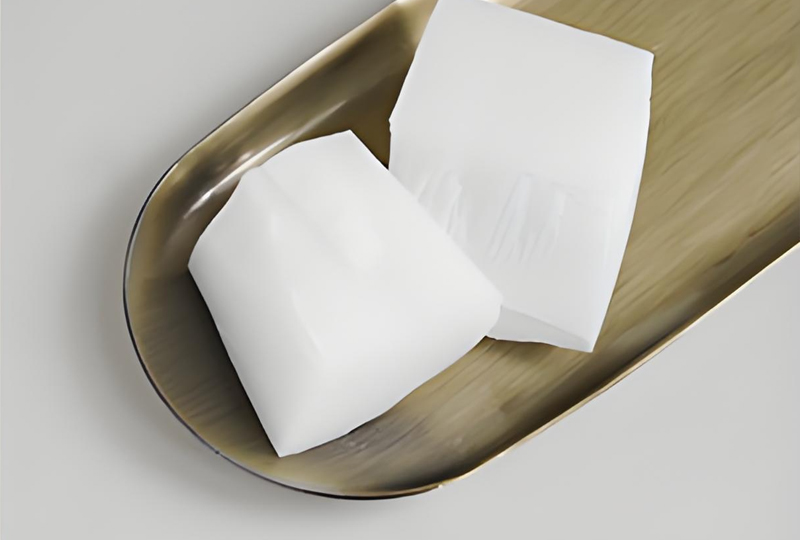
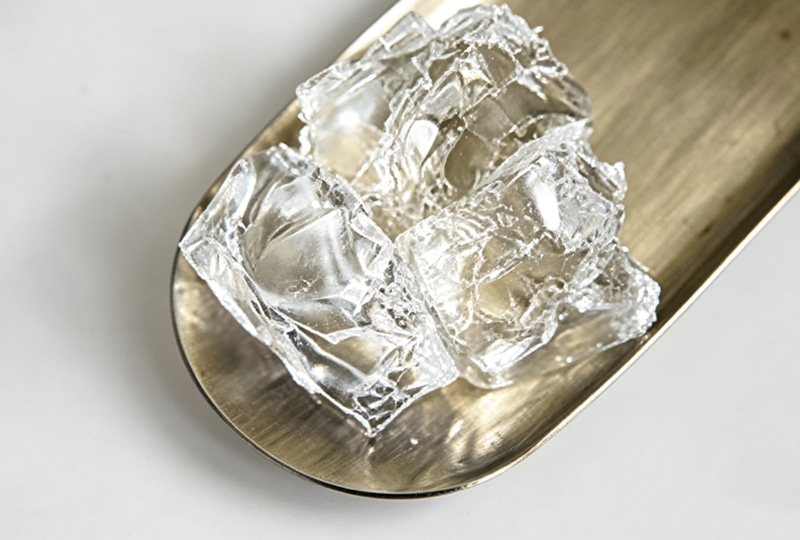
Hard Jelly Candle Wax is a transparent candle-making material developed for decorative candles that require firm shapes, clear visual definition, and a polished appearance after cooling. Unlike softer jelly waxes that are often selected for flexible forms or simple visual effects, this harder variant is intended for shaped and mold-cast candles. Its higher firmness helps preserve sculptural details, making it suitable for figural candles, artistic candle collections, seasonal designs, and premium home-fragrance products.
The wax melts at approximately 85°C and is poured at a higher temperature range of 130–140°C. This processing range is essential because full clarity and proper flow are achieved only when the material is thoroughly melted. When handled correctly, the finished candle can offer a glass-like transparent appearance that highlights embedded decorative elements, layered colors, shaped surfaces, and carefully designed silhouettes.
Hard Jelly Candle Wax is a fully transparent blend of mineral oil and polymer. This composition gives the material its characteristic clarity, smooth texture, and flexible formulation potential. At the same time, its harder structure provides improved shape retention compared with softer jelly wax types. These combined characteristics make it a valuable raw material for candle manufacturers, private-label brands, home-fragrance companies, gift suppliers, and product developers seeking differentiated decorative candle formats.
For professional production, the material should be melted slowly with controlled low heat, stirred with stainless steel tools, and poured only after reaching the recommended high-temperature range. Silicone molds with a degree of flexibility are recommended because they allow the finished candle to be removed with less resistance. Rigid molds, including some PC plastic molds, may make complete demolding more difficult, especially when the design contains narrow sections, deep recesses, or intricate surface details.
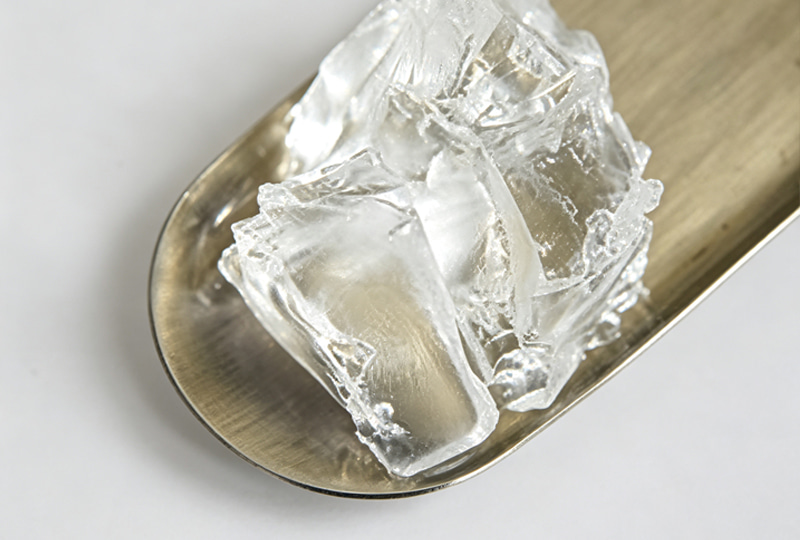
Hard Jelly Candle Wax
Hard Jelly Candle Wax is a transparent gel-type candle raw material designed for decorative candle production. It combines mineral oil with a polymer structure that creates a clear, jelly-like material capable of holding fragrance, color, and visual effects. Once melted and poured into a suitable mold, the wax cools into a firmer transparent candle form.
The term “hard” describes the relative firmness of this variant compared with softer jelly wax. It does not mean that the material behaves like a brittle solid or conventional paraffin wax. Instead, it indicates that the cooled material offers stronger shape retention and a more stable surface. This makes it better suited to candles with recognizable three-dimensional forms, sculptural profiles, and detailed mold impressions.
Traditional container candles are usually poured directly into glass, metal, ceramic, or other vessels. Their appearance depends mainly on the fragrance, color, vessel, label, and surface finish. Hard jelly wax expands the design possibilities by allowing the candle itself to become the main visual object. A candle can be made in the form of an ornament, architectural shape, animal figure, fruit, flower, geometric sculpture, or seasonal decorative object.
Because the material is transparent, it can create a visual depth that opaque waxes cannot easily reproduce. Light can pass through the candle body, creating a luminous effect when the wick is burning or when the product is displayed near natural or artificial light. Designers can also use transparency to highlight suspended decorative components, colored layers, textures, or carefully positioned internal elements.
For commercial buyers, this combination of transparency and firmness is particularly useful. It supports product lines that need a distinctive appearance while still allowing manufacturers to work with standard candle-development processes such as mold selection, color adjustment, fragrance addition, wick placement, cooling, inspection, and packaging.
The material has several technical characteristics that distinguish it from basic candle waxes and softer jelly formulations. The first is its transparency. The second is its higher hardness after cooling. The third is its elevated pouring temperature. The fourth is its suitability for flexible silicone molds and shaped candle designs.
| Characteristic | Performance or Recommendation | Production Significance |
|---|---|---|
| Material type | Transparent jelly candle wax | Supports clear and visually distinctive decorative candles |
| Main composition | Mineral oil and polymer | Creates a transparent, gel-like structure |
| Melting temperature | Approximately 85°C | Indicates when the wax begins to melt and can be prepared for processing |
| Recommended pouring range | Approximately 130–140°C | Promotes full clarity and suitable flow during casting |
| Relative firmness | Harder than the softer jelly wax variant | Improves shape definition and stability after cooling |
| Preferred mold type | Soft, flexible silicone molds | Supports easier demolding and protects detailed forms |
| Recommended stirring tool | Stainless steel tool | Helps maintain clean processing and consistent mixing |
| Heating approach | Slow, controlled, low-heat melting | Reduces the risk of smoking and avoidable air entrapment |
These characteristics should be considered together rather than separately. For example, the higher pouring temperature is not simply a processing inconvenience. It contributes to the final appearance by helping the material reach a sufficiently fluid and clear state. Similarly, the harder structure is valuable for shape retention, but it also increases the importance of selecting a mold that can release the finished candle without damaging delicate areas.
Sculptural candles place greater demands on raw materials than ordinary container candles. A container candle can tolerate a relatively simple internal structure because the vessel provides support. A shaped candle must retain its own form. If the wax is too soft, thin projections may bend, edges may lose definition, and the finished item may become difficult to handle or package.
Hard Jelly Candle Wax provides a firmer structure that supports more defined silhouettes. This is especially valuable when a design includes raised surfaces, narrow edges, curved walls, recessed details, or repeated geometric patterns. The material helps the candle remain visually close to the original mold design after cooling.
Firmness also benefits the product during inspection and logistics. A candle that maintains its shape is easier to arrange in a display box, gift set, retail tray, or protective insert. Improved dimensional stability can reduce the likelihood of minor deformation caused by ordinary handling, provided that the product is stored and transported under suitable temperature conditions.
The material is also appropriate for premium visual positioning. A transparent sculptural candle can appear more like a decorative object than a basic consumable. This creates opportunities for interior-design collections, boutique gift ranges, hotel amenities, seasonal decorations, wedding favors, and branded promotional products.
Compared with softer jelly wax, the harder grade offers a practical balance between visual transparency and structural definition. A soft material may be useful when flexibility is the priority, but the harder grade is more appropriate when the goal is a clear, stable, and recognizable molded shape.
Conventional paraffin, soy, beeswax, and other opaque or semi-opaque candle materials remain useful for many applications. However, Hard Jelly Candle Wax offers a different visual and design profile. Its principal advantage is the ability to create a transparent body with a firm decorative form.
Opaque waxes can produce attractive colors and smooth finishes, but they generally conceal the interior of the candle. Hard jelly wax allows light to travel through the product and makes internal details visible. This is helpful when a product concept depends on suspended decoration, transparent color, layered effects, or a luminous appearance.
Container candles are efficient for fragrance delivery and straightforward production, but their visual identity often depends heavily on the vessel and packaging. A molded jelly candle can communicate its design even without an elaborate container. This may reduce reliance on heavy external decoration and allow the candle shape to act as a central branding element for a private-label collection.
Softer jelly wax can provide a flexible and visually interesting result, yet it may be less suitable for products that require firm edges and stable three-dimensional forms. The harder formulation is designed specifically for situations where a decorative shape must remain clear after cooling and handling.
Hard jelly wax should not be viewed as a universal replacement for every candle material. Its strongest advantage appears in shaped decorative products, where transparency and structural definition are more important than the simplicity of low-temperature container filling. Selecting the correct material according to the intended candle format is an important part of professional product development.
Home fragrance is increasingly connected with interior styling, gifting, seasonal decoration, and lifestyle presentation. Customers often evaluate a candle not only by its scent but also by its appearance on a shelf, table, bedside cabinet, bathroom counter, or gift display. Transparent molded candles can respond to this demand with a distinctive visual language.
The clear body of Hard Jelly Candle Wax can create a clean, modern, and lightweight appearance. Depending on the mold and finish, the product may look elegant, playful, artistic, festive, or minimalist. This flexibility allows the same raw material to support multiple collections and target markets.
Color can be introduced to create soft translucent tones, stronger decorative shades, or layered visual effects. Fragrance can be selected to complement the product’s intended mood, such as floral, fresh, woody, fruity, warm, or seasonal profiles. When color and scent are developed together, the finished candle can communicate a coherent sensory concept.
Transparent candles are also suitable for limited editions. A brand may use special molds, seasonal colors, metallic accents, or exclusive fragrances for holidays and promotional periods. The material’s clear appearance makes it easier to create products that feel different from standard opaque candles without requiring an entirely new production system.
For gift sets, shaped jelly candles can be combined with reed diffusers, fragrance accessories, candle components, or other home products. This makes the raw material relevant not only to individual candle sales but also to coordinated home-fragrance programs.

Before heating, the wax should be stored in a clean, dry environment and protected from unnecessary contamination. Production personnel should confirm the material identity, batch information, intended formula, color plan, fragrance plan, and mold design before beginning the process.
Clean preparation is particularly important for transparent wax. Small particles, residue, or incompatible additives can become highly visible in the finished product. Work surfaces, vessels, tools, molds, and measuring equipment should therefore be inspected and cleaned before use.
The required quantity should be calculated according to the mold volume, expected production loss, and any additional components. Accurate weighing supports consistent candle dimensions and helps maintain repeatability between production batches.
Hard Jelly Candle Wax melts at approximately 85°C, but the process should begin with gradual heating rather than a sudden application of intense heat. Slow, controlled heating helps the material melt evenly and reduces the risk of localized overheating.
Although the wax begins to melt near 85°C, it should not be considered ready for final pouring at that point. The material is recommended for pouring at approximately 130–140°C, where it can achieve the flow and clarity required for shaped decorative candles. Temperature should be monitored with suitable equipment rather than estimated visually.
Excessive or uncontrolled heating may increase the possibility of smoking, discoloration, or other processing problems. A stable heating system allows operators to approach the working range gradually and gives them better control over the condition of the material.
Stirring is required to promote even heat distribution and consistent material condition. Stainless steel tools are recommended because they are durable, easy to clean, and suitable for controlled production environments.
Stirring should be steady and deliberate. Overly aggressive movement can introduce air bubbles into the melted wax. Trapped air may reduce visual clarity and appear as small imperfections in the finished candle. The objective is to mix the material sufficiently without creating unnecessary turbulence.
If colorants, fragrance, or other compatible components are added, they should be incorporated according to a tested formula. Each addition can influence clarity, viscosity, fragrance performance, cooling behavior, and final appearance. Small-scale trials are recommended before full production.
Soft and flexible silicone molds are recommended for this hard jelly wax variant. Silicone can provide the flexibility needed to release a cooled candle from narrow or detailed sections. This is especially important for sculptural designs with undercuts, curved recesses, or delicate projections.
Rigid PC plastic molds may make complete demolding more difficult. The issue is not necessarily the quality of the plastic mold, but the relationship between the mold’s rigidity and the candle’s final firmness. When both the mold and the cooled candle resist movement, detailed areas may remain caught inside the mold.
Molds should be checked for cleanliness, damage, deformation, and correct assembly. Even small defects can be transferred to a transparent candle surface. For repeat production, mold condition should be monitored as part of quality control.
Once the wax reaches the recommended 130–140°C range and has achieved a clear, fluid condition, it can be poured into the prepared mold. Pouring should be controlled to reduce splashing and turbulence. A steady stream can help limit the formation of visible air pockets.
The mold should be positioned securely on a stable surface. If the design includes a wick, the wick should be centered and supported before or during filling according to the chosen production method. Wick alignment is particularly important in sculptural candles because an off-center wick can affect both appearance and burning performance.
Operators should avoid unnecessary movement immediately after pouring. The candle needs sufficient time to cool and solidify without being disturbed. Cooling conditions should be consistent between batches so that the appearance and dimensions remain as uniform as possible.
Cooling should be managed gradually and consistently. Rapid or uneven cooling may contribute to surface irregularities, internal stress, or differences between products. The most appropriate cooling approach depends on the mold design, batch size, ambient conditions, and final product requirements.
Demolding should begin only when the candle has cooled and developed adequate firmness. The flexibility of a silicone mold allows operators to release the product progressively rather than forcing it out through a narrow opening. Careful demolding protects the edges, projections, and detailed surfaces created by the mold.
After removal, each candle should be inspected for clarity, shape accuracy, surface condition, wick position, visible bubbles, contamination, and other defects. Transparent products are visually demanding, so inspection standards should be established before production begins.
Advanced manufacturing is not limited to sophisticated machinery. In candle production, it also involves disciplined process control, documented procedures, careful material handling, reliable supplier coordination, and repeatable quality checks. These controls are essential when producing transparent shaped candles for commercial distribution.
Temperature control is one of the most important factors. The melting temperature and pouring temperature should be recorded for each batch or production run. Operators should understand that a wax which has technically melted may still require additional heating to reach the clarity and flow needed for final casting.
Mixing control is equally important. Stirring time, stirring speed, addition sequence, and additive compatibility can all affect the final result. A standardized process reduces variation between operators and makes troubleshooting more efficient when a batch does not meet expectations.
Mold control supports dimensional consistency. Each mold should be associated with a product specification that identifies the intended shape, approximate weight, wick position, filling method, and acceptable visual tolerance. Damaged or worn molds should be removed from use before they create repeated defects.
Cooling control helps maintain a stable appearance. Production teams should avoid placing freshly poured products in environments with unpredictable temperature changes unless a validated cooling method has been established. Consistency is especially important for export orders, where buyers may expect uniformity across large quantities.
Inspection records can include batch identification, raw material information, heating observations, pouring temperature, mold status, cooling time, and final inspection results. These records provide traceability and help a supplier identify the cause of a problem rather than relying on guesswork.
Transparent candle products require a quality system that considers both appearance and function. Visual clarity is important, but it is only one part of a complete evaluation. The finished product should also be checked for structural integrity, wick positioning, fragrance consistency, packaging compatibility, and resistance to ordinary handling.
Appearance inspection may include checking for cloudiness, visible particles, excessive bubbles, cracks, uneven color, incomplete mold filling, surface marks, and shape deformation. Acceptance criteria should be realistic and agreed upon with the buyer, especially when the product is handmade or contains intentionally decorative inclusions.
Dimensional inspection can confirm that the candle matches the approved sample or technical drawing. Weight checks can help identify underfilling or overfilling. Wick placement should be evaluated because the wick affects the product’s appearance before burning and its performance during use.
Fragrance evaluation should be carried out under controlled conditions. The scent should be consistent with the approved fragrance profile, and the formula should be reviewed for compatibility with the jelly wax base. Fragrance concentration and performance may vary depending on the product’s shape, surface area, and intended use.
Packaging inspection is also important. A firm molded candle can still be damaged if the package does not provide adequate protection. Inserts, trays, cartons, and gift boxes should be matched to the shape of the candle. Products with narrow projections or delicate edges may require additional internal support.
Hangzhou Leo Home Trading Co., Ltd. describes an in-house laboratory and strict quality control across key stages, from raw materials to finished goods. This type of quality approach can support product development by helping evaluate materials, verify samples, review production results, and coordinate corrective action when necessary.
Hard Jelly Candle Wax is most valuable when it can be integrated into a reliable product-development and supply-chain system. Buyers often need more than a raw material. They may require assistance with product specifications, fragrance selection, colors, molds, labels, packaging, quality inspection, and delivery coordination.
Hangzhou Leo Home Trading Co., Ltd. is based in Hangzhou, China, and specializes in international trading and supply-chain solutions for household and daily necessities. Its stated product scope includes home fragrance, scented candles, LED candles, gift sets, personal care, home and garden products, and daily tools.
The company reports cooperation with 10 candle factories, 8 jar customization partners, and 8 color box factories. This network can provide buyers with broader sourcing options than a single-factory arrangement. It may also support the development of coordinated collections that combine shaped candles, container candles, fragrance products, and customized packaging.
A multi-partner supply chain can be particularly useful for private-label buyers. A client may begin with a small test order, revise the design after market feedback, and then expand into a larger seasonal collection. Access to multiple production partners can help match the product to the required material, capacity, packaging format, and price structure.
The company also states that it supports OEM and ODM services. For Hard Jelly Candle Wax products, customization may involve the candle shape, mold design, fragrance, color, wick, decorative details, carton, label, gift box, and retail presentation. Customization based on drawings or physical samples can help buyers move from an initial concept to a manufacturable product.
Strong supply-chain coordination can be an advantage over suppliers that offer only a standard wax grade without broader product-development support. Buyers can potentially manage several connected requirements through one commercial partner instead of coordinating each item separately.
For commercial candle programs, manufacturing capacity must be considered alongside design quality. A product may perform well in a sample stage but become difficult to supply consistently if the production system lacks adequate capacity, process documentation, or material coordination.
Hangzhou Leo Home reports daily capacity of up to 50,000 units across its supply-chain resources, while also supporting smaller volumes and trial runs. This flexibility is useful for buyers at different stages of development. New brands may need limited quantities for testing, while established retailers may require stable bulk production and replenishment.
Capacity alone does not guarantee quality. The important issue is whether production can be organized through consistent specifications, approved samples, inspection procedures, and communication between the buyer and manufacturing partners. A strong trading and coordination company can help translate commercial requirements into workable factory instructions.
Hard jelly candles may require more careful handling than simple container candles because of their shapes, transparency, temperature requirements, and demolding needs. A capable production network should therefore consider not only the number of units that can be made, but also the availability of appropriate molds, trained operators, suitable heating equipment, inspection resources, and protective packaging.
The company’s location in Hangzhou, together with logistics access near Ningbo Port, can support export coordination. Efficient logistics are important for candles because shipping plans must account for packaging volume, temperature exposure, seasonal conditions, lead time, and replenishment schedules.
Hard jelly wax is well suited to seasonal shapes such as stars, snowflakes, ornaments, flowers, leaves, hearts, pumpkins, and other decorative forms. Transparent or lightly colored finishes can create a refined alternative to conventional holiday candles.
Seasonal collections can be developed with matching fragrances and packaging. A winter product may use a warm woody or sweet profile, while a spring product may use floral or fresh notes. The visual form, color, scent, and box design can be coordinated as one collection.
Shaped candles can be included in gift sets with scented candles, reed diffusers, fragrance accessories, or decorative home items. Their transparent appearance can add contrast to opaque products and help the set look more varied.
Gift-set development also benefits from the company’s stated ability to coordinate candle factories, jar partners, and color box factories. A buyer can request a unified appearance across several product types rather than purchasing unrelated components from separate suppliers.
Private-label buyers often need products that appear exclusive without requiring completely independent factory infrastructure. A custom mold, approved fragrance, specific color, branded label, and tailored box can transform a standard raw material into a distinctive retail product.
OEM and ODM support can help buyers decide whether a concept is technically realistic, commercially efficient, and suitable for the target market. Early sampling is especially useful for examining shape definition, transparency, fragrance, wick behavior, packaging fit, and customer appeal.
Hotels, restaurants, spas, event planners, and corporate gift programs may use shaped candles as decorative or promotional items. A transparent candle with a custom form can communicate a premium message while remaining suitable for small gift occasions, room decoration, event styling, or brand campaigns.
In these applications, packaging and customization are often as important as the wax itself. The product may require a logo, message card, custom color, special fragrance, or coordinated presentation. A supplier with access to design, sourcing, and packaging resources can simplify the development process.

Hard Jelly Candle Wax should be handled by trained personnel using suitable heating and production equipment. The stated melting and pouring temperatures are high enough that operators should use appropriate protective practices, including heat-resistant gloves, protective clothing, stable vessels, and carefully controlled work areas.
The material should be kept away from uncontrolled flames and unnecessary ignition sources during storage and processing. Heating equipment should be inspected and operated according to the equipment manufacturer’s instructions. Temperature monitoring should be continuous enough to identify abnormal heating before it becomes a production or safety problem.
Storage areas should be clean, dry, and protected from excessive heat, direct sunlight, and contamination. Finished candles should also be stored in packaging that protects their surfaces and helps reduce exposure to high temperatures during warehousing and transportation.
Because the product is transparent, visual contamination may be easy to notice. Tools and containers should therefore be dedicated to compatible materials or cleaned thoroughly between formulas. Fragrance residues, pigment residues, dust, and foreign particles can affect the clarity and final quality of the candle.
Buyers should request and follow the relevant technical documentation, safety information, labeling requirements, and destination-market regulations before commercial production. Requirements may differ according to the country, product classification, fragrance ingredients, packaging, intended use, and sales channel.
Mold selection directly affects the quality and commercial success of a Hard Jelly Candle Wax product. A mold should be evaluated for flexibility, detail, wall thickness, opening size, wick position, release path, cleaning requirements, durability, and compatibility with the planned production volume.
Flexible silicone molds are generally preferred because they can be gently opened or flexed during demolding. This is helpful when the finished candle has a firm structure and the design includes areas that would be difficult to release from a rigid cavity.
The mold design should avoid unnecessary undercuts unless the release process has been tested. Deep undercuts can make demolding slower and may increase the risk of surface damage. If an undercut is essential to the appearance, the mold may need to be designed in multiple parts or with a carefully planned opening direction.
Large, thin, or unsupported sections should also be evaluated. While hard jelly wax offers improved firmness, every design has practical limits. A product-development sample can reveal whether the candle has enough structural strength for handling, packaging, and retail display.
For repeat orders, mold durability and replacement planning should be considered. A custom shape may be commercially attractive, but the buyer should understand how many cycles the mold can support, how its dimensions may change over time, and how replacement molds will be matched to the approved sample.
Transparency is one of the material’s main advantages, so color should be added with care. Too much pigment may reduce the clear appearance and create an opaque result. A light translucent color can preserve the depth and luminous quality of the jelly wax while giving the collection a recognizable visual identity.
Layered colors can create a more complex appearance, but each layer requires controlled timing and temperature management. The production team should test whether the layers bond properly, remain visually distinct, and maintain a smooth surface after cooling.
Internal decorations may be used to create visual interest, but they should be evaluated for compatibility, placement, stability, and safe use. Any decorative component must be selected with consideration for the intended candle function and the applicable product-safety requirements.
Fragrance selection should support the product concept without overwhelming the transparent appearance. A clear candle with a delicate floral scent may communicate a different message from an amber-toned candle with a rich woody fragrance. Coordinating these elements can improve the perceived value of the finished collection.
Fragrance addition may affect the wax’s clarity, viscosity, cooling behavior, and surface finish. For that reason, fragrance formulas should be tested in the actual wax system rather than approved based only on performance in another candle base.
International buyers often evaluate suppliers according to product quality, communication, customization, capacity, documentation, price, and delivery reliability. Hard Jelly Candle Wax can be attractive to these buyers because it supports a product category with strong visual differentiation and multiple retail applications.
The company’s stated experience in international trading and cross-border marketing can help buyers coordinate export-oriented projects. Its reported deliveries to more than 10 countries and regions across North America, Europe, and the Middle East indicate experience working with international customer requirements, although each order should still be reviewed according to the specific destination market.
A China-based supply network can provide access to competitive production resources, product-development partners, packaging factories, and port logistics. The value of this network depends on effective coordination, quality control, and transparent communication. Buyers should establish clear specifications and approve samples before confirming mass production.
The company’s focus on one-stop service can reduce the number of separate supplier relationships required for a home-fragrance collection. This may be particularly valuable for brands that want matching jars, shaped candles, gift boxes, labels, and fragrance products in one launch program.
Flexible order support can also reduce development risk. Trial runs allow a buyer to test consumer response, packaging performance, fragrance acceptance, and product durability before committing to larger quantities. Once the design is validated, larger-scale manufacturing and replenishment can be planned more confidently.
The most direct comparison is between Hard Jelly Candle Wax and a softer jelly wax variant. Both materials can provide transparency and a distinctive jelly-like appearance, but their structural behavior and ideal applications differ.
| Evaluation Area | Hard Jelly Candle Wax | Softer Jelly Wax |
|---|---|---|
| Relative firmness after cooling | Firmer and more shape-retentive | Softer and more flexible |
| Best application | Shaped, sculptural, and mold-cast candles | Flexible forms and selected decorative or container applications |
| Detail retention | Well suited to defined edges and recognizable shapes | May be less suitable for highly defined sculptural details |
| Mold preference | Soft silicone molds recommended | Selection depends on the design and release requirements |
| Visual effect | Transparent with a firmer decorative body | Transparent with a softer, more flexible structure |
| Primary selection reason | Shape stability and structural definition | Flexibility and softer tactile behavior |
The choice should be based on the product’s purpose rather than a general belief that one grade is always better. If the candle must preserve a complex sculptural form, the harder grade is likely to be more appropriate. If flexibility is more important than rigid shape definition, the softer grade may be a better fit.
The competitive value of Hard Jelly Candle Wax comes from the combination of properties rather than from one feature alone. Transparency gives the product a distinctive appearance. Higher firmness supports shaped designs. The elevated pouring range helps achieve full clarity. Silicone-mold compatibility makes detailed forms more practical. Together, these characteristics create opportunities that are not easily achieved with ordinary opaque waxes or softer jelly formulations.
Another competitive advantage is the ability to develop the wax into finished commercial products through customization. A raw material supplier that can also coordinate fragrance, mold, wick, packaging, inspection, and logistics can provide more value than a supplier offering an isolated material without product-development support.
Hangzhou Leo Home’s stated strengths in customization, supply-chain integration, quality assurance, diverse styles, flexible delivery, and export logistics support a broader commercial proposition. These strengths can help overseas buyers move from a design idea to an organized product line with fewer coordination points.
The company’s reported access to multiple candle, jar, and packaging partners may also support cost management. Buyers can compare suitable production options, select packaging according to market position, and plan different quantities for testing, launch, and replenishment.
For brands competing in a crowded candle market, visual differentiation is increasingly important. A well-designed transparent molded candle can stand out in online photography, retail displays, gift packaging, and social-media content. Its shape can become a recognizable part of the brand’s product identity.
A practical development workflow begins with a clear product brief. The brief should define the candle shape, approximate dimensions, target weight, fragrance direction, color, wick, packaging, expected order quantity, destination market, and intended sales channel.
The next step is material and design evaluation. The buyer and supplier should confirm that Hard Jelly Candle Wax is appropriate for the selected shape and that the mold can support clean filling and demolding. A prototype or sample should be produced before finalizing the design.
Sample approval should address more than appearance. Buyers should examine transparency, surface condition, shape accuracy, fragrance, wick alignment, packaging fit, handling strength, and overall presentation. If the candle is intended to burn, the wick and burn behavior should receive suitable attention during product testing.
After approval, a production specification should be prepared. It may include photographs, drawings, color references, fragrance information, tolerance requirements, packaging artwork, inspection criteria, and shipping marks. Clear documentation reduces misunderstandings during mass production.
Pre-production confirmation should verify raw materials, molds, packaging components, production timing, inspection arrangements, and shipment planning. During production, quality checks should be performed at suitable stages rather than waiting until the entire order is complete.
Finally, the finished products should be packed in a way that protects their form and surface. Shipment planning should consider seasonal temperatures and transit conditions. A post-delivery review can help identify improvements for future orders, especially when the product is part of a continuing collection.
It is a fully transparent blend of mineral oil and polymer. This composition gives it a clear jelly-like appearance and supports the production of decorative molded candles.
The material melts at approximately 85°C. However, the recommended pouring temperature is higher, at approximately 130–140°C, to achieve suitable flow and full clarity.
Melting indicates that the material has begun to become liquid. Pouring requires a sufficiently fluid and clear condition so that the wax can fill detailed mold sections and produce a transparent finished appearance. The higher working range helps support these requirements.
It is best suited for shaped, sculptural, figural, and mold-cast decorative candles. It is especially useful when the finished product must hold a firm and clearly defined shape.
Hard Jelly Candle Wax is firmer after cooling and generally provides stronger shape retention. Soft jelly wax is more flexible and may be selected when a softer structure is preferred. The correct choice depends on the candle design and handling requirements.
Soft, flexible silicone molds are recommended because they can make demolding easier. Rigid PC plastic molds may make complete removal difficult, particularly for intricate or deeply detailed shapes.
Yes, it can be developed with compatible colorants to create translucent or colored decorative effects. Color levels should be tested carefully because excessive pigment may reduce transparency.
Fragrance development should be based on a tested formula and compatibility review. The fragrance may influence clarity, viscosity, cooling behavior, and final scent performance, so trials are recommended before mass production.
Slow, controlled melting and gentle stainless steel stirring can help reduce unnecessary air entrapment. Pouring should also be steady and controlled. Mold design, temperature, and cooling conditions may further influence bubble formation.
Stainless steel tools are durable, cleanable, and suitable for controlled candle production. They support consistent mixing when the wax is heated and prepared for pouring.
Flexible silicone molds are preferred. Rigid molds may be usable for certain simple designs, but they can make complete demolding more difficult because the cooled wax is relatively firm and may resist release from narrow or detailed sections.
Product development may include customization of shape, mold, fragrance, color, wick, label, packaging, and gift-set configuration. Buyers should confirm technical feasibility and approve samples before mass production.
Important checks include clarity, visible particles, bubbles, surface finish, shape accuracy, weight, wick position, fragrance consistency, packaging fit, and resistance to ordinary handling. The exact inspection standard should be agreed upon before production.
Hangzhou Leo Home states that it supports smaller volumes and trial runs in addition to larger production programs. Trial orders can help buyers evaluate market response before expanding the product line.
The company states that it provides OEM and ODM services, R&D support, international sourcing, quality control, packaging coordination, and delivery assistance. Its reported supply network includes candle factories, jar customization partners, and color box factories.
It can be developed for export-oriented candle products, subject to the specifications, documentation, labeling, packaging, and safety requirements of the destination market. Buyers should confirm all applicable requirements before placing a commercial order.
Hard Jelly Candle Wax provides a strong foundation for transparent, shaped, and visually distinctive decorative candles. Its blend of mineral oil and polymer creates a clear jelly-like material, while its harder structure supports firmer and more defined forms than softer jelly wax. The material melts at approximately 85°C and should be poured at approximately 130–140°C to promote suitable flow and full clarity.
The product is especially valuable for sculptural candle designs in which the candle body itself functions as a decorative object. Flexible silicone molds, slow controlled heating, stainless steel stirring, careful pouring, and consistent cooling are central to successful production. These process requirements should be treated as part of the product’s quality system rather than as optional recommendations.
For buyers, the commercial opportunity extends beyond the wax itself. Through customization, OEM and ODM support, access to multiple production partners, laboratory and QC resources, flexible order quantities, and export logistics, Hangzhou Leo Home Trading Co., Ltd. can help coordinate the development of complete home-fragrance products and collections.
When matched with an appropriate mold, fragrance, color scheme, wick, and package, Hard Jelly Candle Wax can help brands create products that stand apart from ordinary container candles. Its transparency, firmness, and compatibility with sculptural designs make it a practical option for seasonal products, gift sets, private-label collections, hospitality programs, and modern home-fragrance ranges.
1. Product technical information for Hard Jelly Candle Wax, including material composition, melting temperature, pouring range, mold recommendations, and processing guidance.
2. General candle-making process principles covering controlled heating, mixing, mold preparation, cooling, demolding, wick placement, and finished-product inspection.
3. General quality-control practices for transparent molded candles and home-fragrance products.
4. Company profile information for Hangzhou Leo Home Trading Co., Ltd., including customization, supply-chain coordination, OEM/ODM services, quality assurance, production capacity, and export support.
5. General product-development guidance for private-label candles, gift sets, seasonal home-fragrance collections, and decorative molded products.

Room 1701, Building C1, Wangjing, Xiaoshan District, Hangzhou City, Zhejiang Province, China.

+86-15937257616

Copyright© 2026 Hangzhou Leo Home Trading Co., Ltd. All Rights Reserved.

Luxury Candles Home Fragrance Manufacturers Modern Candles Factory