
 English
 Français
News
Home / Author / Sophia Lin — Product Sales Executive / Pre-Tabbed Cotton Candle Wicks with Adhesive Sustainers for Consistent Container Candle Production
Content
In modern candle production, consistency is not a small detail; it is the foundation of product quality, buyer confidence, and repeat sales. A candle may have a beautiful vessel, a carefully selected fragrance, and a refined wax blend, but if the wick is poorly positioned, unstable during pouring, or inconsistent during burning, the entire user experience can be affected. The pre-tabbed cotton candle wick with adhesive sustainer is designed to solve these practical production challenges by combining a pre-cut cotton wick, a metal sustainer base, pre-waxed braid rigidity, and an adhesive backing that allows direct placement at the bottom of a candle container.
This product is especially valuable for container candle manufacturers, craft studios, private-label candle brands, and retail supply channels that need efficient, repeatable, and beginner-friendly wick placement. Instead of relying on separate wick tabs, manual crimping, wax drops, glue dots, or additional centering steps before pouring, this wick format arrives ready for direct use. The adhesive-backed sustainer holds the wick in place during wax filling, helping reduce floating, drifting, tilting, and off-center burning. For producers managing high-fragrance wax, liquid wax at elevated temperatures, or fast filling lines, this stability can make a measurable difference in finished candle quality.
Hangzhou Leo Home Trading Co., Ltd. supports this product through a strong international supply chain, coordinated production resources, customization capabilities, and quality control procedures developed for home fragrance and daily-use products. With experience in scented candles, LED candles, candle components, reed diffusers, fragrance gift sets, and household lifestyle categories, the company provides not only a candle wick component but also a sourcing and production support system for brands that want dependable candle accessories and scalable supply.
Pre-Tabbed Cotton Candle Wick with Adhesive Sustainer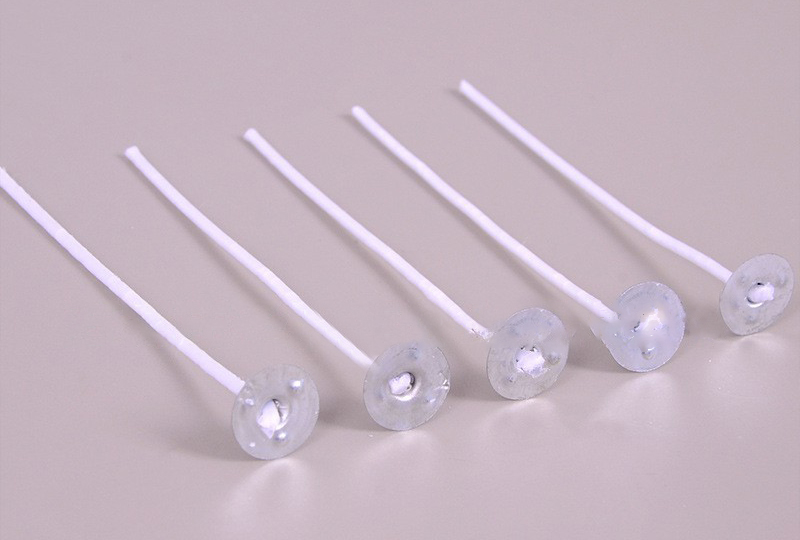
The candle wick is the functional center of a candle. It controls how melted wax travels upward to the flame, how the fragrance is released, how evenly the wax pool forms, and how cleanly the candle burns. A wick that is too weak may drown in wax, while a wick that is too large may create excessive flame height, soot, overheating, or rapid wax consumption. Even when the wick size is correct, poor placement can create tunneling, uneven melt pools, wax residue on one side of the container, and inconsistent burn results.
In container candles, wick placement is particularly important because the vessel walls influence heat distribution. If the wick is not centered, one side of the candle may melt faster than the other. This can cause incomplete wax consumption, glass overheating in localized areas, and a less attractive burn appearance. For commercial candle makers, these defects are not merely cosmetic. They may increase customer complaints, reduce perceived quality, and create additional waste during quality inspection.
The pre-tabbed cotton candle wick with adhesive sustainer addresses this challenge at the preparation stage. By supplying the wick already cut, waxed, tabbed, and fitted with adhesive, the product reduces the number of manual operations required before wax pouring. The user can position the wick quickly and press the sustainer onto the bottom of the vessel. This simple workflow improves efficiency while supporting more consistent candle assembly.
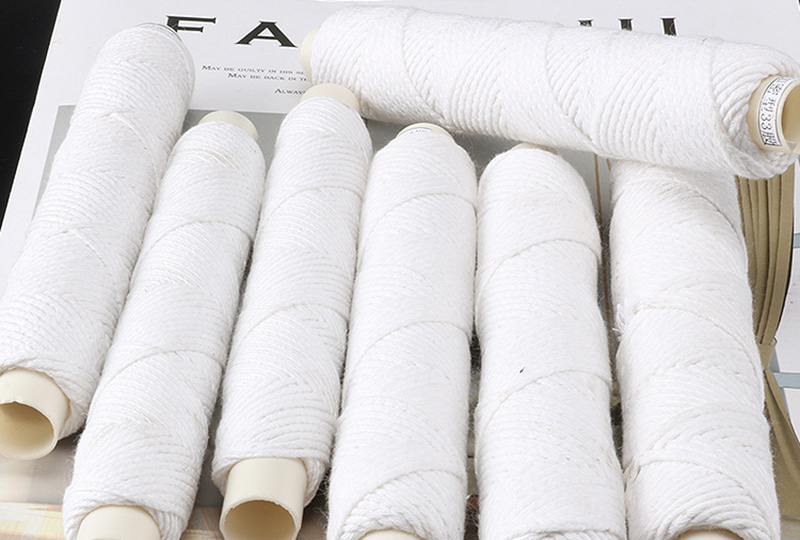
The product consists of several carefully matched components. The first is the cotton wick braid. Cotton remains one of the most widely used wick materials because it is familiar, versatile, and suitable for many wax and fragrance systems. A properly braided cotton wick can provide stable capillary action, helping melted wax move from the wax pool to the flame in a controlled manner.
The second component is the pre-waxing treatment. Pre-waxed cotton wicks are easier to handle because the wax coating gives the braid rigidity. This makes the wick less likely to collapse, fray, or bend excessively during placement. In a production environment, handling rigidity matters because operators need to position wicks quickly without spending extra time straightening or correcting them.
The third component is the metal sustainer base. The sustainer is crimped to the bottom of the wick and acts as a stable anchor point. It helps hold the wick upright and provides a defined base for attachment to the candle vessel. A secure crimp is important because weak attachment between the wick and the sustainer may cause shifting or detachment during handling or pouring.
The fourth component is the adhesive backing applied to the sustainer base. This feature is one of the most important advantages of the product. Instead of requiring separate adhesive dots, hot glue, wax drops, or manual fixing tools, the adhesive backing allows direct placement. The user simply removes or exposes the adhesive surface, places the sustainer at the intended location, and presses it down. This allows faster preparation and better positioning repeatability.
Finally, the product is supplied in standard lengths, commonly including 10 cm, 15 cm, and 20 cm options. These sizes allow users to match the wick length to candle fill depth and vessel height. For larger projects, length and specification customization can also be supported according to sample requirements, drawings, or target candle designs.
Traditional candle wick preparation often involves several separate steps: cutting the wick, attaching it to a metal tab, securing the tab to the vessel, straightening the wick, and then using a centering device during pouring and cooling. Each step introduces the possibility of error. The wick may be cut unevenly, the tab may be poorly crimped, the adhesive may not hold, or the wick may move when hot wax is poured.
The pre-tabbed cotton candle wick with adhesive sustainer simplifies this process by integrating several of these steps before the product reaches the candle maker. This integration gives it a strong advantage over loose cotton wick rolls, non-tabbed wicks, manually tabbed wicks, and wicks that require separate adhesive accessories.
| Comparison Point | Pre-Tabbed Cotton Wick with Adhesive Sustainer | Conventional Loose or Manually Fixed Wick |
|---|---|---|
| Preparation Time | Ready for direct placement, reducing setup steps before pouring | Requires cutting, tabbing, adhesive application, or wax fixing |
| Placement Stability | Adhesive sustainer helps hold the wick during wax filling | Higher risk of floating, drifting, or tilting during pouring |
| Production Consistency | Standardized length, tab position, and base attachment improve repeatability | Manual variation can affect burn quality and appearance |
| Beginner Friendliness | Simple to use for small studios, craft users, and trial production | Requires more skill, tools, and process control |
| Workflow Efficiency | Supports faster vessel preparation in batch production | More labor-intensive and slower for larger quantities |
| Burn Reliability | Centered placement supports more even melt pool development | Off-center placement may cause tunneling or uneven wax consumption |
The most immediate advantage is time savings. In high-throughput production, even a few seconds saved per candle can become significant across thousands of units. If a worker can place a ready-to-use adhesive-backed wick faster than a manually assembled wick system, total labor cost decreases and output becomes more predictable.
A second advantage is reduced process complexity. Candle production often requires careful control of wax temperature, fragrance load, vessel preparation, cooling conditions, and labeling. By simplifying wick placement, the production team can focus more attention on formulation, filling accuracy, and final inspection.
A third advantage is improved consistency. When wick placement varies from candle to candle, burn performance also varies. A pre-tabbed adhesive wick supports repeatable anchoring, making it easier to maintain consistent product quality across a batch. This is especially important for brands selling through retail channels, online platforms, gift sets, or wholesale distributors.
The adhesive backing on the sustainer base is designed for practical candle production. During pouring, melted wax can create buoyancy and movement. A wick that appears centered before pouring may shift when liquid wax enters the vessel. This is especially true when the wax is poured quickly, when the vessel has a smooth base, or when the formulation contains a high fragrance load that changes viscosity and cooling behavior.
The adhesive sustainer helps prevent this movement by anchoring the wick before wax is poured. The result is a more stable setup and less need for corrective handling after filling. This can reduce rework, which is one of the hidden costs in candle manufacturing. Re-centering a wick after wax has been poured can disturb the wax surface, slow the production line, and create visual defects. By keeping the wick in place from the beginning, the adhesive-backed design helps protect both appearance and function.
For small studios, the advantage is convenience. Makers can prepare vessels quickly without buying separate glue dots, hot glue guns, or tabbing tools. For larger factories, the advantage is process standardization. Operators can be trained more easily, and production managers can reduce the number of consumable materials used in the wick placement stage.
The adhesive feature also supports flexible production runs. Many candle brands now produce seasonal collections, limited-edition fragrances, gift sets, and private-label orders in different vessel shapes and sizes. Ready-to-place wicks make it easier to switch between batches and reduce preparation time when product designs change frequently.
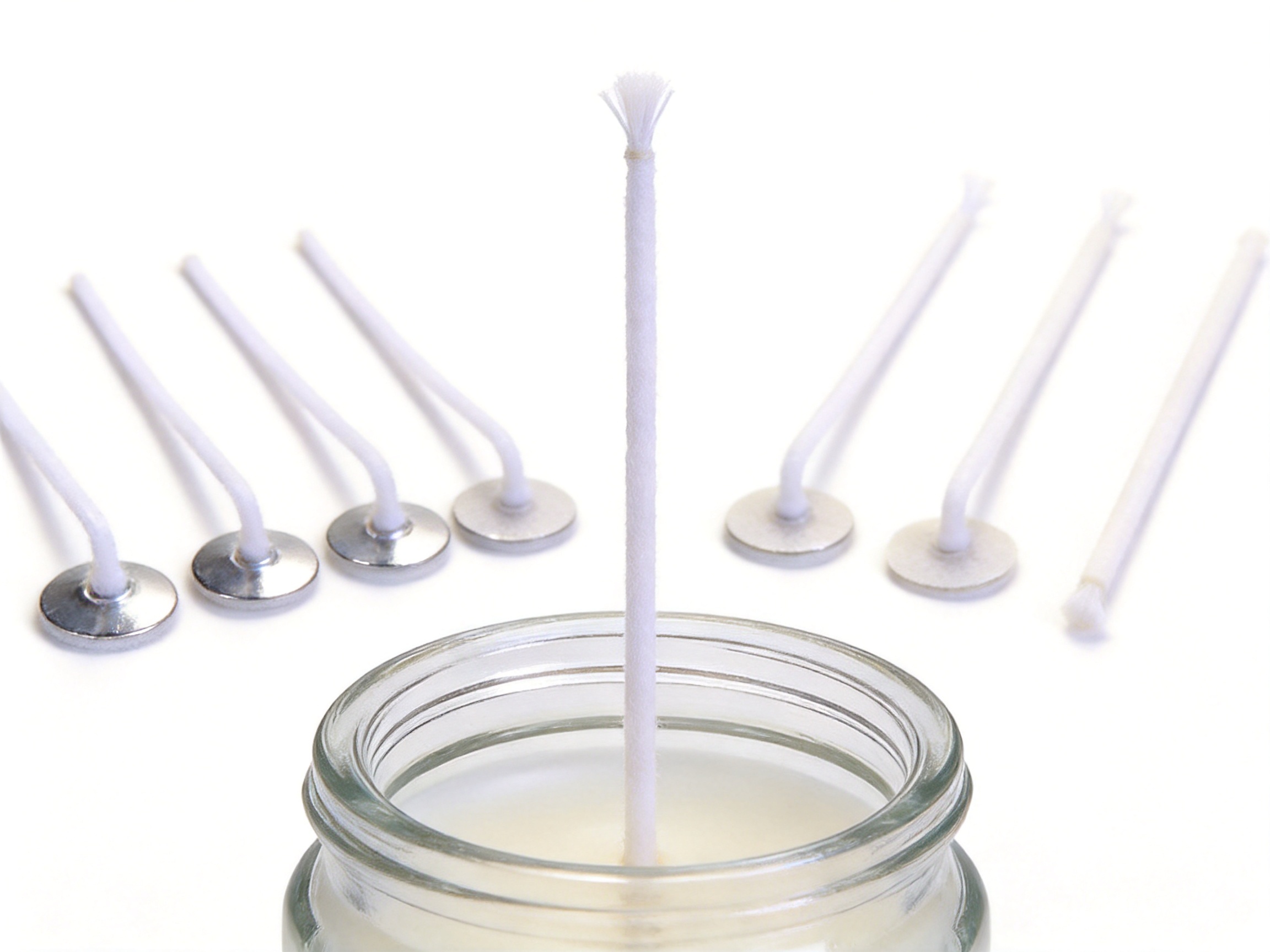
A well-designed cotton wick should burn with a controlled flame and minimal carbon buildup when properly matched with the wax, fragrance load, dye system, and vessel diameter. The pre-waxed cotton braid in this product helps support steady ignition and stable burning. The wax coating gives the wick structure, while the cotton braid supports fuel transport through capillary action.
Clean burning is important for both consumer satisfaction and product positioning. Customers expect scented candles to provide fragrance ambiance without excessive smoke, blackened jar walls, or mushrooming wick tips. While burn performance depends on the entire candle system, the wick remains a critical factor. A consistent wick component allows the candle maker to test and refine formulations more reliably.
Controlled flame behavior also contributes to safety and product life. If the flame is too large, the candle may consume wax too quickly or generate excess heat. If the flame is too small, the wax may not melt evenly, leading to tunneling and reduced fragrance release. Pre-tabbed cotton wicks help producers establish a stable baseline for testing because the wick length, tab attachment, and handling form are consistent.
It is still essential for candle makers to conduct burn tests for each wax, fragrance, dye, and container combination. No single wick can be universally perfect for all candles. However, using a standardized pre-tabbed wick reduces variables and makes testing more efficient. Once the correct wick size and length are selected, the adhesive sustainer format supports repeatable production.
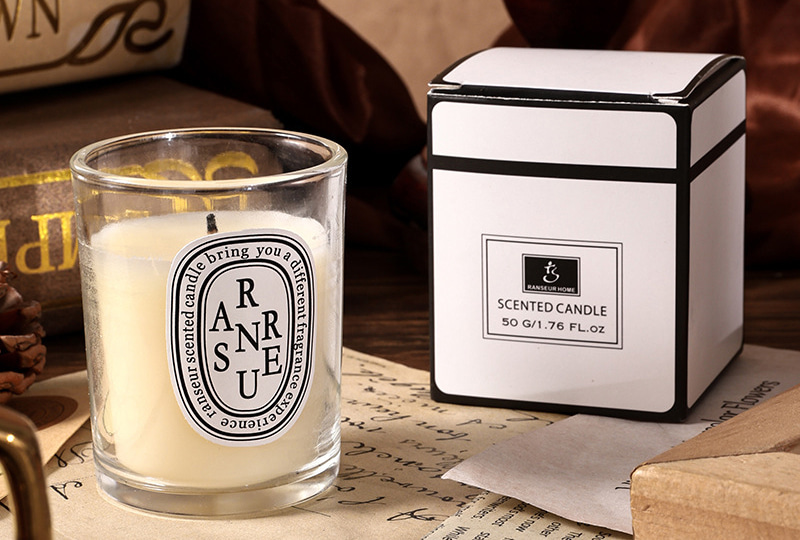
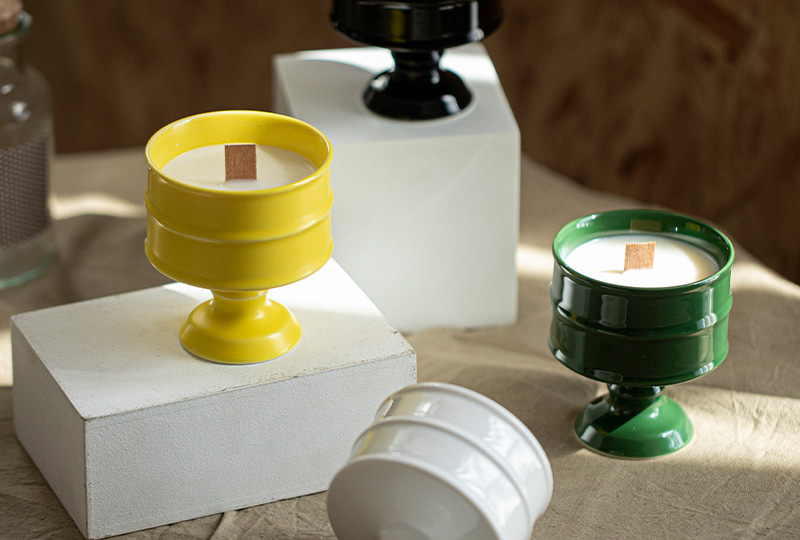
This wick format is especially suited for container candles. Container candles are widely used in home fragrance because they are convenient, attractive, and adaptable to many design styles. They can be made with glass jars, ceramic cups, tins, concrete vessels, and other heat-resistant containers. In each case, the wick must remain centered and upright from filling through curing and burning.
For commercial container candle lines, pre-tabbed adhesive wicks help improve throughput. Vessels can be prepared in advance, positioned on filling tables, and poured in batches with less concern about wicks floating away from the center. This is useful for paraffin wax, soy wax, coconut wax, blended vegetable wax, gel wax systems, and other candle formulations, provided compatibility testing confirms performance.
For studio makers, the product lowers the barrier to entry. New candle makers may struggle with traditional wick placement methods, especially when working with small jars or narrow openings. A ready-to-use adhesive wick makes the process more approachable and reduces frustration. This supports retail craft supply sales, candle-making kits, workshops, and small-batch handmade candle businesses.
For gift set production, the product contributes to standardization. Gift sets often include multiple small candles or a combination of candles and reed diffusers. When many small vessels are filled at once, efficient wick placement becomes even more important. Pre-tabbed adhesive wicks reduce handling time and help keep each candle visually consistent.
Candle brands often need more than a standard component. They may require a wick length matched to a specific vessel, a tab size compatible with a jar base, packaging suitable for retail craft supply, or bulk packaging for factory use. Hangzhou Leo Home Trading Co., Ltd. supports OEM and ODM development by coordinating specifications, samples, packaging, labels, and supply planning according to buyer requirements.
The company’s customization support is especially valuable for overseas clients who need reliable sourcing but may not have direct access to multiple component factories. By integrating candle factories, jar customization partners, and color box factories, the company can help buyers develop not only wick components but also complete candle and home fragrance product lines. This one-stop coordination reduces communication complexity and helps maintain consistency across related products.
Customization may include wick length selection, packaging quantity per bag or carton, labeling requirements, retail packaging design, and specification alignment with candle vessel dimensions. For large orders, production planning can be arranged to support stable replenishment. For new product development, smaller trial runs may be supported to help buyers test the market before scaling up.
This flexibility is important because candle markets are highly seasonal and trend-driven. A buyer may need autumn fragrance candles, holiday gift sets, spring floral collections, spa-themed candles, wedding favors, or DIY candle-making kits. Having access to pre-tabbed adhesive wicks in suitable formats helps buyers respond quickly to changing market demand.
The value of a candle wick depends not only on its design but also on how consistently it is produced. A reliable production process includes material selection, cotton braid preparation, pre-waxing, wick cutting, sustainer crimping, adhesive application, inspection, packaging, and shipment control. Each stage affects the final user experience.
Material selection begins with the cotton braid. The braid must be suitable for candle use, with consistent thickness, structure, and absorbency. Variation in braid density can influence wax flow and flame behavior. The pre-waxing process must also be controlled so that the wick has enough rigidity for handling without becoming brittle, uneven, or excessively coated.
Cutting accuracy is another important factor. Standard wick lengths such as 10 cm, 15 cm, and 20 cm must be controlled within acceptable tolerances. Uneven lengths can create waste or require trimming before use. In retail craft supply applications, visible consistency also affects customer confidence.
The crimping of the metal sustainer is a critical mechanical step. The wick must be securely held in the sustainer so that it does not loosen during handling, shipping, placement, or pouring. A weak crimp can compromise the product even if the cotton braid itself is suitable. Inspection of crimp strength and alignment helps ensure reliability.
The adhesive backing must be applied so that it supports placement without interfering with normal candle production. The adhesive should help the sustainer stay in position during pouring and early cooling. Packaging must protect the adhesive area from contamination, dust, or premature sticking. Careful packing also prevents wick bending and sustainer deformation during transit.
Hangzhou Leo Home Trading Co., Ltd. emphasizes quality assurance across key stages, from material selection to finished goods inspection. The company’s in-house lab support and coordinated QC procedures help buyers reduce uncertainty. For international buyers, this is particularly valuable because component quality issues may not become visible until production begins. A dependable inspection system lowers the risk of shipment delays, rework, and inconsistent finished candles.
A good product requires a dependable supply chain. Hangzhou Leo Home Trading Co., Ltd. is based in Hangzhou, China, and focuses on international trading and supply chain solutions for household and daily necessities. Founded in January 2025, the company combines digital tools, supplier coordination, product development support, and cross-border marketing capabilities to serve overseas clients.
The company’s product scope includes personal care, home and garden items, daily tools, and especially home fragrance products such as scented candles, LED candles, reed diffusers, candle components, and gift sets. This category focus helps the company understand the needs of candle buyers, including fragrance selection, vessel compatibility, packaging presentation, safety expectations, and replenishment timing.
One of the company’s major strengths is supplier integration. By coordinating resources such as candle factories, jar customization partners, and color box factories, it can help manage cost, quality, and delivery schedules. This is particularly useful for brands that want to develop complete candle programs rather than purchase isolated components. The wick can be sourced as part of a broader project involving jars, wax, fragrance, packaging, labels, and accessories.
The company also supports flexible delivery. Daily capacity across its coordinated supply network can reach up to 50,000 units for stable bulk delivery and replenishment, while smaller volumes and trial runs can be supported for new customers or developing brands. This combination of scale and flexibility gives buyers room to test, grow, and adjust according to market demand.
Location is another advantage. With access to efficient export logistics near major shipping routes and Ningbo Port, the company can support international transportation for clients in Europe, North America, the Middle East, and other regions. Export experience helps reduce documentation problems and improves coordination for overseas shipments.

Candle factories benefit from speed, repeatability, and reduced labor complexity. In a factory setting, every additional manual step increases time and variation. Pre-tabbed adhesive wicks allow workers to prepare containers efficiently and move quickly into filling. The reduced need for separate fixing tools or adhesive materials can simplify the production line and improve batch consistency.
Private-label brands need products that are consistent across repeated orders. A candle that burns well in the first order must perform the same way in future replenishments. By using standardized wick components and working with a supplier that understands quality control, brands can improve the stability of their finished product line.
Small studios often operate with limited equipment and limited labor. A ready-to-use wick helps them produce candles more professionally without investing in complex tools. It also reduces beginner mistakes, making the product useful for workshops, local handmade businesses, and online craft sellers.
Retail customers value convenience. A pre-tabbed cotton wick with adhesive sustainer is easy to explain, package, and sell to DIY users. It can be included in candle-making kits or sold as a replacement supply. Because the wick is already prepared, it appeals to hobbyists who want reliable results without technical preparation.
Gift set producers often work with multiple small candles and tight delivery deadlines. Fast wick placement supports efficient assembly, and consistent placement improves the appearance of the finished product. This is important for holiday sets, promotional gifts, wedding favors, and seasonal collections.
The home fragrance market is competitive, and buyers increasingly expect both attractive design and dependable performance. Many suppliers can offer basic candle components, but not all can provide a combination of ready-to-use functionality, customization, quality assurance, and integrated supply chain support. This is where the pre-tabbed cotton candle wick with adhesive sustainer has a practical advantage.
First, the product solves a real production pain point. Wick placement is a small step, but it affects labor cost, visual quality, burn performance, and customer satisfaction. By improving this stage, the product adds value beyond its size and cost.
Second, the product supports both industrial and craft use. Some components are designed only for factories, while others are intended only for hobbyists. This wick format bridges both markets. It can be packed in bulk for manufacturers or adapted for retail craft supply packages.
Third, the product improves standardization. In candle manufacturing, standardization is essential for scaling. A brand cannot grow successfully if every batch requires excessive correction or produces variable burn results. Pre-tabbed adhesive wicks help reduce one of the key sources of variation.
Fourth, the company behind the product offers category knowledge. Because Hangzhou Leo Home Trading Co., Ltd. works across candles, reed diffusers, fragrance sets, packaging, and home products, it can help buyers consider how wick specifications fit within a larger product strategy. This is different from purchasing a generic component without technical or supply chain support.
Fifth, the company supports export-oriented service. Overseas buyers often need clear communication, packaging coordination, inspection, shipping support, and responsiveness. A supplier with international trading experience can make the procurement process smoother and reduce the risk of misunderstandings.
To achieve the best results, users should follow a controlled wick placement process. The vessel bottom should be clean, dry, and free from dust, wax residue, oil, or moisture. Contamination can reduce adhesive contact and weaken placement stability. Before applying the wick, the user should confirm the center point of the vessel, especially for round glass jars or tins.
After positioning the sustainer, the user should press it firmly onto the vessel bottom to ensure good adhesive contact. The wick should be kept upright with a centering device, wick holder, or simple support during pouring and cooling. Although the adhesive sustainer holds the base in place, the upper part of the wick still benefits from centering support to maintain vertical alignment.
Wax should be poured according to the formulation’s recommended temperature and process. Extremely aggressive pouring directly onto the wick base should be avoided when possible, as high turbulence can create unnecessary movement. Once the wax cools and sets, the sustainer becomes embedded in the candle, and the wick remains positioned for the full burn life of the product.
Before mass production, burn testing is recommended. The candle maker should test the wick with the exact wax blend, fragrance concentration, dye, vessel diameter, and fill weight intended for production. Tests should evaluate flame size, melt pool diameter, soot behavior, hot throw, container temperature, and burn time. Adjustments can then be made by selecting different wick sizes or lengths if needed.
Packaging plays an important role in maintaining wick quality. Pre-waxed cotton wicks should be protected from excessive bending, compression, dust, and high heat during storage and transit. The adhesive sustainer should remain clean and ready for use. Bulk packaging can be designed for factory efficiency, while smaller retail packaging can be developed for craft supply stores, online shops, or DIY kits.
For international buyers, carton strength, labeling, quantity control, and documentation all matter. Hangzhou Leo Home Trading Co., Ltd. provides export support to help buyers manage these details. Proper packaging reduces damage during shipping and helps warehouse teams handle inventory efficiently.
The company’s cross-border experience supports clients in North America, Europe, the Middle East, and other markets. Since candle components are often ordered alongside jars, boxes, fragrance accessories, or finished candles, coordinated logistics can improve efficiency. Combining related products within a planned shipment may help buyers control freight costs and simplify receiving procedures.
Buyers evaluating pre-tabbed cotton candle wicks should consider several quality points. The cotton braid should be uniform and free from obvious defects. The wax coating should be even enough to support handling without leaving excessive residue. The wick should stand reasonably straight when held, depending on length and thickness.
The metal sustainer should be clean, properly shaped, and securely crimped. The wick should be centered in the sustainer, not loosely attached or angled at the base. The adhesive backing should be intact and protected before use. If the adhesive is exposed to dust or pressure during shipping, placement performance may be reduced.
Length consistency should be checked across samples. For production use, variation should remain within the agreed tolerance. Packaging quantity should match order specifications. If the wicks are intended for retail sale, appearance and presentation should also be evaluated, including bag sealing, label clarity, and instruction accuracy.
Finally, real candle burn tests should be performed. Component inspection is important, but candle performance depends on the complete system. A professional supplier can support sampling and specification refinement so that buyers can choose the best wick solution for their target candle designs.
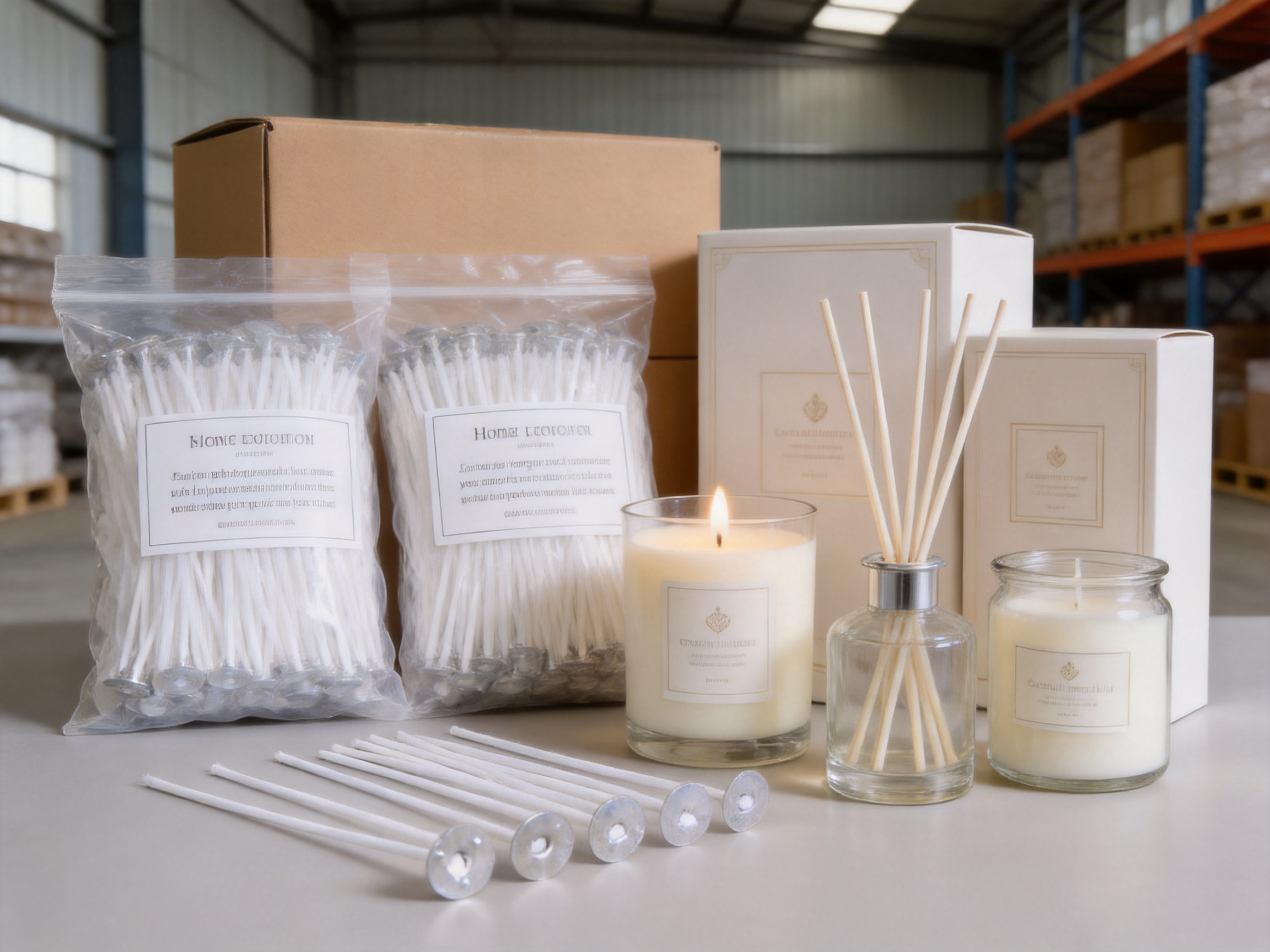
Hangzhou Leo Home Trading Co., Ltd. offers several strengths that make it a valuable partner for pre-tabbed cotton candle wicks and related home fragrance products. The company combines customization, supply chain integration, quality assurance, diverse product styles, flexible delivery, and export logistics support.
Customization is a major advantage. The company can provide professional development support based on drawings, samples, target specifications, scents, and packaging concepts. For candle components, this means buyers can request wick lengths, packaging formats, or accessory combinations suited to their market.
Supply chain integration helps manage costs and product coordination. The company works with multiple candle factories, jar customization partners, and color box factories. This network allows buyers to develop complete candle lines with compatible components, packaging, and presentation. Instead of sourcing each item separately, buyers can rely on coordinated support.
Quality assurance is another core strength. With lab support and strict QC procedures across key stages, the company aims to ensure reliable and consistent quality. For candle wicks, this includes attention to material consistency, cutting, crimping, adhesive application, packaging, and finished goods inspection.
Diverse product capability supports broader business development. Buyers interested in pre-tabbed candle wicks may also need scented candles, jar candles, shaped candles, jelly candles, LED candles, reed diffusers, diffuser accessories, or fragrance gift sets. A supplier with multiple category capabilities can help buyers create coordinated collections for seasonal launches and retail programs.
Flexible delivery helps both established importers and developing brands. Large buyers need stable capacity and replenishment. Smaller buyers may need trial orders or lower-volume development runs. The company’s ability to support both creates a practical pathway for long-term cooperation.
The company’s core values also shape its service approach. Execution means treating instructions as commitments and delivering outcomes responsibly. Warmth reflects supportive communication and teamwork. Refinement means focusing on details from formulation and craftsmanship to export documentation. These values are especially important in international trade, where clarity, responsiveness, and reliability influence long-term trust.
Although candle wick components are small, they can still contribute to better resource use when designed for efficiency and consistency. A pre-tabbed adhesive wick can reduce wasted materials caused by failed placement, off-center burning, and rejected candles. When fewer candles require rework or disposal, the production process becomes more responsible and cost-effective.
Standardized components can also help reduce overuse of separate adhesives, glue tools, and corrective supplies. By integrating the adhesive into the sustainer, the product simplifies material handling. In production environments, fewer separate consumables can mean cleaner workstations and better inventory control.
Quality control also supports sustainability by reducing defective shipments and unnecessary replacement orders. When buyers receive components that perform consistently, they can plan production more accurately and reduce emergency sourcing. Reliable supply chains are not only commercially valuable; they also help reduce waste caused by uncertainty and rushed corrections.
The growth of home fragrance has created opportunities across several channels. Consumers buy candles for relaxation, decoration, gifting, seasonal atmosphere, wellness routines, and personal expression. At the same time, many small entrepreneurs are entering the candle market through online platforms and local craft channels. This creates demand for candle components that are easy to use and reliable.
Pre-tabbed adhesive wicks are well positioned for this market. They can serve professional candle factories, private-label developers, DIY craft suppliers, workshop organizers, and handmade sellers. Their value lies in making candle production simpler without sacrificing consistency.
Retail craft kits are a particularly strong opportunity. A candle-making kit may include wax, fragrance oil, dye, jars, warning labels, stirring tools, and wicks. Including adhesive-backed pre-tabbed wicks makes the kit easier for beginners to use. This can improve customer reviews and repeat purchases.
Private-label candle programs also benefit. Brands launching a new candle collection often want fast development and reliable replenishment. By working with a supplier that can coordinate wicks, jars, packaging, and finished candles, the buyer can shorten development time and reduce sourcing complexity.
It is a cotton candle wick that has already been cut to a usable length, pre-waxed for handling rigidity, crimped into a metal sustainer base, and fitted with adhesive backing on the base. This allows the wick to be placed directly onto the bottom of a candle vessel before wax pouring.
The adhesive sustainer helps hold the wick in position during wax pouring. It reduces the risk of the wick floating, drifting, or shifting away from the center, which supports better candle appearance and more consistent burn performance.
Yes. Because the wick is pre-cut, pre-tabbed, and adhesive-backed, it is easier to use than loose wick rolls or manually assembled wick systems. It is suitable for DIY candle makers, craft kits, workshops, and small studios.
Yes. The product is also suitable for high-throughput container candle production. It helps reduce preparation time, simplify worker training, and improve consistency in batch manufacturing.
Common lengths include 10 cm, 15 cm, and 20 cm. Other specifications may be discussed according to vessel size, fill depth, and production requirements.
No wick can guarantee perfect performance in every candle formula. Burn testing is still necessary because wax type, fragrance load, dye, vessel diameter, and fill weight all affect performance. However, this wick format reduces placement variation and provides a more consistent testing baseline.
It is especially suitable for container candles, including glass jar candles, tins, ceramic vessels, and other container-based candle products. Compatibility should always be confirmed through production and burn testing.
The vessel bottom should be clean and dry. The user should place the adhesive-backed sustainer at the center of the vessel and press firmly. A wick centering tool or holder may be used to keep the upper wick upright during pouring and cooling.
Yes. The company supports OEM and ODM customization, including specifications, packaging, labels, and related candle product development. Bulk packaging and retail craft packaging can be discussed based on buyer requirements.
The company offers home fragrance category experience, integrated supply chain resources, quality control support, flexible order handling, export logistics experience, and customization services. These strengths help buyers source not only wick components but also related candle and fragrance products more efficiently.
The pre-tabbed cotton candle wick with adhesive sustainer is a practical, efficient, and production-friendly component for modern container candle making. By combining a cotton braid, pre-waxed rigidity, a crimped metal sustainer, and adhesive backing, it simplifies wick placement and helps improve consistency before wax pouring begins. Its greatest value lies in reducing production time, improving placement stability, lowering beginner difficulty, and supporting repeatable candle quality.
Compared with conventional loose wicks or manually fixed wick systems, this format offers clear advantages in workflow efficiency, placement reliability, and ease of use. It is suitable for candle factories, small studios, private-label brands, retail craft suppliers, and gift set producers. Whether used in bulk production or DIY candle kits, it helps solve one of the most common challenges in candle making: keeping the wick properly positioned from start to finish.
Hangzhou Leo Home Trading Co., Ltd. strengthens the product’s value through its supply chain integration, customization service, quality assurance procedures, home fragrance category experience, and export support. The company’s ability to coordinate candle components, vessels, packaging, and related fragrance products makes it a practical partner for buyers who want reliable sourcing and scalable development.
For candle makers and brands seeking a more efficient wick solution, the pre-tabbed cotton candle wick with adhesive sustainer offers a smart balance of convenience, consistency, and professional production support. It is a small component with a major influence on candle quality, and it reflects the growing need for candle accessories that support both craftsmanship and scalable manufacturing.
1. Candle Manufacturing and Testing Guidelines, Home Fragrance Production Manual.
2. Technical Notes on Wick Selection and Container Candle Burn Performance, Candle Craft Industry Reference.
3. Quality Control Procedures for Candle Components, Household Goods Manufacturing Handbook.
4. Cotton Wick Materials and Capillary Combustion Principles, Applied Candle Science Review.
5. International Home Fragrance Market Development Report, Consumer Lifestyle Products Research Series.

Room 1701, Building C1, Wangjing, Xiaoshan District, Hangzhou City, Zhejiang Province, China.

+86-15937257616

Copyright© 2026 Hangzhou Leo Home Trading Co., Ltd. All Rights Reserved.

Luxury Candles Home Fragrance Manufacturers Modern Candles Factory