 English
 Français
News
Home / Author / Sophia Lin — Product Sales Executive / Marbled Pattern Ceramic Jar Candle for Decorative Home Fragrance Collections
Content
In the modern home fragrance market, a candle is no longer judged only by how it smells. Buyers, retailers, interior decorators, gift brands, and end users increasingly evaluate a candle as a complete lifestyle object: a fragrance carrier, a decorative accessory, a reusable container, and a mood-setting design element. The Marbled Pattern Ceramic Jar Candle responds directly to this evolution. With its refined ceramic body, natural-looking marbled pattern, stable cylindrical shape, and practical single-wick structure, it offers a balanced combination of aesthetics, safety, usability, and commercial flexibility.
This product belongs to the ceramic jar candle category, but its appeal extends beyond a simple container-and-wax format. The jar is designed as a decorative object that can remain useful even after the wax has been consumed. Each marbled ceramic surface presents subtle variations, giving every candle an individual visual character. This is especially valuable for home décor retailers and gift set developers who want products that feel more personal and curated than mass-produced plain glass containers.
For brands developing scented candle lines, the Marbled Pattern Ceramic Jar Candle offers a strong foundation for customization. It can be adapted through fragrance selection, wax type, label design, packaging concept, and seasonal presentation. Its neutral yet expressive visual language allows it to fit minimalist interiors, spa-inspired bathroom settings, boutique hotel rooms, holiday gift sets, wellness collections, and premium household product assortments.
Behind the product is a supply chain model supported by Hangzhou Leo Home Trading Co., Ltd., a Hangzhou-based international trading company focused on household and daily necessity products, with a strong emphasis on home fragrance categories such as scented candles, LED candles, candle gift sets, reed diffusers, and related accessories. Through its integrated network of candle factories, jar customization partners, color box factories, quality control procedures, and export service capabilities, the company is positioned to support global clients seeking reliable development, competitive pricing, and consistent delivery.
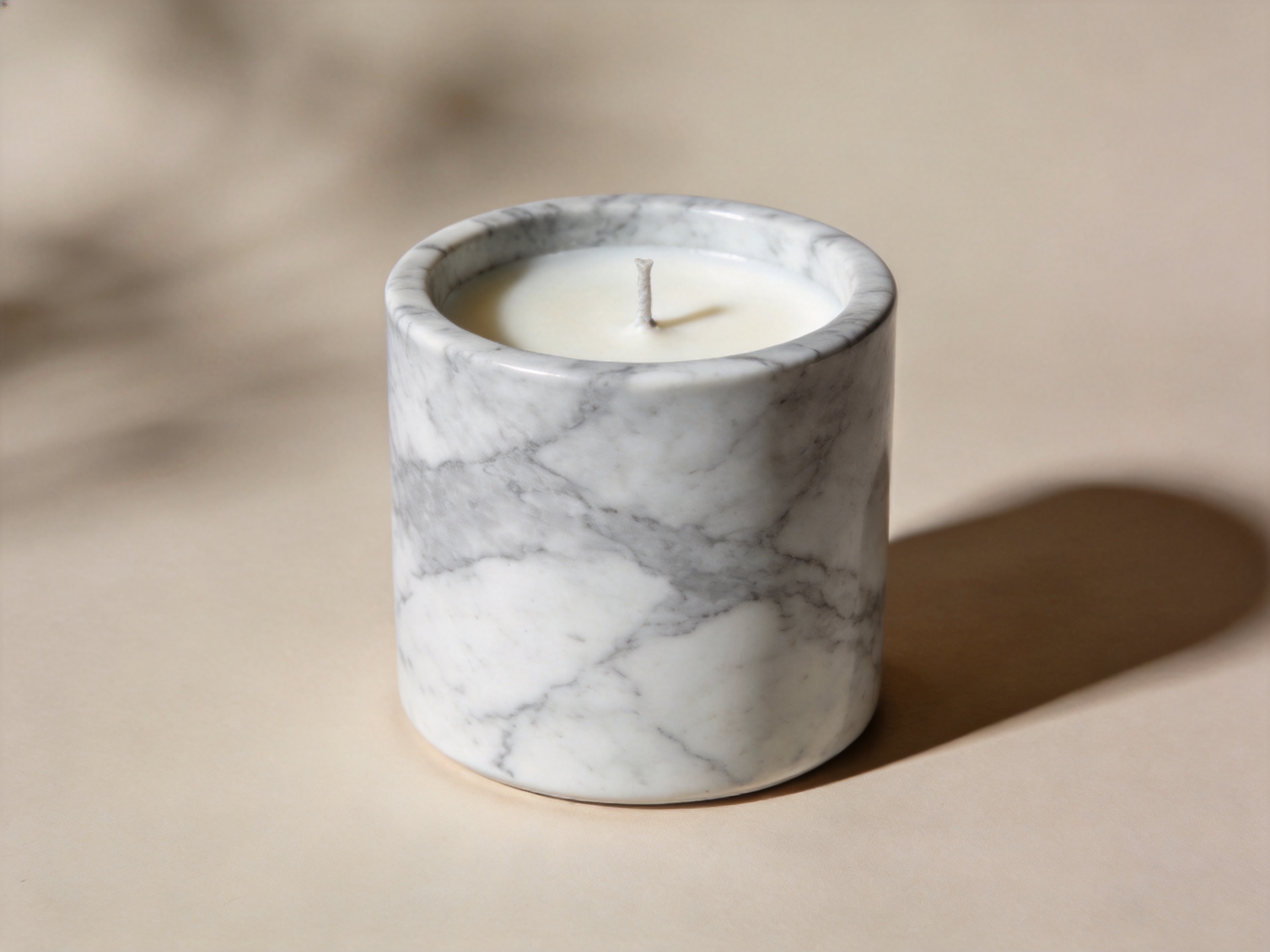
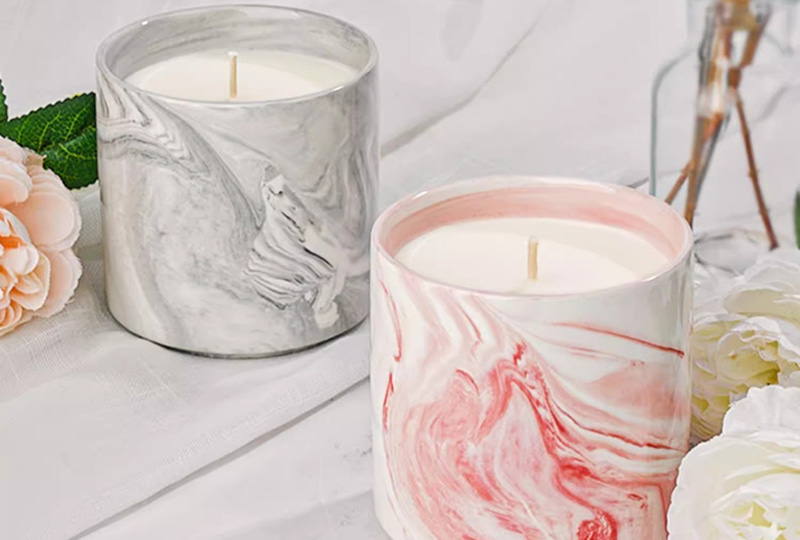
The Marbled Pattern Ceramic Jar Candle is built around the idea that a home fragrance product should enrich the visual atmosphere of a room before it is even lit. The ceramic jar features a refined marbled pattern, with subtle natural variations across the surface. This creates depth, movement, and a handcrafted visual effect that plain containers often lack. Instead of looking like a standard commodity candle, it reads as a small decorative vessel that can complement interior styling.
The cylindrical silhouette is deliberately simple. A clean round profile helps the candle sit comfortably on bedside tables, coffee tables, bathroom counters, vanity trays, bookshelves, office desks, and hospitality room settings. This balanced shape also makes the product easier to package, display, ship, and incorporate into retail shelving systems. For buyers, such practicality is essential because an attractive candle must also perform well in logistics and merchandising.
The single-wick design gives the candle a classic and controlled format. A single wick is often preferred for medium-sized jar candles because it simplifies burning behavior, makes care instructions easier for end users, and supports a clean visual presentation. When combined with appropriate wax, fragrance load, and wick selection, the result can be a steady flame and a pleasant fragrance experience suited to personal spaces and intimate interior environments.
The ceramic material adds another important dimension. Ceramic is valued for its heat resistance, visual solidity, and premium tactile feel. Compared with lightweight plastic decorative holders or thin metal tins, ceramic gives the product a more substantial presence. Compared with transparent glass jars, ceramic offers greater surface design potential and a stronger decorative identity. The marbled surface turns the container itself into part of the product’s value proposition.
The first advantage is individuality. Because the marbled pattern includes subtle variations, each piece can appear slightly different. This creates a sense of uniqueness without requiring expensive fully handmade production. In competitive retail environments, this visual diversity helps the candle stand out from uniform, flat-colored containers. Consumers often respond positively to products that feel personal, artisanal, or naturally inspired.
The second advantage is decorative flexibility. Marble-inspired patterns have long been associated with refined interiors, spa spaces, luxury bathrooms, boutique hotels, and contemporary home accessories. The pattern can feel modern, calm, premium, or organic depending on the selected color palette and fragrance concept. This makes the ceramic jar suitable for year-round collections, holiday editions, wellness lines, housewarming gifts, and private-label lifestyle assortments.
The third advantage is material durability. Ceramic provides reliable structural stability when properly produced and inspected. A well-made ceramic jar sits firmly on surfaces and conveys quality through weight and texture. This stability is especially important during use, as the candle should remain steady while burning. The container also provides heat resistance appropriate for candle applications when designed and tested for that purpose.
The fourth advantage is post-use value. After the candle is finished, the jar can be cleaned and reused as a small storage holder or decorative container. It may hold cotton pads, jewelry, desk clips, makeup brushes, keys, small stationery items, dried flowers, or other household objects. This extended usefulness supports sustainability-minded purchasing behavior and increases the perceived value of the candle.
The fifth advantage is customization compatibility. Ceramic jars allow a wide range of surface styles, colors, patterns, and finishing effects. The product can be developed for different target markets by changing the marbled tone, pairing it with specific fragrance families, adjusting the packaging, or applying customized labels and sleeves. For importers and retailers building private-label programs, this flexibility is commercially important.
Many scented candles are packaged in glass jars, metal tins, concrete vessels, or plain ceramic cups. Each format has advantages, but the marbled ceramic jar offers a distinctive balance of decoration, stability, perceived value, and reusability. Glass jars are popular because they are familiar and often cost-effective, but they can appear ordinary when not supported by strong printing, labeling, or decorative finishing. Metal tins are lightweight and travel-friendly, but they may not deliver the same home décor feeling. Concrete vessels can be trendy, yet their rough texture and heavy weight may limit appeal in soft, elegant interiors.
The Marbled Pattern Ceramic Jar Candle sits in a commercially attractive middle ground. It feels more premium and decorative than many basic glass options, while remaining more refined and interior-friendly than overly industrial containers. It has a strong visual identity without relying only on printed labels. The container itself becomes a key selling feature.
| Feature | Marbled Ceramic Jar Candle | Basic Glass Jar Candle | Metal Tin Candle | Plain Ceramic Candle |
|---|---|---|---|---|
| Visual Appeal | Distinct marbled texture with decorative depth | Clean but often common without extra decoration | Simple, portable, usually less decorative | Solid but may appear too minimal |
| Perceived Value | Premium, giftable, and suitable for home décor | Moderate depending on glass thickness and label design | Practical but less luxurious | Good, but pattern may be needed for stronger shelf impact |
| Reusability | Can be reused as a storage holder or decorative vessel | Reusable but may feel less decorative after label removal | Reusable for small items, but less elegant | Reusable depending on design |
| Stability | Strong and steady due to ceramic structure | Stable when thick enough | Lightweight and may feel less substantial | Stable when properly formed |
| Customization Potential | High: color, pattern, fragrance, labels, packaging | High through labels and glass color | Moderate through printing and label design | High through glaze and surface treatment |
| Ideal Market Position | Decorative, premium, wellness, gift, private label | Mass market to premium depending on design | Travel, promotional, seasonal, budget-friendly | Home décor and lifestyle collections |
This comparison highlights why the marbled ceramic format is particularly valuable for brands trying to differentiate in crowded candle categories. It does not depend solely on fragrance claims or packaging graphics. The form, material, and pattern contribute directly to the sales story.
Ceramic has long been associated with crafted household objects, from tableware and vases to bathroom accessories and decorative containers. In candle design, ceramic provides both functional and emotional value. Functionally, it offers a solid container with dependable heat resistance when produced to suitable standards. Emotionally, it creates a sense of permanence. A ceramic jar feels less disposable than many lightweight alternatives.
The tactile quality of ceramic is also important. When a consumer picks up a ceramic candle, the weight and surface finish communicate durability and care. This physical impression can influence purchase decisions, especially in offline retail environments where customers compare products by touch and appearance. In online sales, the same qualities can be communicated through photography, product descriptions, and customer reviews.
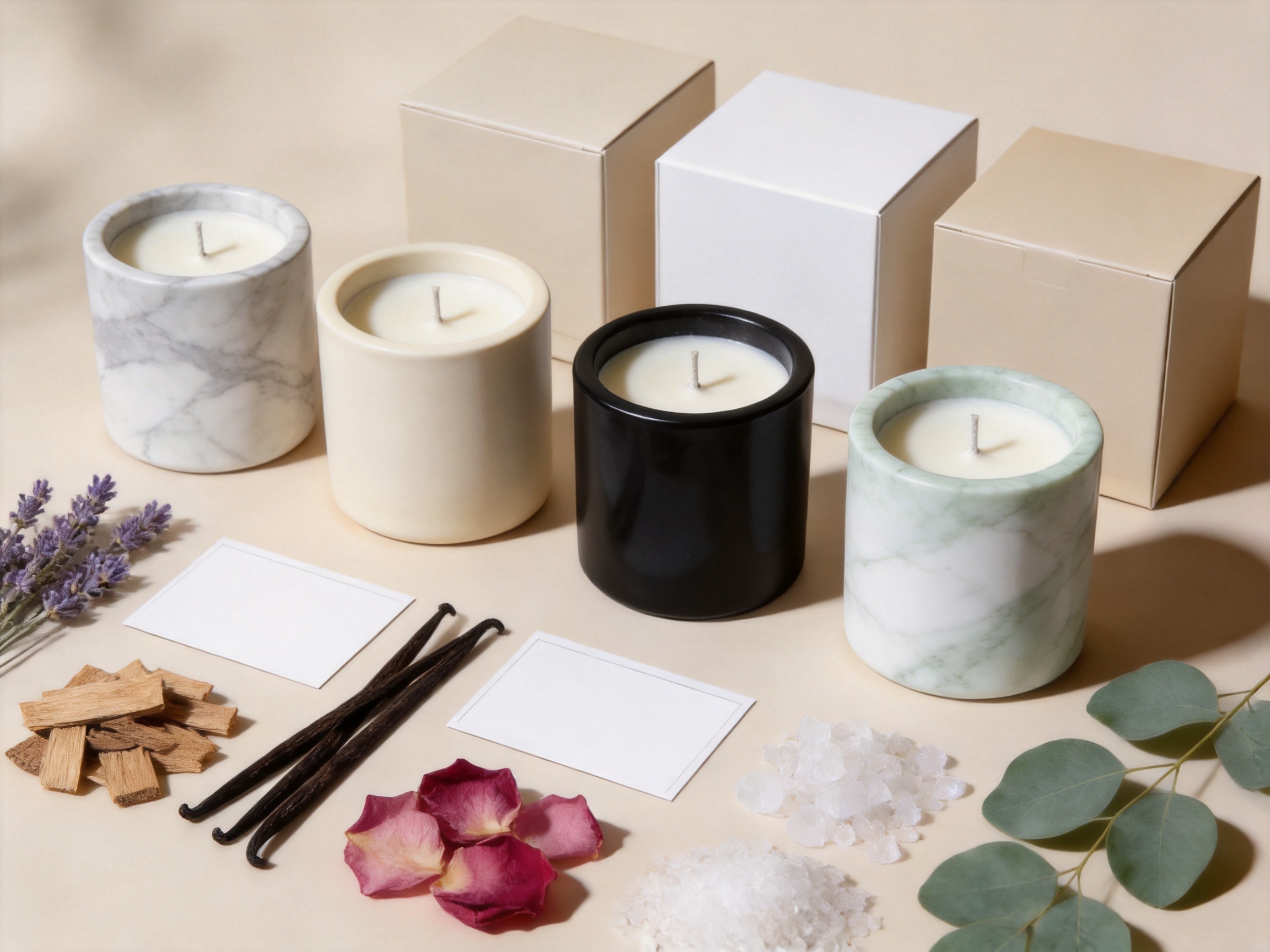
The marbled surface adds an additional layer of sensory appeal. The pattern suggests natural stone, calm movement, and refined decoration. It can pair well with fragrance concepts such as sandalwood, white tea, amber, lavender, jasmine, rose, sea salt, vanilla, cedar, eucalyptus, or cashmere musk. By aligning surface design with scent storytelling, a brand can create a more complete emotional experience.
For example, a grey-white marbled jar may pair well with clean linen, sage, or eucalyptus fragrances for a calm spa theme. A warm beige or cream marbled jar can suit vanilla, sandalwood, amber, or coconut scents for a cozy home atmosphere. A black-and-white marbled jar may support more sophisticated scents such as oud, patchouli, leather, or smoky woods. This design adaptability helps buyers build multiple collections using the same structural candle format.
The single-wick design supports an accessible and user-friendly candle experience. For many standard ceramic jar candles, a single wick offers the right balance between flame control and fragrance release. It provides a clean central focus and reduces complexity compared with multi-wick formats. End users can easily understand the correct care process: trim the wick, allow an even melt pool, burn within recommended time limits, and keep the candle away from drafts.
A single-wick candle is also visually calm. When lit, the flame becomes a small focal point within the ceramic vessel. This makes the candle suitable for bedside relaxation, reading corners, bath rituals, meditation settings, and cozy evening routines. It can contribute to ambience without overwhelming the space.
From a production standpoint, single-wick formats can simplify consistency control when wick size, wax formula, fragrance load, and jar diameter are properly matched. Consistency is important for bulk buyers because repeatable burn behavior reduces customer complaints and supports brand trust. Hangzhou Leo Home Trading Co., Ltd. supports quality control across key stages, helping clients develop products that align with expected safety, performance, and market requirements.
For private-label clients, the single-wick structure can be adapted according to candle size, wax selection, and fragrance direction. It may be suitable for soy wax blends, paraffin blends, plant-based wax formulas, or customized wax systems depending on market preference, price positioning, and desired burn performance. The product platform is flexible enough to support both everyday retail lines and more premium gift assortments.
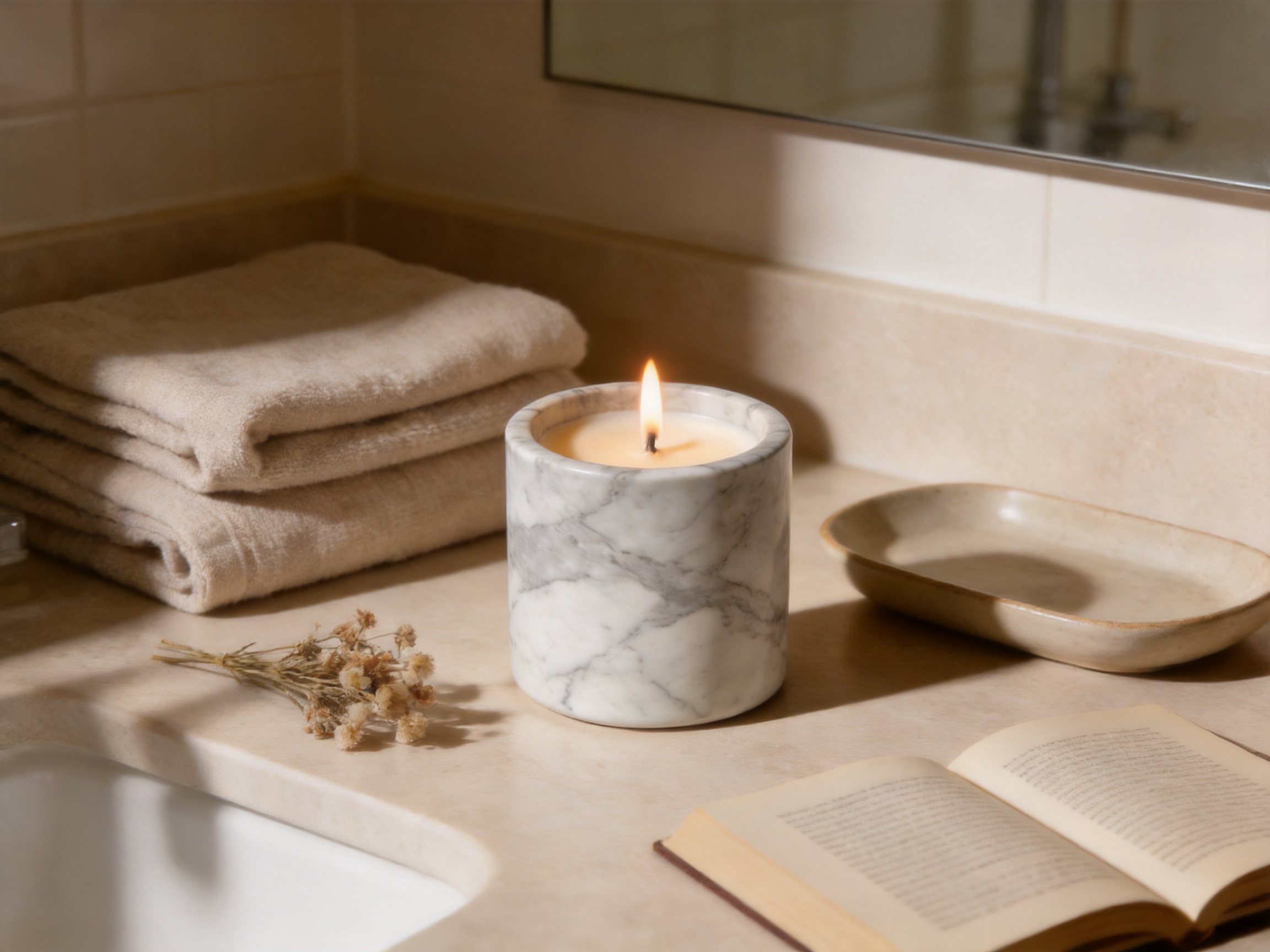
Modern consumers increasingly appreciate products that remain useful after their primary function is complete. The Marbled Pattern Ceramic Jar Candle answers this preference through its reusable container concept. Once the candle has burned down and the remaining wax is properly removed, the ceramic jar can continue to serve as a practical household object.
This reuse potential creates several benefits. First, it reduces the feeling of waste. Consumers are more likely to view the purchase positively when the container can be repurposed. Second, it keeps the product visible in the home longer. A reused jar may continue to remind the consumer of the original candle brand, which supports brand memory and repeat purchase. Third, it strengthens giftability. A candle that becomes a useful decorative holder feels more thoughtful than a purely disposable item.
The jar’s cylindrical form makes it especially suitable for post-use functions. It can hold bathroom accessories such as cotton swabs or pads. It can serve as a desk organizer for pens, clips, or small office items. It can hold hair ties, jewelry, keys, coins, or fragrance sachets. It can also stand alone as a small decorative vessel. The marbled pattern allows it to remain attractive without requiring additional decoration.
For retailers, this feature can be highlighted in product descriptions, packaging text, point-of-sale displays, and online listing content. Instead of marketing the candle only by scent, sellers can present it as a two-stage product: first as a home fragrance candle, then as a reusable ceramic accent piece. This message is particularly powerful in lifestyle, wellness, home décor, and gift categories.
A product’s success depends not only on its design but also on the reliability of the supply chain behind it. Hangzhou Leo Home Trading Co., Ltd. is positioned as an international trading and supply chain service provider based in Hangzhou, China. The company focuses on household and daily necessity categories, with particular attention to home fragrance products. Its operating model combines sourcing, product development, customization coordination, quality control, and export support for overseas clients.
One of the company’s major strengths is its integrated partner network. It works with multiple candle factories, jar customization partners, and color box factories. This structure allows the company to coordinate different production elements efficiently: ceramic container development, wax filling, fragrance selection, label application, packaging design, and final shipment preparation. For overseas buyers, this can reduce the complexity of managing several independent suppliers.
The company states that it integrates 10 candle factories, 8 jar customization partners, and 8 color box factories. This broad supply base helps manage capacity, cost, style variety, and production flexibility. It also allows the company to match client needs with suitable production resources. A small trial order, a seasonal gift set, a customized jar candle collection, or a larger replenishment program may require different factory capabilities. A diversified supply network makes this matching process more practical.
Daily production capacity of up to 50,000 units supports bulk delivery and stable replenishment. This matters for importers, supermarkets, chain stores, e-commerce brands, and promotional buyers who require dependable supply. At the same time, the company supports smaller volumes and trial runs, which is important for new brands testing market response before committing to large-scale orders.
Location also supports logistics efficiency. Hangzhou is close to major manufacturing and export regions, and access to Ningbo Port supports international shipping. For global candle buyers, export coordination, documentation accuracy, packaging integrity, and shipping schedule management all influence the final success of an order. The company’s cross-border trading focus helps bridge the gap between factory production and overseas market requirements.
The Marbled Pattern Ceramic Jar Candle benefits from a structured product development and quality control approach. In candle manufacturing, small details can strongly affect final performance. The jar must be dimensionally suitable, the wax must match the fragrance and wick, the wick must be centered, the pour temperature must be controlled, and the finished surface must be inspected. Packaging must protect the ceramic container during handling and shipping. A reliable supplier must monitor all these stages.
The process begins with product specification. Buyers may define candle size, jar color, marbled pattern style, wax type, fragrance family, wick type, label format, lid option, and packaging structure. When drawings or samples are provided, the company can support refinement of specifications to make the product more practical for production and more suitable for the target market.
Raw material selection is the next critical stage. Ceramic jars must be checked for surface quality, shape consistency, structural soundness, and finish. Wax materials should be selected according to burn expectations, scent throw, appearance, and market preferences. Fragrance oils should be compatible with the wax system and selected according to safety and performance needs. Wicks must be matched to jar diameter, wax formula, and fragrance load.
During production, jar preparation and wick placement are essential. The wick should be centered to help support an even burn. Poor wick placement can lead to uneven melting, tunneling, excessive heat on one side, or unsatisfactory user experience. A well-controlled process reduces these risks. Wax pouring should also be managed carefully to avoid defects such as sinkholes, cracking, frosting, poor adhesion, or uneven surfaces, depending on the wax system used.
Fragrance integration requires care. The fragrance must be blended into the wax under appropriate conditions so that it disperses evenly. If temperature control or mixing is poor, scent performance can suffer. A consistent fragrance experience is one of the main reasons customers return to a candle line, so process discipline is commercially important.
After pouring and cooling, finished candles should be inspected for appearance, wick position, jar condition, surface quality, net weight, label alignment, and packaging accuracy. Hangzhou Leo Home Trading Co., Ltd. emphasizes strict quality control from raw material selection to finished goods inspection. Its in-house lab and quality procedures support consistency across key stages, helping reduce risk for overseas customers.
Customization is a central strength of this product. The Marbled Pattern Ceramic Jar Candle can be developed for different brand identities and market segments without changing its core functional concept. This makes it especially suitable for OEM and ODM projects.
Jar customization may include color tone, pattern intensity, glaze effect, size adjustment, and surface finish. A retailer targeting minimalist home décor may choose soft white, beige, or grey marbling. A holiday collection may use deeper tones, metallic accents, or warmer color palettes. A wellness brand may select muted natural tones that convey calm and purity. A luxury gift line may prefer dramatic marble effects with premium packaging.
Fragrance selection is equally flexible. Scent families can be adapted by season, region, and consumer preference. Fresh scents may appeal to spring and summer collections. Warm gourmand scents may perform well in autumn and winter. Floral scents can suit gifting and personal care themes. Woody, amber, musk, or tea-based fragrances can support premium lifestyle positioning. For buyers selling in North America, Europe, or the Middle East, fragrance direction may be adjusted according to local preferences.
Packaging customization includes color boxes, rigid gift boxes, sleeves, labels, hang tags, insert cards, and set packaging. Since the company coordinates with multiple color box factories, it can support different retail presentation requirements. Packaging is particularly important for ceramic candles because it must be visually attractive and protective. A beautiful candle can lose commercial value if it arrives damaged or if the package does not communicate quality.
Labeling and branding can also be adapted. Some clients may prefer minimal front labels to preserve the marbled jar’s decorative appearance. Others may use full branding labels, fragrance labels, warning labels, bottom labels, or luxury-style embossing on packaging. The key is to ensure that branding supports rather than overwhelms the ceramic pattern.
OEM and ODM support also helps clients develop complete collections. The ceramic jar candle can be paired with reed diffusers, scented sets, LED candles, candle accessories, or seasonal gift items. This allows buyers to build coordinated product families rather than isolated single items. A unified marbled design theme can be extended across multiple home fragrance products for stronger shelf presence.
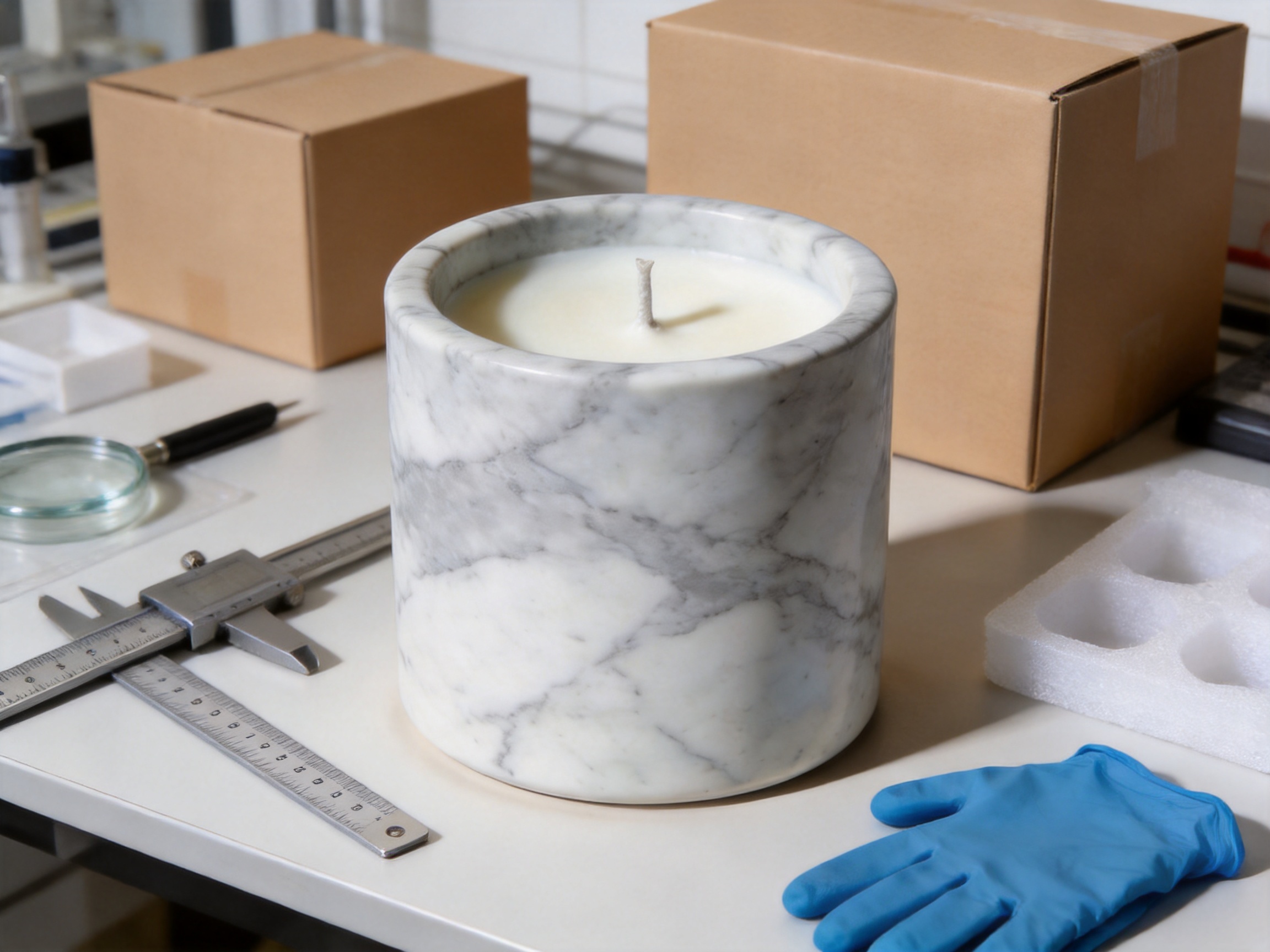
Quality assurance is particularly important for scented candles because the product combines decorative, functional, and safety-related characteristics. Customers expect a candle to look attractive, smell pleasant, burn properly, and remain stable during use. Retailers also expect the product to arrive intact, meet specifications, and maintain consistency across batches.
The company’s stated quality assurance process covers key stages from materials to finished goods. This includes material evaluation, production checks, finished product inspection, and packaging review. For ceramic jar candles, inspection should pay attention to cracks, chips, glaze defects, color inconsistency, severe pattern deviation, unstable bases, incorrect fill level, off-center wicks, surface imperfections, label defects, and carton strength.
An in-house lab can support product evaluation and development. In candle programs, lab testing may involve burn performance checks, fragrance performance review, wick selection trials, wax compatibility assessments, and basic stability observations. While requirements differ by destination market and product type, having internal testing capability improves development speed and reduces dependence on guesswork.
Consistency is one of the major advantages professional buyers seek. A single attractive sample is not enough; bulk production must match approved samples as closely as possible. The marbled pattern naturally allows variation, but that variation should remain within an agreed visual range. The candle weight, fragrance, wick, packaging, and labeling must also remain consistent. Strong supplier management helps achieve this.
Quality assurance also supports brand reputation. In home fragrance categories, negative reviews often relate to weak scent, poor burn behavior, damaged jars, messy surfaces, or misleading presentation. By controlling development and inspection, the supplier helps clients reduce after-sales issues and protect long-term customer trust.
Retail success often depends on the first few seconds of visual attention. A customer walking through a store or browsing an online platform must quickly understand why a product is worth considering. The Marbled Pattern Ceramic Jar Candle has a strong advantage because the jar itself communicates style before the customer reads the label.
On a retail shelf, the marbled pattern can create visual movement and depth. A group of candles displayed together appears more dynamic than a row of identical plain containers. The pattern can catch light differently from various angles, making the product feel more tactile and premium. In lifestyle stores, the candle can be placed alongside towels, trays, vases, bath products, books, or decorative objects because it already behaves like home décor.
For e-commerce, the product photographs well. The ceramic texture, cylindrical form, and marbled surface can be shown through close-ups, room-setting images, gift-packaging shots, and post-use lifestyle images. These visuals can help improve perceived value and support higher price positioning compared with basic candle formats.
Giftability is another retail advantage. Consumers often purchase candles as gifts for birthdays, housewarmings, holidays, weddings, thank-you occasions, and corporate events. A marbled ceramic jar feels more thoughtful because it looks like a lasting object. With customized packaging, the product can be positioned as a ready-to-gift item that does not require additional wrapping.
The Marbled Pattern Ceramic Jar Candle is suitable for a wide range of settings. In the bedroom, it can create a calm evening atmosphere on a bedside table or dresser. In the living room, it can serve as a decorative accent on a coffee table, console, or shelf. In the bathroom, it can contribute to a spa-like environment when paired with fresh, herbal, aquatic, or floral fragrances. In a home office, it can add warmth and personality to the workspace.
The candle is also relevant for hospitality applications. Boutique hotels, guesthouses, spas, wellness centers, beauty salons, yoga studios, and serviced apartments often use fragrance to shape customer experience. A ceramic jar candle can serve both as decoration and ambience support. Its marbled pattern fits well with interiors that emphasize calm, comfort, and refined detail.
For corporate gifting, the product can be customized with packaging, fragrance, and branding elements while still maintaining a premium decorative identity. Compared with generic promotional items, a well-designed ceramic candle feels more personal and useful. It can be included in employee appreciation gifts, client holiday gifts, event welcome boxes, or lifestyle gift sets.
For seasonal retail, the candle can be adapted without losing its core identity. Spring collections may use floral scents and light marble tones. Summer collections may use citrus, sea salt, coconut, or green notes. Autumn collections may use amber, fig, cedar, pumpkin spice, or cashmere. Winter collections may use pine, vanilla, cinnamon, oud, or smoky woods. This flexibility allows brands to refresh the product line regularly while relying on a proven container format.
For importers, the product provides a visually differentiated item that can be positioned above basic commodity candles. The ceramic jar and marbled pattern support stronger storytelling, which can help justify better margins. Importers can offer the candle to boutiques, supermarkets, gift shops, online sellers, and home décor chains.
For wholesalers, the product’s broad appeal is valuable. It is not limited to one narrow audience. It can be sold as a home fragrance item, a decorative accessory, a gift product, a wellness item, or part of a seasonal collection. This versatility expands potential sales channels.
For brand owners, customization is the key advantage. The product can be adapted to match brand language, target customer preferences, and price positioning. Whether the goal is a soft minimalist collection, a luxury spa line, a colorful seasonal range, or a private-label gift set, the ceramic jar format provides a strong base.
For e-commerce sellers, the product offers strong image potential and post-use value that can be emphasized in listings. A product that looks good in lifestyle photography and carries a clear reuse message can perform well in online marketplaces and independent brand stores. Packaging can also be optimized for safe parcel delivery, reducing damage risk.
For chain retailers, supply capacity and quality consistency matter. The company’s supply network and daily capacity support stable production planning. Its experience in export markets across North America, Europe, and the Middle East also helps address the needs of international clients.
Hangzhou Leo Home Trading Co., Ltd. was founded in January 2025 and is based in Hangzhou, China. Although young as a company, it is built around modern international trading practices, digital tools, supply chain integration, and a focused service model. Its product scope includes personal care, home and garden products, daily tools, and especially home fragrance categories. This combination allows the company to serve clients looking for practical lifestyle products with customization potential.
The company’s team covers product development, international sourcing, and cross-border marketing. This matters because candle buyers often need more than manufacturing. They need help translating market ideas into workable products. They may require fragrance suggestions, packaging improvements, cost optimization, production follow-up, inspection, and export coordination. A trading partner with product and supply chain knowledge can reduce communication difficulties and improve development efficiency.
The company emphasizes execution, warmth, and refinement as core values. Execution is important in international trade because delays, unclear communication, and missed details can create serious problems. Warmth reflects service attitude and teamwork, which can improve long-term cooperation. Refinement is especially relevant to candles, where details such as surface finish, scent balance, wick centering, packaging fit, and documentation accuracy all influence customer satisfaction.
Another strength is the company’s one-stop service approach. Instead of asking clients to coordinate separately with jar suppliers, wax fillers, fragrance developers, label printers, and packaging factories, the company can integrate these resources. This helps streamline development and can reduce time to market. It is particularly useful for overseas clients who may not have local sourcing teams in China.
The company also provides OEM and ODM services, supporting product development across specifications, fragrance selection, labels, and packaging. This is highly relevant to the Marbled Pattern Ceramic Jar Candle because the product’s value grows when design, scent, and packaging are aligned into a complete market concept.
Premium positioning does not depend on one feature alone. It emerges from the combined effect of material, design, fragrance, packaging, quality, and brand storytelling. The Marbled Pattern Ceramic Jar Candle supports premium positioning in several ways.
First, the ceramic jar delivers a more substantial feel than many low-cost containers. Second, the marbled pattern provides decorative sophistication. Third, the reusable container concept adds long-term value. Fourth, customization options allow brands to create coordinated collections rather than generic products. Fifth, quality control and supply chain coordination support consistency, which is essential for premium customer experience.
The candle can be positioned as an affordable luxury item: accessible enough for regular purchase, but refined enough for gifting and home styling. This is a commercially powerful position in the home fragrance market. Many consumers are willing to pay more for candles that enhance their living environment and look attractive when displayed.
Premium positioning can be strengthened through careful fragrance design. A simple label with an elegant scent name, a well-balanced fragrance formula, and protective gift packaging can elevate the product significantly. The marbled jar already provides the visual base; the remaining elements should reinforce the same sense of refinement.
The visual style of the ceramic jar pairs well with many fragrance families. For a clean and modern collection, scents such as white tea, cotton, bergamot, sage, eucalyptus, sea salt, and green bamboo can work well. These fragrances match the calm and elegant appearance of light marbled ceramics.
For a warm home collection, vanilla, amber, sandalwood, cedar, cashmere, tonka, fig, and soft musk can create a cozy atmosphere. These scents are suitable for living rooms, bedrooms, and autumn-winter retail periods.
For a floral gift collection, rose, jasmine, peony, lily, lavender, neroli, and gardenia can appeal to customers seeking romantic or personal-care-inspired products. The ceramic jar can make floral scents feel more sophisticated and less ordinary.
For a luxury or evening collection, oud, patchouli, leather, smoky woods, dark amber, incense, and black tea may be suitable. When paired with darker marbled tones, these fragrances can create a dramatic premium line.
For spa and wellness positioning, lavender, chamomile, eucalyptus, mint, rosemary, hinoki, green tea, and mineral notes can be used. The ceramic container supports the calm, tactile, and natural feeling associated with wellness spaces.
Packaging is crucial for ceramic jar candles because it must protect the product and communicate value. A good packaging strategy should consider structure, visual design, labeling, safety information, and shipping durability.
For retail display, a color box with a window may allow the marbled jar to be seen, but full protective boxes can look more premium and protect the ceramic surface better. Rigid gift boxes may be suitable for luxury lines, holiday sets, and corporate gifting. Simple kraft boxes may support natural or eco-inspired positioning. Matte laminated boxes, embossed logos, foil accents, or textured paper can elevate the product for premium channels.
Inside the box, inserts or protective materials should keep the jar stable. Ceramic products need secure packaging to reduce breakage during export shipping and last-mile delivery. The company’s access to multiple color box factories can support packaging optimization according to the buyer’s channel, budget, and destination requirements.
Packaging copy should highlight the candle’s main selling points: marbled ceramic design, decorative appeal, single-wick format, home fragrance experience, and reusable jar. Safety instructions and candle care guidance should also be included. Clear usage instructions help consumers enjoy the candle properly and reduce misuse.
End users should follow standard candle safety practices. The candle should be placed on a stable, heat-resistant surface away from drafts, curtains, papers, children, and pets. The wick should be trimmed before lighting to support a controlled flame. The candle should not be burned for excessive periods, and it should never be left unattended.
For the first burn, users should allow enough time for the wax surface to melt evenly toward the edges, within recommended safety limits. This can help reduce tunneling and improve the candle’s appearance over time. If soot appears, the wick may need trimming, or the candle may be exposed to drafts.
Once the candle has burned down to the recommended remaining wax level, use should be discontinued. The ceramic jar can then be cleaned according to appropriate care guidance and reused. Reuse should be limited to suitable household storage or decoration; the jar should not be assumed safe for food use unless specifically tested and declared for that purpose.
These care instructions should be communicated through packaging, insert cards, or product listings. Proper customer education improves satisfaction and helps maintain the brand’s reputation.
The main difference is the combination of fragrance function and decorative ceramic design. The marbled pattern gives each jar a refined visual texture, while the ceramic material provides a solid, premium feel. Unlike many standard candles that rely mainly on labels for decoration, this candle uses the container itself as a key design feature.
Yes. After the candle has been used and the remaining wax has been properly removed, the ceramic jar can be reused as a small storage holder or decorative container. It is suitable for items such as cotton pads, jewelry, keys, stationery, or small household accessories.
Ceramic offers heat resistance, structural stability, and a premium tactile quality when properly produced for candle use. It also supports attractive surface finishes such as marbled patterns, glazes, and custom colors. This makes it both functional and decorative.
Yes. Customization can include fragrance selection, jar color, marbled pattern style, label design, packaging structure, box artwork, and gift set configuration. Hangzhou Leo Home Trading Co., Ltd. supports OEM and ODM customization for overseas clients.
The marbled ceramic design pairs well with many fragrance families, including white tea, lavender, sandalwood, amber, vanilla, rose, jasmine, eucalyptus, cedar, sea salt, cashmere musk, and oud. The best choice depends on the target market, season, and brand positioning.
Yes. Its decorative appearance and reusable jar make it highly suitable for gift sets. It can be packaged alone in a premium color box or combined with reed diffusers, accessories, bath products, or other home fragrance items.
The company supports quality control across key stages, including raw material selection, production monitoring, finished goods inspection, and packaging review. Its in-house lab and supplier network help improve consistency and reduce quality risks for international buyers.
The product is suitable for home décor stores, gift shops, supermarkets, e-commerce platforms, boutique hotels, spas, wellness brands, corporate gifting programs, and private-label fragrance collections. It can be adapted for North America, Europe, the Middle East, and other markets through fragrance and packaging customization.
The marbled pattern gives the candle a distinctive decorative identity. It helps the product stand out from plain glass jars, metal tins, and simple ceramic containers. Because the pattern suggests natural stone and refined interior design, it supports stronger shelf appeal and premium positioning.
Yes. The company supports smaller volumes and trial runs while also working with a supply network capable of stable bulk delivery. This flexibility helps new brands test the market and allows established buyers to plan replenishment programs.
The Marbled Pattern Ceramic Jar Candle is a strong product for today’s home fragrance market because it combines fragrance, decoration, material quality, and reuse value in one compact format. Its ceramic body provides stability and a premium tactile impression. Its marbled pattern creates visual individuality and shelf appeal. Its cylindrical single-wick structure supports practical use in bedrooms, living rooms, bathrooms, offices, hospitality spaces, and gift settings. After use, the jar can continue serving as a decorative storage container, extending the product’s value beyond the burning experience.
Compared with basic glass candles, metal tins, and plain containers, this product offers a more distinctive decorative identity. It is especially well suited for private-label development, seasonal collections, wellness lines, premium gift programs, and home décor retail. Buyers can adapt fragrance, color, packaging, and branding to meet different market needs.
Hangzhou Leo Home Trading Co., Ltd. strengthens the product’s commercial potential through integrated supply chain resources, OEM and ODM support, quality control procedures, in-house lab capabilities, and export service experience. With access to multiple candle factories, jar customization partners, and color box factories, the company can help clients manage product development from concept to delivery. Its focus on execution, warmth, refinement, and one-stop service supports efficient cooperation with overseas buyers.
For brands seeking a candle that is more than a fragrance item, the Marbled Pattern Ceramic Jar Candle offers a practical and attractive solution. It can enrich interiors, support memorable gifting, strengthen retail presentation, and provide a reusable decorative object for consumers. In a market where customers increasingly value design, quality, and lasting usefulness, this ceramic jar candle is positioned to stand out.
1. National Candle Association. Candle Safety and Usage Guidelines.
2. ASTM International. Standard Guides and Test Methods Related to Candle Fire Safety and Performance.
3. International Fragrance Association. Fragrance Safety Standards and Best Practices.
4. Society of Glass and Ceramic Decorated Products. Ceramic Surface Decoration and Quality Considerations.
5. Home Fragrance Market Research Reports. Global Trends in Scented Candles, Reed Diffusers, and Decorative Fragrance Products.
6. Packaging Industry Technical Handbooks. Protective Packaging Principles for Fragile Consumer Goods.
7. Retail Merchandising Guides. Visual Presentation Strategies for Home Décor and Gift Products.

Room 1701, Building C1, Wangjing, Xiaoshan District, Hangzhou City, Zhejiang Province, China.

+86-15937257616

Copyright© 2026 Hangzhou Leo Home Trading Co., Ltd. All Rights Reserved.

Luxury Candles Home Fragrance Manufacturers Modern Candles Factory