 English
 Français
News
Home / Author / Marina Zhao — Senior Product Sales Manager / Moon Crater Astronaut Art Candle: A Sculptural Approach to Modern Home Fragrance
Content
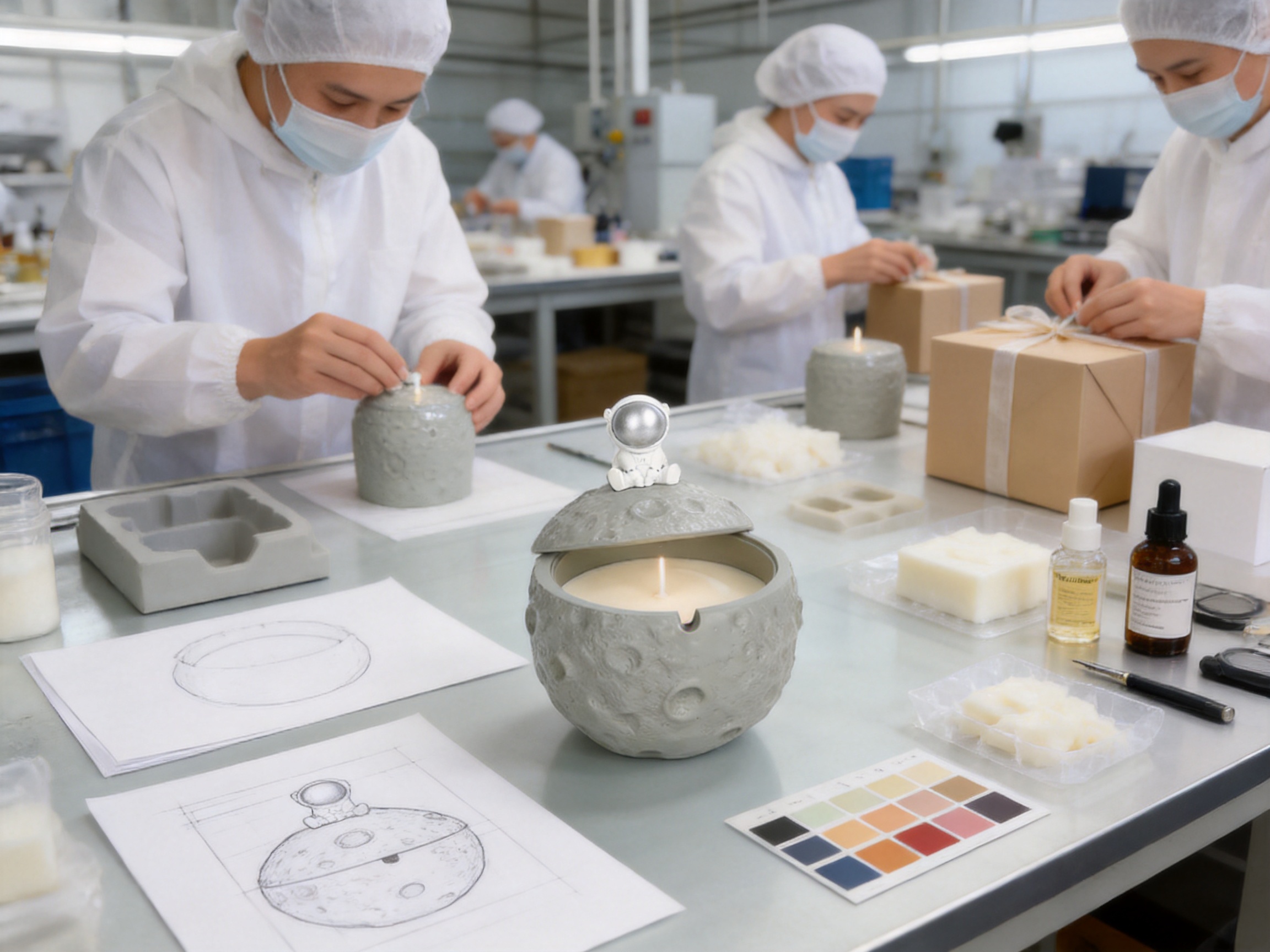
The modern candle market is no longer limited to simple wax-filled jars placed on a coffee table. Consumers increasingly look for products that combine fragrance, atmosphere, visual appeal, and emotional meaning. A successful candle can now function as a source of light, a home fragrance product, a decorative sculpture, a gift, and a conversation piece at the same time. The Moon Crater Astronaut Art Candle is designed for this evolving market.
Inspired by lunar exploration, the product combines the rugged appearance of a cratered moon surface with the imaginative presence of a miniature astronaut. Its vessel is shaped with uneven textures that resemble the irregular landscape of the moon. A small astronaut figure rests on the lid, creating a visual story that connects the product with curiosity, exploration, science fiction, and the human desire to discover the unknown.
Unlike a conventional candle that depends primarily on its fragrance or packaging to attract attention, this art candle creates interest through its physical form. Even before it is lit, it can be displayed as a decorative object on a shelf, desk, bedside table, gift counter, or creative interior installation. When lit, the candle produces a warm glow that moves across the cratered surface, emphasizing the texture and creating a calm atmosphere.
This combination of sculptural design, atmospheric lighting, and gift-friendly appeal gives the Moon Crater Astronaut Art Candle a distinctive position within the home fragrance market. It is suitable for consumers who want something more expressive than a traditional candle and for retailers searching for products that can stand out through visual storytelling.

Moon Crater Astronaut Art Candle
The concept of the Moon Crater Astronaut Art Candle is built around contrast. The moon-like vessel has a rugged, uneven, and mysterious appearance, while the astronaut figure introduces a sense of character and human connection. The textured surface suggests a distant and powerful environment; the small figure suggests quiet observation and adventure.
This contrast gives the product a strong decorative identity. Many candles are designed around smooth glass, minimal labels, or standardized cylindrical forms. Those formats can be elegant and commercially practical, but they may appear similar when displayed beside competing products. The Moon Crater Astronaut Art Candle takes a different approach by making the shape itself the primary visual feature.
The cratered vessel is especially important because it adds depth and variation to the product. Uneven surface details catch light from different angles, allowing the appearance of the candle to change throughout the day. In natural daylight, the texture gives the vessel a sculptural quality. Under warm indoor lighting, the raised and recessed areas create shadows. When the candle is lit, the glow from within enhances the sense of a glowing lunar object.
The astronaut figure on the lid adds a second level of storytelling. The glossy silver helmet and clean white spacesuit create an identifiable silhouette that can be recognized quickly from a distance. The astronaut appears to be resting on the lunar surface and looking into space, which gives the product a peaceful and imaginative mood rather than a purely technical or mechanical appearance.
This storytelling element can make the candle especially attractive to consumers who enjoy astronomy, science fiction, space-themed interiors, creative gifts, or unusual decorative objects. It can also appeal to buyers who are not specifically interested in space but appreciate products with personality and an original design concept.
In physical retail, product recognition is an important commercial advantage. A candle that looks like a standard jar may depend heavily on its label, color, or shelf placement to attract attention. A sculpted moon-and-astronaut design communicates its theme through shape alone. This makes it easier for customers to understand the product category and emotional appeal at a glance.
The same benefit applies to online retail. Product images are often viewed quickly on mobile devices, marketplace grids, social media feeds, and search result pages. A distinctive silhouette can improve visual memorability and help a product stand apart from ordinary containers. The astronaut detail also provides a natural focal point for photography, short-form video, seasonal displays, and gift guides.
One of the product’s key strengths is its ability to remain attractive when unlit. Traditional candles may lose much of their appeal after the wick is extinguished, especially when the main value of the product is its fragrance or flame. The Moon Crater Astronaut Art Candle is different because its sculptural vessel and astronaut figure continue to function as decorative elements.
This allows consumers to place it in rooms where a candle may not always be burning. It can be displayed in a home office, bedroom, living room, reading corner, creative studio, or children’s study area, provided that it is kept away from heat sources and handled responsibly. Its unlit decorative function also supports longer-term display, which can increase perceived value and make the item more suitable for gifting.
When lit, the candle emits a soft, warm glow from within the moon-like vessel. The illumination is not only functional; it also changes the visual character of the product. The cratered surface becomes a field of highlights and shadows, creating a more dimensional experience than a smooth container can typically provide.
Soft candlelight can contribute to a relaxing evening environment. It may be used during quiet reading, meditation, a bath, dinner, or an evening spent away from screens. The product is therefore positioned not simply as an object to look at, but as a tool for creating mood and atmosphere.
Products with a clear story often create stronger emotional connections than products defined only by technical features. The Moon Crater Astronaut Art Candle suggests a small narrative: an astronaut resting on the moon, observing the universe in silence. That narrative invites customers to interpret the product in their own way.
For some users, the candle may represent exploration and ambition. For others, it may evoke calmness, solitude, imagination, or the beauty of the night sky. Because the concept is open-ended, the product can serve different audiences while maintaining a coherent identity.
Giftability is another major advantage. A gift candle often needs to satisfy two requirements: it must be useful, and it must feel personal or memorable. Standard candles can meet the first requirement but may not always create a strong sense of surprise. The Moon Crater Astronaut Art Candle adds a decorative and imaginative dimension that can make the gift experience more distinctive.
Potential gifting occasions include birthdays, housewarming celebrations, holidays, graduation events, office exchanges, science-themed parties, and gifts for design enthusiasts. It may also be suitable for customers seeking presents for astronomy lovers, students, collectors of unusual home décor, or people who enjoy science-fiction aesthetics.
For retailers, this broad gift potential can support sales across multiple seasons. The product is not restricted to a single holiday or fragrance moment. Its space-themed design can be promoted through birthday collections, educational gift selections, novelty décor assortments, and year-round home fragrance displays.
The Moon Crater Astronaut Art Candle should not be compared only with other scented candles. Its closest competitive set includes shaped candles, decorative sculptures, novelty gifts, themed home accessories, and artistic fragrance products. Its advantage comes from combining functions that are often separated across different product categories.
| Product Attribute | Conventional Jar Candle | Decorative Sculpture | Moon Crater Astronaut Art Candle |
|---|---|---|---|
| Primary function | Fragrance and ambient light | Decoration | Ambient light, decoration, and home fragrance |
| Visual storytelling | Usually dependent on label and packaging | Often strong but may not provide candle functionality | Built directly into the cratered vessel and astronaut figure |
| Display value when unlit | Moderate, depending on container design | High | High because of its sculptural moon-and-astronaut form |
| Gift differentiation | Can appear familiar or standardized | Distinctive but may be less functional | Distinctive while retaining practical candle use |
| Lighting effect | Usually produced through a smooth glass or ceramic container | Not applicable | Enhanced by the cratered surface and internal glow |
| Target audience | General home fragrance consumers | Décor and art-object buyers | Home fragrance users, design enthusiasts, gift buyers, and space-themed consumers |
This comparison shows why the product can occupy a meaningful niche. It does not need to compete solely on fragrance strength, container minimalism, or the lowest possible price. Instead, it offers additional value through form, character, display potential, and emotional appeal.
Many modern candles use attractive but familiar vessels. Clear glass jars, colored tumblers, metal tins, and simple ceramic containers are widely available and easy to understand. However, familiarity can also reduce distinctiveness. The Moon Crater Astronaut Art Candle uses an unconventional shape to create a stronger memory association.
A customer who sees the product may remember it as “the astronaut candle” or “the moon crater candle,” which is more specific than remembering a generic jar by color or label. This kind of visual shorthand can support word-of-mouth recommendations and improve the product’s ability to stand out in a crowded assortment.
A decorative sculpture may provide strong visual value but no practical use. The Moon Crater Astronaut Art Candle brings the atmosphere of candlelight and home fragrance into the same object. This dual role can increase its usefulness and make it easier for retailers to position in both decorative and functional categories.
Minimalist candles remain popular, but they primarily communicate through restraint, color, typography, and material quality. The Moon Crater Astronaut Art Candle communicates through character and narrative. It is suited to buyers who want their interior objects to express personality rather than blend quietly into the background.
The supplied product concept emphasizes the sculpted appearance of the lunar surface, including uneven and detailed crater textures. For a product of this type, form accuracy and surface consistency are important. The crater details must be visible enough to create the intended visual effect, while the overall structure must remain suitable for safe candle use and reliable handling.
Art candles require a balance between aesthetics and production practicality. Excessively delicate details may be vulnerable during demolding, packing, or transportation. Conversely, overly shallow details may fail to create convincing shadows or visual depth. A well-controlled production process must therefore consider the relationship between mold design, material behavior, cooling, finishing, packaging, and inspection.
The astronaut lid also requires careful attention. Its glossy helmet, white suit, proportions, posture, and connection to the lid all contribute to the final impression. Small accessories or decorative components can have a major influence on perceived quality because customers tend to focus on them closely. Clean finishing and secure assembly are therefore essential to maintaining the product’s artistic character.
Surface texture can make a product feel more substantial and visually interesting. In the Moon Crater Astronaut Art Candle, the texture is not an afterthought; it is central to the design. The crater pattern gives the vessel a tactile quality and allows the product to interact with light in a distinctive way.
Texture can also support premium positioning. Customers often associate detailed shaping, dimensional surfaces, and carefully finished components with craftsmanship. When these features are combined with suitable packaging and consistent quality, the product can be presented as an art-inspired home fragrance item rather than a basic disposable candle.
Product design is only one part of commercial success. A distinctive candle must also be supported by dependable development, sourcing, quality control, customization, and delivery capabilities. Hangzhou Leo Home Trading Co., Ltd. operates as an international trading and supply chain partner with a focus on household and daily-use products, including scented candles, LED candles, and related gift sets.
The company was founded in January 2025 and is based in Hangzhou, China. Its operating model combines product development, international sourcing, cross-border marketing, and supply chain coordination. This structure is relevant to buyers who want access to creative products without managing every stage of supplier communication independently.
The company reports that it integrates 10 candle factories, 8 jar customization partners, and 8 color box factories. This network can provide important flexibility for product programs that require different forms, containers, packaging styles, and order volumes.
For an art candle such as the Moon Crater Astronaut design, access to multiple production resources can help support development and commercialization. A candle factory may contribute to wax processing, molding, filling, wick placement, and finishing. Jar or vessel partners can support customized shapes or materials when the product structure requires them. Color box factories can help create packaging that reinforces the space-themed design and protects the product during shipment.
A broad partner network may also reduce dependence on a single production source. This can support continuity, capacity planning, and the development of related products. Buyers may be able to build a collection that includes shaped candles, jar candles, gift boxes, LED alternatives, or complementary home fragrance items while working through one coordinated supply chain contact.
The company provides R&D support for customization based on drawings or samples. This is particularly valuable for art candles because the visual result often depends on details that cannot be fully described through a basic product title.
A customization project may involve adapting the vessel shape, changing the astronaut pose, refining surface textures, selecting a different lid structure, adjusting color combinations, developing a new fragrance, or creating packaging for a specific market. Beginning with a drawing or physical sample allows the development team to clarify the intended form before moving into mass production.
For brand owners and importers, this approach can help create exclusive product lines. Rather than selecting an identical item already available to many buyers, a customer can work toward a more differentiated design. Custom development may also allow the product to align with a retailer’s audience, seasonal concept, price level, or existing visual identity.
The company describes a strict quality control process covering raw material selection, production stages, and finished goods inspection. It also reports having an in-house laboratory. For candle products, quality control is important because the customer experience depends on several connected factors: appearance, structural integrity, wick performance, burn behavior, fragrance consistency, packaging condition, and labeling accuracy.
Material inspection can help identify variation before production begins. During processing, checks may be used to monitor molding quality, surface defects, color consistency, wick positioning, and component assembly. Finished goods inspection can help confirm that the final products meet agreed specifications before packing and shipment.
For the Moon Crater Astronaut Art Candle, visual inspection is especially important because the design contains multiple focal details. The crater texture should remain recognizable, the astronaut should be cleanly finished, and the lid should fit appropriately. Consistent quality helps ensure that product images, samples, and bulk shipments present the same overall design standard.
The company reports daily capacity of up to 50,000 units for stable bulk delivery and replenishment, while also supporting smaller volumes and trial runs. This combination can be helpful for buyers at different stages of product development.
A new retailer may begin with a trial order to evaluate customer response, packaging performance, and sales velocity. If the product performs well, the same supply chain can support larger replenishment programs. This reduces the need to find an entirely new supplier when demand increases.
For established importers, higher capacity can support seasonal campaigns, promotional launches, multi-country distribution, and coordinated product collections. Capacity does not replace quality control, but when managed properly, it can help reduce stockout risk and improve planning for successful products.
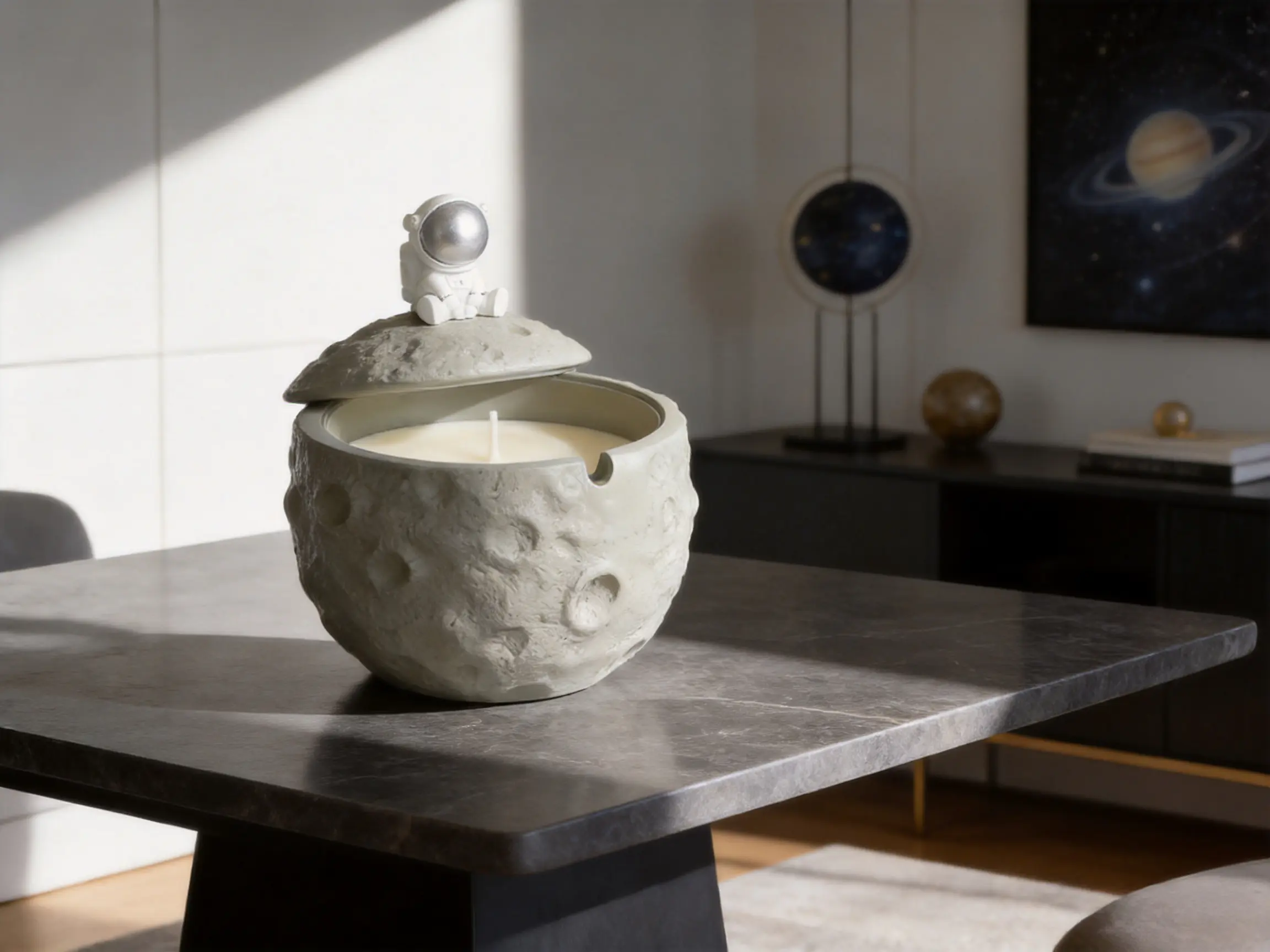
The Moon Crater Astronaut Art Candle can serve as a starting point for a broader product development program. Customization may be considered across the product itself, fragrance, labeling, packaging, and collection strategy.
Buyers may explore modifications to the crater pattern, astronaut design, lid proportions, or overall dimensions. A more realistic lunar appearance could emphasize geological texture, while a more playful interpretation could use a stylized astronaut or brighter colors. The preferred direction depends on the target market and the desired price positioning.
Other possible design directions include a seated astronaut, a standing astronaut, a flag accessory, a satellite-inspired lid, or a collection featuring different planets. Any modification should be evaluated for production feasibility, structural stability, safe use, packaging protection, and cost.
The existing concept uses a moon-like vessel together with a glossy silver helmet and white spacesuit. These colors create a clean and recognizable space theme. However, color customization may allow the product to match a retailer’s collection or a specific seasonal campaign.
Potential color directions could include graphite gray, warm ivory, metallic silver, deep blue, muted lavender, or a monochrome black-and-white palette. Color selection should take into account the material, surface texture, lighting effect, photography, and compatibility with packaging.
Fragrance is a central part of the home fragrance experience. The supplied product description focuses on the visual and atmospheric qualities of the candle but does not specify a particular scent. This creates an opportunity for buyers to select fragrance profiles that suit their market.
A calm, clean fragrance may reinforce the quiet mood of an astronaut observing space. Woody notes can support a deeper evening atmosphere, while fresh or mineral-inspired accords may connect with the idea of the moon and night sky. A soft floral, amber, vanilla, or citrus direction could make the product more accessible to broader home fragrance consumers.
Fragrance selection should be supported by appropriate testing for scent consistency, compatibility with the wax system, and performance during use. Regional preferences, seasonal demand, regulatory requirements, and packaging communication should also be considered before final approval.
Packaging is particularly important for an art candle because it must protect a sculptural product while communicating its story. A suitable color box can use space-inspired graphics, a dark sky palette, silver details, crater illustrations, or a clean scientific aesthetic. The package should make the product visible and understandable while protecting the astronaut figure and textured vessel during transport.
Customized packaging can also include product instructions, safety information, fragrance details, barcode requirements, multilingual labeling, and brand-specific messaging. For gift channels, the box may be designed to create a more complete unboxing experience. For e-commerce, protective inserts and shipping cartons may require additional attention because the product will pass through multiple handling points.
Because this is a candle, aesthetic appeal must be supported by responsible product use and appropriate quality management. Customers should follow the instructions supplied with the final product, including placing the candle on a stable, heat-resistant surface, keeping it away from flammable materials, and never leaving a burning candle unattended.
The sculptural shape may create areas with different thicknesses or textured surfaces. These characteristics make product testing important. Burn behavior, wick position, flame stability, heat distribution, and vessel performance should be evaluated during product development. The final instructions should reflect the approved product design and testing results.
Quality assurance is not limited to the candle itself. The lid, astronaut component, packaging inserts, labels, and outer carton should also be considered. A complete inspection system helps reduce the risk of damage, missing components, inconsistent appearance, or incorrect information reaching customers.
For international buyers, product compliance should be reviewed according to the destination market. Importers may need to consider applicable requirements for labeling, packaging materials, fragrance ingredients, safety warnings, and transport. Working with an experienced supply chain partner can help buyers organize these considerations, although the importer remains responsible for confirming the requirements that apply to its own market and sales channel.
Home décor stores can position the product as a sculptural accent with candle functionality. It may be displayed alongside decorative objects, small lighting products, astronomy-inspired accessories, or contemporary ornaments. The product’s unlit appearance makes it suitable for displays where candles are not actively burning.
Gift retailers can emphasize the product’s memorable theme and broad gifting potential. A clear display card or package message can explain the moon crater concept and astronaut story. It may perform well in stores that carry novelty gifts, science-related products, creative home accessories, or design-led items.
Online sellers can benefit from the product’s strong visual identity. Product photography should show the vessel from multiple angles, present the astronaut detail clearly, and demonstrate the difference between the unlit and illuminated appearance. Lifestyle images can place the candle in a calm home environment, while close-up images can show the crater texture and lid construction.
Product listings should communicate the item’s dual role as a decorative art candle and a home fragrance product. They should also provide clear information about materials, dimensions, fragrance, burn instructions, packaging, and care once those details have been confirmed for the final version.
The space theme can be adapted to seasonal and promotional campaigns without losing its core identity. It may fit gift collections, back-to-school assortments, science and discovery themes, winter night displays, or special décor launches. Retailers can also combine it with other themed candles to create a collection based on planets, stars, exploration, or imaginative travel.
A single distinctive product can become the foundation for a wider home fragrance assortment. Buyers may use the Moon Crater Astronaut Art Candle as a statement item, then develop supporting products with related colors, fragrances, or packaging.
A collection could include a smaller moon candle, a larger centerpiece version, a rocket-shaped candle, a star-shaped candle, a space-themed scented set, or a matching reed diffuser. LED candle alternatives may also be considered for customers who prefer flameless lighting. By connecting products through a shared visual language, retailers can create a stronger shelf presentation and encourage multiple-item purchases.
The company’s broader product scope includes scented candles, LED candles, gift sets, reed diffusers, and other home fragrance products. This range can support buyers seeking a coordinated product program rather than a single isolated item. The same supply chain relationship may be used to explore complementary categories and packaging formats.
Hangzhou Leo Home Trading Co., Ltd. serves overseas clients and has delivered products to more than 10 countries and regions across North America, Europe, and the Middle East. Its location in Hangzhou, together with logistics access near Ningbo Port, supports international shipment planning.
For overseas buyers, sourcing involves more than finding a visually appealing product. It also includes communication, specification confirmation, sample review, packaging coordination, quality inspection, documentation, production scheduling, and shipping arrangements. A trading partner that coordinates these activities can simplify the process for customers who do not have a local production team in China.
The company’s international trading model is designed to provide sourcing and delivery support while connecting clients with suitable production resources. This can be particularly useful for small and medium-sized brands that want customized products but may not have enough volume or internal infrastructure to manage multiple factories independently.
Art products can be sensitive to misunderstandings because words alone may not fully communicate a shape or finishing requirement. Drawings, samples, reference images, packaging layouts, and written specifications can all contribute to more accurate development.
A disciplined approval process should define the product form, color, fragrance, packaging, labeling, quantity, inspection standard, and shipping requirements. Clear documentation helps reduce variation between the approved sample and the bulk order. It also gives the buyer and supplier a common reference throughout production.
Buyers may choose the Moon Crater Astronaut Art Candle when they want to offer a product with stronger visual personality than a conventional candle. The design is distinctive, giftable, and suitable for display before and after use. It combines a decorative object with the sensory and atmospheric qualities of a candle.
They may also choose it because it can be developed as part of a customized program. The ability to discuss shapes, fragrances, labels, and packaging allows the product to be adapted for different markets. The supplier’s factory and partner network further supports options for trial orders, larger production programs, and related product development.
From a commercial perspective, the product has several layers of value. The sculptural shape attracts attention. The astronaut creates emotional interest. The candle function provides practical use. The warm glow changes the appearance of the vessel. The space theme supports gifting and seasonal merchandising. Together, these features can help the product occupy a stronger position than an undifferentiated candle.
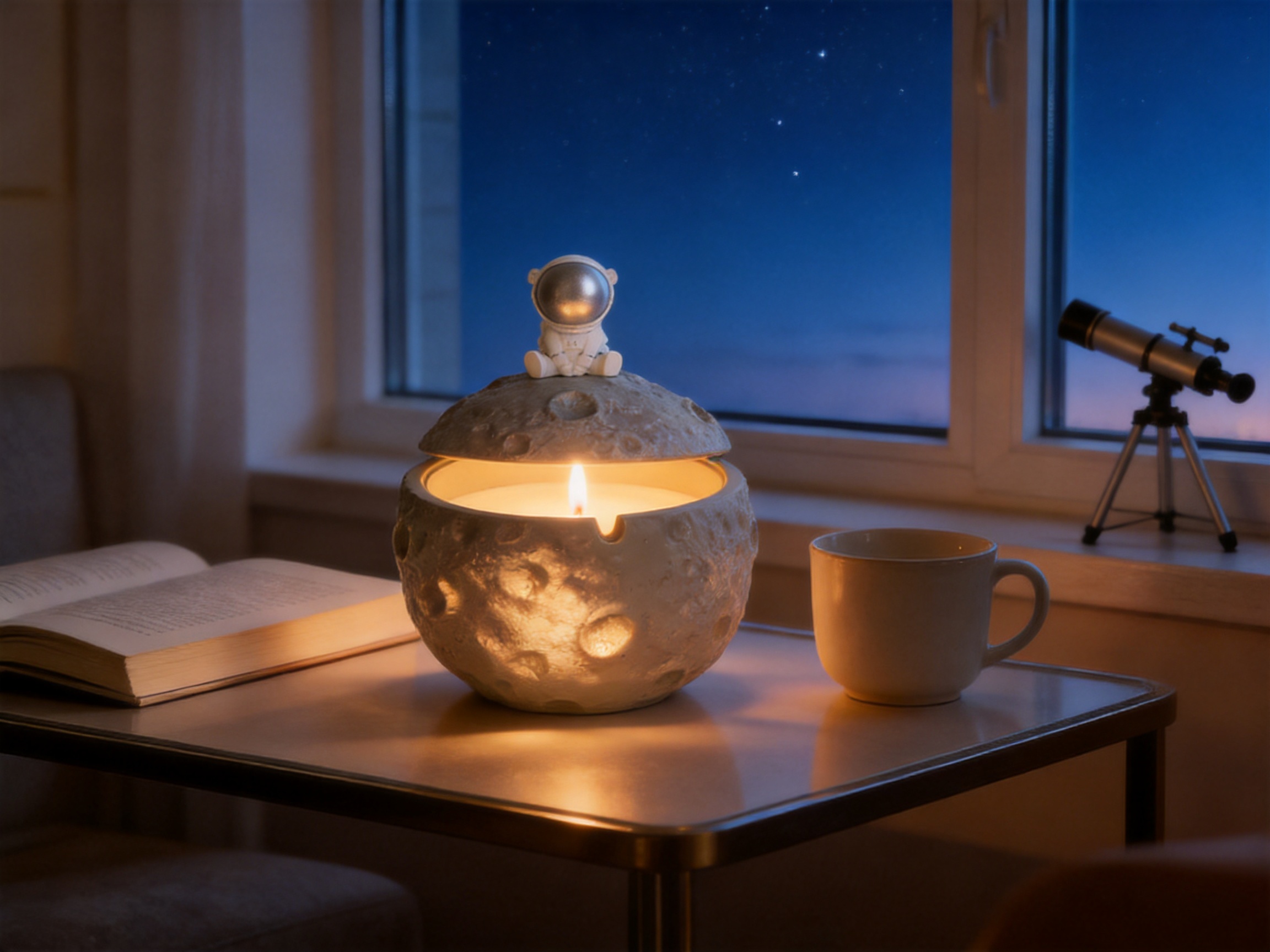
The first stage is to identify the intended customer and sales channel. A product designed for a premium home décor store may require different finishing and packaging from one intended for a novelty gift marketplace. The target market will influence color, fragrance, box design, product size, pricing, and order quantity.
At this stage, the buyer and development team should confirm the crater texture, astronaut appearance, lid structure, overall proportions, and visual style. Drawings or physical references can be used to clarify the desired result. Important details should be recorded before mold development or production preparation begins.
The candle material, wick system, fragrance, color, and surface finish should be evaluated together. A visual design may behave differently depending on the wax or material system used. Fragrance and color may also influence the final appearance and performance. Samples should be reviewed carefully before approval.
Samples should be checked for appearance, assembly, surface detail, packaging fit, fragrance impression, and candle performance. The buyer should review the sample under different lighting conditions because texture and color may appear differently in daylight, indoor lighting, and candlelight.
Packaging should be tested for presentation and protection. The box must protect the cratered vessel and astronaut component without hiding the product’s main appeal. Inserts, cushioning, product labels, safety instructions, and shipping cartons should all be considered before mass production.
Once the sample and specifications are approved, production can proceed through the coordinated factory network. Quality checks should take place during key stages, followed by finished-goods inspection. Any agreed inspection standard should be documented clearly so that the buyer understands how the shipment will be evaluated.
After launch, sales feedback can guide future production. The buyer may adjust fragrance, color, packaging, or order quantity based on customer response. Strong performance can support replenishment and the development of related space-themed or art candle products.
It is a sculptural art candle inspired by the moon’s cratered surface and space exploration. The vessel features uneven lunar-like textures, while a miniature astronaut with a glossy silver helmet and white spacesuit sits on top of the lid.
Its main difference is its sculptural form and storytelling design. Instead of relying primarily on a label or conventional container, it uses a cratered moon shape and astronaut figure to create visual interest. It can function as both a candle and a decorative object.
Yes. The moon-like vessel and astronaut figure are designed to remain visually appealing when unlit. It can be displayed on a shelf, desk, table, or other suitable location, provided it is kept away from excessive heat, moisture, and areas where it may be knocked over.
The product may appeal to home fragrance consumers, astronomy enthusiasts, science-fiction fans, design lovers, gift buyers, and customers who enjoy unusual home décor. Its imaginative theme also makes it suitable for specialty gift shops and creative lifestyle retailers.
The company provides OEM/ODM services that may include fragrance selection and development. The final fragrance options should be confirmed according to the buyer’s target market, product specifications, testing results, and applicable requirements.
The company supports customization based on drawings or samples. Buyers may discuss possible changes to the crater texture, astronaut pose, colors, proportions, or related design features. Feasibility must be reviewed before a final quotation and production plan are confirmed.
Yes. Customization services include labels and packaging. Buyers can discuss color boxes, graphics, product information, safety content, inserts, and other presentation requirements for their market or brand program.
The company reports support for smaller volumes and trial runs, as well as larger bulk delivery programs. The available quantity, minimum order requirements, sample policy, and production schedule should be confirmed for each specific project.
The company describes quality control from raw material selection through finished goods inspection and reports an in-house laboratory. Product-specific inspection items should be agreed during development and may include appearance, dimensions, assembly, fragrance, wick placement, packaging, and other requirements.
The company’s product scope includes scented candles, LED candles, home fragrance gift sets, reed diffusers, and related household products. Buyers may discuss coordinated collections or complementary products using similar themes, fragrances, colors, or packaging.
The candle should be placed on a stable, heat-resistant surface and used according to the final product instructions. It should be kept away from flammable materials, children, and pets, and it should never be left burning unattended. Buyers should follow the safety information supplied with the approved product.
The product includes a textured vessel and a miniature astronaut component, so the packaging must protect both the overall structure and the detailed finish. Strong presentation also helps communicate the space theme and improves the product’s suitability for gifting and retail display.
Retailers can emphasize its moon crater texture, astronaut story, warm internal glow, decorative function, and gift appeal. Online listings should use multiple angles, close-up photography, lifestyle images, and clear information about the fragrance, size, materials, burn instructions, and packaging once those details are finalized.
The Moon Crater Astronaut Art Candle represents a broader movement in home fragrance: the transformation of everyday products into objects with stronger design identity and emotional meaning. Its cratered vessel, miniature astronaut, and warm internal glow create a product that can be experienced visually, functionally, and imaginatively.
Compared with conventional candles, it offers more distinctive display value and stronger storytelling. Compared with a purely decorative sculpture, it adds the practical benefits of candlelight and home fragrance. Compared with standardized novelty products, it has the potential to be developed through customized fragrance, color, packaging, and related product collections.
Its commercial potential is supported by Hangzhou Leo Home Trading Co., Ltd.’s international sourcing model, coordinated factory network, customization capabilities, quality control system, laboratory support, and flexible approach to trial and bulk orders. The company’s experience in home fragrance and daily-use products provides a foundation for buyers seeking reliable product development and supply chain coordination.
For retailers, importers, and brand owners, the product offers an opportunity to build a more expressive candle assortment. It can serve as a statement item in a décor collection, a memorable gift in a specialty store, or a visually compelling product for online sales. With careful development, testing, packaging, and market positioning, this space-inspired art candle can bring together craftsmanship, atmosphere, and imaginative design in one distinctive product.
1. Product information supplied for the Moon Crater Astronaut Art Candle, including design concept, visual features, category, and intended decorative use.
2. Company profile information supplied for Hangzhou Leo Home Trading Co., Ltd., including international sourcing, OEM/ODM customization, quality assurance, partner network, delivery capacity, and export markets.
3. General principles of candle product development, including material selection, wick placement, surface finishing, packaging protection, and finished-goods inspection.
4. General home fragrance merchandising practices covering gift positioning, decorative display, seasonal collections, online product presentation, and coordinated product ranges.
5. General consumer candle safety guidance concerning stable placement, heat-resistant surfaces, supervision during burning, and separation from flammable materials.

Room 1701, Building C1, Wangjing, Xiaoshan District, Hangzhou City, Zhejiang Province, China.

+86-15937257616

Copyright© 2026 Hangzhou Leo Home Trading Co., Ltd. All Rights Reserved.

Luxury Candles Home Fragrance Manufacturers Modern Candles Factory