 English
 Français
News
Home / Author / Marina Zhao — Senior Product Sales Manager / Modern Multicolor Glazed Ceramic Sculptural Candle Holder: Artistic Design, Reliable Function, and Scalable Supply
Content
The Modern Multicolor Glazed Ceramic Sculptural Candle Holder is designed for buyers who want more from a candle accessory than basic flame support. It combines the visual impact of a small contemporary sculpture with the practical purpose of holding a standard candle securely. Its stacked profile, rounded layers, glossy finish, and warm multicolor palette create an eye-catching object for homes, hospitality settings, gift collections, lifestyle stores, and interior décor programs.
Unlike conventional candle holders that often depend on a single material, a plain silhouette, or a purely functional presentation, this design is intended to perform in two ways. When a candle is lit, it contributes to atmosphere and mood. When the candle is removed, it remains a decorative accent that can occupy a shelf, mantel, dining table, console, or display cabinet. This dual-purpose quality helps retailers present it as both a home accessory and a sculptural décor item.
The product is especially appropriate for modern, Nordic, artistic, eclectic, and softly minimalist interiors. Its earthy base tones can coordinate with natural wood, stone, linen, and neutral walls, while subtle blue and red accents introduce contrast without overwhelming the surrounding space. The result is a decorative piece with enough personality to stand out and enough flexibility to work across different visual environments.
The central design idea is a stacked, layered silhouette. Rather than presenting the candle holder as a flat platform or a simple vertical stem, the form uses rounded circular volumes to create movement and depth. The eye follows the transition from the base upward toward the candle opening, giving the object a sense of balance and rhythm.
This sculptural construction gives the product an important advantage over mass-market candle holders with generic shapes. A standard holder may serve its purpose but contribute little to the room once the flame is extinguished. The Modern Multicolor Glazed Ceramic Sculptural Candle Holder is different because its form remains visually active throughout the day. It can function as a small work of decorative art even when it is not being used for illumination.
The rounded layers also soften the overall appearance. The design does not rely on sharp geometric edges or overly ornate detailing. Instead, it uses volume, proportion, and color variation to create character. This makes it suitable for consumers who prefer contemporary decorative objects but do not want an excessively complex or heavily embellished product.
Layered circular elements create highlights and shadows across the surface. Depending on the direction of natural or artificial light, one part of the holder may appear brighter while another recedes into a deeper tone. This changing appearance can make the accessory feel different throughout the day, adding subtle visual interest to a display.
For retailers, visual depth is valuable because it improves presentation in product photography and physical merchandising. The holder can be photographed from several angles, allowing online listings to show the contours, glaze transitions, opening, and base. In a store, the rounded profile can catch attention from more than one direction, which is useful for open shelving and tabletop displays.
The form also supports coordinated merchandising. Several pieces can be grouped with scented candles, reed diffusers, decorative trays, ceramic vases, books, or seasonal accessories. Because the holder is decorative even without a candle, it can be used in styled displays that communicate a broader lifestyle concept rather than a single-product function.
The multicolor glazed surface is one of the product’s most visible competitive advantages. Instead of presenting a single uniform color, the design combines warm earthy tones with restrained blue and red accents. This approach gives the holder a handcrafted and expressive appearance while maintaining a modern overall direction.
Color variation can help a product stand apart in a crowded home décor market. Many basic candle holders are offered in monochrome white, black, gold, or metallic finishes. Those colors have broad appeal, but they may also make products appear interchangeable. The multicolor treatment gives this model a stronger identity and can help it attract consumers who are looking for decorative pieces with individuality.
The glossy finish enhances the color relationship. Light reflects across the curved surfaces, emphasizing the transitions between tones and adding a refined appearance. The glaze can also make the product easier to coordinate with other materials, including polished metal, glass, wood, marble-look surfaces, and painted furniture.
Glazed ceramic products naturally benefit from subtle variation. Changes in the way color moves across a curved surface can give each piece a distinct character. For consumers, this can create the impression that the item is more personal and less mechanically repetitive than a completely uniform accessory.
At the same time, commercial buyers need consistency. A successful supply program must balance individuality with reliable quality. Color should remain within an approved range, the main design should remain recognizable, and the finish should be checked for unacceptable defects. This is where sample approval, production inspection, and supplier coordination become important.
The company’s quality-control approach is designed to support this balance. According to the supplied company information, the business works with an in-house laboratory and applies quality controls across key stages, from material selection to finished-goods inspection. For customized projects, buyers can establish reference samples, approved color standards, packaging requirements, and acceptable variation limits before mass production begins.
Although the holder is visually expressive, its practical function remains central. The carefully shaped central opening is intended to hold a standard candle, while the balanced base supports stable placement on tables, shelves, mantels, and other flat surfaces. This combination of a secure candle position and a broad visual foundation allows the holder to serve everyday decorative and atmospheric needs.
A candle holder should not be evaluated only by its appearance. The opening must be appropriately formed, the base should sit evenly, and the overall construction should feel stable during normal use. The Modern Multicolor Glazed Ceramic Sculptural Candle Holder addresses these requirements through a compact design in which the decorative layers contribute to the object’s visual balance.
The holder is suitable for styling with scented candles, making it a natural complement to a home-fragrance product range. It can be paired with floral, woody, citrus, gourmand, or seasonal fragrances depending on the desired mood. The accessory may also be sold separately as an add-on item, included in a curated gift set, or used as part of a wider home-fragrance collection.
On a dining table, the product can serve as a centerpiece accent without requiring a large amount of space. On a mantel, it can be combined with framed artwork, vases, and seasonal ornaments. On a bedside table, it can contribute to a calm nighttime atmosphere when used in accordance with candle-safety practices. On a console or shelf, it can remain in place as a decorative sculpture between uses.
The compact format also makes it useful for hospitality and commercial interiors. Restaurants, boutique hotels, spas, salons, and event stylists may use sculptural candle holders to add warmth to reception areas, dining tables, guest rooms, or promotional installations. The multicolor finish can be incorporated into a brand’s color story or used as an accent against neutral surroundings.
The product description identifies the item as ceramic and describes a glazed ceramic surface. The supplied specification table lists the material as glass and the craftsmanship as electroplating, while also identifying the product type as a candlestick and the packaging as Styrofoam packaging. Because these descriptions are not fully consistent, buyers should confirm the final material, surface process, and technical specification for the exact production batch before placing a purchase order.
This confirmation is especially important for private-label, OEM, and ODM programs. Material affects weight, heat behavior, appearance, shipping cost, packaging design, breakage risk, and regulatory documentation. If the approved sample is ceramic with a glossy glaze, the commercial specification should state ceramic clearly. If a glass version or electroplated version is intended, the final product documentation should be updated accordingly.
Clear specification management protects both the buyer and the supplier. It prevents misunderstandings between product development, procurement, quality control, packaging, and logistics teams. A documented specification may include material composition, dimensions, weight, candle-opening diameter, color references, finish requirements, base flatness, packaging method, carton quantity, and inspection standards.
| Specification Area | Supplied Product Information | Recommended Buyer Confirmation |
| Product type | Candlestick or candle holder | Confirm intended candle size and application |
| Primary material | Ceramic in the product description; glass in the specification table | Approve the final material in writing |
| Surface appearance | Glossy multicolor glaze | Confirm color range, gloss level, and acceptable variation |
| Craftsmanship | Electroplating listed in the specification table | Clarify whether electroplating applies to the final product |
| Base function | Balanced base for stable placement | Check flatness, stability, and finished-product weight |
| Packaging | Styrofoam packaging | Confirm protection, carton strength, and sustainability requirements |
A visually distinctive product is only commercially successful when it can be produced with repeatable quality. Sculptural candle holders require attention to forming, surface finishing, color application, inspection, and protective packaging. Curved layers and recessed areas can make defects more noticeable, so the manufacturing process must be coordinated from the earliest development stage.
The company’s broader operating model is based on international trading, product development, sourcing, and supply-chain management. Founded in January 2025, the business has developed a dedicated team covering international sourcing, product development, and cross-border marketing. This structure allows product requirements to be communicated between overseas buyers and specialized production partners.
For a product such as this candle holder, the process begins with design interpretation. A drawing, reference image, or physical sample can be translated into a production brief. The team can then coordinate details such as form, dimensions, color direction, surface appearance, packaging, labeling, and target market requirements.
The first stage is typically concept alignment. The buyer and supplier establish the desired visual language, intended retail position, target customer, and functional expectations. For this model, the key elements include the stacked sculptural profile, central candle opening, glossy multicolor appearance, and stable base.
The next stage is sample development. A sample allows the buyer to evaluate proportion, visual balance, color, tactile quality, opening size, and overall presentation. It also creates a physical reference for later production. If the buyer requests changes, adjustments can be made before the design reaches mass manufacturing.
Sample approval should be detailed rather than based only on general appearance. Buyers may approve front, side, and top views; color swatches; surface gloss; packaging layout; product labeling; and the relationship between the candle and the opening. A signed or digitally documented approval sample can reduce ambiguity throughout production.
When the product is manufactured as ceramic, material preparation and forming are important to the final result. The body must be shaped accurately enough to preserve the stacked profile and ensure that the candle opening is correctly positioned. The base should remain sufficiently level to support the holder on a flat surface.
Forming may involve molds or other repeatable production methods suitable for the approved design. Complex curves and layered volumes require careful control because uneven wall thickness, deformation, or shrinkage can affect the final silhouette. Production partners must account for the behavior of the material during drying and firing or other applicable processing stages.
If the final specification uses glass or another material instead, the forming and finishing process will differ. This is another reason material confirmation is essential. The commercial product description, quality standard, and packaging design should all correspond to the actual manufacturing route.
The multicolor finish requires coordinated color application. Earthy base tones, blue accents, and red accents must be positioned and balanced so that the finished collection looks intentional. The objective is not necessarily to make every piece identical in every detail, but to ensure that each piece belongs to the same approved visual family.
Gloss level is equally important. A surface that is too dull may not deliver the intended contemporary appearance, while an excessively reflective surface may reduce the visibility of color transitions. Samples should therefore be reviewed under suitable lighting conditions and compared with the approved finish standard.
Inspection can include checks for pinholes, cracks, excessive bubbles, uneven glaze, sharp edges, poor color coverage, contamination, and visible handling marks. On sculptural products, inspectors should also examine recessed areas and the transitions between raised layers, where finishing irregularities may be more difficult to notice during a quick inspection.
The company emphasizes quality control from raw-material selection through finished-goods inspection. This approach is valuable because quality problems can originate at several points. A material issue may affect the body, a forming issue may affect stability, a finishing issue may affect appearance, and a packaging issue may cause damage during transportation.
Using a structured inspection system helps separate these risks. Incoming materials can be reviewed against agreed requirements. During production, samples can be checked for dimensions, shape, color, and surface quality. Before shipment, finished goods can be inspected for appearance, function, quantity, labeling, and packaging condition.
The company’s supply-chain network includes ten candle factories, eight jar customization partners, and eight color-box factories according to the supplied company information. While these figures primarily describe the wider home-fragrance supply chain, they demonstrate an established ability to coordinate multiple product and packaging resources. For buyers developing a candle holder alongside candles or gift sets, this integrated network can simplify project management.
For this particular product, the inspection plan should focus on several practical points. The holder should sit securely on a flat surface without rocking. The central opening should be cleanly formed and suitable for the approved candle size. The sculptural layers should match the approved shape without major distortion. The glaze should be smooth and visually consistent with the accepted color standard.
Inspectors should also look for cracks, chips, sharp edges, exposed defects, unstable bases, and damage around the candle opening. If the product is supplied in multiple colors or finishes, the assortment should be checked against the purchase order. Carton labels, inner protection, product quantity, and shipping marks should also be verified before dispatch.
For buyers selling into different markets, additional requirements may apply. These can include packaging language, labeling rules, candle-use warnings, material declarations, and retailer-specific testing. The precise requirements depend on the destination market and the intended sales channel, so they should be confirmed during the development stage.
The supplied information identifies Styrofoam packaging. Protective packaging can be useful for sculptural products because the layered form may be vulnerable to impact, abrasion, and pressure during transportation. The holder should be positioned so that its raised elements do not bear excessive load from other products or carton walls.
Packaging design should protect the base, upper structure, candle opening, and glazed surface. Internal cushioning should limit movement while avoiding pressure points. The outer carton should be appropriately sized and strong enough for stacking, handling, and long-distance shipping. Buyers may also request drop testing, vibration testing, or packaging trials before approving a large order.
Sustainability is an increasingly important consideration. If a buyer prefers alternatives to expanded foam, the supplier can be asked to evaluate molded pulp, corrugated inserts, honeycomb paper, or other protective materials. Any change should be tested carefully because reducing plastic protection without maintaining adequate shock resistance can increase breakage and total environmental impact.
Packaging can also contribute to the product’s retail value. A well-designed color box, branded sleeve, or gift-ready package can position the candle holder as a premium accessory. The company’s access to color-box customization partners may support coordinated packaging development for retail collections and seasonal programs.
The strongest advantage of this model is its combination of sculpture and utility. Many conventional candle holders are designed around a single function and have limited decorative value once the candle is removed. This product remains relevant as a stand-alone interior object, giving the buyer more opportunities for merchandising and the consumer more ways to use it.
A second advantage is the multicolor surface. A plain finish may be easier to produce, but a carefully controlled multicolor glaze can create stronger shelf appeal. It can attract customers who want a decorative accent rather than a purely practical accessory. This is particularly useful for lifestyle retailers, concept stores, gift shops, and online sellers that depend on distinctive visual presentation.
A third advantage is design versatility. The holder can complement contemporary, Nordic, artistic, and minimalist interiors. It can be displayed with candles, fragrance products, natural materials, ceramics, and textiles. This flexibility makes it easier to place within different collections and seasonal campaigns.
A fourth advantage is potential for coordinated customization. The supplier’s OEM and ODM services can support adjustments based on drawings or samples, as well as specifications, fragrance selection, labels, and packaging for broader product programs. Although the candle holder itself is a décor accessory rather than a fragrance product, it can be developed as part of a matching candle and home-fragrance assortment.
Metal candle holders often appeal through slender profiles, metallic finishes, and formal styling. They can be effective in classic or industrial collections, but they may not provide the same soft, colorful, sculptural impression as a glazed rounded form. The ceramic-style design offers greater visual warmth and can feel more like a decorative object than a hardware-like candle support.
The multicolor surface also provides a broader palette than a single metallic finish. It can coordinate with mixed-color interiors and expressive décor schemes. For retailers seeking a product with a more artistic identity, this distinction can be valuable.
Plain ceramic holders offer tactile warmth but may lack a strong point of difference if they use basic cylinders, bowls, or single-color finishes. The stacked silhouette of this product gives it greater dimensional presence, while the multicolor glaze adds a second level of differentiation.
The combination helps the holder occupy a more premium design position. It can be presented as a decorative sculpture with candle functionality rather than as an ordinary accessory. That positioning may support stronger storytelling, higher perceived value, and more distinctive online content.
Glass holders frequently emphasize transparency, reflection, or delicate elegance. This product’s sculptural layered form creates a more substantial and grounded visual effect. Warm earthy colors can make it feel more connected to natural interiors, while the rounded volumes provide a tactile appearance.
Because the supplied product information contains both ceramic and glass references, buyers should confirm which version is being ordered. The comparison above applies to the described glazed ceramic version and should not be treated as a final technical statement until the material has been documented.
Home décor retailers can position the candle holder as a statement accent for living rooms, dining spaces, bedrooms, and entryways. It can be sold as an individual piece or grouped with complementary objects. A product page may emphasize the sculptural silhouette, glossy surface, multicolor character, and suitability for standard candles.
Home-fragrance brands can use the holder as a supporting accessory for scented candle collections. It can be included in gift bundles, launch campaigns, holiday assortments, and premium subscription boxes. Pairing the holder with a coordinated candle creates a stronger unboxing experience and can encourage customers to purchase beyond the fragrance itself.
Gift companies may find the product suitable for birthdays, housewarmings, weddings, anniversaries, holidays, and corporate gifting. Its decorative value makes it less dependent on the recipient’s preference for a particular fragrance. When supplied without a candle, it can also appeal to customers who already own candles and want a more distinctive display accessory.
Interior designers and stylists can use the product in residential and commercial scenes. Its rounded profile may balance angular furniture, while its color accents can connect different decorative elements within a room. Hospitality operators can use it to create intimate table settings, provided that the product is used with appropriate candle-safety procedures.
The earthy multicolor palette can be adapted to autumn, winter, and year-round décor. In autumn, the warm tones can be combined with wood, dried flowers, and amber glass. In winter, the holder can be displayed with soft textiles, evergreen elements, and warm white candles. In spring or summer, the blue accents can be brought forward through lighter tableware and natural textures.
Seasonal flexibility extends the product’s selling period. A highly themed accessory may be relevant for only a few weeks, while a sculptural holder with a balanced color scheme can remain in a core assortment and be restyled throughout the year.
Customization is a major strength of the company’s business model. The supplied information states that the company provides R&D support based on drawings or samples and can assist with specifications, scents, labels, and packaging. For buyers, this means the product can serve as a starting point for a private-label or collection-based development program.
Possible customization areas include color combinations, glaze direction, logo presentation, packaging structure, product dimensions, candle compatibility, and coordinated accessories. Buyers may also request a family of related forms, such as smaller and larger holders or complementary trays and containers, subject to production feasibility.
Customization should be managed through a clear development schedule. The buyer should provide reference images, target dimensions, required quantities, packaging expectations, and destination-market information. The supplier can then prepare a development quotation, prototype plan, sampling schedule, and production proposal.
A single sculptural candle holder can become the anchor for a broader home-fragrance collection. A matching scented candle may use similar colors on its vessel or label. A reed diffuser can repeat one of the accent colors. Gift packaging can combine the main earthy shade with carefully selected blue or red details.
This approach helps retailers create visual consistency across multiple product categories. Instead of presenting unrelated items, the assortment communicates a recognizable design language. The candle holder can function as the decorative centerpiece, while candles, diffusers, and accessories provide additional price points and purchase occasions.
The company’s experience with scented candles, LED candles, gift sets, and related home-fragrance products may support this type of coordinated development. Its network of candle, jar, and color-box partners can help buyers manage a multi-item program through one supply-chain contact.
The supplied company profile states that daily production capacity across its supply chain can reach up to 50,000 units, while also supporting smaller volumes and trial runs. For buyers, this combination is useful because product development often begins with samples or limited quantities before moving into larger replenishment orders.
Trial runs can help test customer response, packaging performance, retail pricing, and online conversion before a full-scale commitment. Once demand is established, coordinated production can support larger orders and repeat replenishment. The appropriate quantity will depend on the specific candle-holder factory, material, customization requirements, and packaging plan, so order capacity should be confirmed for each project.
Flexible delivery is particularly important for seasonal home décor. A late shipment can cause a retailer to miss a holiday window or promotional campaign. The company’s supply-chain coordination and logistics experience are intended to help clients organize production and shipment planning more efficiently.
The company is located in Hangzhou, Zhejiang Province, with logistics access near Ningbo Port. This location can support export planning for overseas buyers. Shipping arrangements should still be confirmed according to destination, incoterms, carton dimensions, order volume, customs requirements, and the fragility of the finished goods.
The company reports experience supplying customers in more than ten countries and regions across North America, Europe, and the Middle East. This international orientation is relevant for buyers who need communication support, export documentation, packaging coordination, and delivery planning across borders.
Different markets may have different expectations for design, packaging, labeling, and candle-related safety communication. A product that is successful in one market may need adjustments in color, language, box format, or merchandising position for another. The supplier’s customization model can help buyers adapt the product while preserving its main sculptural identity.
For North American and European lifestyle markets, the holder may be positioned around modern décor, artistic craftsmanship, and giftability. In Middle Eastern markets, it may complement hospitality styling, decorative displays, and premium gifting, depending on the selected colorway and packaging. In every case, market research and buyer-specific compliance review remain necessary.
A professional sample review should begin with the overall silhouette. Place the holder on a level surface and inspect it from the front, sides, and top. Confirm that the stacked layers create the intended visual rhythm and that the product does not lean or appear distorted.
Next, evaluate the base. The holder should sit firmly without rocking under normal handling. The contact area should not contain severe glaze buildup, sharp protrusions, or other defects that compromise stability. If the product will be used on delicate furniture, buyers may also consider whether a protective base pad is appropriate.
Inspect the central candle opening carefully. It should be clean, centered as intended, and compatible with the approved candle. Test the fit using a representative candle rather than relying only on visual inspection. The candle should be held securely without excessive looseness or forceful insertion.
Review the glaze in different lighting conditions. Look for consistent gloss, attractive color transitions, and the absence of unacceptable marks. Since handcrafted-looking variation may be part of the design, the buyer should distinguish between acceptable character and actual production defects.
Finally, review the packaging. Shake testing, controlled drop testing, or simulated transport can reveal whether the internal protection is sufficient. A product that looks perfect at the factory but arrives chipped or cracked cannot deliver commercial value, so packaging approval should be treated as part of product approval.
The holder is intended to support a candle, but safe use remains essential. It should be placed on a stable, heat-resistant, level surface away from curtains, paper, furniture edges, children, pets, and flammable materials. The candle should be kept upright and should never be left burning unattended.
Buyers should provide suitable care and safety guidance with the final product. Instructions may include trimming the wick, avoiding excessive burn time, allowing the holder to cool before handling, and discontinuing use if the product becomes damaged. The exact wording should be reviewed for the intended market and candle type.
Material and construction confirmation is also part of responsible product development. If the finished item is ceramic, glass, or another material, the buyer should ensure that the product information and safety guidance accurately describe it. Any testing requirements related to heat, coating, or candle compatibility should be addressed before commercial launch.
The product can be positioned at the intersection of home fragrance, interior decoration, and collectible design. This wider positioning gives retailers more storytelling opportunities than a basic candle accessory. Product descriptions can focus on its sculptural shape, multicolor glaze, balanced base, and ability to remain decorative when not in use.
Visual content should show the holder both with and without a candle. Images with a lit candle communicate atmosphere and function, while images without a candle emphasize the sculptural form. Close-up photography can reveal the glaze, color transitions, and rounded layers. Lifestyle photography can show how the product fits into a complete interior setting.
For online marketplaces, the product title and bullet points should communicate the primary search terms without losing the design story. Relevant concepts may include sculptural candle holder, multicolor ceramic décor, modern candlestick, glazed home accessory, artistic tabletop decoration, and giftable interior accent.
For physical stores, merchandising should avoid hiding the silhouette behind tall products. Open shelving, pedestal displays, and grouped tabletop arrangements can help customers see the layered form. Pairing it with a candle in a complementary color may demonstrate use without making the accessory appear dependent on the candle.
Home-fragrance and décor programs often involve more than one supplier. A retailer may need candles, vessels, labels, cartons, accessories, fragrance oils, and shipping cartons. Coordinating these elements separately can increase communication time and create inconsistencies in color, timing, and packaging.
The company’s integrated approach is intended to reduce this complexity. Its network includes specialized resources for candle production, jar customization, and color-box manufacturing. This can give buyers a single point of coordination for a broader assortment, while still allowing specialized factories to perform the relevant production work.
Supply-chain integration can also support cost management. Consolidating product development, packaging coordination, inspection, and shipment planning may reduce duplicated communication and help buyers compare options more efficiently. The final commercial benefit will depend on order quantity, customization level, materials, and shipping terms, but the structure offers a practical foundation for international sourcing.
The company describes refinement as a core value, extending from formulation and craftsmanship to export documentation. This principle is particularly relevant to sculptural décor, where small details can influence perceived value. A clean opening, level base, smooth finish, accurate color, and well-protected package all contribute to the customer’s impression.
Execution is another stated value. For overseas buyers, execution means converting approved instructions into correct samples, production, packaging, and delivery. A reliable supplier should record requirements, identify potential conflicts, communicate changes promptly, and maintain control over the approved specification.
Warmth, the company’s third stated value, reflects a service philosophy suited to home and lifestyle products. While quality and efficiency are essential, communication and cooperation also influence project success. Buyers often need advice on materials, packaging, fragrance coordination, market positioning, and production feasibility. A responsive team can help turn a concept into a commercially practical product.
The company’s commitment to long-term growth in personal care, home, and ambient-fragrance categories supports the potential for repeat cooperation. A buyer may begin with the candle holder, then expand into scented candles, LED candles, reed diffusers, gift sets, or other household products as the relationship develops.
A clear purchasing process begins with a product brief. The brief should define the product name, intended market, quantity, target price, material, dimensions, candle compatibility, finish, packaging, branding, and delivery expectations. Any reference images or samples should be included.
The second step is technical clarification. Because the supplied information contains differing material and craftsmanship references, buyers should request a confirmed specification sheet. The sheet should identify the final material, process, dimensions, tolerance, weight, opening size, packaging format, and inspection requirements.
The third step is sample approval. Buyers should review the physical sample carefully and record requested changes. If a color variation is acceptable, it should be defined. If the product must match a specific candle, that candle should be used during compatibility testing.
The fourth step is pre-production confirmation. Before mass production, the supplier and buyer should confirm the approved sample, artwork, packaging, order quantity, production schedule, payment terms, shipping terms, and quality standard.
The final step is inspection and shipment. Finished goods should be checked before dispatch, with attention to appearance, function, quantity, packaging, and carton condition. Documentation should be retained for future replenishment so that repeat orders can maintain the same commercial standard.
The product is designed to hold a standard candle while also functioning as a decorative sculptural object. It can be used for mood lighting, tabletop styling, home decoration, hospitality presentation, and gift collections.
Its stacked rounded silhouette and multicolor glossy finish give it a stronger decorative identity. It remains visually appealing when no candle is present, which allows it to be marketed as both a functional accessory and a small interior sculpture.
The product is suitable for contemporary, Nordic, minimalist, artistic, eclectic, and warm modern interiors. Its earthy base tones provide neutrality, while blue and red accents add visual contrast.
The product description identifies it as glazed ceramic, but the supplied specification table lists glass and electroplating. Buyers should confirm the final material and surface process with the supplier before ordering or publishing technical product information.
The company provides OEM and ODM support based on drawings or samples. Potential customization may include color, dimensions, finish, packaging, labels, and coordination with matching candles or other home-fragrance products, subject to production feasibility.
Yes. Its decorative appearance makes it suitable for pairing with scented candles, LED candles, fragrance products, gift boxes, and seasonal home-accessory collections. Packaging and product combinations should be developed according to the target market.
Buyers should check the silhouette, base stability, candle-opening size, glaze quality, color consistency, cracks, chips, sharp edges, surface marks, packaging protection, and compatibility with the approved candle.
The supplied information lists Styrofoam packaging. Buyers should confirm the exact inner protection and outer carton design. Because the product has raised sculptural elements, packaging should prevent movement, impact, abrasion, and pressure during shipping.
The company states that it supports smaller volumes and trial runs in addition to larger production programs. Specific minimum order quantities, sampling costs, and production capacity should be confirmed for the selected material, colorway, and packaging design.
It is described as being designed for a standard candle, but the precise candle diameter should be confirmed. Buyers should test the approved holder with the intended candle before commercial sale and provide appropriate candle-safety instructions.
The company reports deliveries to more than ten countries and regions across North America, Europe, and the Middle East. Market-specific packaging, labeling, safety, and import requirements should be reviewed for each destination.
The company’s product scope includes personal care, home and garden, daily tools, scented candles, LED candles, gift sets, reed diffusers, and related household products. Its supplier network also includes candle factories, jar customization partners, and color-box factories.
Specification confirmation ensures that the material, finish, dimensions, packaging, and product claims match the actual production item. It is particularly important here because the supplied product description and specification table contain different material and craftsmanship references.
The Modern Multicolor Glazed Ceramic Sculptural Candle Holder offers a compelling combination of visual distinction and everyday utility. Its stacked silhouette gives it the presence of a small sculpture, while its central opening and balanced base support practical candle use. The glossy multicolor finish adds depth, personality, and merchandising flexibility, helping it stand apart from plain or purely functional candle accessories.
Its commercial potential extends across home décor, home fragrance, gifting, hospitality, interior styling, and seasonal retail. It can be sold independently, paired with candles, or developed as part of a larger coordinated collection. The company’s OEM and ODM capabilities, quality-control system, supplier network, flexible order support, and international logistics experience provide a foundation for buyers seeking a reliable sourcing partner.
Before production, buyers should resolve the material discrepancy in the supplied specifications and approve a complete technical sheet. Once the material, finish, candle compatibility, packaging, and inspection requirements are confirmed, the product can become a distinctive addition to a modern home-accessory assortment.

Modern Multicolor Glazed Ceramic Sculptural Candle Holder
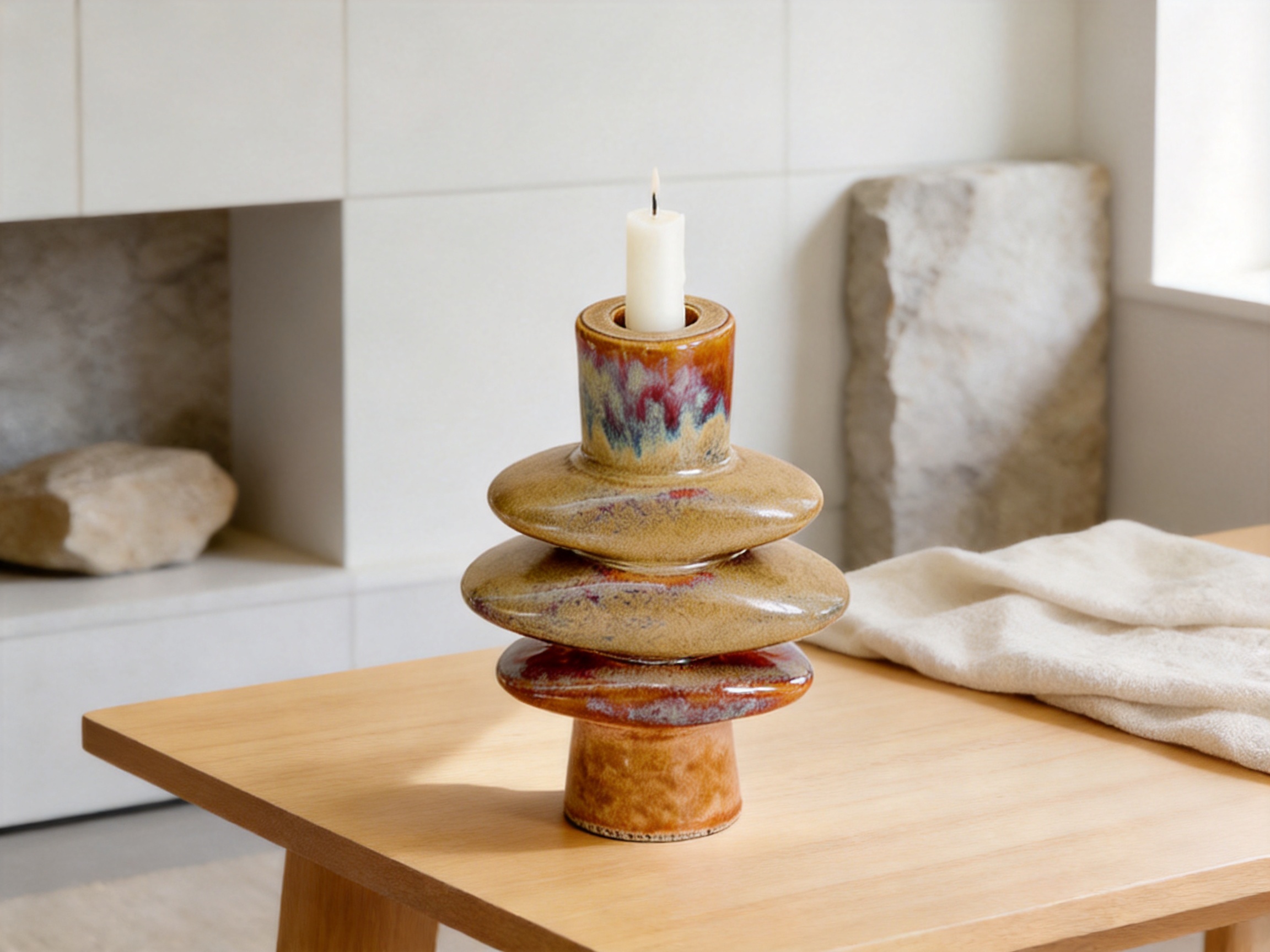
The holder’s sculptural profile makes it suitable for styled interiors, retail displays, and gift presentations where decorative presence is as important as function.
A carefully approved color and finish standard helps maintain the intended balance between individual glaze character and consistent commercial quality.
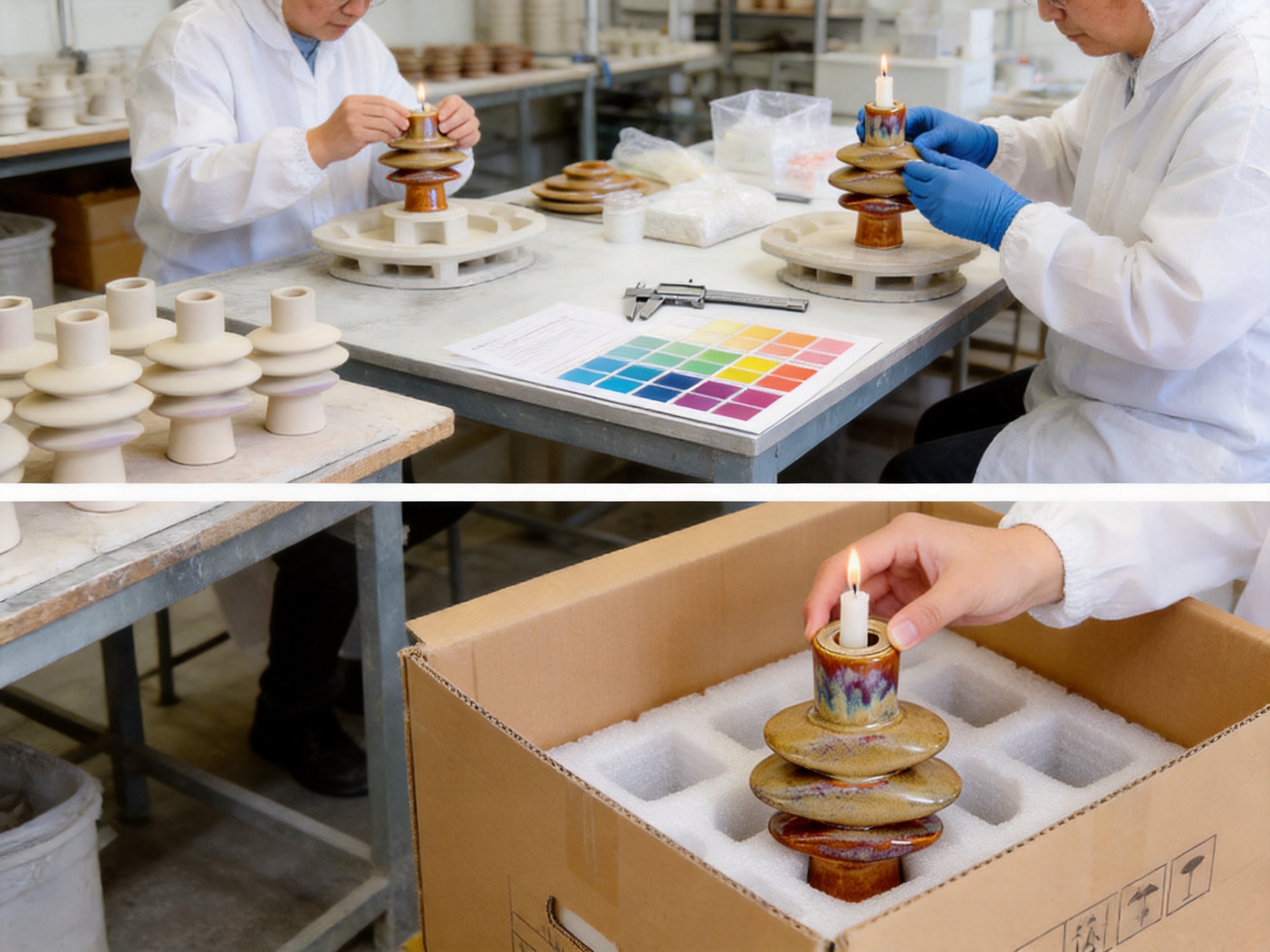
Protective packaging should be tested to preserve the raised form, glazed surface, base, and candle opening throughout international transportation.
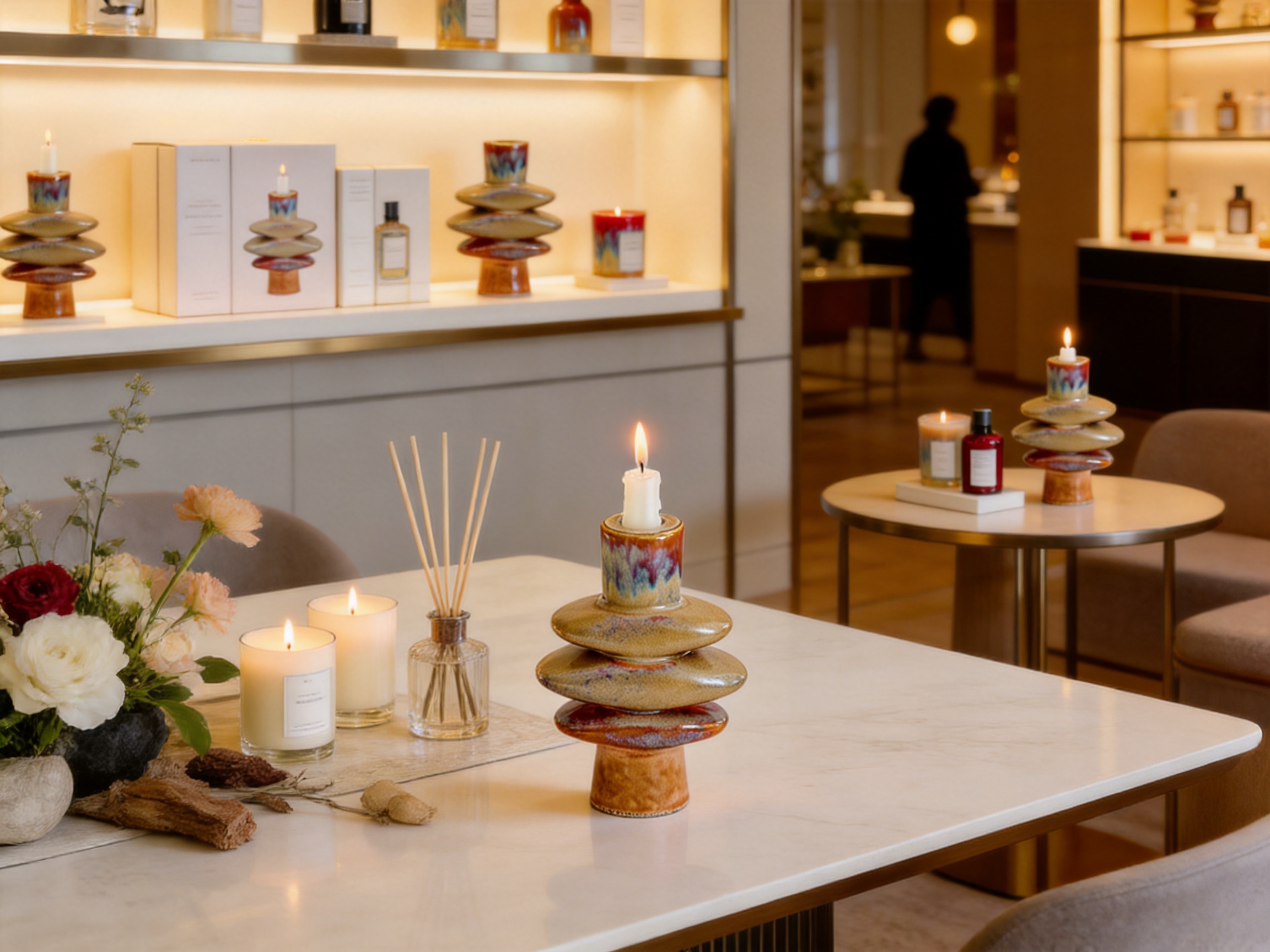
1. Product information and technical details supplied for the Modern Multicolor Glazed Ceramic Sculptural Candle Holder.
2. Company profile and service information supplied for the international sourcing, customization, quality-control, and logistics capabilities of the manufacturer and trading partner.
3. General principles of ceramic product development, glaze inspection, packaging protection, and home-accessory quality management.
4. General candle-use, handling, display, and fire-safety guidance for household decorative accessories.

Room 1701, Building C1, Wangjing, Xiaoshan District, Hangzhou City, Zhejiang Province, China.

+86-15937257616

Copyright© 2026 Hangzhou Leo Home Trading Co., Ltd. All Rights Reserved.

Luxury Candles Home Fragrance Manufacturers Modern Candles Factory