 English
 Français
News
Home / Author / Marina Zhao — Senior Product Sales Manager / Green Cork-Lid Glass Jar Candle: Natural Design, Reliable Quality, and Flexible Customization
Content

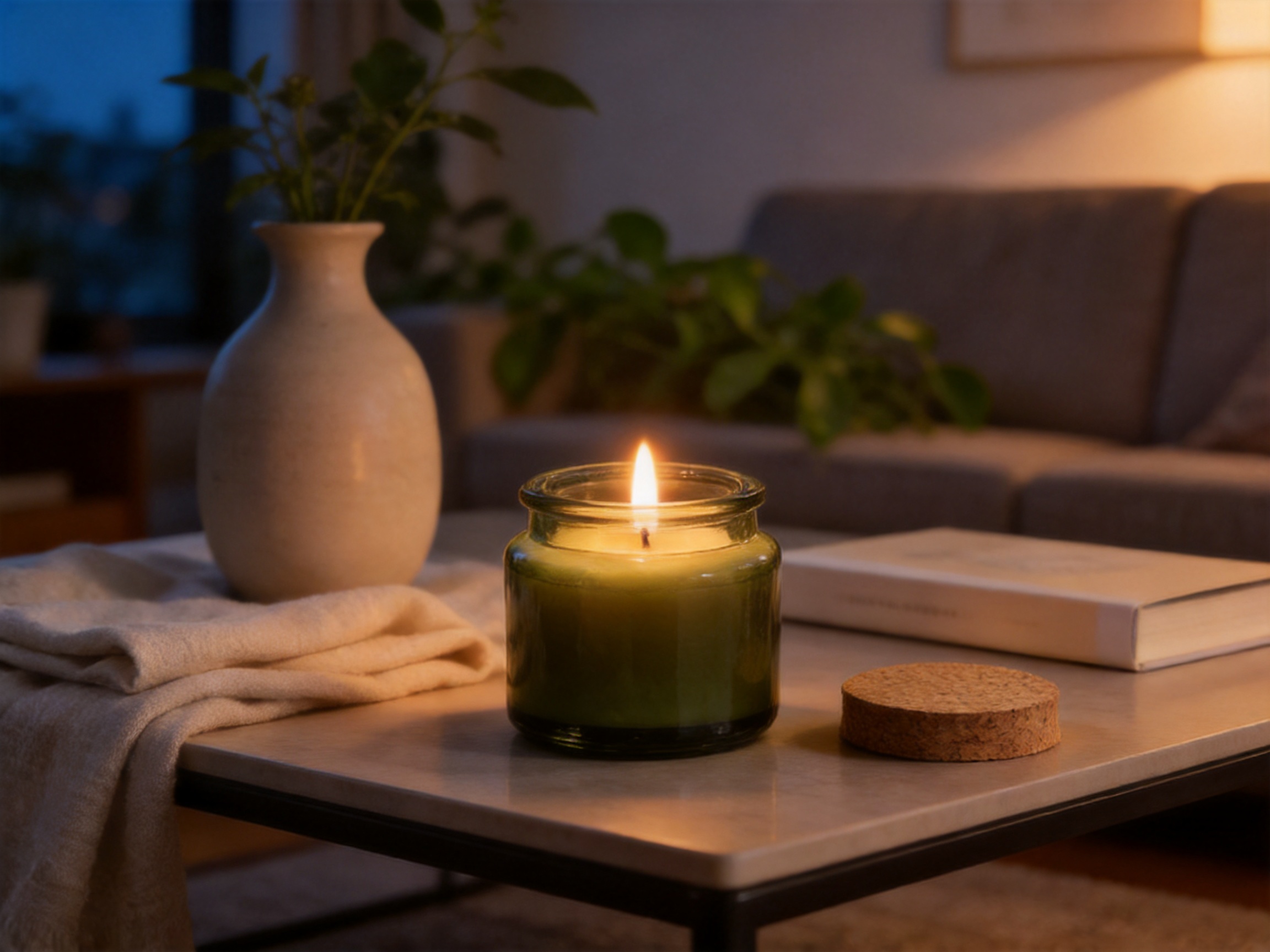
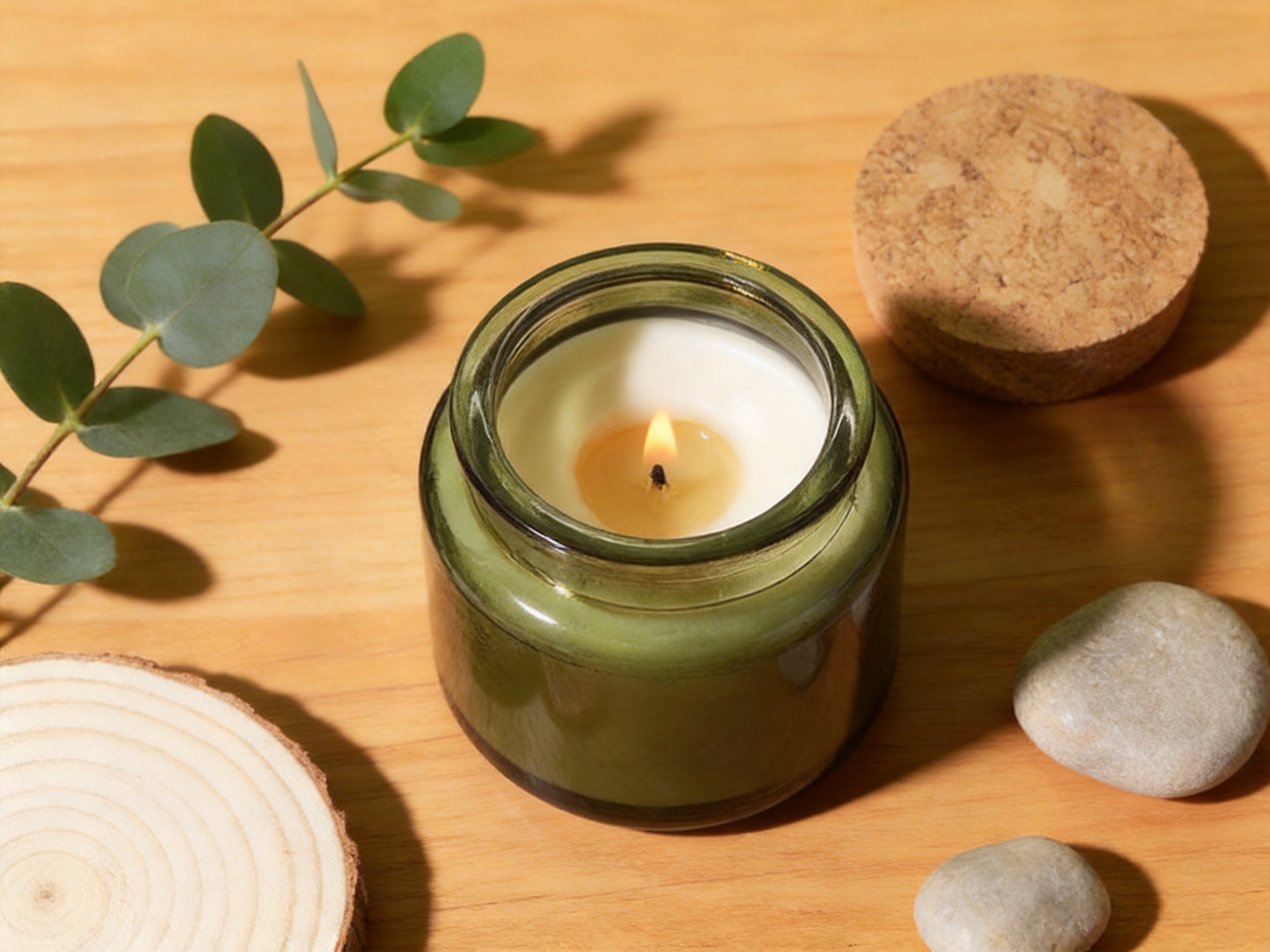
The green cork-lid glass jar candle combines calm visual styling, practical protection, and dependable everyday performance in one versatile home fragrance product. Its colored glass body creates a nature-inspired appearance, while the warm flame adds a soft and inviting glow to living spaces, bedrooms, work areas, hospitality environments, and gift collections. The natural cork lid provides an additional decorative element and helps protect the candle surface from dust when the product is not in use.
As consumers increasingly look for home fragrance products that offer both sensory comfort and attractive interior styling, jar candles have become an important category for retailers, gift companies, lifestyle brands, and e-commerce sellers. However, not every jar candle offers the same combination of appearance, stability, packaging potential, and supply chain support. The green cork-lid glass jar candle is designed to answer these market needs through a balanced product structure and a flexible customization approach.
Hangzhou Leo Home Trading Co., Ltd. supports the product with international sourcing, product development coordination, quality control, customization, and cross-border delivery services. The company works with a network that includes candle factories, jar customization partners, and color box factories, allowing buyers to develop product lines that are consistent with their target markets and sales channels.
The green cork-lid glass jar candle is a decorative scented candle housed in a thick glass container with a green exterior tone and a fitted cork lid. The combination of green glass and cork creates a warm, organic appearance that can complement modern, rustic, Scandinavian, natural, and wellness-oriented interior styles.
The product is suitable for multiple market applications. It can be positioned as a personal home fragrance item, a seasonal decoration, a housewarming gift, a hospitality amenity, a wellness accessory, or part of a coordinated scented gift set. Its neutral yet distinctive appearance makes it suitable for different customer groups, from consumers seeking a relaxing atmosphere to retailers developing a nature-inspired lifestyle collection.
The candle is designed to provide more than fragrance alone. When lit, the flame passes through the green glass and produces a gentle visual effect. The jar helps contain the candle material, supports stable placement, and gives the item a finished appearance that is more suitable for display than many basic container candles.
| Product Feature | Customer Benefit | Commercial Value |
|---|---|---|
| Green glass jar | Creates a calm and nature-inspired visual impression | Supports decorative positioning and shelf appeal |
| Cork lid | Helps keep dust away when the candle is stored | Adds a natural design detail and supports gift presentation |
| Thick glass construction | Offers a stable and durable container | Improves perceived quality and supports repeated display |
| Soft, even flame | Provides ambient lighting and a relaxing atmosphere | Expands use beyond fragrance into décor and gifting |
| Customizable supply model | Allows adjustment of specifications, fragrance, labels, and packaging | Helps buyers create market-specific product lines |
| Multiple production partners | Supports sourcing flexibility and bulk supply planning | Useful for both trial orders and larger replenishment programs |
Color is one of the first factors customers notice when selecting a decorative candle. The green glass body gives this product a softer and more natural appearance than transparent, white, or highly metallic containers. Green is commonly associated with plants, freshness, balance, and quiet outdoor environments. As a result, it can communicate relaxation before the candle is even lit.
The glass color also helps the product function as a decorative object during the day. Many candles are purchased not only for their fragrance but also for the way they contribute to a room’s appearance. A green jar can be placed on a coffee table, bedside table, bookshelf, bathroom shelf, office desk, or reception counter without requiring a separate decorative holder.
When the wick is lit, the warm flame contrasts gently with the cooler green tone of the container. This creates a layered visual effect: the jar retains its colored identity while the flame provides warmth and movement. The result is suitable for evening relaxation, reading, meditation, dining, and quiet social settings.
The product’s visual flexibility is also valuable for commercial buyers. Green can be used in spring and summer collections, botanical-themed ranges, eco-inspired lines, wellness assortments, holiday displays, and year-round home fragrance programs. With appropriate labels and packaging, the same basic jar format can be adapted to different branding directions.

Green Cork-Lid Glass Jar Candle
The cork lid is one of the product’s most recognizable design features. It introduces a natural material into the overall construction and creates a pleasing contrast with the smooth glass container. This contrast can make the candle feel more crafted and considered than a basic jar with a standard plastic or metal cover.
In practical use, the lid helps cover the candle when it is not being burned. This can reduce exposure to airborne dust and help keep the surface cleaner during storage or display. A covered candle can also present a more orderly appearance on a shelf, especially when multiple units are arranged in a retail display or gift box.
The lid contributes to the product’s gifting potential as well. Natural cork is visually connected with wood, plants, handmade goods, and sustainable lifestyle products. Although the environmental characteristics of a final product depend on the complete bill of materials, packaging, sourcing, and disposal conditions, the cork detail can support a nature-oriented product story when communicated accurately.
The lid also provides an opportunity for customization. Depending on the buyer’s requirements, the top surface may be considered for branding, printed identification, laser marking, or coordinated packaging treatment. Any such customization should be evaluated according to production method, order quantity, surface requirements, and final use conditions.
Compared with an uncovered candle, a lidded candle often gives customers a stronger impression of completeness. The cover makes the item feel more like a finished home accessory rather than a simple consumable. This can support premium positioning, gift presentation, and organized storage.
The glass jar provides a stable housing for the candle and creates a clear boundary between the wax interior and the surrounding environment. Its substantial construction supports a dependable tabletop presence, which is especially important for a product intended for living rooms, bedrooms, workspaces, and other frequently used areas.
A well-presented glass container can also improve the perceived value of a candle. Consumers often associate glass with quality, durability, and reusability potential. While the final reuse or recycling result depends on local facilities and the user’s handling practices, glass remains a familiar material for home fragrance packaging and is widely accepted by customers who prefer solid, substantial containers.
The jar’s shape provides a consistent surface for labeling. This is useful for product information, fragrance names, safety instructions, brand identity, barcode placement, and collection design. A regular label area also makes it easier for retailers to develop several fragrance variations that look coordinated when displayed together.
The green coloration adds another level of differentiation. In a crowded candle market, products with plain clear glass may appear similar from a distance. A distinctive green jar can create faster visual recognition and help a collection stand apart on shelves, online listing images, and promotional displays.
The thick glass construction is also beneficial for product handling during transport and retail presentation. Buyers should still use suitable protective packaging, drop testing, and shipment procedures, because all glass products require careful logistics. However, a stable container paired with appropriate packaging can support more reliable movement through the supply chain.
The green cork-lid glass jar candle is intended to perform as both a fragrance product and an ambient lighting accessory. When lit, the flame creates a soft, even visual glow that can make a room feel more comfortable and intimate. This dual role increases the number of situations in which the product can be used.
In a living room, the candle can contribute to a relaxed evening atmosphere. In a bedroom, it can be used as part of a calming nighttime routine, provided that it is extinguished before the user leaves the room or goes to sleep. In a workspace, it can serve as a decorative accent during breaks or quiet periods, subject to appropriate fire safety practices. In hospitality settings, it can support a welcoming visual presentation.
The candle’s performance depends on several technical factors, including wax selection, wick design, fragrance load, container dimensions, curing conditions, and burn testing. A professional supply process should evaluate these factors together rather than treating the jar, wax, fragrance, and wick as separate decisions.
For commercial buyers, this integrated approach is important because a visually attractive candle must also provide a consistent user experience. A suitable wick should be matched to the container diameter and wax formulation. The fragrance should be tested for cold throw, hot throw, stability, and compatibility with the selected wax. The finished candle should be evaluated under controlled conditions before mass production.
Burn performance may vary according to the final specifications and fragrance formula. Therefore, buyers should request production samples and conduct their own validation before approving large orders. Testing should include flame behavior, melt pool development, container temperature, scent release, residue, lid fit, label adhesion, and packaging durability.
Basic candles can meet a low-cost need, but they may not offer the same combination of visual identity, protection, and merchandising flexibility. A simple uncovered candle may have limited dust protection. A plain container may provide fewer opportunities for differentiation. A lightweight package may reduce perceived value or create additional concerns during transportation and display.
The green cork-lid glass jar candle addresses these gaps through a more complete design. It combines a recognizable color, a natural lid, a sturdy container, and a warm lighting effect. These features create several points of customer appeal rather than relying only on fragrance.
Compared with highly decorative candles featuring complex shapes, the jar format can be easier to display, package, stack, and integrate into a broader collection. Shaped candles can attract attention, but they may require specialized packaging and may burn differently depending on their geometry. A jar candle offers a familiar format that many customers understand immediately.
Compared with low-cost plastic containers, glass can provide a more substantial appearance and a stronger premium impression. Compared with entirely clear glass, green glass offers more color identity and a more distinctive shelf presence. Compared with candles without lids, the cork cover provides a useful finishing detail and helps protect the candle during storage.
These advantages do not mean that one format is suitable for every market. Buyers should select the product according to customer preferences, target pricing, shipping requirements, regulatory expectations, and sales channel. The strength of this candle is its balance: it offers a decorative appearance while remaining practical enough for everyday use and scalable enough for commercial development.
| Comparison Point | Basic Uncovered Candle | Green Cork-Lid Glass Jar Candle |
|---|---|---|
| Visual recognition | May depend mainly on the label | Supported by green glass and cork detailing |
| Dust protection | Limited when stored uncovered | Lid helps cover the candle surface |
| Gift presentation | May require additional packaging | Finished lidded appearance supports gifting |
| Interior styling | Often more visually neutral | Offers color, material contrast, and candlelight |
| Display stability | Depends on the individual container | Thick glass construction supports a stable presence |
| Collection development | May require multiple container designs | One jar format can support several fragrances and labels |
| Customization potential | Can vary by supplier | Supports coordinated work on fragrance, labels, specifications, and packaging |
Although Hangzhou Leo Home Trading Co., Ltd. operates as an international trading and supply chain partner, its capabilities are supported by coordinated manufacturing resources. The company’s product development model connects buyers with suitable candle factories, jar customization partners, and packaging suppliers. This structure allows the product to be developed as a complete commercial item rather than as an isolated candle component.
The product development process begins with understanding the buyer’s objectives. These may include target market, retail price, desired fragrance direction, jar color, container size, label style, packaging format, order quantity, and delivery schedule. Clear communication at this stage helps reduce avoidable adjustments later in the project.
After the initial requirements are identified, the jar and lid specifications can be reviewed. Important considerations may include glass thickness, jar dimensions, opening diameter, lid fit, color consistency, surface finish, label area, and packaging clearance. The green tone should be checked through samples or approved color references, because lighting conditions and production batches can influence perceived color.
The candle formula is then developed or selected according to the desired performance and market positioning. Wax type, fragrance concentration, wick size, and curing time all influence the finished result. The technical team and manufacturing partner should assess how the formulation behaves inside the selected glass jar.
Sample production is a critical stage. Samples enable the buyer to examine appearance, fragrance, lid fit, flame behavior, label placement, and overall quality. They also allow the supplier to identify technical issues before the project enters bulk production. For customized orders, sample approval should be documented clearly so that production teams have a reliable reference.
Once specifications are approved, the production schedule can be coordinated across the candle factory, jar supplier, and packaging partner. This is an important strength of an integrated supply chain model. If each component is sourced independently without centralized coordination, differences in timing, color, dimensions, or packaging fit may create delays. Coordinated management helps align the components.
Raw material selection has a direct influence on product quality. Relevant materials may include wax, fragrance, wick, glass, cork, labels, cartons, protective inserts, and shipping boxes. Each component should be reviewed for suitability, consistency, and compatibility with the intended product specification.
For the candle itself, the wax should provide a stable base for the fragrance and support an appropriate melt pattern. The wick should be selected according to the jar’s internal diameter and the formula’s burn behavior. The fragrance should be compatible with the wax and tested for performance in the actual container rather than evaluated only in isolation.
The glass jar should be inspected for surface quality, color consistency, dimensional accuracy, and visible defects. The cork lid should be checked for fit, appearance, and consistency. Packaging materials should protect the glass during handling and transport while also presenting the product in a manner appropriate for the target market.
Hangzhou Leo Home’s supply network includes eight jar customization partners and eight color box factories according to the company information provided. This network gives buyers access to different options for container development and retail packaging. It can also support the creation of coordinated packaging programs for several product variations.
A professional candle requires balance among its primary functional components. Increasing fragrance concentration without evaluating wick performance may affect flame behavior. Changing wax composition may alter the melt pool and scent release. Changing jar diameter may require a different wick selection. For this reason, product development should treat the formula and container as a connected system.
Fragrance development can be adapted to different market preferences. Buyers may request floral, botanical, woody, fresh, fruity, sweet, clean, or seasonal scent directions. The fragrance name, color palette, label language, and packaging design can then be coordinated to create a consistent collection.
The company provides OEM and ODM support for fragrance selection and product customization. OEM services may be suitable when a buyer already has a clear specification or brand concept. ODM services may be useful when a buyer wants assistance developing a product from a general market direction. In both cases, samples and approvals remain important steps before production.
Burn testing should be conducted using the final formula, final wick, final jar, and final lid configuration. Testing should not rely only on a similar container or a preliminary formula. The completed product is the most reliable basis for performance assessment.
Inspection of the glass container may include checking for cracks, chips, bubbles, scratches, uneven coloration, dimensional variation, and surface contamination. The inspection standard should be defined according to the buyer’s quality expectations and the intended retail positioning.
The cork lid should be inspected for shape, surface condition, color, odor, and fit. It should sit securely on the jar without creating unnecessary difficulty for the customer. The lid should also be evaluated after packaging and transportation simulation to confirm that it remains properly aligned.
Because the product combines two visually different materials, consistency is especially important. A green jar with a poorly matched or damaged cork lid may reduce the overall impression of quality. Coordinated inspection helps ensure that the finished product looks intentional and refined.
Quality assurance is a central part of the company’s stated operating model. Hangzhou Leo Home reports that it uses strict quality control from raw material selection through finished goods inspection. This approach is important for home fragrance products because quality problems can occur at multiple stages, from container defects and label errors to fragrance inconsistency and packaging damage.
The company also reports access to an in-house laboratory. A laboratory-supported quality process can help evaluate materials, formulas, and product performance in a more systematic manner. Laboratory testing does not replace finished-product inspection, but it can provide useful information during development and production control.
Quality control may be organized into several stages:
First, incoming materials can be reviewed before they enter production. This includes checking glass jars, cork lids, wax, fragrance materials, wicks, labels, boxes, and protective packaging. Early inspection helps prevent nonconforming materials from moving into later stages.
Second, in-process checks can be carried out during candle filling, cooling, labeling, lid fitting, and packing. These checks help identify issues while they are still easier to correct.
Third, finished-product inspection can assess appearance, dimensions, net content, fragrance presentation, label accuracy, lid fit, packaging condition, and sampling-based burn performance where appropriate.
Fourth, shipment inspection can verify carton quantities, outer carton markings, palletization, loading conditions, and documentation. These details are important for international buyers because an accurately produced item can still encounter problems if it is packed or documented incorrectly.
Quality
Product: Green Cork-Lid Glass Jar Candle
PREV:Golden Wax 464 Soy Candle Wax: A Professional Foundation for High-Performance Container CandlesNEXT:Matte Black Evil Eye Embossed Marble Jar Candle: A Sculptural Statement in Modern Home Fragrance
Be the First to Know
For exclusive deals and latest offers, sign up by entering your email address below.
Contact Information
Copyright© 2026 Hangzhou Leo Home Trading Co., Ltd. All Rights Reserved.  Luxury Candles Home Fragrance Manufacturers Modern Candles Factory |
|---|