 English
 Français
News
Home / Author / Marina Zhao — Senior Product Sales Manager / 300g Soy Wax Scented Ceramic Jar Candle: A Refined Choice for Modern Home Fragrance
Content
Home fragrance has developed from a simple decorative category into an important part of modern lifestyle design. Consumers now look for products that combine attractive styling, reliable performance, responsible material choices, and a memorable sensory experience. A candle is no longer judged only by whether it produces a flame. Its container, wax formulation, fragrance character, burn quality, safety, packaging, and after-use value all contribute to the buying decision.
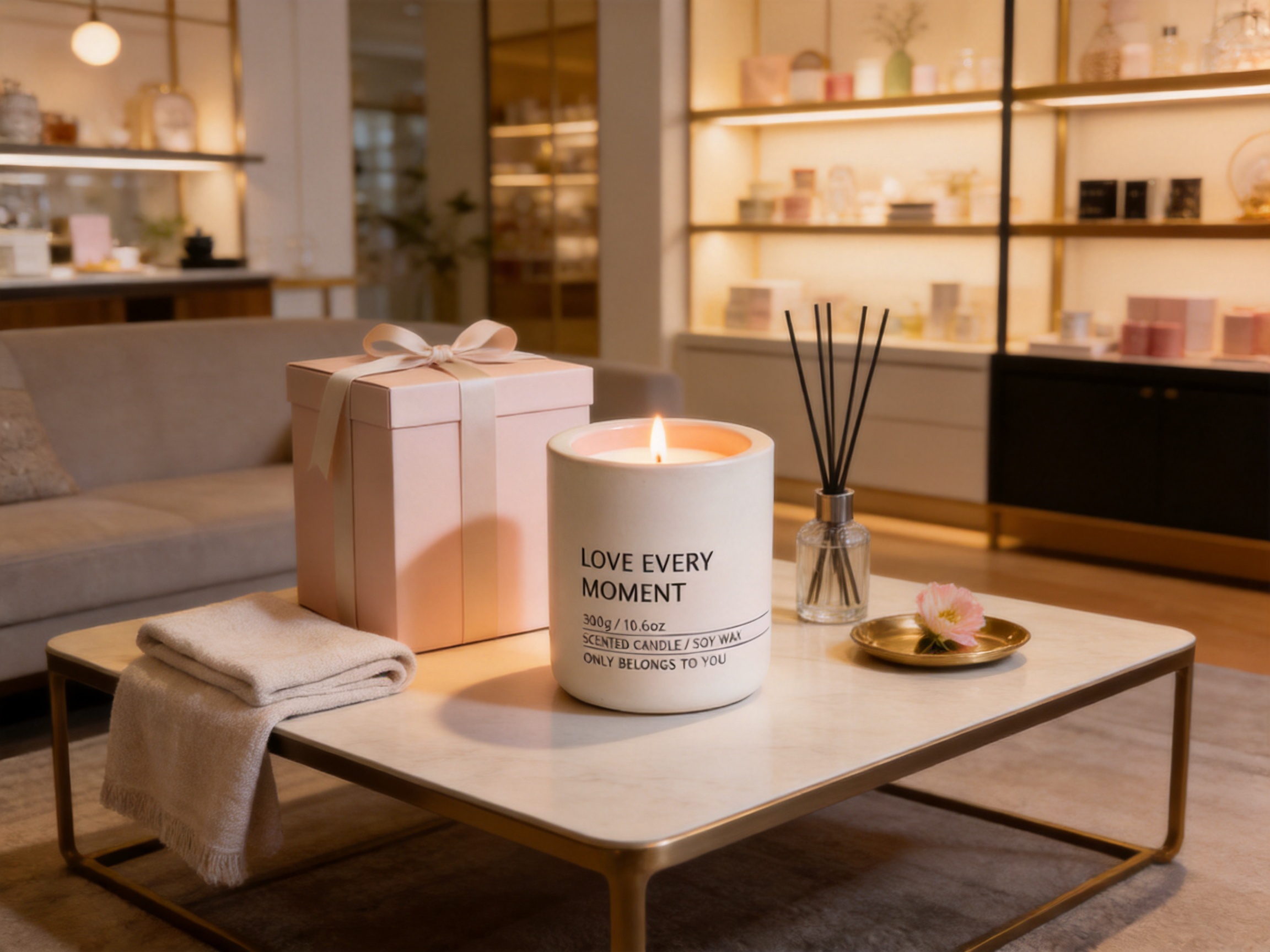
The 300g Soy Wax Scented Ceramic Jar Candle is designed around these expectations. It brings together a heat-resistant ceramic vessel, a smooth matte finish, a soy wax formulation, gentle fragrance diffusion, and a contemporary visual identity. The result is a home fragrance product that can function as both an ambient scent solution and a decorative interior accessory.
For wholesalers, retailers, gift companies, hospitality buyers, and private-label brands, this product also offers a practical platform for collection development. Its ceramic body can support a refined price position, its minimalist appearance can suit several décor styles, and its format can be adapted through fragrance, labeling, color, packaging, and presentation choices. These characteristics make it suitable for year-round home fragrance ranges as well as seasonal gifting programs.
The product contains 300g of soy wax in a ceramic jar designed for indoor use. The container has a matte exterior and a smooth tactile surface, creating a calm and understated appearance. The ceramic construction provides a stable vessel for the wax and offers strong heat resistance during normal candle use. Its solid-color finish and minimalist English typography are intended to complement bedrooms, living rooms, entryways, offices, and other interior environments.
Unlike low-cost candles that may focus primarily on fragrance volume or decorative packaging, this candle balances sensory performance with long-term visual appeal. The product is designed to look intentional before it is lit, to provide a gentle fragrance while burning, and to remain useful after the wax has been consumed. This complete product life cycle gives it an advantage in a market where customers increasingly consider both design and practical value.
The 300g size offers a substantial presence without becoming difficult to position. It is large enough to create a noticeable display on a coffee table, bedside cabinet, shelf, console, or bathroom counter, while remaining suitable for gift boxes and retail shelving. The format can work as an individual product or as part of a larger home fragrance collection that includes reed diffusers, diffuser products, scented sets, LED candles, and related accessories.
From a commercial perspective, the candle sits between everyday fragrance products and premium lifestyle gifts. Its ceramic vessel elevates the appearance beyond a basic glass jar, while the soy wax and reusable container reinforce a more considered product story. Retailers can position it as an accessible luxury item, a self-care purchase, a housewarming gift, or a seasonal home accessory.
The container is one of the most visible differences between candles in the same price category. Glass jars are common because they are efficient to produce and allow customers to see the wax. However, ceramic creates a different emotional and visual experience. It gives the candle a denser, more substantial presence and allows the surface finish, color, and typography to become part of the product identity.
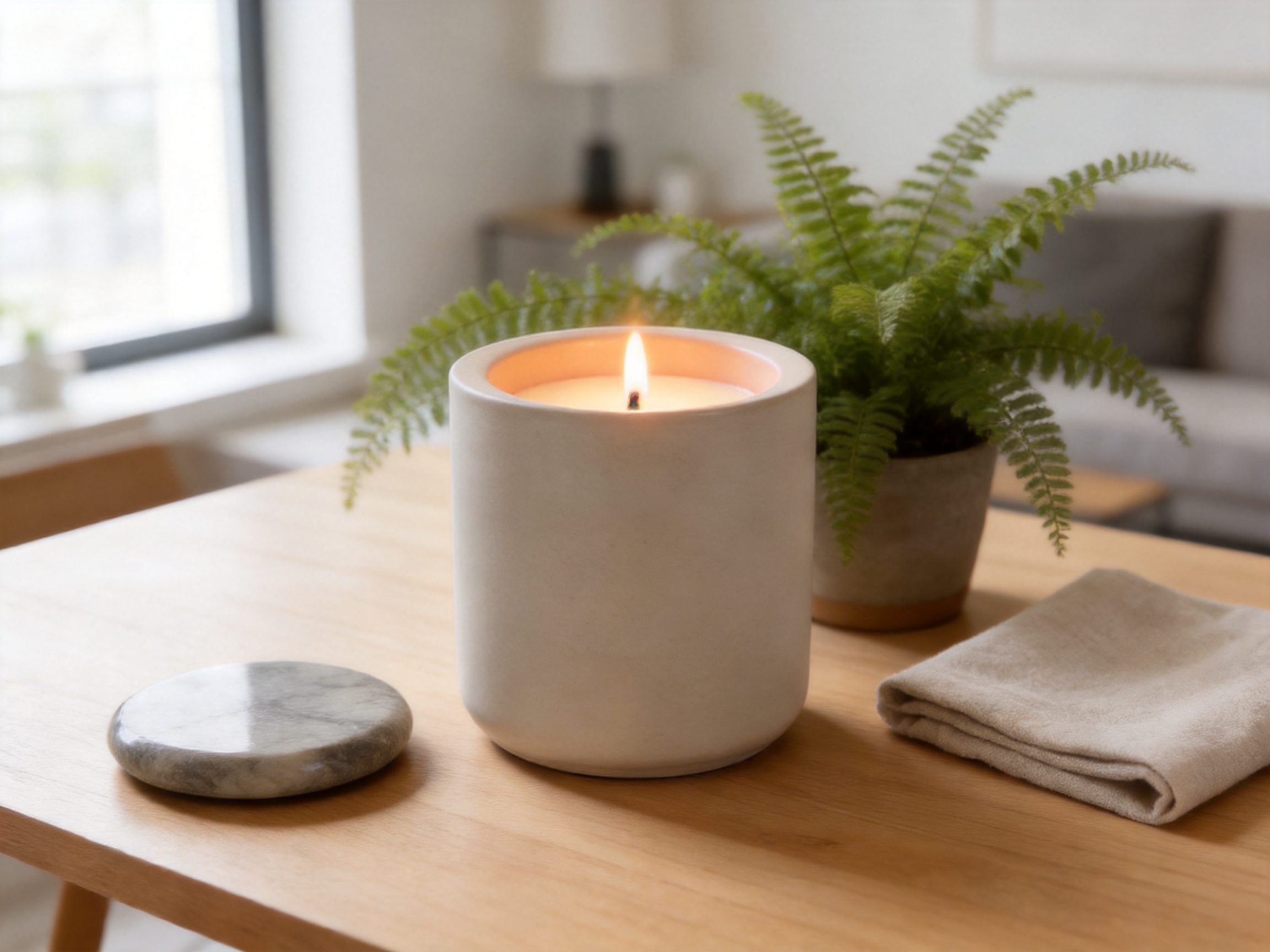
The matte ceramic surface of this candle provides a soft, tactile quality. Rather than reflecting strong highlights, the finish absorbs light and creates a calmer appearance. This makes the product suitable for modern, minimalist, Scandinavian-inspired, contemporary, and transitional interiors. The finish can also help create a more premium impression when displayed in stores or photographed for e-commerce listings.
Ceramic offers another important advantage: it can function as a reusable object after the candle has finished burning. Once the remaining wax and wick materials have been removed, the vessel may be used as a small storage container, planter, desk organizer, bathroom accessory, or decorative holder, depending on its size and form. This second-use potential adds value beyond the initial fragrance experience.
Many competing candles are discarded when the wax is gone because their containers are too thin, too heavily branded, or too specialized for reuse. A ceramic jar with a restrained design has a better chance of becoming part of the customer’s home. This supports a more sustainable product narrative while also increasing perceived value.
The ceramic vessel also provides a strong surface for customization. A supplier can develop different glaze colors, matte tones, typography treatments, labels, printed designs, or packaging combinations for different markets. A retailer may create an exclusive color family, while a hospitality brand may request a discreet logo treatment. Such flexibility is especially valuable for OEM and ODM programs.
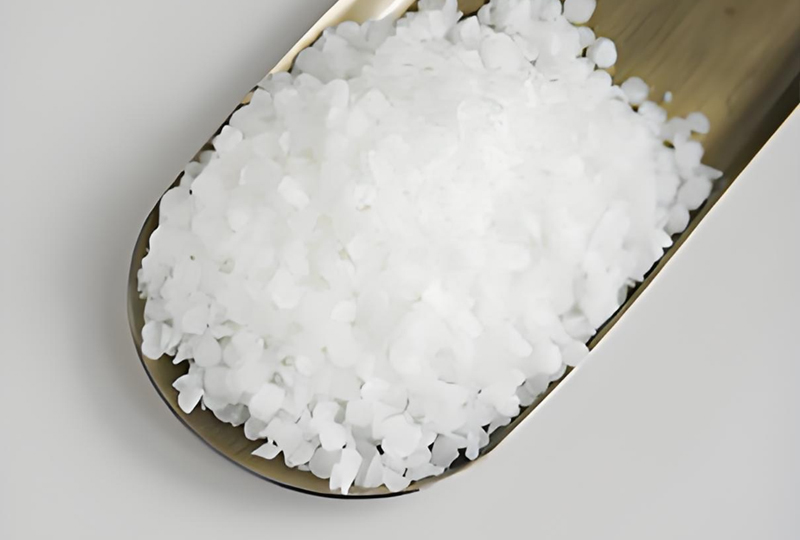
The candle uses 300g of soy wax, a plant-based wax commonly selected for its smooth appearance, consistent fragrance release, and consumer-friendly sustainability profile. Compared with many conventional paraffin-based candles, soy wax is often associated with a cleaner-burning experience and reduced visible soot when the candle is properly wicked, positioned, and maintained.
The use of soy wax supports a contemporary product story. Customers who actively consider plant-based materials may respond positively to the formulation, particularly when the product also uses a durable reusable ceramic vessel. The combination gives retailers two clear points of differentiation: a wax choice connected with responsible sourcing preferences and a container designed for extended utility.
Burn performance depends on several variables, including wick selection, fragrance concentration, wax preparation, vessel dimensions, ambient conditions, and user behavior. For this reason, the manufacturing process must include suitable testing rather than relying only on the appearance of the finished candle. A balanced wick helps create an even melt pool and supports consistent fragrance diffusion throughout the product’s intended use.
When used correctly, the candle is designed to burn evenly with minimal soot and release a gentle, long-lasting fragrance. The fragrance profile is intended to enhance a room without overwhelming it. This makes the candle suitable for everyday use, including evening relaxation, reading, hosting guests, bathing routines, working from home, and creating a calm atmosphere before sleep.
A gentle fragrance approach can be an advantage over highly concentrated products that become tiring or intrusive in smaller rooms. Modern consumers often prefer fragrance products that contribute to the atmosphere rather than dominate it. The candle can therefore be positioned as a refined ambient product instead of a purely intense scent delivery product.
To achieve the best results, users should place the candle on a stable, heat-resistant surface away from drafts, curtains, papers, children, and pets. The wick should be trimmed according to standard candle-care practices before relighting. During the first burn, allowing the wax surface to melt evenly toward the vessel edges can help reduce the formation of a deep central tunnel.
Users should avoid leaving a burning candle unattended and should extinguish it before the wax is fully depleted. The ceramic vessel may remain hot for some time after use, so it should not be moved immediately. Clear care instructions on the product label or packaging can improve the customer experience while supporting safer use.
The candle’s minimalist English typography and solid-color ceramic body create a versatile visual language. Instead of relying on complex illustrations or seasonal graphics, the design uses restraint to remain relevant across different décor environments. This is important for retailers that want products to sell throughout the year rather than only during a short holiday period.
In a bedroom, the candle can support a peaceful nighttime setting when used safely. In a living room, its ceramic body can work as a small design accent on a coffee table, sideboard, or open shelf. In a bathroom, it can contribute to a spa-inspired atmosphere. In an entryway, it can provide an understated decorative detail that welcomes visitors.
The neutral design also makes the product easy to coordinate with other home fragrance formats. A matching reed diffuser can extend the scent experience without a flame. A scented set can combine the candle with complementary products for gifting. Diffuser accessories and candle components can be developed around the same color palette, typography, and packaging architecture.
For online retailers, visual simplicity is useful because the product can be presented in different photography environments. It may be shown in a clean studio setting, styled with natural materials, placed on a bedside table, or included in a gift arrangement. The understated vessel allows the surrounding lifestyle imagery to change while the product remains visually consistent.

300g Soy Wax Scented Ceramic Jar Candle
Competition in the scented candle market includes glass jar candles, metal tin candles, molded pillar candles, decorative shaped candles, paraffin candles, soy-blend candles, and low-cost mass-market fragrance products. Each type has a place in the market, but the 300g soy wax scented ceramic jar candle offers a distinctive combination of advantages.
| Comparison Point | 300g Soy Wax Ceramic Jar Candle | Common Basic Glass Jar Candle | Low-Cost Metal Tin Candle |
|---|---|---|---|
| Visual character | Matte ceramic with a solid, refined appearance | Transparent or printed glass with a familiar appearance | Lightweight metal with a more utilitarian presentation |
| Material story | Soy wax paired with a reusable ceramic vessel | May use different wax types and a glass container | May prioritize low production cost and portability |
| Interior compatibility | Suitable for modern, minimalist, and classic spaces | Versatile but often more dependent on label design | Often associated with casual or outdoor styling |
| After-use potential | Jar can be reused for storage or decoration | May be reusable, depending on shape and label removal | Can be reused but may appear less decorative |
| Gift suitability | Strong potential for premium everyday and seasonal gifting | Suitable for gifts but common in the category | Often positioned as a practical or entry-level item |
| Customization opportunity | Color, finish, typography, fragrance, and packaging can be developed | Usually focuses on label, glass, lid, and packaging changes | Usually focuses on printed tin graphics and fragrance variations |
| Product presence | Substantial 300g format with a tactile ceramic body | Familiar format with variable visual weight | Lightweight and portable but generally less substantial |
The key advantage is not that ceramic is universally better than every other container. Instead, ceramic provides a different value proposition. It supports a more decorative and premium presentation while offering practical heat resistance and second-use potential. When combined with soy wax, the product can communicate both aesthetic refinement and a more responsible material direction.
The candle also avoids being limited to one consumer motivation. Some customers may purchase it because they want a fragrance product. Others may appreciate the décor value, the gift potential, the material choices, or the opportunity to reuse the jar. A product that addresses several motivations can be easier to position across different sales channels.
A successful candle is the result of coordinated manufacturing steps rather than a single production action. The wax, wick, fragrance, ceramic vessel, typography, packaging, and final inspection must work together. The supply chain supporting this product is structured to manage these stages through specialized partners and controlled production procedures.
Material selection begins with the wax, fragrance components, wick, ceramic body, and packaging materials. Soy wax must be selected for its compatibility with the vessel, intended fragrance, and target burn behavior. Fragrance materials need to be evaluated for scent quality, stability, and suitability for candle use. The wick must be matched to the wax load, vessel diameter, fragrance level, and expected burn profile.
The ceramic vessel requires attention to dimensions, wall thickness, surface treatment, color consistency, and heat resistance. A matte finish must be applied evenly so that the final product does not show unwanted differences between production batches. The inside of the container should be checked for defects that could affect filling, appearance, or safe use.
Packaging materials also contribute to quality. A box that protects the ceramic body during transportation is essential, especially for international shipments. Inserts, dividers, protective wrapping, and outer cartons should be selected according to the product’s weight, fragility, and shipping route.
The ceramic manufacturing process typically involves forming the vessel, drying, surface treatment, glazing or finishing, and firing. Each stage affects the final appearance and performance. Proper forming helps maintain consistent dimensions, while controlled drying reduces the risk of cracking or deformation.
The matte exterior requires consistent finishing and firing conditions. Variations in temperature, coating thickness, or material composition can affect color and texture. Quality checks should therefore examine surface smoothness, edge integrity, color uniformity, visible pinholes, cracks, and other cosmetic defects.
Heat resistance is especially important for a candle container. The vessel must be evaluated as part of the complete candle system, not only as an empty ceramic object. Testing with the wax, wick, and fragrance combination helps confirm that the vessel performs appropriately during normal use.
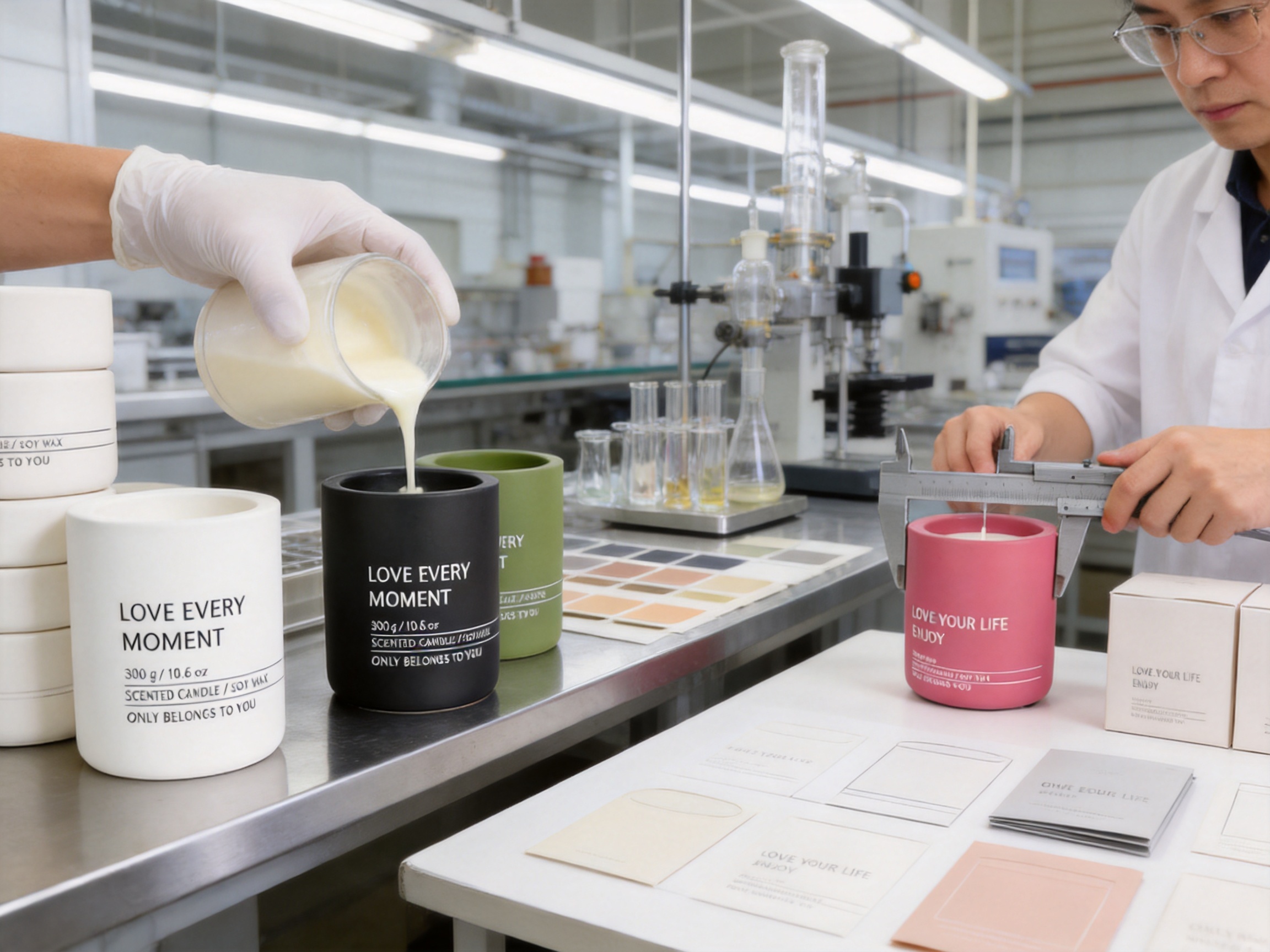
Wax preparation involves controlled melting, fragrance addition, mixing, and filling. Temperature management is essential because excessive heat may affect fragrance characteristics, while insufficient mixing may lead to uneven distribution. The production team must follow established parameters for each formula and record key process information for traceability.
The fragrance should be blended into the wax at a suitable stage and mixed thoroughly. The objective is to achieve consistent scent distribution from the first unit to the last unit in a production batch. The formula may be adjusted according to the fragrance type, soy wax behavior, vessel dimensions, and desired cold throw and hot throw.
After filling, the candle requires a controlled cooling period. Rapid or uneven cooling can produce surface imperfections, frosting, sinkholes, or adhesion issues. A stable cooling environment supports a smoother top appearance and more consistent final presentation.
Wick positioning is a critical manufacturing detail. The wick should be centered and secured so that it remains stable during filling, cooling, packing, and use. Even a visually attractive candle can underperform if the wick is off-center or poorly fixed.
Assembly checks should confirm that the wick is upright, the wax surface is acceptable, and the vessel is clean. Any excess wax on the ceramic exterior should be removed carefully without damaging the matte finish. The final product should have a consistent appearance across the batch.
Quality assurance continues after the candle has been assembled. Finished goods inspections may include checks for ceramic defects, wax appearance, fragrance consistency, wick position, label accuracy, packaging integrity, and overall cleanliness. Samples can also be evaluated through burn testing and visual review.
A systematic inspection process helps identify issues before shipment. It also provides useful feedback for improving future batches. If a particular fragrance produces a different cooling pattern or if a specific ceramic color shows greater variation, the production team can adjust the process or define more precise acceptance criteria.
The company’s supply chain model includes an in-house laboratory and quality control across key stages, from material selection to finished goods inspection. This structure supports a more coordinated approach than simply purchasing finished candles from an unknown source. It also gives buyers a clearer route for discussing product changes, testing requirements, packaging revisions, and production improvements.
Hangzhou Leo Home Trading Co., Ltd. operates as an international trading and supply chain partner for household and daily-use products. Its home fragrance program is supported by a network that includes 10 candle factories, 8 jar customization partners, and 8 color box factories. This integrated network creates several advantages for buyers seeking product development and bulk supply.
First, multiple specialized production partners can provide greater flexibility. Different factories may have strengths in jar candles, shaped candles, jelly candles, LED candles, or gift sets. This enables a buyer to develop a broader collection instead of sourcing every product from unrelated suppliers.
Second, access to several jar customization partners supports more design options. Buyers may request different colors, finishes, sizes, shapes, or surface treatments. The company can coordinate these requirements with the intended wax formula and packaging concept.
Third, a dedicated color box network helps connect the product and packaging development processes. Retail presentation is especially important for gifts and e-commerce products. A well-designed box can protect the ceramic vessel, explain the product benefits, communicate the fragrance identity, and create a more complete customer experience.
Fourth, a coordinated supply chain can help manage costs. Consolidating product development, packaging, inspection, and export preparation through one partner may reduce communication gaps and improve purchasing efficiency. The objective is not simply to offer the lowest price, but to create a better balance among quality, customization, delivery stability, and total product value.
The 300g ceramic jar candle can serve as a starting point for private-label and custom development. OEM buyers may use the existing product structure while applying their own branding, fragrance selection, label design, and packaging. ODM buyers may work with the product development team to modify the vessel, specifications, scent direction, or presentation from an earlier stage.
Fragrance selection is one of the most important customization areas. Retailers may prefer floral, woody, citrus, fresh, gourmand, herbal, amber, or seasonal scent families. A collection can be built around different moods, such as relaxation, freshness, warmth, focus, or evening comfort.
Ceramic color is another strong customization tool. Soft neutrals can support a minimalist collection, while deeper shades may suit autumn and winter ranges. Pastel colors can create a lighter seasonal identity, and dark matte finishes may appeal to customers seeking a more sophisticated look. Color development should be managed with realistic expectations because ceramic production may involve batch variation.
Typography and label treatment can be adjusted to match the buyer’s brand language. A clean wordmark may support a modern lifestyle range, while a more descriptive label may emphasize fragrance notes and product benefits. The design should remain readable and appropriate for the vessel size.
Packaging can be developed for different sales channels. A simple protective box may suit direct-to-consumer shipping, while a more decorative rigid box may be appropriate for gifting. Retail programs may require barcode placement, multilingual information, shelf-ready packaging, or coordinated packaging across a complete product family.
Specifications may also be reviewed. Buyers can discuss vessel dimensions, wax weight, wick type, lid options, warning labels, carton quantities, and sampling requirements. Each adjustment should be assessed through compatibility testing to preserve safe and reliable performance.
With professional research and development support based on drawings or samples, the company can help buyers refine product specifications and transform an initial concept into a production-ready item. This is especially useful for businesses that understand their target market but do not maintain their own candle engineering or sourcing department.
Reliable delivery is a major consideration for candle buyers because home fragrance products are often connected to seasonal launches, promotional calendars, and retail replenishment cycles. Delays can result in missed selling periods, especially for holiday, wedding, hospitality, and gift programs.
The company reports daily capacity of up to 50,000 units across its supply network, while also supporting smaller trial runs and flexible volumes. This range can be useful for different stages of a product program. A buyer may begin with samples and a limited market test, then move toward larger production after reviewing customer response.
The company’s location in Hangzhou, Zhejiang Province, provides access to established manufacturing resources and transport networks. Its logistics arrangements near Ningbo Port can support export shipments to international markets. The company mainly serves Europe and North America and has delivered products to more than 10 countries and regions across North America, Europe, and the Middle East.
For international buyers, logistics planning should include product protection, carton dimensions, shipping weight, documentation, labeling requirements, and destination regulations. Ceramic candles require careful packing because the vessel is heavier and more fragile than a thin metal tin. Strong inner protection and suitable outer cartons are therefore part of the product’s overall quality strategy.
Buyers should also confirm lead times, sampling procedures, production schedules, inspection arrangements, and replenishment planning before placing an order. Clear communication at the beginning of a program reduces the risk of misunderstandings later in production.
The product is suitable for a wide range of consumer and commercial applications. Its design is broad enough for everyday retail while its ceramic presentation supports more specialized programs.
Home décor stores can position the candle as a decorative fragrance object. The matte ceramic body fits naturally beside vases, trays, textiles, picture frames, and other interior accessories. A coordinated display can emphasize the relationship between scent and room styling.
The candle has strong potential for birthdays, housewarming occasions, anniversaries, holidays, Mother’s Day programs, corporate gifts, and general self-care gifting. The 300g size feels substantial, while the ceramic vessel gives the gift a more durable and collectible appearance.
Hospitality businesses can use customized candles in guest rooms, spas, reception areas, or gift shops. A discreet branded version can reinforce a hotel’s visual identity and allow guests to take the experience home. Fragrance selection should be aligned with the atmosphere the business wants to create.
E-commerce brands can benefit from a product that photographs well and has multiple selling points. Product pages can highlight the ceramic vessel, soy wax, gentle fragrance, reusable jar, and customization options. The candle can also become the central product in a subscription, discovery, or seasonal collection.
Companies seeking branded gifts can customize packaging, color, fragrance, and typography. A candle may be included in employee appreciation boxes, client gifts, event packages, or real estate closing gifts. The reusable ceramic jar helps the product remain useful after the fragrance experience ends.
Sustainability in home fragrance involves more than selecting one plant-based material. It includes the relationship between the wax, vessel, packaging, manufacturing process, transport, and product lifespan. The use of soy wax supports a plant-based formulation direction, while the reusable ceramic jar encourages customers to extend the product’s useful life.
Reuse is particularly valuable because it changes the customer’s relationship with the container. Instead of seeing the jar as disposable packaging, the user can regard it as a small household object. The vessel may hold cotton pads, jewelry, office supplies, hair accessories, dried flowers, or other lightweight items after appropriate cleaning.
Packaging design should also support the sustainability story. Protective packaging is necessary for ceramic products, but excessive materials should be avoided where practical. Buyers can discuss recyclable paperboard, efficient carton dimensions, reduced plastic components, and clear disposal guidance as part of the OEM or ODM process.
It is important to present sustainability claims accurately. The product can be described as using soy wax and a reusable ceramic container, but specific environmental claims should be supported by the relevant material and production documentation. Responsible communication builds greater trust than exaggerated promises.
The candle can be merchandised as a sensory product, a decorative object, or a gift. Each approach creates a different customer entry point.
For sensory merchandising, retailers can group the candle with reed diffusers and scented sets according to fragrance family. For example, fresh scents may be placed together, while warm or woody fragrances can form another display. Clear scent descriptions help customers understand the experience without opening every product.
For décor merchandising, the candle can be displayed alongside ceramics, trays, linens, books, and neutral home accessories. The matte surface works especially well with natural textures such as wood, stone, cotton, and woven materials.
For gift merchandising, the candle can be presented with a coordinated box, greeting card, ribbon, or complementary home accessory. The 300g format gives the gift enough physical presence to feel generous without becoming excessively large.
Online product content should explain both appearance and function. Useful information includes wax type, wax weight, vessel material, fragrance description, intended room use, care instructions, packaging details, and customization availability. High-quality product photography should show the candle unlit, lit safely, displayed in an interior setting, and packaged for gifting.
Choosing a supply partner involves more than comparing unit prices. Buyers should evaluate product development capability, communication, quality systems, manufacturing resources, packaging support, logistics experience, and willingness to manage long-term cooperation.
Hangzhou Leo Home Trading Co., Ltd. was established in January 2025 and focuses on international trading, sourcing, customization, and delivery support for household and daily necessities. Although relatively young as a company, it operates with a dedicated team covering product development, international sourcing, and cross-border marketing.
Its product scope includes personal care, home and garden, daily tools, home fragrance, scented candles, LED candles, and gift sets. This broader category knowledge can help buyers build complementary collections rather than purchasing one isolated item.
The company’s stated core values include execution, warmth, and refinement. In practical terms, these values reflect the importance of following specifications, supporting communication, and maintaining attention to detail across product development and export documentation. These qualities are particularly important for custom candle programs, where small changes in color, fragrance, label size, or carton design can affect the final result.
The company also emphasizes a one-stop service model. This can simplify the buyer’s workflow by connecting product sourcing, customization, inspection, packaging, and delivery through one coordinated partner. For businesses entering the candle category, this type of support can reduce the need to manage multiple unrelated factories.
Before confirming a bulk order, buyers should define the commercial and technical requirements of the project. A clear brief may include the target market, estimated quantity, fragrance direction, preferred color, packaging concept, delivery schedule, and expected retail price.
The buyer should request samples and evaluate the ceramic appearance, wax surface, fragrance strength, wick position, packaging protection, and overall product feel. Burn testing should be carried out under controlled conditions, and the results should be documented.
Label and packaging content should be reviewed carefully. Warning information, net wax weight, fragrance naming, care instructions, batch information, and destination-market requirements should be confirmed before mass production. If multiple languages are required, the text should be professionally checked.
Commercial details should also be clarified. These include minimum order quantity, sample fees, customization charges, production lead time, payment terms, inspection procedures, carton quantity, shipping method, and replacement policy for confirmed manufacturing defects.
A strong supply partner should be willing to discuss these details openly. Good preparation protects both sides and creates a more predictable production process.
The product combines 300g of soy wax with a matte ceramic vessel, minimalist English typography, and a reusable container concept. Compared with a basic glass jar candle, it offers a more tactile and decorative appearance while maintaining practical home fragrance functionality.
The ceramic jar is designed with strong heat resistance for normal candle use. It should still be placed on a stable heat-resistant surface and used according to standard candle safety instructions. The candle should never be left burning unattended.
Soy wax is a plant-based wax commonly selected for its smooth appearance, gentle fragrance release, and cleaner-burning profile when properly formulated and used. It supports a contemporary material story and may appeal to customers seeking alternatives to conventional wax formulations.
The product is designed to release a gentle, long-lasting fragrance rather than an excessively intense scent. Actual fragrance perception depends on the fragrance formula, room size, ventilation, burning conditions, and individual sensitivity.
Yes. After the candle has been fully used and the remaining wax and wick materials have been removed, the jar may be reused as a small storage or decorative container. It should be cleaned carefully and inspected before reuse.
OEM and ODM programs can support fragrance selection and development. Buyers may discuss floral, woody, citrus, fresh, gourmand, herbal, amber, or seasonal scent directions according to their target market.
Color and surface treatment can be discussed with the product development team. Matte and solid-color finishes are especially suitable for building coordinated private-label collections. Sample approval is recommended because ceramic colors may vary slightly between production batches.
Yes. The supply network includes color box partners that can support customized packaging. Buyers may develop protective boxes, gift packaging, coordinated collection packaging, barcode layouts, and market-specific information panels.
Yes. The candle can be adapted for private-label programs through fragrance, vessel color, typography, labels, packaging, and collection planning. The exact customization scope should be confirmed during the sampling and quotation stages.
Potential buyers include home décor retailers, gift shops, online brands, hotel and spa businesses, corporate gifting companies, lifestyle stores, wholesalers, and distributors seeking a modern home fragrance product.
The company supports smaller volumes and trial runs in addition to larger production programs. Buyers should confirm the applicable minimum quantity, customization conditions, sample process, and lead time for their specific project.
The company coordinates quality control from raw material selection through finished goods inspection. Its stated capabilities include an in-house laboratory, manufacturing partners, product development support, and inspection procedures for key production stages.
Yes. The ceramic color, fragrance, typography, and packaging can be adapted for seasonal launches, holiday gifting, wedding programs, autumn and winter collections, or limited-edition retail campaigns.
A useful quotation brief should include the required quantity, target market, preferred wax weight, fragrance direction, ceramic color, packaging requirements, branding details, delivery destination, and expected timeline. Drawings, reference samples, or mood boards can further improve communication.
The 300g Soy Wax Scented Ceramic Jar Candle is a well-rounded product for the modern home fragrance market. Its competitive strength comes from the combination of material, appearance, function, and customization potential. The soy wax supports a plant-based product story, while the ceramic vessel provides heat resistance, tactile appeal, decorative value, and the possibility of reuse.
The minimalist design allows the candle to move across different interior styles and retail environments. It can be sold as an everyday fragrance product, a premium home accessory, a thoughtful gift, or the foundation of a private-label collection. Its 300g capacity gives it a substantial presence while remaining practical for display, packaging, and shipping.
Behind the product is a supply chain that connects candle factories, ceramic customization partners, packaging factories, laboratory support, quality control, and international logistics. This structure gives buyers access to more than a finished item. It provides a route for developing coordinated fragrances, colors, packaging systems, and seasonal collections.
For businesses seeking a modern candle that offers more than basic fragrance delivery, this ceramic jar format provides a persuasive balance of lifestyle appeal and commercial practicality. With careful formulation, reliable quality control, thoughtful packaging, and well-managed customization, it can become a durable part of a competitive home fragrance range.
1. Product specification and descriptive materials for the 300g Soy Wax Scented Ceramic Jar Candle.
2. Company profile and supply chain information provided by Hangzhou Leo Home Trading Co., Ltd.
3. General candle safety and responsible-use principles for consumer candle products.
4. General principles of soy wax formulation, fragrance integration, wick selection, and candle burn testing.
5. General packaging and quality-control practices for ceramic household products and international shipments.
6. General sustainability principles concerning plant-based waxes, reusable vessels, and responsible product communication.

Room 1701, Building C1, Wangjing, Xiaoshan District, Hangzhou City, Zhejiang Province, China.

+86-15937257616

Copyright© 2026 Hangzhou Leo Home Trading Co., Ltd. All Rights Reserved.

Luxury Candles Home Fragrance Manufacturers Modern Candles Factory