 English
 Français
News
Home / Author / Emily Chen — After-Sales Service Supervisor / White Ribbed Porcelain Single-Wick Ceramic Jar Candle for Modern Home Fragrance
Content
In the modern home fragrance market, a candle is no longer judged only by its scent. It is also evaluated as an interior object, a lifestyle accessory, a gifting choice, and a reusable decorative vessel. The white ribbed porcelain single-wick ceramic jar candle answers these expectations with a refined balance of visual purity, tactile texture, reliable burning performance, and practical after-use value.
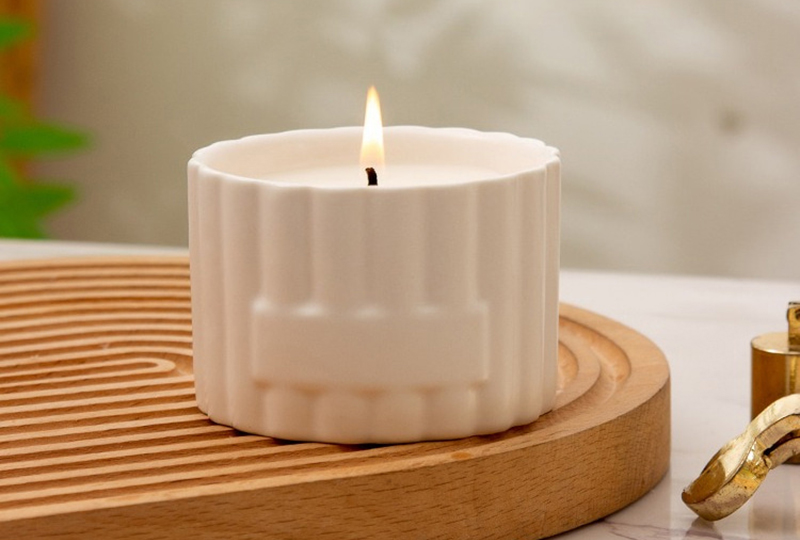
This product features a clean white porcelain jar with evenly spaced vertical ribbing. The ribbed surface creates a subtle three-dimensional effect while maintaining a calm minimalist look. Its compact cylindrical silhouette, soft contours, and single-wick structure make it suitable for desks, bedside tables, shelves, coffee tables, bathrooms, hospitality spaces, and curated gift collections.
For buyers, wholesalers, private-label brands, and retailers, the product offers more than attractive appearance. It is designed for dependable production, flexible customization, stable supply, and consistent quality control. Supported by the sourcing and supply chain capabilities of Hangzhou Leo Home Trading Co., Ltd., this candle can be developed for multiple sales channels, including home décor stores, lifestyle boutiques, e-commerce platforms, seasonal gift programs, hotel amenities, and corporate gifting projects.
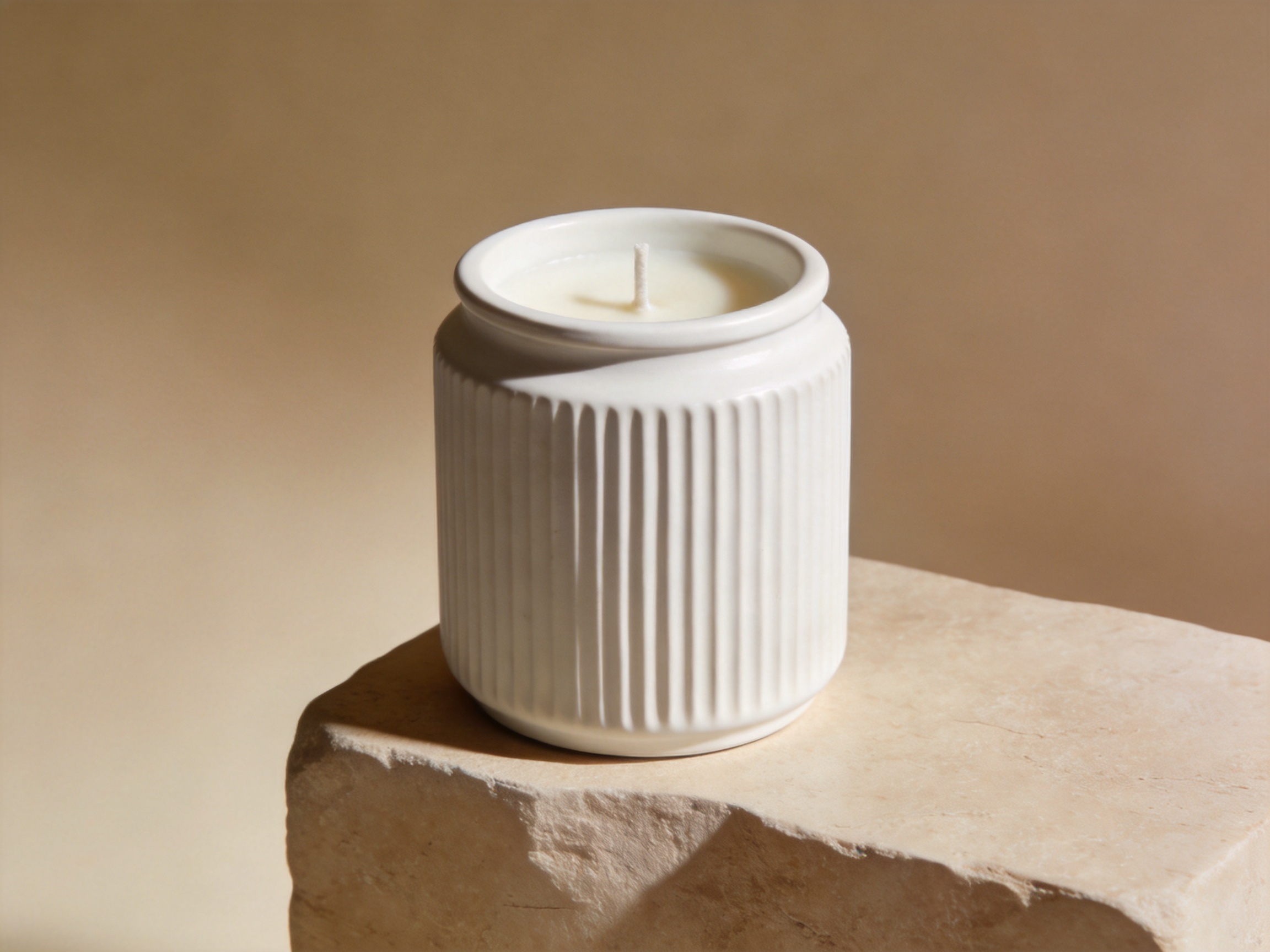
The white ribbed porcelain single-wick ceramic jar candle belongs to the ceramic jar candle category. Its core identity lies in the combination of porcelain craftsmanship and modern home fragrance functionality. The jar is finished in white, a color widely accepted across markets because it coordinates easily with many décor styles, from Scandinavian minimalism and Japanese-inspired interiors to contemporary apartments, spa rooms, and boutique retail displays.
The vertical ribbed texture is one of the product’s most important design features. Unlike a plain cylindrical jar, the ribbed surface creates shadow, dimension, and tactile interest. When placed near natural light or warm indoor lighting, the vertical grooves create a soft rhythm that makes the candle look more architectural. This gives the product a premium visual presence without relying on complicated decoration or heavy ornamentation.
The compact cylindrical form allows convenient placement in both small and large spaces. It does not occupy excessive surface area, which is important for consumers living in apartments, dormitories, compact homes, or shared spaces. At the same time, the ceramic body gives the product a stable and substantial feel, communicating quality when held by the customer.
The single-wick design is suitable for a controlled flame, steady burn, and visually calm atmosphere. For many consumers, single-wick candles are preferred for daily use because they are easy to maintain, simple to extinguish, and suitable for smaller rooms or focused fragrance experiences. The centered wick placement helps support consistent wax consumption and a balanced burning surface when the candle is used properly.
One of the strongest advantages of this candle is its ability to look simple without appearing ordinary. Many minimalist products fail because they remove too many design details and become visually forgettable. This porcelain candle avoids that problem by using texture as the primary decorative element. The ribbing adds character while preserving an elegant and neutral personality.
The white finish also plays an important role. White is strongly associated with cleanliness, calm, softness, and versatility. In home fragrance products, white packaging and containers can communicate purity, relaxation, and premium simplicity. This makes the candle suitable for fragrance concepts such as cotton, linen, white tea, jasmine, sandalwood, vanilla, amber, sea salt, peony, or spa-inspired blends.
The ribbed texture enhances the consumer’s tactile experience. When the jar is picked up, the fingertips naturally notice the raised and recessed vertical pattern. This matters because premium home fragrance products are often purchased not only by looking but also by touching. A pleasant tactile feel can improve perceived value and make the item more memorable in retail environments.
The form is also highly adaptable for branding. A label can be applied to the smooth area if designed accordingly, or the jar can remain label-free for a more refined decorative effect. The white surface supports many label colors and foil details, including black, kraft, gold, silver, beige, sage green, navy, or blush pink. This flexibility allows buyers to develop different brand identities using the same core container.
Porcelain is a preferred material for premium candle vessels because it combines heat resistance, surface refinement, durability, and decorative value. Compared with thin metal tins or low-grade glass containers, a porcelain jar can deliver a stronger sense of craftsmanship and long-term use. The ceramic wall provides a stable container for wax and helps the product feel more substantial in the hand.
The heat-resistant ceramic body is especially valuable for candle products. While safe candle use always depends on proper formulation, wick selection, testing, and consumer instructions, ceramic vessels are commonly appreciated for their ability to tolerate heat when manufactured and tested correctly. This makes them suitable for scented candle applications where the container must support repeated heating during the burning cycle.
Porcelain also offers an elegant surface finish. The white appearance can be clean and smooth, while the ribbed molding adds structure. This dual quality makes the candle look decorative even when it is not lit. In competitive markets, the unlit candle must still attract attention on a shelf, in a product photo, or inside a gift box. A good jar can become a selling point before fragrance is even experienced.
Another advantage is reusability. After the candle has been completely finished and properly cleaned according to safe guidance, the ceramic jar can be reused as a small storage vessel, decorative cup, desk organizer, makeup brush holder, cotton pad holder, jewelry container, or small planter cover. This after-use value strengthens consumer satisfaction and supports sustainability-minded purchasing behavior.
The single-wick format is designed for simplicity and balance. A single centered flame creates a quiet visual focus, making the candle especially suitable for personal relaxation, reading, meditation, bath time, work breaks, or bedtime rituals. Unlike multi-wick candles, which can create a larger flame presence and faster wax consumption, a single-wick candle often offers a more restrained and controlled experience.
A properly selected wick is essential to performance. The wick must match the wax blend, fragrance load, jar diameter, and expected burn profile. If the wick is too small, the candle may tunnel and leave wax on the side wall. If the wick is too large, the flame may become unstable, smoke may increase, and the container may overheat. The advantage of working with an experienced supply chain partner is that wick testing can be performed systematically before production.
The centered wick contributes to steady visual performance. Consumers often notice whether the flame is centered and whether the wax pool forms evenly. A well-made candle should create a calm burn, acceptable melt pool, and manageable flame height under normal use. These details influence repeat purchase behavior because consumers remember whether a candle burned cleanly and evenly.
For private-label brands, the single-wick structure also supports predictable cost control. Compared with complex shaped candles or multi-wick luxury vessels, this product maintains a premium look while remaining efficient for production, packaging, and shipping. It can serve as a core item in a fragrance collection or as an entry-level premium SKU that introduces consumers to a brand.
In a crowded scented candle market, many products compete through fragrance alone. However, fragrance preference is subjective, and competing only on scent can make differentiation difficult. The white ribbed porcelain single-wick ceramic jar candle creates a stronger competitive position because it combines fragrance functionality with container design, reusable value, and décor compatibility.
Compared with basic glass jar candles, this porcelain candle offers a more tactile and decorative appearance. Clear glass jars can be attractive, but they are common and often visually similar across brands. The ribbed ceramic surface gives this product a more distinctive identity and allows it to stand out in product photography, retail displays, and gift sets.
Compared with metal tin candles, the porcelain jar communicates a more refined and home-oriented feeling. Metal tins are lightweight and practical, but they may be associated with travel candles or lower-cost products. A ceramic jar, by contrast, feels more suitable for interior styling and premium gifting. This difference can support higher perceived value and stronger shelf appeal.
Compared with highly decorative novelty candles, this product offers better long-term design relevance. Novelty designs may sell well for short seasonal periods, but they can become outdated quickly. The white ribbed ceramic style is more timeless, making it suitable for year-round collections as well as seasonal fragrance variations.
Compared with large multi-wick candles, this compact single-wick format is easier to place, easier to use, and more suitable for daily rituals. Many consumers want a candle they can light for short relaxation moments without committing to a large decorative centerpiece. The compact porcelain jar answers this need while still looking premium.
| Feature | Product Detail | Benefit for Consumers | Benefit for Buyers and Brands |
|---|---|---|---|
| White porcelain jar | Clean ceramic container with refined finish | Elegant appearance suitable for many rooms | Premium perceived value and easy brand positioning |
| Vertical ribbed texture | Evenly spaced raised and recessed pattern | Improved tactile feel and decorative depth | Stronger shelf differentiation than plain jars |
| Compact cylindrical form | Balanced shape with soft contours | Easy placement on desks, shelves, and nightstands | Efficient for packaging, shipping, and collection planning |
| Single-wick structure | Centered wick for calm flame presentation | Simple daily use and steady ambiance | Predictable production and cost management |
| Heat-resistant ceramic vessel | Designed for candle use with proper testing | Safe, stable, and reassuring container experience | Supports quality positioning and compliance preparation |
| Reusable after candle use | Can become a small storage or decorative vessel | Extended value beyond fragrance consumption | Supports sustainable storytelling and repeat purchase appeal |
| Customizable fragrance and packaging | OEM/ODM options for scent, label, box, and specifications | More choices for different preferences | Flexible development for target markets and sales channels |
The quality of a candle depends on far more than appearance. Behind a successful candle product are material selection, wax preparation, fragrance evaluation, wick matching, container inspection, filling control, cooling management, labeling accuracy, packaging protection, and final quality checks. Hangzhou Leo Home Trading Co., Ltd. supports these processes through a supply chain structure designed for international trading and customization.
The company is based in Hangzhou, China, and focuses on sourcing, customization, and delivery support for overseas clients. Its product scope includes home fragrance products such as scented candles, LED candles, and related gift sets, as well as other household and daily-use categories. This broad experience helps the company understand how product design, cost structure, quality standards, and export logistics must work together.
A major strength is the company’s integrated supply network. The organization works with multiple candle factories, jar customization partners, and color box factories. This network supports cost management, flexible production choices, and coordinated development of complete product solutions. For buyers, this means they do not need to manage separate suppliers for vessels, wax filling, labels, cartons, and gift boxes.
The company also emphasizes quality assurance through strict quality control across key stages. In candle production, small details can affect the final user experience. Fragrance concentration, wick size, wax temperature, cooling speed, jar cleanliness, label alignment, and packaging strength all matter. A structured inspection process reduces inconsistency and helps ensure that finished goods meet buyer expectations.
The in-house lab capability mentioned in the company profile is also important. Product development and testing are essential for scented candles because different waxes, fragrances, and wicks interact in different ways. A fragrance that performs well in one wax blend may behave differently in another. A wick that works in a glass jar may not be ideal in a ceramic jar with a different diameter and heat profile. Lab support allows more controlled evaluation before bulk production.
A high-quality ceramic jar candle is created through a sequence of carefully managed steps. The first stage is product planning. The buyer may select the jar shape, desired wax weight, fragrance direction, label style, packaging format, and target market position. The development team then evaluates feasibility, cost, minimum order requirements, production timing, and testing needs.
The next stage is vessel sourcing and inspection. Ceramic containers must be checked for appearance, size consistency, surface finish, stability, glaze quality, and structural integrity. For a ribbed porcelain jar, the vertical texture must be even and visually balanced. Inconsistent rib spacing or surface flaws can reduce the premium impression. Careful vessel inspection protects the overall product image.
Wax selection follows. Depending on the buyer’s needs, different wax blends may be considered. Common options in the wider candle industry include soy wax, paraffin wax, coconut wax, palm wax, beeswax blends, or mixed formulations. Each wax type offers different melt behavior, fragrance throw, texture, color, and price characteristics. The right choice depends on the target market, burning requirement, sustainability message, and cost plan.
Fragrance matching is another key step. A white porcelain jar naturally supports clean, elegant, soft, and premium fragrance concepts. However, it can also be used for seasonal themes such as winter woods, holiday vanilla, spring florals, summer citrus, or autumn amber. Fragrance selection must consider cold throw, hot throw, stability, discoloration risk, and regulatory requirements for the target market.
Wick testing is then performed to match the wax and jar. This stage is critical for performance. Testing may include flame height observation, melt pool development, container temperature evaluation, smoke behavior, mushrooming, self-trimming performance, and end-of-life burn behavior. A candle that looks beautiful but burns poorly can damage customer trust. Proper testing helps prevent such issues.
During filling, temperature control matters. Wax that is poured too hot or too cool may create surface defects, sinkholes, adhesion problems, frosting, cracking, or uneven appearance depending on the formula. Consistent filling equipment, trained operators, and process standards help maintain appearance and performance from batch to batch.
Cooling and curing also influence quality. Candles require controlled cooling conditions to maintain surface appearance and fragrance stability. After pouring, products should be protected from dust, vibration, and temperature swings. Proper curing time allows the wax and fragrance to integrate more fully before packing and shipment.
Final assembly includes wick trimming, surface cleaning, label application, lid or dust cover placement if applicable, individual box packing, carton packing, and inspection. For export orders, packaging must protect the ceramic container from breakage during transportation. Inner trays, partitions, cushioning, and master carton strength should be designed according to shipping method and destination requirements.

Quality assurance is one of the most important advantages for international buyers. A candle shipment may look acceptable at the factory, but if the container breaks, labels peel, wax surfaces crack, or fragrance performance varies, the brand owner may face customer complaints and financial loss. Therefore, quality must be built into every stage rather than checked only at the end.
Raw material control begins with wax, fragrance, wick, dye if used, adhesive labels, packaging paper, ceramic vessels, and accessories. Each component should match approved samples and specifications. For ceramic jars, inspection should include appearance, dimensions, cleanliness, stability, and possible defects such as cracks, chips, uneven glaze, or deformation.
In-process control is equally important. During candle production, operators need to follow standard procedures for wax melting, fragrance addition, mixing time, pouring temperature, wick centering, cooling, and trimming. Batch records help track production details and make problem-solving easier if variation occurs.
Finished product inspection should evaluate visual appearance, weight, label placement, packaging accuracy, carton marking, and random burn performance when required. A premium candle should arrive clean, stable, properly packed, and consistent with the approved sample. Since the white porcelain jar has a minimalist appearance, visible defects are easier to notice; this makes careful inspection even more necessary.
For overseas buyers, documentation and communication are also part of quality service. Product specifications, packaging details, carton measurements, loading plans, and inspection reports help buyers manage inventory, customs clearance, and sales preparation. A supplier with international trading experience can reduce misunderstandings and improve delivery efficiency.
One of the most commercially valuable aspects of this candle is its adaptability. Buyers can use the same white ribbed porcelain vessel to create different fragrance lines, seasonal launches, gift sets, or regional collections. This reduces development time while allowing variety in the final product offering.
Fragrance customization is often the first request. A buyer may select a calming spa fragrance, a floral feminine scent, a woody luxury profile, a gourmand holiday scent, or a fresh linen everyday fragrance. The white ceramic design works particularly well with fragrance names that suggest purity, comfort, and elegance.
Label customization can dramatically change the product’s market identity. A black-and-white label can create a modern boutique look. A beige or kraft label can suggest natural simplicity. A gold foil label can push the product toward luxury gifting. A soft pastel label can make it suitable for spring, wedding, or wellness collections.
Packaging customization is also essential. The candle can be packed in a simple color box, premium rigid gift box, sleeve box, window box, or multi-piece gift set. For e-commerce channels, protective packaging must be strong enough to reduce ceramic breakage. For offline retail, the box should communicate fragrance, brand story, ingredients, burn instructions, and safety warnings clearly.
Specification customization may include wax weight, fragrance concentration, wick type, dust cover, outer carton configuration, barcode labeling, and carton marks. For buyers developing a full collection, the candle can be paired with reed diffusers, candle accessories, ceramic trays, matches, fragrance sachets, or other scented set items.
Because Hangzhou Leo Home Trading Co., Ltd. provides OEM/ODM support, buyers can refine drawings, samples, scents, labels, and packaging according to target markets. This is particularly helpful for brands that want to launch quickly but still need product differentiation. Instead of starting from zero, they can build on a proven ceramic jar format and customize around it.
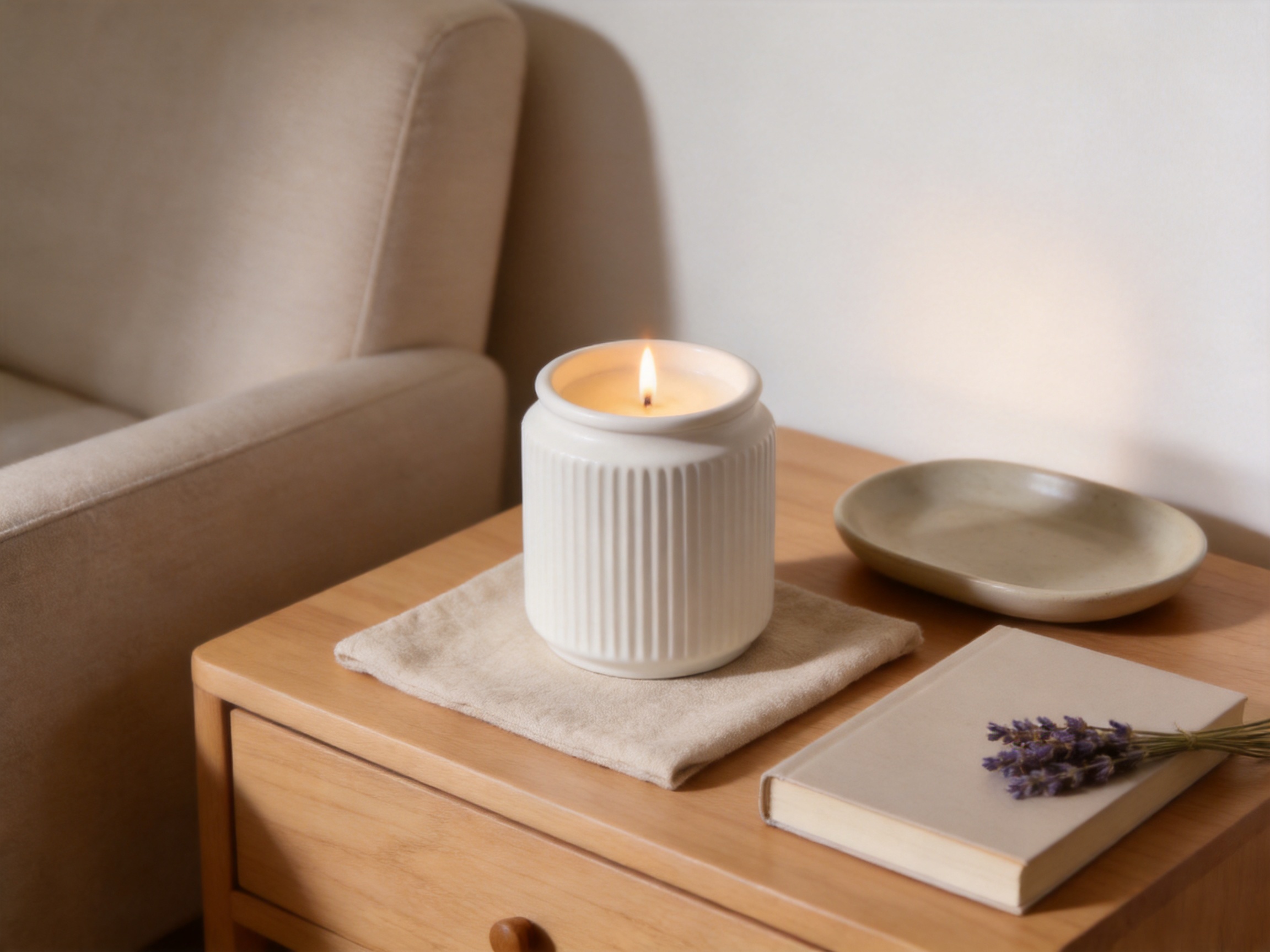
This candle is suitable for several commercial scenarios. In retail stores, it works as a decorative home fragrance item that can be displayed individually or as part of a collection. The white ribbed jar looks clean on shelves and pairs well with natural wood, marble, linen, metal, and neutral-colored display furniture.
For e-commerce, the candle is highly photogenic. The ribbed texture creates visible detail in product images, while the white color supports many background styles. It can be photographed in bedrooms, bathrooms, living rooms, office corners, spa scenes, or seasonal table settings. Strong visual presentation can improve click-through rates and customer interest.
In hospitality, the candle can be used as an amenity, retail item, or branded souvenir. Boutique hotels, wellness resorts, spas, and serviced apartments often need fragrance products that match calm interior environments. A white ceramic candle with custom branding can help extend a property’s atmosphere into the guest’s home.
For gifting, the product has broad appeal. It is neutral enough for many recipients but refined enough to feel thoughtful. It can be used for holidays, birthdays, housewarming gifts, corporate gifts, wedding favors, employee appreciation, or seasonal promotional sets. The reusable ceramic jar adds a practical benefit after the candle is consumed.
For corporate gifting programs, the product can be customized with subtle branding without feeling overly promotional. A refined label, elegant box, and carefully selected fragrance can communicate appreciation while maintaining premium taste. This makes the candle suitable for companies seeking useful, aesthetic, and emotionally warm gifts.
Consumer demand in the home fragrance category is shaped by emotional needs. People buy candles to create comfort, mark personal time, refresh a room, decorate a space, and express taste. The white ribbed porcelain single-wick ceramic jar candle addresses these motivations because it is both functional and atmospheric.
Minimalist home décor remains influential in many markets. Consumers often prefer objects that are easy to coordinate and do not visually clutter a room. A white ceramic candle fits this preference. At the same time, the ribbed texture gives the product enough detail to avoid looking generic.
Wellness-oriented lifestyles also support the product’s appeal. Candles are commonly used during baths, yoga, meditation, journaling, skincare routines, and quiet evenings. The single flame creates a gentle focal point that encourages relaxation. When paired with suitable fragrances, the candle can become part of a daily calming ritual.
Sustainability awareness further increases the value of reusable containers. While a candle is consumable, the jar can continue to serve a purpose. This helps consumers feel that the purchase has longer life and less waste. Retailers can communicate this benefit through packaging text, product pages, and lifestyle photography.
The product also fits the premium affordable segment. It looks more refined than many basic candles, but the compact size and single-wick design can keep pricing accessible. This positioning is attractive because many consumers are willing to pay slightly more for a product that looks giftable, decorative, and reusable.
For importers and brand owners, choosing a candle supplier is not only about the item itself. It is about development reliability, communication efficiency, quality stability, delivery capability, and problem-solving. Hangzhou Leo Home Trading Co., Ltd. was established in Hangzhou and focuses on international trading and supply chain solutions for household and daily necessities. Its home fragrance capabilities make it a relevant partner for candle development.
The company integrates multiple candle factories, jar customization partners, and color box factories. This structure allows it to support a wide range of product styles, including jar candles, shaped candles, jelly candles, scented sets, and related home fragrance items. For buyers building a complete range, this reduces the need to coordinate multiple independent vendors.
Production capacity is another strength. The company profile indicates daily capacity reaching up to 50,000 units through its supply network, supporting both stable bulk delivery and smaller trial runs. This flexibility is important because different buyers have different needs. A new brand may begin with a smaller order, while a retailer may need reliable replenishment for seasonal sales.
Market experience also matters. The company serves clients across North America, Europe, and the Middle East. These regions often require different fragrance preferences, packaging languages, compliance expectations, shipping methods, and sales calendars. Experience with multiple markets helps the supplier anticipate buyer concerns and provide more suitable recommendations.
Logistics support is a practical advantage. Located in Zhejiang Province with convenient access to major export routes and Ningbo Port, the company can help arrange efficient shipping plans. For ceramic jar candles, careful logistics planning is particularly important because the product is breakable and may be relatively heavy compared with simple tins or plastic items.
Packaging has two major roles: it must protect the candle, and it must sell the candle. The white ribbed porcelain jar deserves packaging that matches its refined appearance. A poorly designed box can reduce perceived value even if the candle itself is attractive.
For retail presentation, the package should highlight the fragrance name, burn time if applicable, wax type, safety instructions, brand identity, and product story. Minimalist typography often pairs well with this candle’s clean design. A matte box, soft-touch finish, embossed logo, or foil stamping can create a premium impression.
For gift sets, the candle can be placed in a rigid box with inserts. It can also be combined with reed diffusers, fragrance cards, candle care tools, or matches. A coordinated color palette helps create a coherent collection. Because the jar is white, packaging can easily change for different seasons without needing to change the vessel itself.
For e-commerce shipping, protective packaging must be carefully engineered. Ceramic candles can break if not properly cushioned. Inner boxes, molded pulp trays, paper inserts, bubble protection, corrugated dividers, and drop-test considerations may be required depending on the sales channel. A strong packaging plan reduces refund risk and protects brand reputation.
For export cartons, correct carton strength, packing quantity, gross weight, carton marks, and palletization plans can improve handling efficiency. International buyers often need packaging data for freight quotation and warehouse planning. A supplier experienced in export documentation can make this process smoother.
Safe candle use is essential for consumer satisfaction. Clear instructions should be included on the label, bottom sticker, insert card, or outer packaging. Consumers should be advised to place the candle on a stable, heat-resistant surface, keep it away from drafts and flammable materials, and never leave a burning candle unattended.
Wick trimming is also important. A wick that is too long may create a large flame or soot. Many candle care guidelines recommend trimming the wick before each use. Burn duration should also be controlled to avoid overheating and to maintain optimal performance. The exact instructions should be validated according to the final candle specification.
Users should discontinue burning when only a small amount of wax remains at the bottom, according to the product’s safety guidance. This helps prevent excessive heat transfer to the container base. After the candle is finished and cooled, the jar can be cleaned and reused if appropriate. Consumers should follow safe cleaning practices and avoid using the vessel for food unless it has been specifically designed and approved for that purpose.
For brands, safety communication is part of product professionalism. Clear warning labels, compliant symbols, and multilingual instructions where required can reduce misuse and improve trust. This is especially important for products exported to Europe, North America, and other regulated markets.
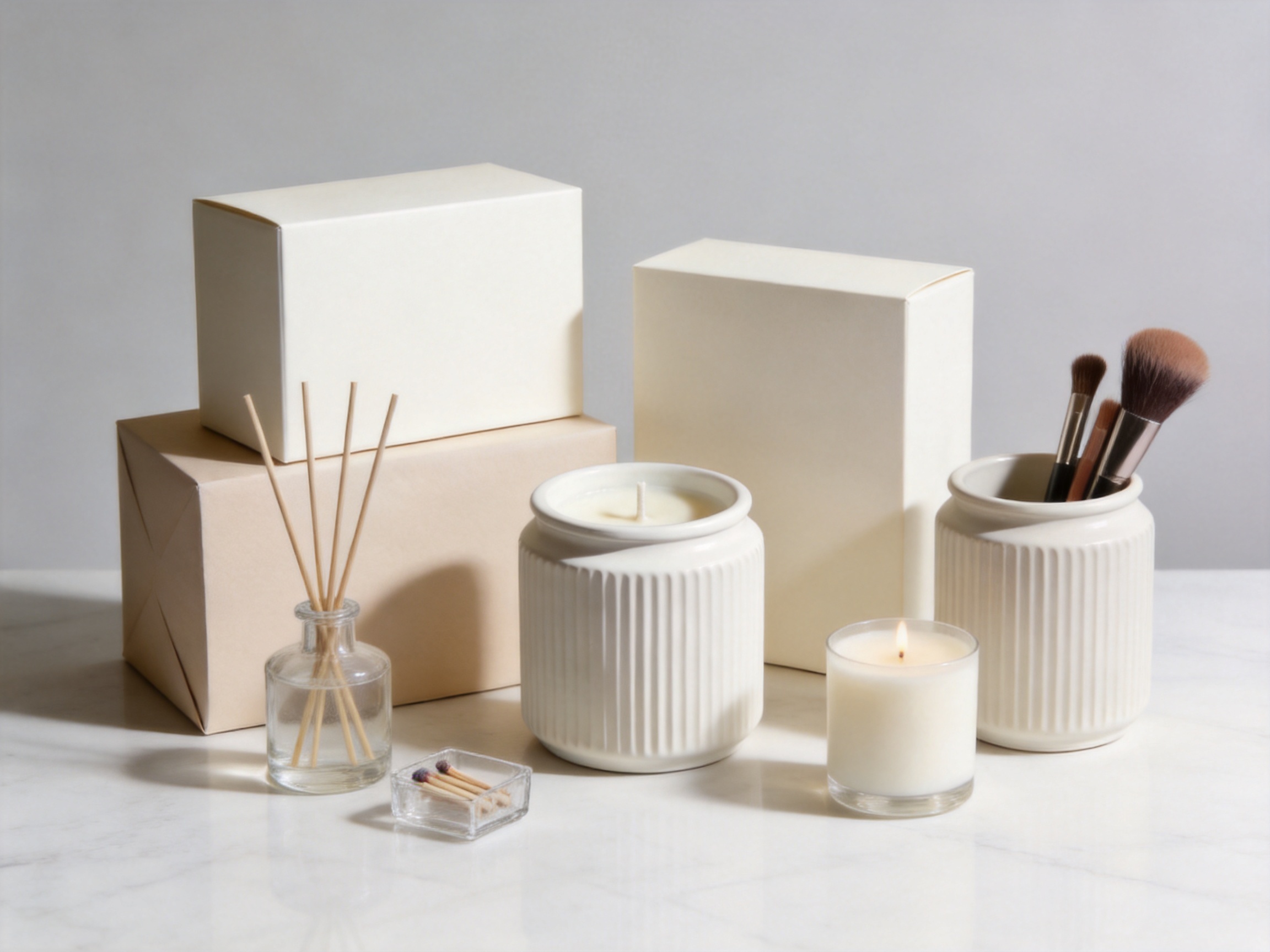
The reusable nature of the ceramic jar gives this candle an advantage in sustainability-conscious markets. Although the candle itself is consumed, the container can continue to provide value. Consumers increasingly appreciate products that do not become waste immediately after use.
The ribbed porcelain jar can be reused in many ways. On a desk, it may hold pens, paper clips, or small accessories. In a bathroom, it may hold cotton swabs, hair ties, or makeup brushes. On a dresser, it may hold rings, earrings, or small keepsakes. In a living room, it may simply remain as a decorative object.
Brands can encourage reuse by adding a small after-use message to packaging or product pages. For example, the packaging can suggest turning the jar into a decorative holder after the candle is finished. This creates a positive emotional connection and makes the product feel more thoughtful.
Reusable packaging and containers also support storytelling. A candle that becomes a vessel after use can be positioned as more than a consumable product. It becomes part of the home. This strengthens the product’s lifestyle value and can encourage customers to collect different scents in the same jar style.
The white ribbed porcelain candle can serve as a foundation for multiple product collections. A brand may create a core everyday collection with four fragrances: fresh linen, white tea, sandalwood, and vanilla amber. The same jar can then be used for seasonal launches such as spring garden, summer citrus, autumn woods, and winter spice.
A wellness collection could include calming fragrances such as lavender, eucalyptus, chamomile, cedar, or soft musk. The white ceramic jar supports a spa-like appearance. Packaging could use gentle neutral colors and simple typography to reinforce relaxation.
A luxury gifting collection could include deeper fragrances such as oud, amber, smoked wood, fig, black tea, or rose. Gold foil labels, rigid boxes, and matching accessories could elevate the product for premium channels. The ribbed texture already provides a decorative foundation, reducing the need for overly complex packaging.
A hotel or resort collection could use custom fragrances inspired by the property’s environment. For example, a seaside hotel may choose sea salt and sage, while a mountain resort may choose cedarwood and pine. The white jar can be branded subtly with the property name, creating a souvenir that guests may purchase or receive as a gift.
A wedding or event collection could use soft florals, vanilla, white musk, or champagne-inspired fragrances. The clean white vessel naturally matches wedding aesthetics. With customized labels, ribbons, or gift boxes, it can become a refined favor or guest-room amenity.
For importers, the product offers several commercial advantages. First, it is visually differentiated but not risky. The white ribbed design is distinctive enough to stand out, yet neutral enough to appeal to broad audiences. This reduces the risk of slow-moving inventory caused by overly niche design.
Second, the product supports repeatable collection planning. Retailers can reorder the same vessel with different fragrances or seasonal packaging. This simplifies supply chain management and creates continuity on shelves. Customers who like the jar may return to buy another fragrance in the same design.
Third, the product has gifting potential. Giftable products often perform well during holidays and promotional seasons. The ceramic jar, premium appearance, and reusable value make it suitable for gift packaging and bundled sets. Retailers can increase average order value by pairing the candle with diffusers, bath products, or home accessories.
Fourth, the product is suitable for both online and offline channels. Its clean design photographs well for online listings, while its tactile ceramic texture performs well in physical stores. This dual-channel adaptability makes it attractive for modern retail strategies.
Fifth, the company’s customization and supply chain support can help buyers manage product development more efficiently. Instead of separately sourcing the jar, wax filling, packaging, and export service, buyers can work with an integrated partner capable of coordinating the full process.
The main difference is the white ribbed porcelain container. It provides a more tactile, decorative, and premium appearance than many basic glass jars. The ribbed texture adds depth and visual interest, while the ceramic material supports a refined home décor feeling and after-use value.
Yes. The white color, compact cylindrical shape, and clean ribbed texture make it highly suitable for minimalist, Scandinavian, modern, spa-inspired, and neutral home interiors. It adds detail without creating visual clutter.
Yes. After the candle is completely finished, cooled, and properly cleaned according to safe guidance, the ceramic jar can be reused as a small storage vessel or decorative container. It may hold office items, jewelry, cotton pads, makeup brushes, or small accessories.
The single-wick design supports a calm and focused flame experience. It is simple to use, suitable for everyday home fragrance, and appropriate for compact spaces such as bedrooms, desks, bathrooms, and small living areas.
Yes. Fragrance customization is available through OEM/ODM development. Buyers can select fragrance directions according to their market, such as floral, woody, fresh, gourmand, spa, seasonal, or luxury-inspired profiles.
Yes. Buyers can customize labels, color boxes, gift boxes, inserts, carton marks, and other packaging details. The white porcelain jar works well with many branding styles, from simple black-and-white labels to luxury foil designs.
The product is suitable for importers, wholesalers, private-label brands, retailers, e-commerce sellers, hotel groups, spas, gift companies, and corporate gifting programs. It can be sold individually or included in a scented set.
Hangzhou Leo Home Trading Co., Ltd. supports production through an integrated supply chain that includes candle factories, jar customization partners, and color box factories. The company also emphasizes quality control, lab support, customization service, and export coordination.
Yes. Its neutral white ceramic design, compact size, and premium appearance make it highly suitable for gift sets. It can be paired with reed diffusers, matches, candle tools, fragrance cards, or other home fragrance accessories.
Consumers should always burn candles on stable, heat-resistant surfaces, keep them away from flammable items and drafts, trim the wick as instructed, avoid leaving candles unattended, and stop use according to the safety instructions when the remaining wax becomes too low.
The white ribbed porcelain single-wick ceramic jar candle is a strong example of how modern home fragrance products can combine beauty, function, and commercial practicality. Its white porcelain vessel creates a clean and timeless impression, while the vertical ribbed texture adds tactile richness and visual distinction. The compact cylindrical body makes it easy to place in everyday spaces, and the single-wick structure supports a calm, steady candle experience.
For consumers, the product offers ambiance, décor value, and reusability. For brands and retailers, it offers customization potential, broad market appeal, and strong visual identity. For importers, it benefits from the manufacturing coordination, supply chain integration, quality assurance, and export support of Hangzhou Leo Home Trading Co., Ltd.
In a competitive candle market, products must do more than smell pleasant. They must look appealing before purchase, perform reliably during use, and leave a positive impression after the fragrance is gone. This candle achieves that by turning a simple home fragrance item into a refined lifestyle object. With the right fragrance, packaging, and brand positioning, it can become a valuable product for year-round sales, seasonal collections, hospitality programs, and premium gifting lines.
National Candle Association. Candle Safety and Usage Guidelines.
ASTM International. Standard Guide for Candle Fire Safety Labeling.
European Candle Association. Quality and Safety Recommendations for Candles.
International Fragrance Association. Standards for Fragrance Ingredient Use.
Home Fragrance Market Industry Reports. Consumer Trends in Scented Candles and Decorative Home Fragrance.
Ceramic Materials Handbook. Properties and Applications of Porcelain and Heat-Resistant Ceramic Containers.

Room 1701, Building C1, Wangjing, Xiaoshan District, Hangzhou City, Zhejiang Province, China.

+86-15937257616

Copyright© 2026 Hangzhou Leo Home Trading Co., Ltd. All Rights Reserved.

Luxury Candles Home Fragrance Manufacturers Modern Candles Factory