 English
 Français
News
Home / Author / Emily Chen — After-Sales Service Supervisor / Textured Concrete Wooden Wick Candle: A Modern Home Fragrance Solution for Custom Collections
Content
Home fragrance has evolved from a basic household accessory into an important part of interior styling, relaxation, hospitality, gifting, and lifestyle retail. Consumers increasingly look for products that combine atmosphere, visual appeal, material authenticity, and practical reusability. The Textured Concrete Wooden Wick Cement Jar Candle responds to these expectations through a distinctive combination of tactile construction, soft illumination, subtle sound, and flexible styling.
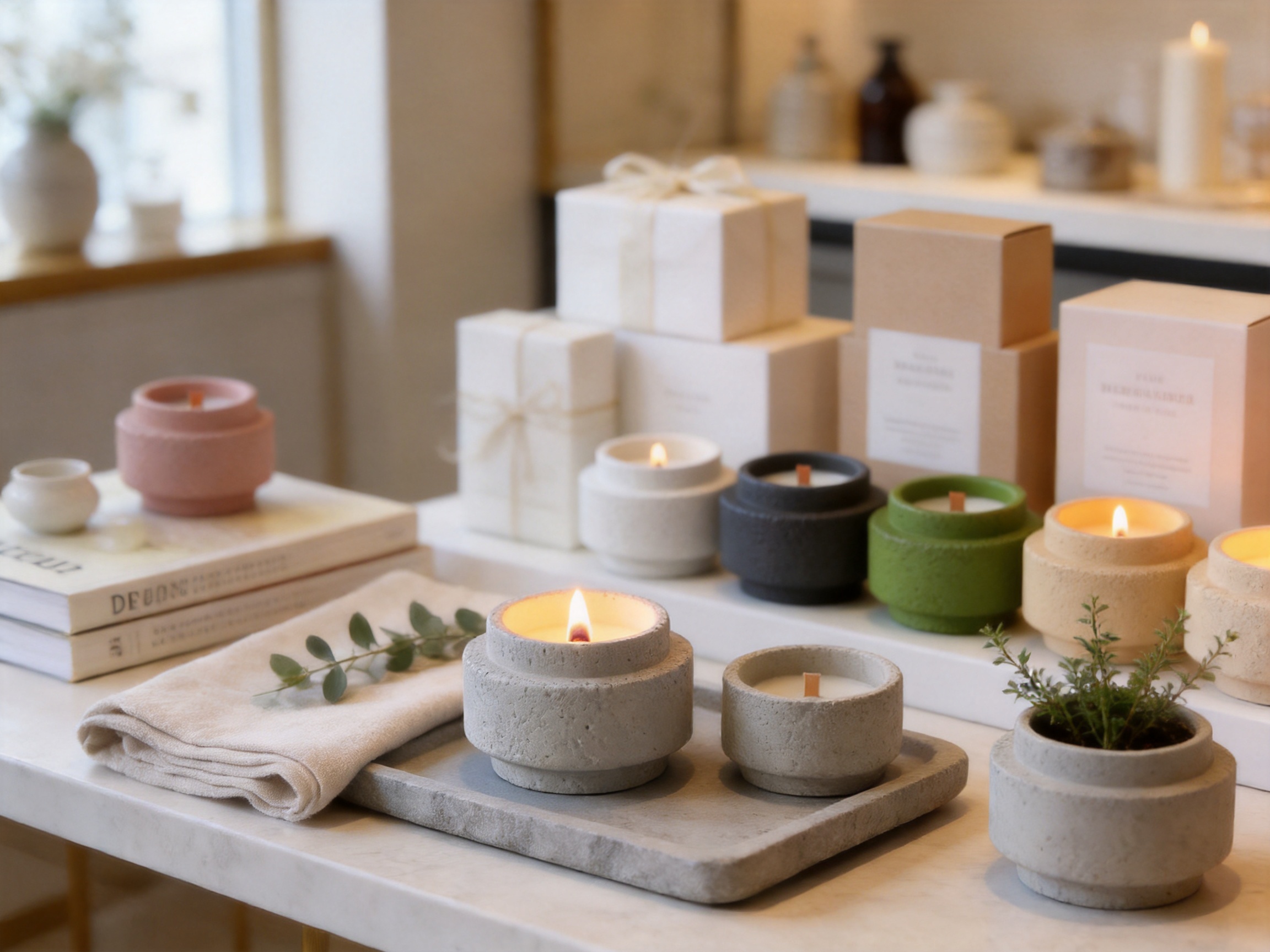
Designed in a solid cement vessel with a textured concrete finish, this candle offers an industrial yet refined alternative to conventional glass, ceramic, or smooth metal candle containers. Its rounded silhouette and muted appearance make it suitable for modern apartments, boutique hotels, restaurants, spas, offices, gift collections, and seasonal home décor programs. At the same time, the wooden wick creates a gentle crackling effect during burning, adding an auditory dimension that ordinary cotton-wick candles generally do not provide.
Beyond its appearance, the product reflects a carefully coordinated approach to product development, material selection, quality control, customization, packaging, and international supply. Hangzhou Leo Home Trading Co., Ltd. supports overseas buyers with sourcing and supply chain services across home fragrance and daily-use categories. Its network of candle factories, jar customization partners, and color box factories allows buyers to develop coordinated collections rather than purchase isolated products from disconnected suppliers.
This article examines the product’s design advantages, functional characteristics, commercial potential, customization possibilities, manufacturing and quality processes, supply chain strengths, and suitability for different markets. It also explains how a textured cement jar candle can help retailers and importers create differentiated home fragrance lines in a competitive environment.
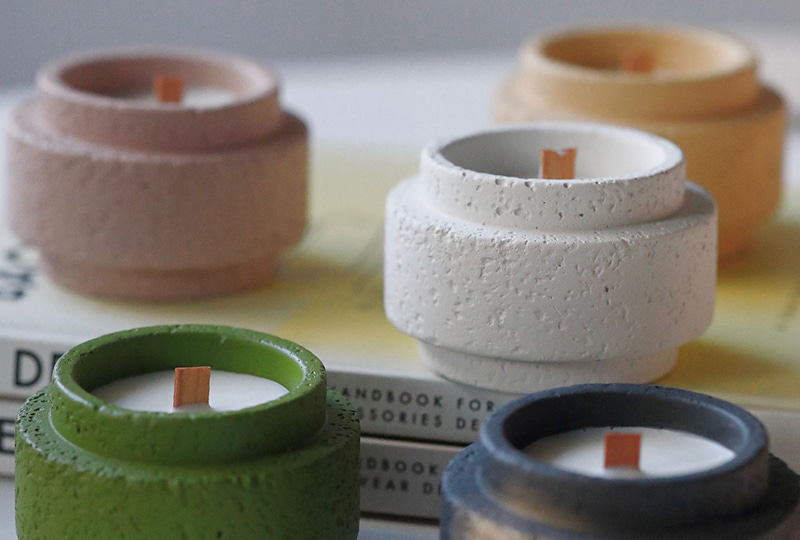
Cement Jar Candle6aTextured Concrete Wooden Wick Cement Jar Candle
The Textured Concrete Wooden Wick Cement Jar Candle is built around a simple but effective design principle: combine the visual strength of concrete with the emotional warmth of candlelight. The contrast between the hard, mineral character of cement and the soft glow of a burning flame gives the product a balanced identity. It feels substantial without appearing overly decorative, and contemporary without becoming cold or impersonal.
The jar features a raw, tactile surface that resembles naturally finished concrete. Instead of relying on bright colors, complex graphics, or ornate shapes, the product uses texture and proportion as its primary design language. This makes it adaptable to a wide variety of interiors, including minimalist, Scandinavian, industrial, contemporary, rustic, and neutral-toned environments.
Its rounded silhouette further softens the visual impact of the cement material. Sharp architectural lines can sometimes make concrete products appear heavy or severe, while the clean curved profile creates a more approachable appearance. The result is a vessel that can be placed on a coffee table, bedside table, bathroom shelf, reception desk, dining table, or display tray without overwhelming surrounding décor.
The design also supports a second life after the candle has been consumed. Once the wax has been removed and the container has been cleaned, the cement jar may be used as a decorative holder, small storage container, planter for suitable plants, organizer, or display vessel. This reusability adds practical value and helps extend the product’s presence in the consumer’s home.
Many scented candles compete through fragrance names, printed labels, decorative lids, or colorful vessels. Those features can be effective, but they may also create a crowded visual market. A textured concrete jar takes a different approach by making the material itself part of the product story.
The concrete appearance communicates durability, authenticity, and craftsmanship. Subtle surface variation can make each piece feel more distinctive, particularly when the finish is intentionally designed to preserve a tactile, handcrafted impression. This can be valuable for retailers that want to present their candle range as elevated, artistic, or design-conscious rather than purely promotional.
The understated vessel also provides broad branding flexibility. Buyers may select a restrained label, a natural paper label, a foil mark, a wraparound design, or minimal packaging that allows the concrete surface to remain visible. The jar can therefore support both premium collections and accessible lifestyle ranges depending on the selected fragrance, packaging, and presentation.
A candle is often purchased for its scent, but a successful home fragrance product engages more than one sense. The Textured Concrete Wooden Wick Cement Jar Candle combines visual, tactile, auditory, and olfactory elements.
The concrete surface provides a tactile experience before the candle is lit. The flame creates a warm and steady visual glow. The fragrance helps shape the atmosphere of a room. The wooden wick adds a subtle crackling sound that may remind users of a small fireplace. These combined effects can make the product feel more immersive than a standard candle with a smooth vessel and conventional wick.
This sensory combination is particularly useful for relaxation-oriented positioning. The candle can be marketed for evening routines, reading, meditation, bathing, quiet entertaining, seasonal decorating, or creating a welcoming atmosphere after work. It can also support gift messaging centered on comfort, calmness, and personal well-being.
The candle market includes a wide selection of glass jar candles, tin candles, ceramic candles, shaped wax products, and decorative gift sets. The cement jar format offers several points of differentiation that can help buyers build a more distinctive assortment.
| Product Feature | Consumer Benefit | Commercial Advantage |
|---|---|---|
| Textured concrete vessel | Provides a tactile, contemporary appearance | Helps products stand out in crowded candle displays |
| Wooden wick | Creates a gentle crackling sound during burning | Supports premium and sensory-focused positioning |
| Solid cement construction | Offers a stable and substantial container | Creates a stronger perceived-value impression |
| Rounded minimalist silhouette | Matches many interior styles | Supports broad retail and hospitality applications |
| Reusable vessel | Allows continued use after the wax is finished | Encourages longer product retention and better value perception |
| Customization support | Allows fragrance, labeling, and packaging adaptation | Helps buyers build market-specific collections |
Glass candles remain popular, but transparent vessels can make many products look similar when displayed together. A textured cement jar introduces a different visual weight and surface character. Its muted tones can create contrast against bright packaging and can also blend naturally into neutral or earth-toned displays.
For independent boutiques, interior stores, gift shops, and lifestyle retailers, the product can function as both a fragrance item and a décor object. It may be displayed beside ceramics, textiles, wooden accessories, bathroom products, or small furniture pieces. This cross-category compatibility increases merchandising opportunities and allows retailers to present the candle as part of a broader lifestyle story.
Perceived value is influenced by more than the amount of wax inside a vessel. Weight, texture, finish, packaging, fragrance quality, wick performance, and reusability all shape how consumers judge a candle. A solid cement container can feel more substantial in the hand than a lightweight tin or thin glass vessel.
The textured finish suggests that attention has been given to the exterior as well as the internal formulation. When combined with a suitable fragrance and carefully designed packaging, the product can support a premium price structure without depending on excessive ornamentation.
This is especially relevant for gift markets. A candle with a tactile architectural vessel can appear complete and intentional even when the external design is minimal. The product may be suitable for housewarming gifts, corporate gifts, holiday collections, hospitality welcome packages, and self-care themed assortments.
After a candle has been consumed, many traditional containers are discarded. A cement jar offers a stronger opportunity for reuse because of its durable appearance and stable structure. Consumers may repurpose it as a holder for jewelry, clips, cosmetics, stationery, keys, small plants, or decorative objects.
Although reuse depends on the consumer’s cleaning method and intended application, the possibility itself adds meaningful product value. Retailers can highlight the vessel’s second-life potential in packaging copy or product education. This may appeal to customers who prefer items with continued household usefulness.
The wooden wick is one of the product’s most recognizable functional features. When properly selected and matched with the wax formulation and vessel dimensions, a wooden wick can create a stable flame and a soft crackling sound. This sound is not intended to dominate the room. Its appeal lies in its subtlety and in the way it complements the visual warmth of the flame.
Compared with a standard cotton wick, a wooden wick gives the candle a more distinctive sensory identity. It can strengthen product descriptions built around fireside comfort, slow living, relaxation, and evening ambiance. The sound may be particularly attractive during quiet moments when background noise is limited.
Wick selection requires technical coordination. The wick size, thickness, width, treatment, wax type, fragrance load, vessel diameter, and intended burn behavior all influence the final result. A wick that is too small may produce a weak flame or uneven melt pool, while a wick that is too large may create excessive flame height, soot, or heat. For this reason, wooden wick products should be developed and tested as a complete system rather than by selecting the vessel and wick independently.
Different wax systems have different melting characteristics and fragrance-release behaviors. The wick must provide enough heat to create an even melt pool without producing an unnecessarily large flame. Fragrance oils can also influence how the candle burns because they may alter the wax structure and fuel flow.
A professional development process therefore includes trial pours, wick testing, burn observation, fragrance evaluation, and adjustments to the formula. Key observations may include initial ignition, flame stability, melt-pool development, vessel temperature, scent diffusion, wick performance near the end of the burn, and visible residue.
For buyers developing their own collections, this technical coordination is an important advantage of working with an experienced supply partner. A supplier that can communicate with candle factories and support product development is better positioned to resolve compatibility issues than a supplier that only purchases finished goods without technical coordination.
All candles require responsible use. Product packaging should provide clear instructions regarding placement, trimming, burn duration, supervision, and keeping the candle away from flammable materials, children, and pets. Wooden wicks may require trimming between burns to support a more consistent flame.
Clear instructions benefit both the consumer and the buyer. They reduce misuse, support a better user experience, and help protect the reputation of the retail brand. Packaging and labeling can be customized to include appropriate usage information, market requirements, warning statements, fragrance details, and care guidance.
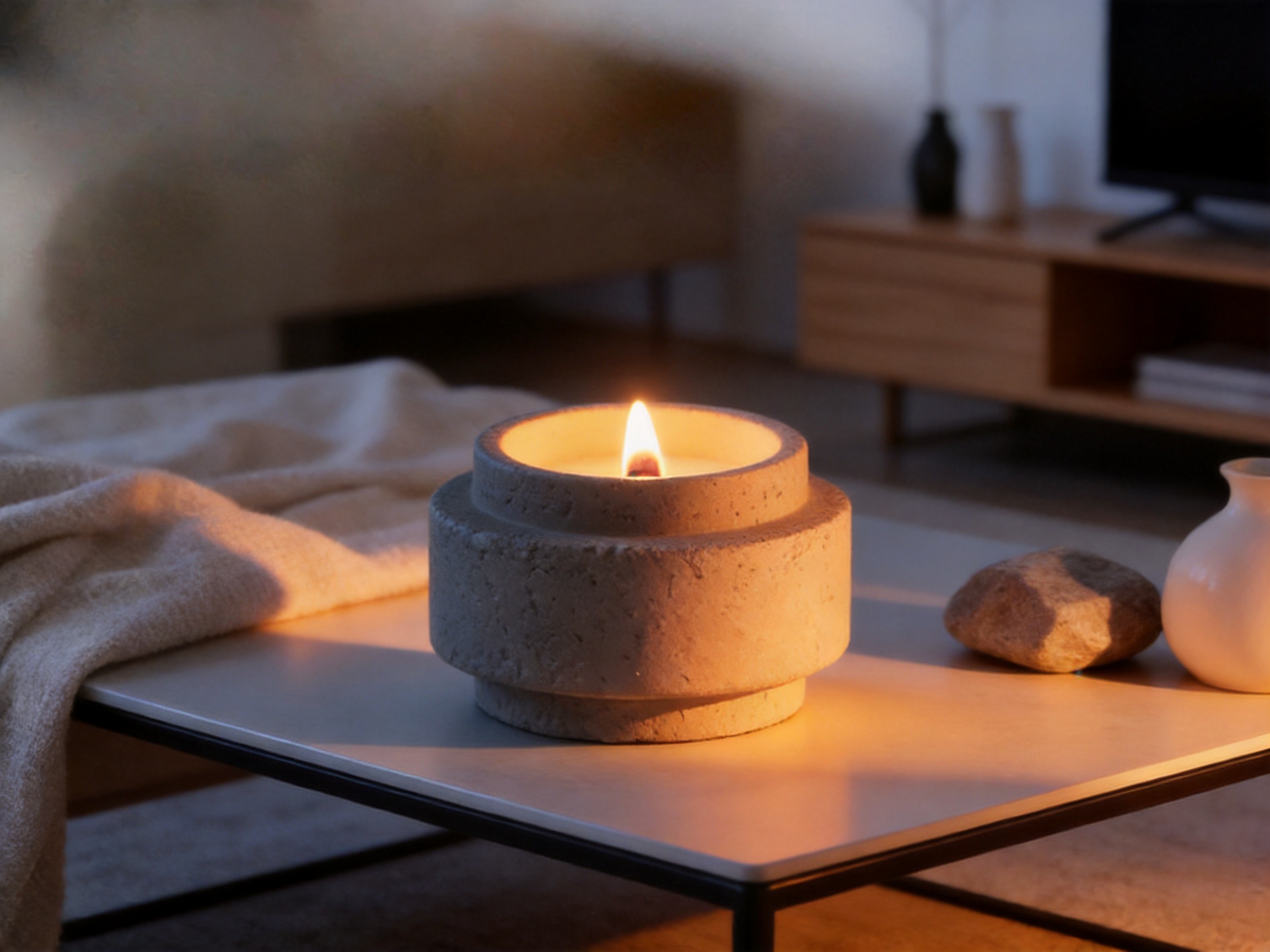
The cement jar is central to the product’s identity and performance. Its construction must balance appearance, weight, stability, heat behavior, surface consistency, and compatibility with the candle filling process. A successful vessel is not simply a decorative shell; it is part of the candle’s functional system.
A textured concrete finish is attractive because it conveys natural variation. However, controlled variation is important. Excessive inconsistency can make products appear defective, while a perfectly uniform surface may remove the handmade character buyers expect from cement products.
Quality control should therefore define acceptable standards for texture, color, edge formation, surface marks, pinholes, cracks, base flatness, and overall shape. Inspection criteria may differ depending on the buyer’s positioning. A rustic collection may accept more visible variation, while a premium minimalist line may require a cleaner and more consistent finish.
Color can be adjusted through material selection, pigment use, surface treatment, or finishing methods. Neutral gray, warm gray, beige, charcoal, off-white, and other muted tones can support different collection themes. Because the surface is an important selling feature, samples should be reviewed under suitable lighting before bulk production is approved.
The solid cement vessel offers a stable base that can reduce the risk of tipping when placed on a level surface. Its substantial construction also contributes to the product’s robust feel. Nevertheless, stability and heat performance must be verified through appropriate product testing.
Testing may consider the vessel’s condition during extended burning, the temperature of the outer surface, the behavior of the wax near the base, and the condition of the vessel after repeated use. The objective is to ensure that the complete candle performs as intended under normal consumer conditions.
Vessel design also needs to account for wall thickness, interior finish, base design, wick placement, filling level, and the relationship between the wax surface and the rim. These details influence both appearance and burn behavior. A professionally coordinated manufacturing process reduces the likelihood of misalignment, uneven filling, or inconsistent presentation.
After the cement vessels have been inspected, the candle production process may include wick positioning, wick securing, wax preparation, fragrance blending, filling, cooling, surface finishing, labeling, and packing. Each stage can affect the final product.
Wick placement should be centered and firmly secured so that the flame remains properly positioned. Wax temperature and pouring conditions must be managed to reduce surface imperfections and support consistent adhesion. Cooling conditions can influence the smoothness of the wax surface, the appearance of sinkholes, and the final fragrance presentation.
Once the candle has set, the product may undergo trimming, cleaning, label application, visual inspection, and packaging. When several factories and suppliers are involved, coordination is especially important. The vessel, wax, wick, fragrance, label, and box must be compatible in dimensions and specifications.
Hangzhou Leo Home Trading Co., Ltd. operates as an international trading and supply chain partner serving household, home and garden, personal care, daily-use, and home fragrance categories. Its role allows overseas buyers to access coordinated product development and sourcing support without managing every factory relationship independently.
The company integrates 10 candle factories, 8 jar customization partners, and 8 color box factories. This network creates flexibility in product development and helps buyers compare capabilities across different production resources. It also supports the creation of coordinated candle collections involving different jar styles, shapes, fragrances, packaging formats, and seasonal themes.
A major challenge in home fragrance procurement is that product quality depends on multiple connected components. A beautiful jar is not enough if the wick is poorly matched. A good fragrance is not enough if the packaging does not protect the product. An attractive box is not enough if the candle is filled inconsistently.
A coordinated supply chain approach brings these elements together. The buyer can discuss vessel design, fragrance selection, labeling, box dimensions, carton packing, inspection requirements, and shipping schedules through a single commercial partner. This can simplify communication and reduce the risk of specification gaps between separate vendors.
For international buyers, this arrangement may also reduce administrative pressure. Instead of independently managing several factories, the buyer can receive assistance with supplier communication, sample coordination, product updates, quality follow-up, and delivery planning.
The company supports customization based on drawings or samples. This is valuable for buyers that already have a brand identity, retail concept, or product line architecture. A buyer may begin with a preferred vessel shape, a reference texture, a target color, an existing label design, or a sample from another market.
Customization can cover specifications, fragrances, labels, packaging, and related presentation details. Buyers may request a specific fragrance direction such as woody, floral, citrus, herbal, gourmand, fresh, seasonal, or spa-inspired. They may also develop several fragrances within one vessel design to create a recognizable collection.
Packaging can be adapted for different sales channels. A gift-focused product may require a full-color rigid box or coordinated sleeve, while a minimalist lifestyle product may use a simple kraft carton with understated printing. E-commerce packaging may require stronger protection and more secure internal placement, while boutique retail packaging may prioritize shelf presentation.
New product development often begins with a trial order rather than immediate large-scale purchasing. Flexible support for smaller volumes allows buyers to test consumer response, fragrance preferences, packaging performance, and retail positioning before committing to a large launch.
Once a product proves successful, stable bulk replenishment becomes important. The company reports daily capacity of up to 50,000 units across its supply capabilities, supporting larger orders and ongoing programs. Actual capacity and lead times depend on the selected specifications, materials, packaging, order quantity, and production schedule, but an established network can provide useful flexibility during scale-up.

Quality assurance is essential for any candle program, particularly when the product combines a specialized vessel with a wooden wick. Inconsistent raw materials, fragrance variation, inaccurate filling, or poor packaging can affect performance and customer satisfaction.
Hangzhou Leo Home Trading Co., Ltd. describes a quality system that covers raw material selection, production stages, and finished goods inspection. The company also maintains an in-house laboratory and applies quality control at key stages. This structure supports more consistent communication between product development and inspection activities.
Raw material control may include the examination of wax, fragrance oils, wicks, pigments, cement or vessel materials, labels, adhesives, and packaging components. Materials should be checked against approved samples or specifications before they enter production.
For a textured cement candle, the vessel inspection is particularly important. Buyers may establish reference samples for acceptable color, texture, dimensions, weight, interior condition, and base stability. These references help production teams and inspectors evaluate whether the finished vessels are within the agreed range.
In-process inspection can identify problems before an entire order is completed. Checks may include wick centering, wick height, filling level, wax appearance, surface cleanliness, label position, vessel damage, and packaging assembly.
Early inspection is more efficient than discovering defects after packing or shipment. If a problem is found during filling, it may be corrected before large quantities are completed. If a packaging dimension is wrong, it can be adjusted before the product reaches final packing. This staged approach supports more reliable production management.
Finished product inspection may evaluate appearance, quantity, dimensions, labeling, packing, carton marks, and sample performance. Depending on the buyer’s requirements, inspection may also include burn testing or review of previously approved production samples.
For international orders, inspection documentation can support communication between the supplier and buyer. Photographs, sample reports, packing details, and production updates help overseas customers understand the order status and make decisions before shipment.
Repeat-order consistency is important for retailers that build long-term collections. Consumers who purchase a candle again expect the vessel color, fragrance character, wick behavior, and packaging to remain reasonably consistent.
Maintaining approved samples, written specifications, fragrance records, packaging files, and inspection standards can help support consistency. A supply partner with experience across several factories can also assist in maintaining production references when order volumes change or when different production resources are needed.
The product can serve as a ready-to-develop platform for private-label and OEM/ODM candle collections. Buyers may retain the core textured cement concept or adjust the product to suit their target market.
Fragrance selection should reflect the intended consumer, sales channel, season, and price level. A balanced collection may include a fresh fragrance for daytime use, a floral option for gift buyers, a woody or amber scent for autumn and winter, and a clean spa-inspired fragrance for bathrooms and wellness settings.
Fragrance naming and storytelling can also influence the perceived identity of the collection. Names may refer to natural landscapes, quiet rituals, architectural materials, seasonal moods, or travel memories. The concrete vessel provides a strong neutral base, allowing fragrance storytelling to become the primary color and emotional language of the range.
Labels can be designed to emphasize different product qualities. A monochrome label may support a modern architectural theme. A botanical label may soften the industrial vessel and create a natural lifestyle impression. A metallic accent may contribute to a premium gift appearance, while a textured paper label may reinforce the tactile character of the jar.
Label specifications should account for the vessel’s surface. Highly uneven areas may require carefully selected adhesive materials or a label shape that sits on a more controlled section of the jar. Buyers should review physical samples rather than relying only on digital artwork because texture, curvature, and lighting can change the final appearance.
Packaging can be developed for individual sales, multi-piece gift sets, subscription programs, hospitality amenities, or seasonal promotions. A box may include a window, sleeve, insert, care card, fragrance description, or collection story.
Protective packaging is particularly important for cement vessels because their weight and surface finish require suitable internal support. The packaging should help prevent movement, impact damage, abrasion, and label scuffing during handling and transportation. Carton configuration should also be considered to improve warehouse efficiency and shipping stability.
The neutral vessel makes the candle suitable for seasonal adaptations. Winter collections may use warm fragrances and darker packaging. Spring products may introduce soft botanical notes and lighter labels. Autumn editions may combine wood, spice, amber, and earthy visual themes. Holiday gift boxes can add coordinated accessories or multiple fragrances.
Limited editions can create urgency and encourage repeat purchases while allowing retailers to test new fragrance concepts. Because the vessel is visually distinctive, seasonal differentiation does not always require a completely new jar mold. Changes in fragrance, label, sleeve, and box design may be sufficient to create a fresh presentation.
The candle is suitable for multiple market segments because its design combines décor value with home fragrance functionality.
Home décor stores can position the candle alongside decorative objects, ceramics, textiles, trays, and furniture accents. Its concrete surface complements natural wood, stone, linen, glass, and matte metal. The candle can be merchandised as a small architectural object that also delivers fragrance.
Gift retailers may value the product’s combination of attractive presentation and practical use. A textured cement candle can be marketed for housewarming, birthdays, anniversaries, holidays, employee appreciation, and thank-you gifts.
Its reusable container helps communicate that the product offers more than a short-term fragrance experience. Buyers can develop gift packaging that includes a message card, fragrance guide, or coordinated accessory to increase perceived completeness.
Hospitality businesses often use candles to influence atmosphere and reinforce a sense of comfort. The product may be suitable for spa reception areas, hotel rooms, lounge spaces, dining environments, and promotional gift programs, subject to the operator’s safety procedures and local requirements.
The subdued vessel can fit professional interiors without appearing overly decorative. Custom labeling can help hospitality businesses present the candle as part of their own visual identity or sell it through an on-site boutique.
In e-commerce, visual differentiation is critical. A textured concrete vessel can create strong product photography through shadows, surface detail, and contrast. Images may show the candle in a minimalist interior, beside books or ceramics, or in an evening setting with the flame lit.
Online product descriptions should explain the material, wooden wick, fragrance, dimensions, care instructions, packaging, and reuse potential. Since consumers cannot touch the vessel before purchase, detailed photography and accurate copy are especially important.
Consumers are paying greater attention to product longevity, packaging waste, material choices, and the overall life cycle of household goods. The reusable cement vessel can support a more durable product story because it may remain useful after the candle has finished burning.
Responsible communication should remain accurate and specific. Rather than making broad environmental claims, buyers can explain the container’s reuse potential, provide cleaning guidance, reduce unnecessary packaging, and select appropriate materials for labels and boxes where feasible.
Packaging design can also support responsible positioning by avoiding excessive layers and by using dimensions that protect the product without creating unnecessary empty space. Efficient carton packing may reduce handling complexity and improve shipping utilization, although packaging decisions must always preserve product safety.
The company’s supply chain integration may help buyers evaluate several packaging and component options. A coordinated discussion about the vessel, wax, wick, label, and box can produce a more balanced result than treating each element separately.
International buyers often face challenges that extend beyond finding a product photograph. They need dependable specifications, responsive communication, sample development, quality follow-up, packaging coordination, export documentation, and delivery planning.
Hangzhou Leo Home Trading Co., Ltd. was founded in January 2025 and is based in Hangzhou, China. The company focuses on international trading and supply chain solutions for household and daily necessities, with particular attention to home fragrance products such as scented candles, LED candles, and related gift sets.
Its team covers product development, international sourcing, and cross-border marketing. This combination is useful for buyers that want to develop products for overseas markets rather than purchase generic inventory without adaptation.
Product development support can help buyers translate a concept into a manufacturable specification. This may include choosing vessel dimensions, discussing texture, reviewing fragrance options, coordinating wick testing, selecting label materials, and adapting packaging.
Support based on drawings or samples is particularly helpful when the buyer has a clear visual direction but needs assistance with production feasibility. Factory communication can identify potential issues involving mold design, wall thickness, surface finish, packing dimensions, or production cost.
The company’s network of candle factories, jar customization partners, and color box factories creates a broader sourcing foundation. Buyers can use this network to compare different styles and develop product families that include jar candles, shaped candles, jelly candles, LED candles, and scented sets.
This diversity can help retailers create a layered assortment. The cement jar candle may serve as the premium architectural centerpiece, while smaller candles or gift sets provide entry-level options. Such assortment planning can improve cross-selling and allow customers with different budgets to remain within the same collection.
The company reports experience serving more than 10 countries and regions across North America, Europe, and the Middle East. Its location within Zhejiang Province provides access to established manufacturing resources and logistics infrastructure, while proximity to Ningbo Port can support international shipping arrangements.
Export orders require careful attention to carton information, commercial documentation, packing lists, product descriptions, and shipping schedules. A supplier familiar with cross-border requirements can help reduce avoidable communication delays and support smoother coordination between production and shipment.
A structured workflow helps buyers move from concept to finished order efficiently. The following process can be adapted to different project sizes and market requirements.
Begin by identifying the intended market, retail channel, price range, consumer profile, and collection style. Decide whether the candle should be presented as a premium décor item, a wellness product, a gift, a seasonal accessory, or an everyday home fragrance.
Review the jar shape, dimensions, weight, texture, color, interior condition, base design, and preferred surface variation. Physical samples should be assessed under retail lighting and photographed for reference.
Choose a fragrance portfolio that supports the collection’s intended mood. Samples should be evaluated both cold and while burning because fragrance perception can change with heat and diffusion.
Review wick size, ignition, flame behavior, melt-pool development, scent release, soot, and vessel temperature. Testing should be repeated when the wax, fragrance, vessel size, or wick material changes.
Create artwork that reflects the jar’s texture and shape. Confirm label adhesion, readability, color accuracy, warning information, barcode placement where applicable, and packaging protection.
The approved sample should represent the expected production standard. It can be used as a reference for appearance, dimensions, fragrance, wick position, label placement, and packing method.
Confirm the order quantity, schedule, materials, inspection points, carton configuration, and shipping requirements. Production updates and inspection records should be maintained throughout the order.
After launch, collect feedback on sales, fragrance popularity, packaging condition, customer comments, and repeat purchases. This information can guide future fragrance additions, packaging improvements, or new vessel variations.
Good product education helps consumers enjoy the candle safely and obtain better performance. Retail packaging should advise users to place the candle on a stable, heat-resistant surface and keep it away from drafts, flammable materials, children, and pets.
The wooden wick should be kept at an appropriate length according to the supplier’s care guidance. Trimming the wick between uses may help maintain a controlled flame. Consumers should avoid moving the candle while the wax is liquid and should allow the vessel to cool before handling or cleaning.
Burning should always be supervised. Users should follow the recommended maximum burn period and stop using the product when an appropriate amount of wax remains at the bottom. These instructions can be printed directly on the box, included on a care card, or presented through a QR-free printed information panel for markets that prefer fully offline packaging.
When reusing the vessel, consumers should allow the remaining wax to cool and remove it using a method suitable for the container. The jar should be cleaned carefully and inspected before reuse. Buyers should avoid making specific reuse claims that exceed the tested characteristics of the vessel.
The candle should be positioned around its combined strengths rather than a single feature. A strong product message may include textured concrete design, wooden wick ambiance, stable construction, reusable vessel potential, customization, and coordinated supply support.
Compared with low-cost candles that compete mainly on price, this product can emphasize material character and sensory detail. Compared with highly decorative candles that may suit only a narrow interior style, its rounded minimalist form offers broader adaptability. Compared with ordinary cotton-wick products, the wooden wick provides an additional sound-based experience.
For buyers, the greatest competitive advantage may be the ability to develop a complete product line. The candle can be customized with market-specific fragrances, labels, packaging, and collection concepts. This helps retailers move from generic resale toward a more recognizable private-label or OEM/ODM offering.
First, the textured concrete vessel delivers an authentic, architectural appearance. Second, the wooden wick creates a gentle crackling atmosphere. Third, the cement jar provides a stable and substantial format. Fourth, the rounded silhouette works across a variety of interior styles. Fifth, the vessel can remain useful after the candle is finished. Sixth, professional sourcing and quality coordination support consistent international supply.
These points can be adapted for catalog pages, wholesale presentations, packaging copy, trade show materials, and online listings. Buyers should select only the claims that match their final tested specifications and local market requirements.
The product uses a textured cement vessel rather than a conventional smooth glass container. Its tactile concrete appearance creates a stronger décor presence, while the solid jar offers a substantial feel. The wooden wick also adds a gentle crackling sound that gives the candle a more distinctive sensory profile.
Yes. The rounded silhouette, muted tones, and minimalist surface allow the vessel to fit modern, industrial, Scandinavian, contemporary, rustic, and neutral interior styles. Its design is intentionally versatile rather than tied to one decorative trend.
Wick selection can be evaluated as part of the product development process. The final wick depends on the vessel size, wax formulation, fragrance load, and desired burn performance. Buyers should request sample testing before approving bulk production.
Yes. OEM/ODM support can include fragrance selection and collection development. Buyers may choose from different fragrance directions and create a portfolio suited to their target market, season, retail channel, or brand concept.
Yes. Customization may include labels, sleeves, color boxes, fragrance information, care instructions, collection graphics, and gift presentation. Packaging should be reviewed with the vessel dimensions and shipping requirements in mind.
The vessel is designed with reuse potential as a decorative or storage container after the wax has been removed and the jar has been cleaned. The final reuse application should be selected responsibly and should reflect the vessel’s actual tested characteristics.
Yes. Its neutral, material-led design provides a strong base for private-label programs. Buyers can develop their own fragrance names, labels, packaging, and collection stories while retaining the distinctive concrete vessel concept.
Important checks include vessel texture, color, dimensions, stability, interior condition, wick position, wax appearance, fragrance consistency, flame behavior, packaging quality, label placement, and carton protection. Burn testing is also important when specifications change.
The company supports flexible delivery and smaller volumes or trial runs, subject to the selected specifications and production arrangements. A trial order can help buyers evaluate market response before moving to larger quantities.
The candle may suit home décor, gift, lifestyle, wellness, hospitality, e-commerce, and seasonal retail markets. Its final suitability depends on local regulations, packaging requirements, product testing, and the buyer’s commercial positioning.
Integrated sourcing can simplify communication among candle factories, jar suppliers, packaging partners, and inspection teams. It can also support coordinated customization, cost comparison, production follow-up, and international delivery planning.
Buyers should confirm the approved vessel sample, fragrance specification, wax and wick combination, label artwork, packaging design, product dimensions, carton packing, inspection standards, order quantity, production schedule, and shipping documentation requirements.
The Textured Concrete Wooden Wick Cement Jar Candle combines material character, sensory appeal, practical stability, and flexible customization in one adaptable home fragrance product. Its textured surface distinguishes it from ordinary smooth containers, while the rounded form helps it integrate naturally into a wide range of interiors.
The wooden wick adds a subtle crackling sound that strengthens the emotional experience of lighting the candle. The solid cement vessel contributes to perceived quality and may continue serving as a decorative or storage container after the wax has been consumed. Together, these features create a product with strong potential for premium lifestyle, gift, décor, wellness, and hospitality applications.
For international buyers, the product’s commercial value extends beyond its physical design. The supporting supply chain includes candle factories, jar customization partners, and packaging factories, enabling coordinated OEM/ODM development. Assistance with fragrance, specifications, labels, packaging, quality control, trial orders, bulk production, and logistics can help buyers move more efficiently from a concept to a finished collection.
In a competitive home fragrance market, products must offer more than fragrance alone. They need a clear visual identity, a memorable user experience, dependable quality, and a supply structure capable of supporting repeat orders. This cement jar candle addresses those requirements through a balanced combination of industrial texture, warm illumination, wooden-wick ambiance, reusability, and professional supply chain coordination.
1. International Organization for Standardization. Guidance on Quality Management Principles and Consistent Manufacturing Practices.
2. National Candle Association. General Candle Safety, Wick Care, and Responsible Burning Recommendations.
3. ASTM International. Candle Fire Safety and Performance Testing Considerations.
4. International Fragrance Association. General Principles for the Responsible Use of Fragrance Materials.
5. United Nations Environment Programme. Consumer Product Life Cycle and Resource Efficiency Discussions.
6. Hangzhou Leo Home Trading Co., Ltd. Product Development, Supply Chain, Quality Assurance, and OEM/ODM Company Materials.

Room 1701, Building C1, Wangjing, Xiaoshan District, Hangzhou City, Zhejiang Province, China.

+86-15937257616

Copyright© 2026 Hangzhou Leo Home Trading Co., Ltd. All Rights Reserved.

Luxury Candles Home Fragrance Manufacturers Modern Candles Factory