 English
 Français
News
Home / Author / Catherine Wu — Key Account After-Sales Specialist / Yellow Jar-Shaped Elegant Style Ceramic Jar Candle: A Modern Statement in Home Fragrance
Content
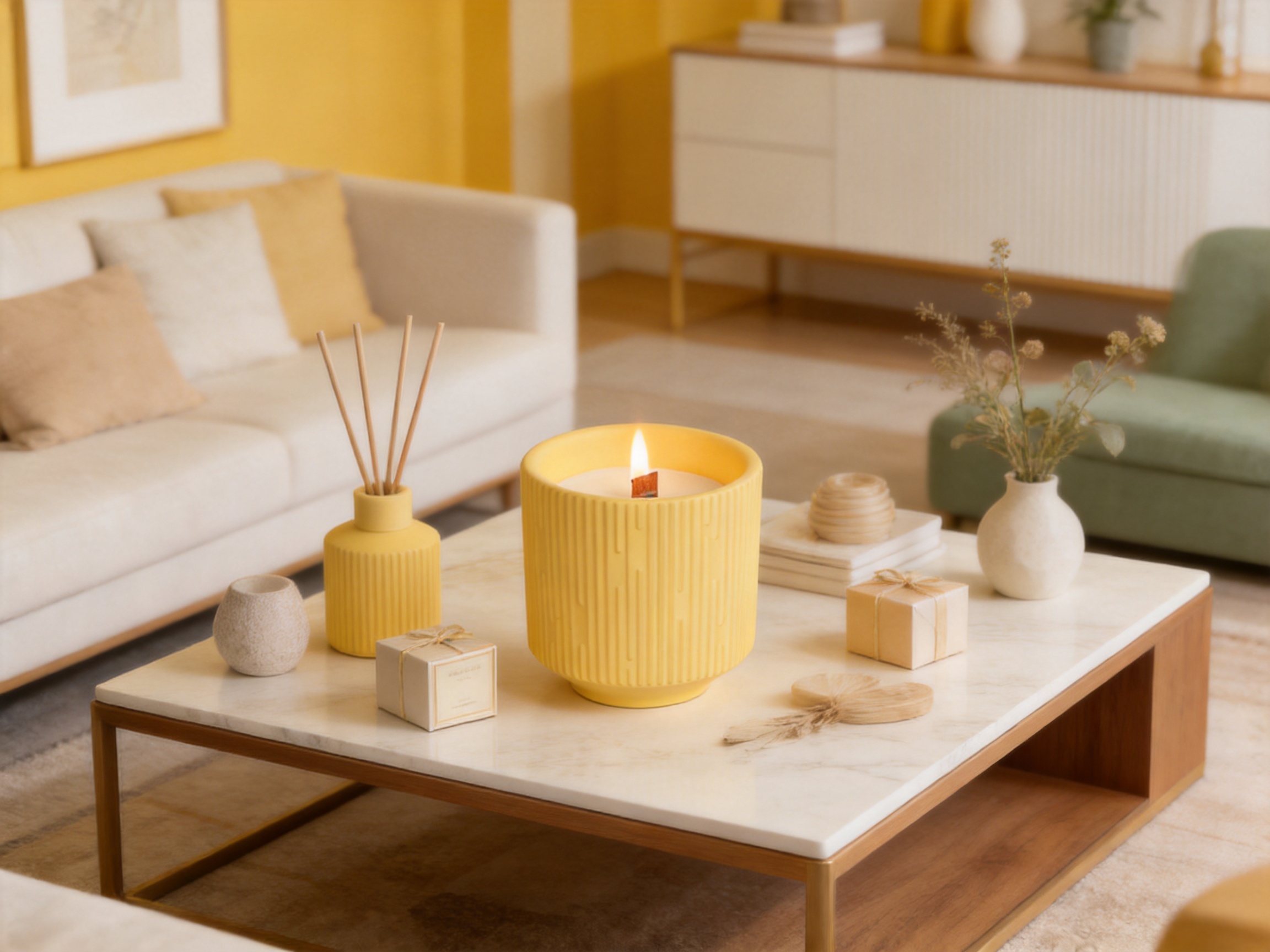
The Yellow Jar-Shaped Elegant Style Ceramic Jar Candle combines decorative appeal, dependable candle performance, and flexible commercial potential in one thoughtfully designed product. With its vivid yellow finish, ribbed exterior, rounded jar silhouette, and wooden wick, it is created for consumers who want more from a candle than a temporary source of fragrance. It serves as an atmospheric product, a decorative object, a giftable item, and a practical addition to contemporary interiors.
In the increasingly competitive home fragrance market, candles must perform across several dimensions. Buyers expect an attractive appearance, an enjoyable fragrance experience, dependable burning behavior, safe construction, and packaging that supports gifting or retail presentation. Retailers and importers also require consistent quality, reasonable lead times, customization options, and dependable supply chain support. This ceramic jar candle addresses these needs through a combination of visual identity, material selection, product versatility, and organized manufacturing coordination.
The candle’s yellow color immediately creates a sense of warmth and optimism. Unlike neutral candles that blend quietly into a room, the yellow vessel can function as a visible accent on a coffee table, shelf, bedside table, reception desk, or dining area. Its ribbed surface adds tactile interest and helps distinguish it from ordinary smooth glass containers. The jar shape provides a familiar and stable format, while the ceramic material gives the product a more substantial and refined presence.
The product is particularly suitable for home fragrance collections, seasonal assortments, decorative gift programs, boutique retail lines, hospitality applications, and private-label projects. It can be positioned as a modern lifestyle candle, a cheerful interior accessory, or part of a coordinated collection that includes reed diffusers, scented sets, diffusers, and other candle formats.
The strongest first impression of this candle comes from the relationship between color, form, and texture. The yellow vessel has a lively visual character that can brighten a room even when the candle is not lit. This makes the product useful in two distinct states: as a decorative container during the day and as a fragrance product during use.
The jar-shaped profile gives the candle a balanced appearance. It is neither overly traditional nor excessively experimental. This is an important advantage in retail, because highly unusual candle shapes may attract attention but can be difficult to coordinate with different interior styles. The jar format, by contrast, is familiar to consumers and easy for retailers to display. The elegant ribbed finish introduces enough distinction to create a premium impression without making the product difficult to merchandise.
Ribbing also contributes to the tactile experience. Consumers often evaluate a decorative candle by holding the vessel, examining its surface, and judging its perceived weight and finish. A textured ceramic body can communicate craftsmanship and substance more effectively than a basic disposable container. The vertical or structured ribbed appearance creates visual rhythm, allowing the vessel to catch light from different angles and appear more dimensional on a retail shelf.
The yellow color can support multiple merchandising themes. It may be presented as a spring or summer shade, a cheerful addition to a year-round color collection, or a warm accent for kitchens, living rooms, and creative workspaces. It can also be used in mood-based product stories focused on energy, optimism, comfort, and renewal. For private-label buyers, the color provides a strong foundation for developing complementary shades, including neutral, pastel, jewel-toned, or seasonal variations.
The design is also suitable for consumers who appreciate objects that continue to have value after the candle has been used. Once properly cleaned, a ceramic vessel may be reused as a small planter, storage container, decorative holder, or desk accessory, depending on its size and construction. This potential for secondary use can enhance consumer perception and support a more thoughtful product story.
Ceramic offers several meaningful advantages over more common candle container materials. Glass remains popular because it is transparent, familiar, and often economical. However, glass containers can sometimes appear visually similar across many product lines. Ceramic allows greater freedom in color, surface treatment, shape, and texture, helping a candle achieve a more distinctive identity.
A ceramic jar can also convey a stronger sense of permanence. The material has a solid, substantial quality that supports premium positioning. It can feel more like a home accessory than a simple consumable package. For retailers seeking products with a higher perceived value, this distinction can be commercially important.
The opaque ceramic body creates a different visual experience from transparent glass. It conceals the wax interior and places emphasis on the vessel’s exterior form, color, and finish. This is especially useful when the product concept depends on a bold decorative color such as yellow. The consumer sees a complete design object rather than only the candle wax and flame.
Compared with lightweight disposable containers, ceramic may also support stronger shelf presence. A stable vessel is less likely to appear insubstantial in a display, and its weight can contribute to a premium unboxing experience. The material works well in gift sets, where the product must look appealing before the package is opened and remain attractive after use.
Of course, ceramic requires careful handling during production, inspection, packaging, and transport. A successful supply program must manage surface consistency, edge quality, structural integrity, color matching, and protection against damage in transit. The manufacturing and quality-control capabilities supporting this product are therefore central to its commercial value.
The wooden wick adds a sensory dimension that helps distinguish this candle from products using only conventional cotton wicks. When properly selected and balanced with the wax formulation and vessel design, a wooden wick can create a gentle crackling sound during burning. This sound contributes to a cozy, intimate atmosphere and can make the candle feel more immersive.
A candle experience is shaped by more than fragrance. Visual flame behavior, the warmth of the vessel, the appearance of the melt pool, and the sound of the wick all influence how consumers perceive quality. The wooden wick gives the product an additional point of differentiation, particularly for customers who associate crackling sounds with fireplaces, relaxation, and comfortable evenings at home.
Wooden wicks can also complement the product’s natural and crafted visual language. The ceramic vessel communicates durability and design, while the wooden wick introduces an organic detail. Together, these elements create a balanced contrast between modern styling and natural sensory appeal.
Wick selection must be treated as a technical process rather than a purely decorative decision. Wick width, thickness, wood type, wax blend, fragrance load, vessel diameter, and intended burn behavior all affect performance. A reliable supplier should evaluate ignition, flame stability, melt-pool development, soot behavior, and burn consistency during product testing. These controls help ensure that the finished candle provides a pleasant experience rather than merely an attractive appearance.
For customers, basic instructions remain important. The wick may require trimming before each use, and the candle should be burned on a stable, heat-resistant surface away from drafts and flammable objects. The exact care instructions should be confirmed according to the final formulation, vessel design, and applicable market requirements.
The candle is designed to support a relaxing and inviting environment. Although the supplied product information does not specify one fragrance profile, the ceramic vessel is suitable for a broad range of scent directions. Floral, citrus, fruity, woody, herbal, gourmand, fresh, and seasonal fragrance concepts can all be considered depending on the target market and collection strategy.
This flexibility is valuable for importers and brand owners. A single vessel design can support several scent variations, allowing a retailer to create a coherent collection without developing an entirely new package for each fragrance. The yellow version may be paired with bright citrus, sunny floral, tropical fruit, or fresh botanical concepts, while additional colors could represent deeper wood, soft musk, vanilla, or winter fragrance families.
A successful fragrance candle must balance scent character with performance. The fragrance should be recognizable but not overwhelming, and its expression should remain pleasant during both cold throw and hot throw. Cold throw refers to the aroma perceived before lighting, while hot throw describes the fragrance released during burning. Testing these characteristics helps ensure that the candle performs effectively in a retail environment and in the consumer’s home.
Fragrance customization is especially relevant to OEM and ODM programs. Buyers may request existing fragrance options, develop a custom scent direction, or adapt a formula to regional preferences. The supplier’s role is to coordinate fragrance selection with wax compatibility, wick performance, vessel size, labeling, packaging, and regulatory documentation.
Home fragrance trends increasingly emphasize emotional wellbeing and personal rituals. Consumers may light a candle while reading, taking a bath, preparing a meal, working from home, or hosting guests. The Yellow Jar-Shaped Elegant Style Ceramic Jar Candle fits these occasions because it functions as both a scent source and a visible mood-setting accessory.
The product offers several advantages when compared with basic candles in plain glass, metal tins, or untextured containers. Its first advantage is visual distinction. The bright yellow ceramic body and ribbed finish create a recognizable appearance that can stand out in crowded retail environments.
Its second advantage is perceived value. Ceramic generally communicates a more substantial and decorative quality than low-cost disposable packaging. The combination of a solid vessel, elegant shape, and wooden wick can support a premium or mid-premium price position, depending on fragrance, packaging, and market placement.
Its third advantage is versatility. The product can be marketed for everyday home use, seasonal decoration, gifting, hospitality, and coordinated home fragrance collections. A simple tin may be perceived primarily as a functional candle, whereas this product can be presented as a lifestyle object with extended decorative value.
Its fourth advantage is sensory differentiation. The wooden wick provides a crackling effect that can increase the perceived richness of the burning experience. This feature gives retailers a clear benefit to communicate in product descriptions and visual merchandising.
Its fifth advantage is customization potential. The manufacturer and supply chain partners can support changes in fragrance, color, labeling, packaging, and specifications. This enables buyers to create a product line that reflects their own brand identity instead of selling an entirely generic item.
| Evaluation Area | Yellow Ceramic Jar Candle | Basic Glass Candle | Simple Metal Tin Candle |
|---|---|---|---|
| Visual identity | Bright color, ribbed texture, and decorative jar silhouette | Often dependent on label design and wax color | Usually relies heavily on printed graphics |
| Perceived material value | Solid, substantial, and suitable for premium presentation | Familiar and versatile, but common in the marketplace | Lightweight and practical, generally more utilitarian |
| Decorative use after purchase | Potential for reuse as a small home accessory | Possible reuse, depending on shape and cleaning | Limited decorative positioning in some markets |
| Sensory differentiation | Wooden wick may provide a gentle crackling sound | Usually depends on wax, fragrance, and flame only | Usually depends on wax, fragrance, and flame only |
| Customization potential | Color, fragrance, labels, packaging, and specifications can be developed | Customization is possible but may appear less distinctive | Strong graphics potential but less material differentiation |
| Merchandising position | Home décor, gifting, lifestyle, and fragrance collections | Broad mainstream and premium applications | Travel, everyday use, promotional, and value-focused applications |
This comparison does not mean that ceramic is suitable for every candle program. Glass may be preferable when consumers need to see the remaining wax, while tins may be better for portable or highly cost-sensitive formats. The competitive strength of the yellow ceramic jar lies in its combination of decorative presence, tactile quality, and sensory appeal.

Yellow Jar-shaped elegant style Ceramic Jar Candle
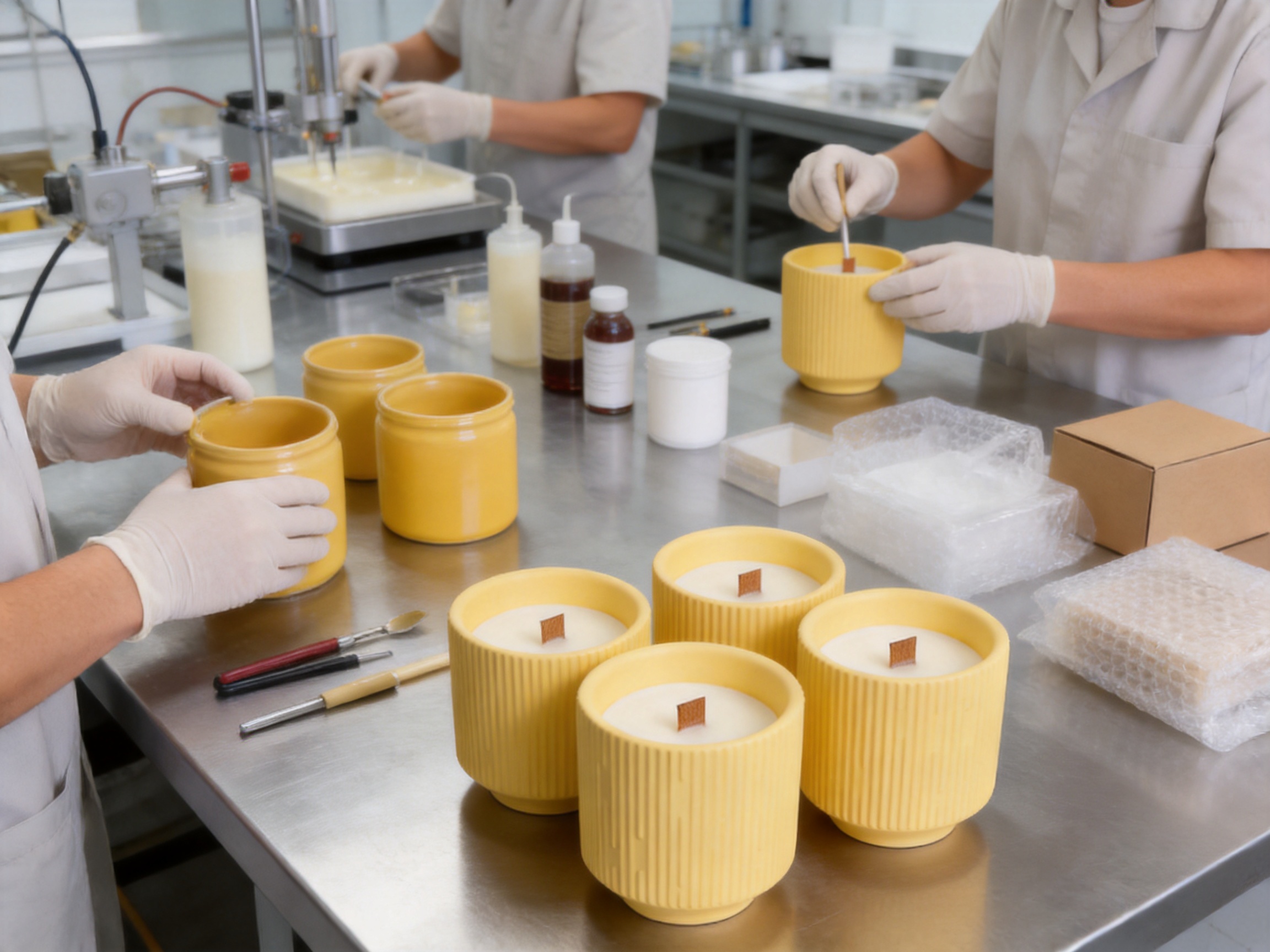
The quality of a ceramic jar candle begins long before filling. Product development must bring together vessel design, ceramic production, surface finishing, wax formulation, fragrance selection, wick testing, packaging, and quality inspection. Each stage affects the final customer experience.
The first stage involves confirming the product concept and technical requirements. This may include the vessel shape, yellow color standard, ribbed pattern, wall thickness, opening diameter, base stability, wick position, fill weight, fragrance direction, label area, packaging format, and intended sales market.
For OEM and ODM clients, development can begin with a drawing, reference sample, mood board, or general product description. The supplier’s professional development team can help convert the concept into a practical specification. This is particularly important for ceramic products because small changes to shape, texture, glaze, or wall thickness may affect production feasibility, shipping protection, and candle performance.
Sampling allows the buyer to assess the visual appearance and physical quality before mass production. A sample review may cover color accuracy, ribbing definition, rim smoothness, base stability, overall proportions, wick placement, fragrance impression, and packaging presentation.
Ceramic production generally requires controlled preparation of the ceramic body, forming of the vessel, drying, surface treatment, firing, and finishing. The exact process depends on the selected ceramic material and factory capabilities. Consistency is essential because irregular drying or firing can lead to deformation, uneven color, surface defects, or structural weakness.
The ribbed texture must be formed with enough definition to remain attractive after firing while still allowing efficient cleaning, glazing, and inspection. The vessel must also maintain a stable base so that it sits securely during filling, transportation, display, and consumer use.
Color control is especially important for the yellow finish. The finished shade can be influenced by the ceramic body, glaze or coating, firing conditions, surface preparation, and production batch. A defined color reference and approved sample help reduce variation. Buyers may request a specific yellow tone, such as a soft pastel, warm golden yellow, or vivid contemporary shade. Final approval procedures should confirm whether the color meets the agreed standard under suitable lighting conditions.
After the vessel is approved, the candle components must be coordinated. The wax needs to support the desired fragrance release and burn characteristics. The fragrance must be compatible with the wax and wick. The wooden wick must be centered and securely fixed, and the fill process must produce a smooth, attractive surface.
Temperature control during filling can influence the final appearance of the wax. Cooling conditions may affect frosting, sinkholes, adhesion, surface smoothness, and the visual relationship between the wax and ceramic vessel. A controlled process helps improve batch consistency.
Wick centering is another important point. A wick that is not positioned correctly can create uneven burning, excessive heat on one side of the vessel, or incomplete wax consumption. Appropriate testing helps determine whether the selected wooden wick performs effectively with the chosen wax and fragrance combination.
Quality control should cover incoming materials, in-process operations, and finished goods. For ceramic vessels, inspectors may examine shape, color, surface finish, ribbing, rim condition, cracks, pinholes, chips, glaze consistency, and base stability. For candles, inspection may include fill level, wick position, wax surface, fragrance consistency, label placement, and packaging quality.
Burn testing provides information that cannot be obtained from visual inspection alone. Testers can evaluate ignition, flame stability, melt-pool development, fragrance release, soot, vessel temperature, and end-of-life behavior. The exact testing protocol should correspond to the target market and product specification.
The company profile describes an in-house laboratory and strict quality control from raw materials to finished goods. This structure supports more dependable product development because potential issues can be identified earlier. It also provides a stronger foundation for repeat orders, where maintaining consistency between production batches is essential.
A high-quality product is valuable only when it can be delivered consistently. The company’s supply chain network includes ten candle factories, eight jar customization partners, and eight color box factories. This integrated partner structure provides access to specialized capabilities across the key stages of candle production.
Multiple factory relationships can support flexibility in product development and capacity planning. A buyer may need a particular ceramic finish, a specific packaging style, or a fragrance program that requires different technical resources. A coordinated network makes it easier to identify suitable production partners while maintaining communication through one trading and supply chain team.
The stated daily capacity reaches up to 50,000 units for stable bulk delivery and replenishment. This is relevant for established retailers, promotional programs, seasonal launches, and clients that need ongoing stock availability. At the same time, the company states that it can support smaller volumes and trial runs, allowing buyers to test market response before making a larger commitment.
Capacity should not be viewed only as a high-volume advantage. It also contributes to operational resilience. Seasonal candle demand can rise sharply before holidays, gifting periods, and promotional events. A supplier with coordinated production resources may be better positioned to manage demand fluctuations, provided that orders are planned with appropriate lead times.
The company’s location in Hangzhou, together with logistics access near Ningbo Port, supports export coordination. Efficient logistics are particularly important for ceramic products because packaging, container utilization, handling, and damage prevention must be carefully managed. Good supply chain planning can help reduce avoidable delays and protect the condition of the finished goods during international transportation.
The yellow candle can be supplied as a ready-developed product or used as the foundation for a customized collection. OEM and ODM services may include fragrance selection, ceramic color, vessel development, label design, packaging, carton configuration, and product specifications.
For an OEM project, a buyer may provide an existing design, brand direction, fragrance requirement, or packaging concept. The supplier coordinates production according to the client’s specifications. This approach is suitable for retailers and brands that already understand their target customers and wish to translate an established identity into a ceramic candle format.
For an ODM project, the supplier contributes more actively to product development. The buyer may provide only a target price, market segment, preferred color family, or general style. The development team can then recommend vessel shapes, fragrance families, wick options, packaging structures, and coordinated products.
Customization can be applied at several levels. The most accessible options may include label artwork, fragrance selection, outer carton design, and color adjustments. More extensive programs may involve new ceramic molds, special textures, coordinated vessel sizes, gift sets, and complementary reed diffusers or accessories.
Buyers should define their requirements clearly at the beginning of the project. Important questions include the target sales channel, intended retail price, order quantity, launch date, fragrance restrictions, packaging needs, testing requirements, and destination market. Clear specifications reduce the risk of revisions and help the supplier recommend practical solutions.
Packaging is an important part of the product’s competitive position. A decorative ceramic candle should arrive in packaging that protects the vessel while also expressing the product’s style. The packaging must manage several requirements at once: impact protection, product visibility, branding, regulatory information, shipping efficiency, and gift appeal.
Color boxes can be developed to complement the yellow vessel. A restrained box design may emphasize premium minimalism, while a more expressive design may highlight energy, fragrance, and lifestyle use. The packaging should provide sufficient space for product information, burning instructions, warnings, fragrance details, and brand communication according to the destination market.
Protection is particularly important because ceramic can be vulnerable to impact during handling. Internal supports, appropriate cushioning, correct carton strength, and secure palletization can help reduce the risk of breakage. Packaging trials should be considered before mass production, especially for export orders involving multiple handling points.
Retail presentation can use the product’s color and texture as central selling features. Open shelving allows consumers to see the yellow ceramic body, while gift displays can group the candle with complementary home fragrance products. Online listings should show the vessel from several angles and explain the wooden wick, ceramic construction, decorative appeal, and intended atmosphere.
The candle is suitable for a wide range of commercial and consumer applications. In home décor retail, it can be positioned as a colorful accent object. In fragrance stores, it can form part of a collection organized by scent family or emotional mood. In gift shops, the combination of attractive appearance and practical use supports impulse purchases and seasonal gifting.
Boutique hotels, restaurants, spas, and wellness spaces may also consider ceramic candles for controlled atmosphere creation, subject to appropriate safety policies and operating requirements. The product’s visual design can support reception areas, guest rooms, treatment spaces, or event styling when open-flame use is suitable.
For e-commerce, the product benefits from a clear visual story. The yellow color photographs well against neutral backgrounds, and the ribbed ceramic texture can create close-up detail in product images. Product descriptions should explain the candle’s decorative role without overstating technical details that have not been confirmed.
Seasonal collections offer another opportunity. The yellow vessel may be featured in spring, summer, sunshine, celebration, or new-home themes. It can also be sold as part of a color-based assortment, where customers collect several shades in the same jar design.
Safe candle use should be communicated clearly. Consumers should place the candle on a stable, heat-resistant surface, keep it away from curtains and other flammable materials, and avoid leaving it unattended while lit. It should be kept out of reach of children and pets, and it should not be moved while the wax is liquid or the vessel is hot.
The wooden wick should be maintained according to the final care instructions. Trimming may help support a controlled flame, although the recommended wick length should be confirmed through product testing. Consumers should also follow the supplier’s guidance regarding maximum burn time and when to discontinue use.
Safety communication is not only a regulatory issue; it also supports consumer confidence. Clear instructions show that the product has been developed with practical use in mind. For private-label buyers, warning language, symbols, and documentation should be reviewed for the target market before printing.
Quality assurance is most effective when it is integrated into the entire supply chain. Material selection, supplier coordination, process control, laboratory testing, finished-product inspection, and export documentation should work together rather than operate as isolated activities.
The company’s stated quality approach begins with raw material selection and continues through finished goods inspection. This can include checking ceramic components, wax, fragrance materials, wooden wicks, labels, packaging materials, and cartons. Early control is important because defects discovered after filling or packing may be more expensive to correct.
An in-house laboratory can support development and testing by providing a controlled setting for evaluating formulations and performance. Laboratory work may help compare fragrance options, monitor burn behavior, assess compatibility, and verify that production samples conform to agreed requirements.
Finished-goods inspection provides the final opportunity to identify problems before shipment. Sampling plans can be established for appearance, dimensions, labeling, packaging, and functional performance. Buyers may also request pre-shipment inspections or approved reference samples for comparison.
Consistency is particularly important for repeat orders. A buyer who launches a yellow ceramic candle expects later replenishments to match the original in color, vessel shape, fragrance character, wick behavior, and packaging. Strong records, approved samples, and coordinated factory management help support this continuity.
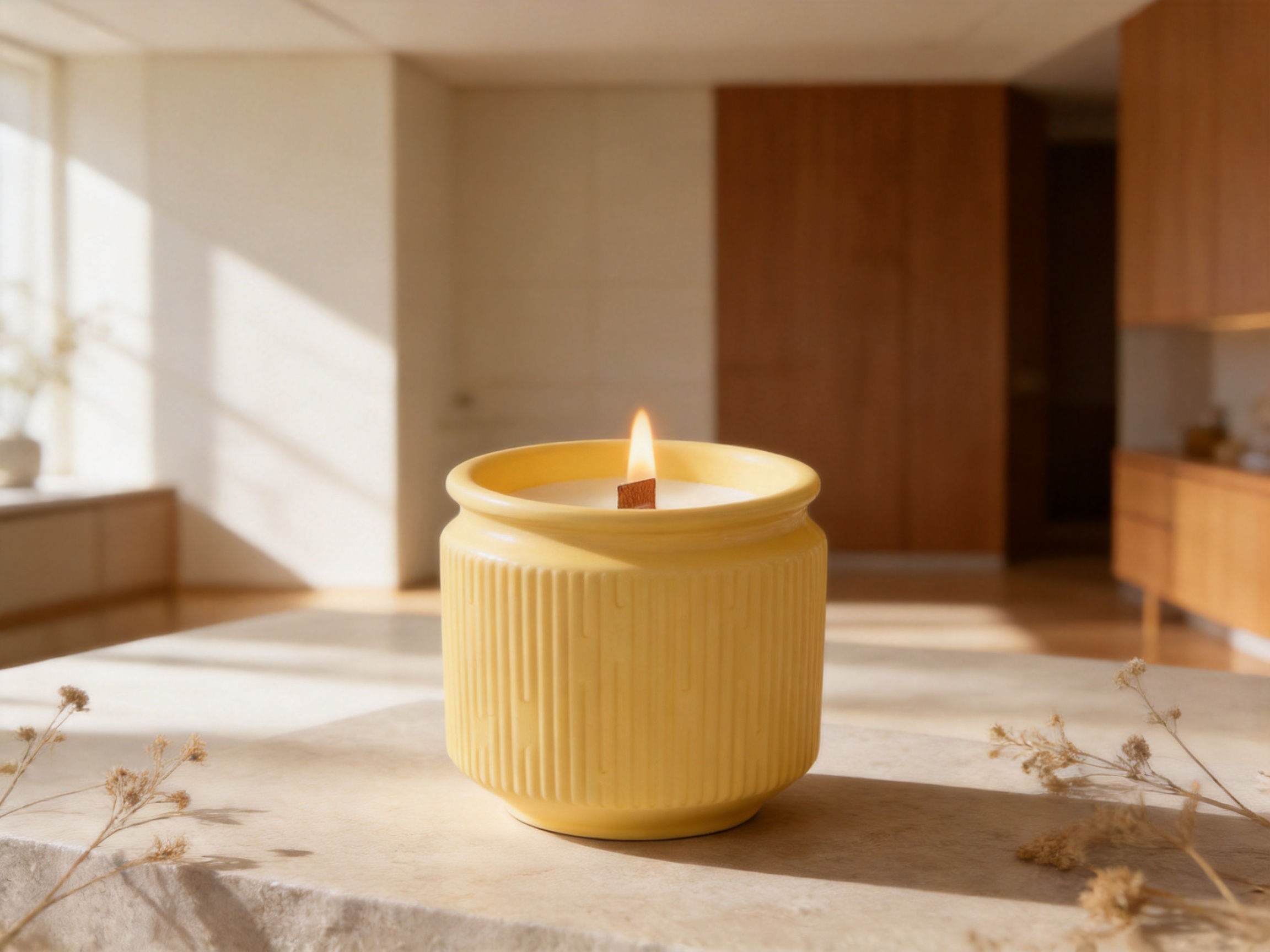
From a commercial perspective, the candle offers a balance between attractive differentiation and manageable product development. It is distinctive enough to stand out but familiar enough for consumers to understand immediately. The jar format reduces the education required at the point of sale, while the ceramic material and wooden wick provide clear reasons to choose it over a basic alternative.
The product can support multiple pricing strategies. A retailer may position it as an accessible premium product, a decorative gift, or part of a larger luxury home fragrance range. The final position will depend on fragrance quality, packaging, order quantity, customization, and target market.
Its collection potential is another advantage. A buyer can develop several fragrances within the same vessel design or create a range of colors that share the same form. This supports visual consistency across a shelf or online storefront while giving consumers choices.
Replenishment can also be managed efficiently when the product specification is stabilized. Once the vessel, fragrance, wick, label, and packaging have been approved, future orders can follow an established process. This may shorten development time for repeat purchases and make the product suitable for ongoing retail programs.
The supplier’s ability to support both trial runs and large-volume production reduces the barrier to market testing. A buyer can begin with a smaller order, evaluate customer response, and later expand successful colors or fragrances. This staged approach may be useful for new brands and retailers entering the home fragrance category.
The Yellow Jar-Shaped Elegant Style Ceramic Jar Candle can serve as an anchor product in a broader home fragrance assortment. A coordinated collection might include reed diffusers, diffuser oils, scented sets, LED candles, candle accessories, and other decorative fragrance products.
Using the same fragrance family across multiple formats can encourage cross-selling. A consumer who likes the candle may also purchase a reed diffuser for continuous fragrance or a scented set as a gift. Matching visual elements such as color, typography, label design, and packaging can make the full assortment appear more organized and professional.
The candle may also represent the decorative centerpiece of a collection. Reed diffusers are often purchased for continuous, low-maintenance scent, while candles are chosen for atmosphere and ritual. Offering both formats allows a brand to address different consumer occasions without abandoning a consistent design language.
For seasonal programs, the ceramic jar can be adapted through fragrance and color. A yellow version may support bright and uplifting themes, while other ceramic shades can introduce autumnal, festive, romantic, or calming concepts. This makes the design suitable for collection planning across the calendar year.
Buyers should first clarify the intended market and sales channel. A product developed for boutique gift stores may require different packaging and scent positioning from one developed for supermarkets, online marketplaces, hotels, or corporate gifting.
Next, buyers should confirm the desired fragrance direction. Since fragrance preference varies across countries and consumer groups, scent selection should be based on market research, prior sales data, or sample evaluation. It is useful to assess both cold and hot throw before approving a formula.
The desired color should be confirmed against a physical sample whenever possible. Digital images may not accurately represent the final ceramic finish because screen settings, lighting, glaze variation, and photography conditions can affect perception.
Buyers should also request information about minimum order quantities, sampling charges, lead times, packaging options, testing procedures, and shipping arrangements. These commercial details influence the feasibility of the program as much as the product design itself.
Finally, buyers should confirm documentation and labeling requirements for the destination market. These may include ingredient information, safety instructions, warning statements, packaging marks, carton specifications, and other import requirements. The supplier can support preparation, but the buyer remains responsible for ensuring that the final product complies with the applicable rules in its market.
Its main points of distinction are the vivid yellow ceramic vessel, ribbed exterior, jar-shaped decorative profile, and wooden wick. Together, these features create a product that functions as both a home fragrance item and a visible interior accessory.
Yes. Its colorful ceramic design and premium-looking texture make it suitable for individual gifting, seasonal programs, housewarming assortments, lifestyle collections, and corporate gift projects. Final gift suitability will also depend on the selected outer packaging.
Fragrance selection can be discussed as part of an OEM or ODM project. Buyers may evaluate existing options or request a fragrance direction suited to their market. The chosen fragrance must be tested with the wax and wooden wick to confirm performance.
Color customization can be considered for larger or planned product programs. The final result should be confirmed through physical samples because ceramic color may vary according to the material, surface treatment, and firing process.
Yes. Custom labels, color boxes, carton configurations, and other packaging elements can be developed according to the buyer’s brand and market requirements. Packaging should protect the ceramic vessel while supporting retail presentation.
Potential buyers include home décor retailers, gift shops, fragrance brands, lifestyle stores, e-commerce sellers, hospitality businesses, spas, seasonal distributors, and importers seeking private-label home fragrance products.
Wooden wicks should be used according to the final care instructions. In general, proper wick maintenance and safe burning practices are important for achieving a controlled flame and pleasant performance. The exact recommended trimming and burn guidance should be confirmed with the approved product specification.
A properly cleaned ceramic vessel may have secondary decorative or organizational uses, depending on its size, condition, and construction. Consumers should allow the vessel to cool completely and remove remaining wax carefully before reuse.
The company states that it supports smaller volumes and trial runs as well as bulk production. Actual minimum quantities depend on customization requirements, packaging, fragrance development, and the selected production plan.
Quality control may cover raw materials, ceramic appearance, color, texture, vessel stability, wax filling, wick placement, fragrance consistency, packaging, and finished-product condition. The company also describes an in-house laboratory and quality control across key production stages.
Yes. The jar design can be used with multiple fragrance options, colors, labels, and complementary formats such as reed diffusers, scented sets, and other home fragrance products. This makes it suitable for coordinated collections and seasonal lines.
Useful information includes the target market, estimated order quantity, desired color, fragrance preference, packaging concept, target price, launch schedule, labeling requirements, and any reference drawings or samples. Clear information helps the development team recommend practical solutions.
Choosing a candle supplier involves more than selecting an attractive sample. A reliable partner must coordinate design, materials, production, inspection, packaging, and export logistics. This is particularly important for ceramic candles, where vessel quality and shipping protection directly influence customer satisfaction.
Hangzhou Leo Home Trading Co., Ltd. presents itself as an international trading and supply chain company specializing in household and daily necessities, with a strong focus on home fragrance. Its stated network of candle factories, jar customization partners, and color box factories provides a foundation for managing different parts of the product program.
The company was founded in January 2025 and operates with teams covering product development, international sourcing, and cross-border marketing. Its profile states that products have been delivered to more than ten countries and regions across North America, Europe, and the Middle East. This international orientation can assist buyers who require export coordination and communication across different markets.
The company also emphasizes customization, quality assurance, diverse styles, flexible delivery, and logistics access near Ningbo Port. These strengths are relevant to buyers who do not simply want to purchase a standard candle but instead need a product that can be adapted to a specific brand, customer group, or sales channel.
Its stated core values of execution, warmth, and refinement align with the needs of a home fragrance project. Execution supports reliable follow-through, warmth supports cooperative communication, and refinement emphasizes attention to details such as formulation, craftsmanship, packaging, and documentation.
The Yellow Jar-Shaped Elegant Style Ceramic Jar Candle is a strong example of how a home fragrance product can combine utility, decoration, and sensory experience. Its vibrant yellow color creates immediate visual impact, while the ribbed ceramic vessel adds texture, substance, and a more premium appearance. The wooden wick introduces a gentle crackling element that can make the burning ritual feel warmer and more immersive.
Compared with ordinary candle formats, the product offers stronger decorative identity, broader gifting potential, and greater suitability for coordinated lifestyle collections. Its jar shape remains familiar and easy to merchandise, while the ceramic construction gives it a distinctive presence. The vessel may also retain value as a reusable home accessory after the candle has been consumed.
Its commercial strength is reinforced by the supporting supply chain. Access to multiple candle factories, jar customization partners, and packaging factories can help buyers develop customized products, manage capacity, and plan replenishment. An in-house laboratory, quality controls across production stages, flexible order support, and export logistics further contribute to a more complete sourcing solution.
For importers, retailers, and private-label brands, the product offers a practical starting point for building an attractive home fragrance collection. With carefully selected fragrances, approved ceramic colors, protective packaging, and appropriate testing, it can serve everyday consumers, gift buyers, décor enthusiasts, hospitality users, and seasonal shoppers.
Ultimately, the candle’s value comes from the integration of design and process. The yellow ceramic body draws attention, the ribbed texture communicates refinement, the wooden wick adds atmosphere, and the manufacturing network supports customization and consistent delivery. Together, these qualities make the product a compelling option for modern home fragrance programs seeking a balance of style, performance, and supply chain reliability.
1. Product specification and descriptive materials for the Yellow Jar-Shaped Elegant Style Ceramic Jar Candle.
2. Company profile and supply chain information supplied for Hangzhou Leo Home Trading Co., Ltd.
3. General principles of ceramic vessel production, candle filling, wick selection, and finished-product inspection.
4. General home fragrance merchandising and private-label product development practices.
5. General candle safety, packaging, transportation, and consumer-use considerations.

Room 1701, Building C1, Wangjing, Xiaoshan District, Hangzhou City, Zhejiang Province, China.

+86-15937257616

Copyright© 2026 Hangzhou Leo Home Trading Co., Ltd. All Rights Reserved.

Luxury Candles Home Fragrance Manufacturers Modern Candles Factory