
 English
 Français
News
Home / Author / Catherine Wu — Key Account After-Sales Specialist / Natural Grain Flat Wooden Candle Wick with Tab Base for Premium Candle Production
Content
In the modern home fragrance market, a candle is no longer judged only by scent. Buyers, private-label brands, craft makers, and retail chains increasingly evaluate the full burning experience: flame appearance, scent release, burn stability, sound, material character, packaging compatibility, and production consistency. The Natural Grain Flat Wooden Candle Wick with Tab Base is designed for this more demanding candle market, offering a premium wick solution for container candles, artisan collections, OEM projects, and scalable home fragrance programs.
This flat wooden wick combines natural uncoated wood, a refined grain appearance, and a pressed metal tab sustainer base. Its structure is simple, but its influence on candle performance is substantial. When correctly matched with wax type, fragrance load, vessel diameter, and candle formulation, a wooden wick can create a distinctive horizontal flame, a soft crackling sound, and a slower, more controlled burn profile. These advantages help finished candles stand apart from standard cotton-wick products and support a more sensory, giftable, and premium brand identity.
Unlike many decorative candle components that only improve appearance, the wooden wick directly affects the burning behavior of the candle. It determines how heat is delivered to the wax pool, how fragrance evaporates, how stable the flame remains, and how the candle feels to the consumer during use. The Natural Grain Flat Wooden Candle Wick with Tab Base is therefore not only an accessory. It is a performance component for candle manufacturers who want a refined balance of aesthetics, function, and production reliability.
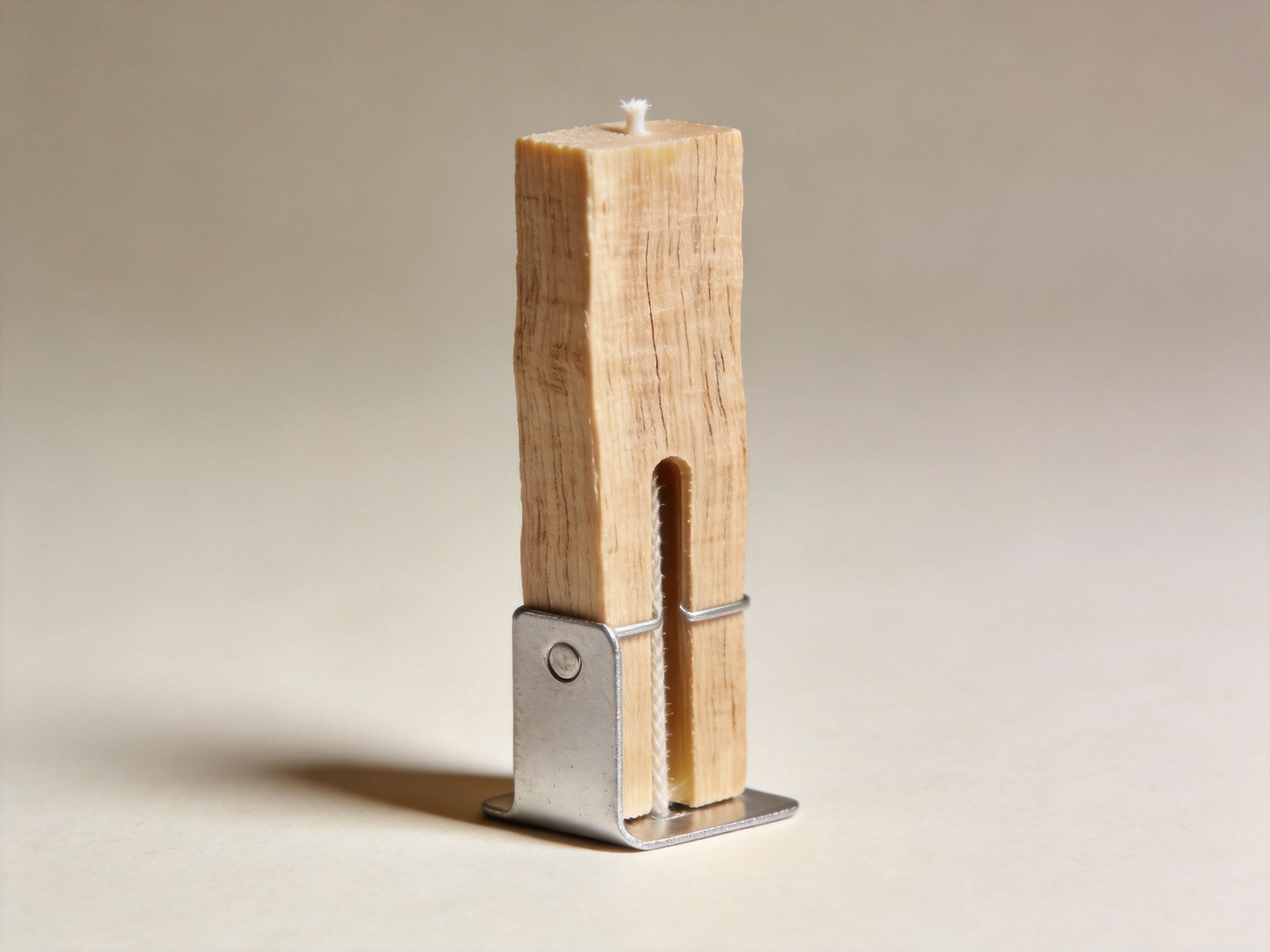
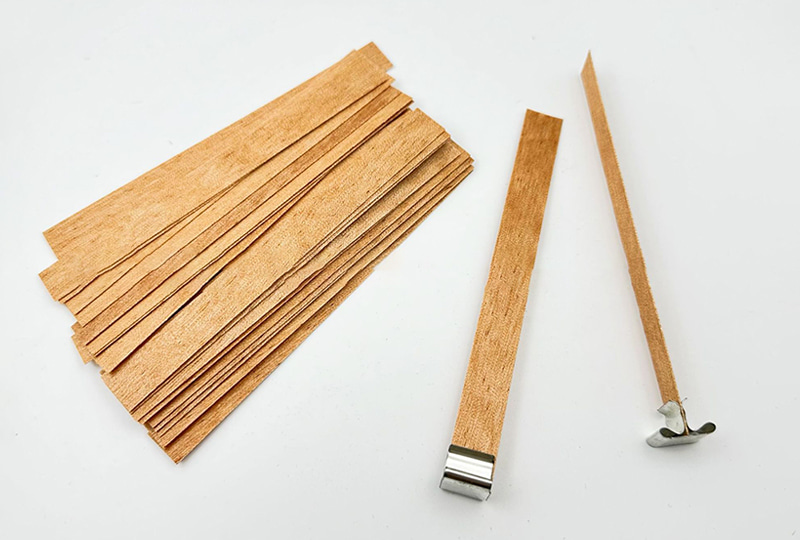
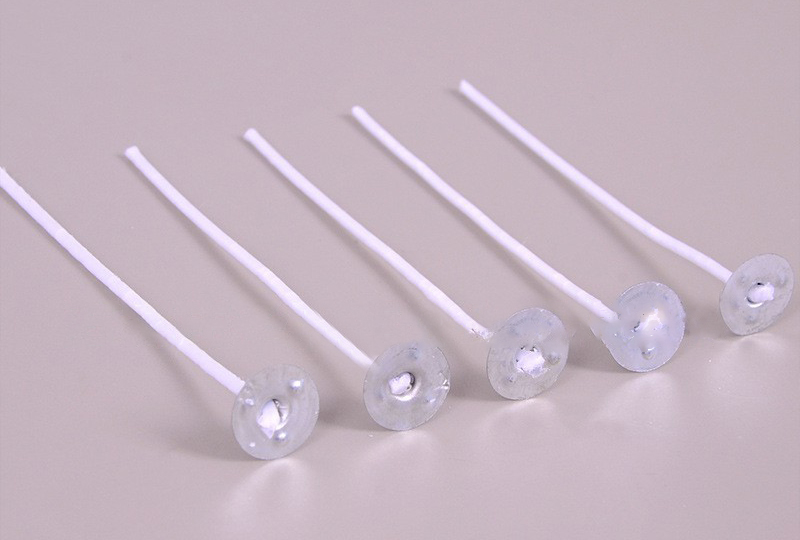
The Natural Grain Flat Wooden Candle Wick with Tab Base is made from natural uncoated wood and supplied with a pressed metal tab sustainer. The wick has a flat profile, making it suitable for candles where a wider flame presentation and a subtle crackling effect are desired. The natural grain finish gives each wick a slightly unique appearance while maintaining consistent dimensional and burning characteristics within the intended specification range.
Its available width range extends from narrow sizes around 6–7 mm to wider sizes around 15–16 mm. This makes it adaptable to different candle vessel diameters, from smaller containers of approximately 60 mm to larger vessels of 120 mm and beyond, depending on wax formulation and desired burn effect. This size flexibility allows candle producers to build coordinated product ranges across multiple jar sizes without changing the overall wick style or consumer experience.
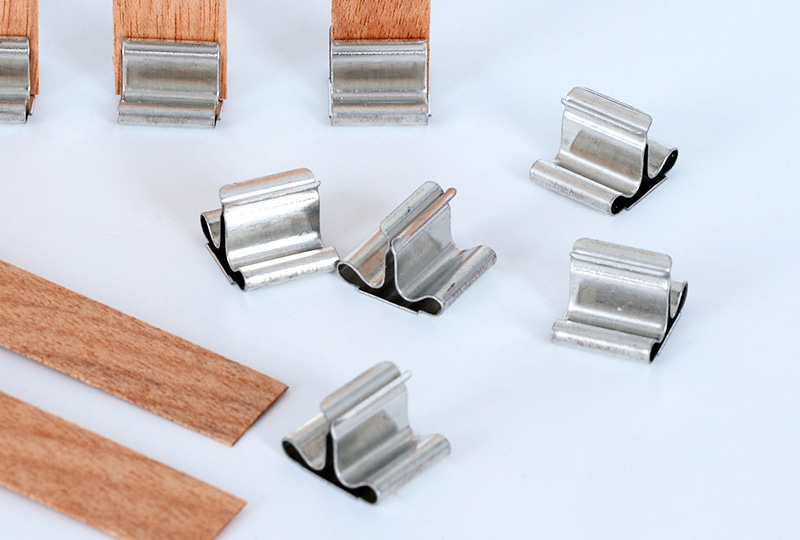
The included metal tab base is designed to hold the flat wooden wick in an upright position. The channel structure grips the wick securely without excessive crimping, helping maintain the perpendicular relationship between wick and base. This is important because a wick that leans or shifts can cause uneven melting, unstable flame behavior, or poor visual presentation. A stable tab base improves production handling and enhances the reliability of the finished candle.
The product is suitable for professional candle production, craft supply distribution, private-label candle brands, and OEM/ODM home fragrance programs. It can be used in scented candles, decorative jar candles, gift sets, seasonal candle collections, and premium lifestyle fragrance lines.
Wooden wicks have become popular because they transform the candle from a simple fragrance source into a richer sensory object. A cotton wick can produce a reliable flame, but it does not usually provide the same visual width, acoustic presence, or natural material appeal as a wooden wick. For many consumers, the soft crackle of a wooden wick is associated with comfort, warmth, fireplaces, and quiet evenings at home. This emotional connection gives candle brands a strong storytelling advantage.
The flat wooden wick produces a horizontal flame that can look more elegant and contemporary than the narrow vertical flame of a standard cotton wick. This flame style pairs especially well with modern glass jars, ceramic vessels, concrete containers, minimalist labels, and luxury gift packaging. It helps the candle feel more premium even before the fragrance is evaluated.
Wood also interacts with wax differently from cotton. Natural wood absorbs wax more slowly, which can contribute to a more measured burn and a fragrance release that develops gradually. Instead of an immediate strong throw followed by quick intensity loss, a properly designed wooden-wick candle can provide a smoother aroma curve. This is particularly valuable for premium fragrance blends, complex essential oil compositions, and seasonal candles where the user expects a layered scent journey.
Wooden wicks also offer strong marketing value. They are easy to describe in product pages, catalogues, retail packaging, and social media content. Phrases such as “natural grain,” “soft crackling flame,” “premium wooden wick,” and “slow controlled burn” communicate clear consumer benefits. For candle brands competing in crowded fragrance categories, these details help create differentiation without requiring a complete redesign of the product line.
The wick uses natural uncoated wood, allowing the grain pattern to remain visible. This natural appearance supports a clean, craft-inspired, and premium aesthetic. Since the surface is not artificially coated for visual effect, the wick preserves the honest material character that many consumers associate with handmade, eco-conscious, and lifestyle-oriented candle products.
Natural wood grain also means that each wick has a slight visual individuality. In premium candle making, this can be an advantage rather than a flaw. It gives the finished candle a warm and organic personality while still remaining consistent enough for commercial production. This combination of uniqueness and controlled specification is valuable for brands that want products to feel handcrafted but still meet retail-level quality expectations.
The flat profile is one of the defining features of this wick. A flat wooden wick burns differently from a round cotton wick. It creates a wider flame line and distributes heat across a broader area. This can support more even wax melting when the wick is correctly matched to the candle diameter and formulation.
The flat structure also contributes to the signature crackling sound that consumers often expect from wooden wicks. This sound is subtle rather than disruptive, adding ambience to relaxation settings such as bedrooms, bathrooms, living rooms, spa spaces, and boutique retail environments. For scented candles positioned as mood-enhancing products, this sensory detail can be a strong selling point.
The metal tab base provides an important functional advantage. In candle manufacturing, wick positioning is critical. Even a high-quality wick can perform poorly if it is not centered, upright, and securely fixed. The pressed tab sustainer base helps keep the wooden wick vertical during pouring, cooling, packaging, and consumer use.
The tab includes a formed channel that grips the flat wick while avoiding excessive compression. This matters because over-crimping may damage the wick structure and affect capillary behavior or flame consistency. A well-designed tab supports stability while preserving the intended burn characteristics of the wood.
The tab diameter is also compatible with standard sustainer gripping tools, which makes the product easier to integrate into established candle production workflows. Manufacturers do not need to redesign their entire process to adopt this wick. This compatibility helps reduce onboarding time, tooling concerns, and labor inefficiency.
Candle makers often need different wick sizes for different jars. A wick that works well in a 60 mm container may be too small for a 100 mm container, while a wick that is suitable for a large vessel may burn too hot in a smaller jar. The Natural Grain Flat Wooden Candle Wick with Tab Base is available in a practical width range, allowing producers to choose suitable dimensions for different container diameters and wax systems.
Narrow sizes around 6–7 mm can be considered for smaller candle vessels, while wider sizes around 15–16 mm are better suited for larger containers or formulations requiring more heat output. The exact selection should always be tested with the intended wax, fragrance concentration, dye level, jar shape, and fill weight.
This wick is flexible enough for small-batch craft production and structured enough for larger OEM brand programs. Craft makers benefit from the visual charm and sensory appeal. Professional factories benefit from the tab stability and size options. Private-label brands benefit from the ability to create a higher-perceived-value candle without radically increasing product complexity.
For gift sets, wooden wicks are particularly effective because they add an extra talking point. A candle set that includes wooden-wick candles can be marketed around atmosphere, natural materials, and elevated relaxation. The wick becomes part of the value proposition rather than an invisible component.
Many candles in the market still use standard cotton wicks. Cotton wicks are widely available and cost-effective, but they do not always provide strong differentiation in premium categories. Lower-grade wooden wicks may offer visual appeal but fail in consistency, tab quality, sizing accuracy, or crackling performance. The Natural Grain Flat Wooden Candle Wick with Tab Base is positioned to address these competitive gaps.
| Feature | Natural Grain Flat Wooden Candle Wick with Tab Base | Standard Cotton Wick | Lower-Grade Wooden Wick |
|---|---|---|---|
| Flame Appearance | Wide horizontal flame with premium visual effect | Narrow vertical flame | May be inconsistent or unstable |
| Acoustic Experience | Subtle crackling ambience when properly formulated | Usually silent | May crackle unevenly or fail to crackle |
| Material Appeal | Natural uncoated wood grain | Functional but less visually distinctive | May have uneven finish or poor grain quality |
| Burn Control | Supports slower, more controlled burn with correct pairing | Reliable but often more conventional | Can suffer from poor capillary balance |
| Tab Stability | Pressed metal tab grips flat wick securely | Common sustainer options available | May loosen, tilt, or crimp too tightly |
| Brand Differentiation | Strong premium and sensory storytelling value | Limited differentiation | Visual value but inconsistent quality risk |
| Production Compatibility | Compatible with standard sustainer gripping tools | Highly familiar to factories | May require additional adjustment |
This comparison shows that the product’s strength is not based on one single feature. It comes from the combination of natural appearance, sensory performance, size flexibility, and production practicality. A wooden wick must be beautiful, but it must also burn properly, stay upright, fit the container, and support repeatable manufacturing. This product is designed with all of these requirements in mind.

Consumers often choose scented candles for emotional reasons. They want relaxation, comfort, decoration, fragrance, and atmosphere. A wooden wick enhances these expectations in several ways. The first is visual. The flame is broader and more sculptural, which makes the candle feel alive and decorative even when viewed from across a room.
The second is sound. The light crackling effect creates a cozy environment. It can remind users of a fireplace, a quiet cabin, or a calm evening indoors. This sound is especially appealing in colder seasons, holiday collections, spa-inspired product lines, and aromatherapy-style candles.
The third is pacing. A well-matched wooden wick can encourage a controlled melt pool and gradual fragrance diffusion. This helps the candle feel balanced rather than harsh. Many consumers dislike candles that release too much fragrance immediately or burn too quickly. A controlled burn supports a more refined experience.
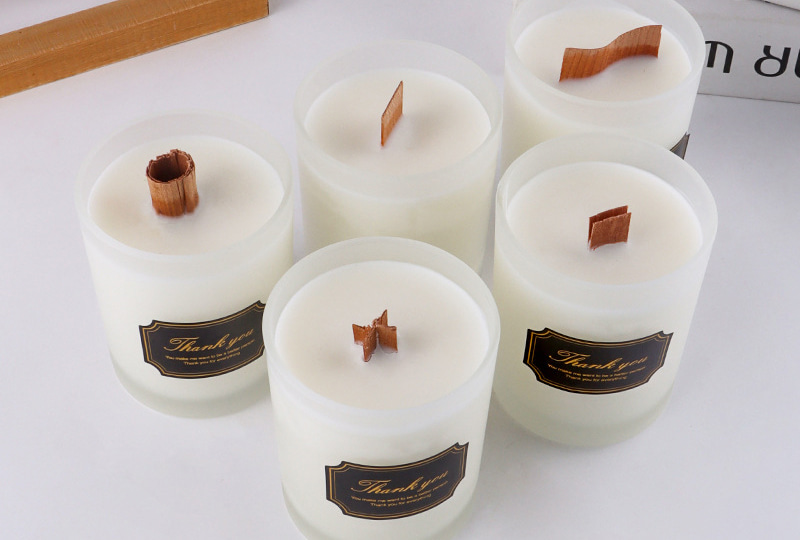
The fourth is perceived quality. Even before lighting the candle, customers can see the wooden wick at the center of the wax surface. It instantly signals that the candle is different from a basic mass-market product. For online retail, this visual detail can also improve product photography and help listings stand out.
For scented candle producers, wick selection is one of the most important technical decisions. Wax type, fragrance oil, dye, vessel shape, and wick size must work together. The Natural Grain Flat Wooden Candle Wick with Tab Base can be used in a variety of candle systems, but proper testing remains essential.
In soy wax candles, wooden wicks are often used to create a natural and eco-inspired positioning. Soy wax has a softer appearance and is widely chosen for clean lifestyle products. A natural wood wick complements this identity and can help deliver a warm, elegant burn when sized correctly.
In paraffin or paraffin-blend candles, wooden wicks can provide strong flame performance and fragrance diffusion. Blended waxes may require different wick widths depending on the hardness, melting point, and fragrance loading. The available width options make it easier to tune performance during product development.
In coconut wax or vegetable wax blends, the wick can support premium candle positioning. Coconut-based waxes are frequently used in luxury candles because of their creamy appearance and strong fragrance compatibility. The wooden wick adds a natural focal point and a refined sensory layer.
For colored candles, wick testing should consider the dye concentration. Some dyes may influence burn behavior, particularly if the formula includes higher fragrance loads or decorative additives. The wick should be tested through a full burn cycle rather than judged only during the first lighting.
For large containers, one wide wooden wick may be suitable in some cases, while other designs may require multiple wicks. Because wooden wicks create a broad flame, the choice between one wide wick and multiple smaller wicks depends on jar diameter, wax melt behavior, safety requirements, and desired visual effect.
Although the product is available in multiple widths, there is no universal wick size that works for every candle. Candle makers should select the wick according to the full candle system. Vessel diameter is a starting point, but it is not the only factor. Wax type, fragrance oil content, fragrance chemistry, dye, additive level, jar wall thickness, ambient use conditions, and desired burn time all influence final performance.
A smaller container generally requires a narrower wick to prevent excessive heat. A larger container requires more heat output to create an appropriate melt pool. If the wick is too small, the candle may tunnel, leaving wax on the sides of the vessel. If the wick is too large, the candle may burn too hot, produce a high flame, consume wax too quickly, or create safety concerns.
Testing should include initial ignition, flame height, melt pool diameter, melt pool depth, crackling effect, fragrance throw, soot level, tab stability, and end-of-life behavior. A complete burn test should also evaluate whether the flame remains stable as the candle level decreases. The lower portion of the vessel may create different heat conditions compared with the first burn.
Hangzhou Leo Home Trading Co., Ltd. supports this product through a supply chain model built for reliable sourcing, customization, and export delivery. Based in Hangzhou, China, the company focuses on household and daily necessities, with a strong emphasis on home fragrance products such as scented candles, LED candles, fragrance gift sets, and related candle components. The company was founded in January 2025 and applies digital tools and efficient supply chain management to serve overseas clients.
Although the wick itself is a compact component, its quality depends on disciplined production control. Material selection, cutting accuracy, grain consistency, moisture management, tab forming, assembly precision, and final inspection all affect the candle maker’s experience. Hangzhou Leo Home works with an integrated supplier base and applies strict quality control from raw material selection to finished goods inspection, helping clients reduce inconsistency and sourcing risk.
The company’s supply chain integrates multiple candle factories, jar customization partners, and color box factories. This network is valuable because candle projects rarely involve only one component. A brand may need wicks, jars, wax, fragrance, labels, color boxes, and outer cartons to work together. By coordinating these resources, the company can help clients create complete candle programs rather than sourcing each element separately.
The company also supports OEM/ODM customization. For wooden wick projects, this can include specification refinement, candle vessel matching, packaging coordination, and product line development. When clients provide drawings, samples, target markets, or performance requirements, the team can help refine the solution for commercial production.
The strength of this product is supported by process discipline. A wooden wick may look simple, but production repeatability requires careful control. The wood must be selected for suitable grain structure and performance stability. The wick must be cut to consistent dimensions. The tab must be pressed and formed so that it grips securely. The assembly must remain straight and stable. The finished product must be packed to protect shape and cleanliness during transport.
For professional buyers, process control is often more important than a low unit price. A candle factory cannot afford to stop production because wick dimensions vary or tab bases are loose. A private-label brand cannot risk customer complaints caused by unstable flames or poor ignition. Hangzhou Leo Home’s quality assurance approach is designed to reduce these risks by checking key stages and maintaining communication across the supply chain.
The company emphasizes refinement as a core value. In practical terms, this means attention to details such as specification accuracy, material consistency, packaging suitability, export documentation, and delivery coordination. For candle components, these details directly affect production efficiency and buyer confidence.
Execution is another core value. For overseas clients, reliable execution means that instructions are confirmed, specifications are followed, samples are developed efficiently, and bulk orders are coordinated according to agreed requirements. This is especially important for seasonal candle lines, where launch windows are strict and delays can affect sales performance.
Warmth, as a company value, is also relevant in customer service. Candle development often requires testing, adjustment, and communication. A supportive supplier helps clients solve problems instead of simply shipping goods. This service mindset is valuable for new brands, growing e-commerce sellers, and retailers developing private-label home fragrance ranges.
Overseas buyers need more than a product. They need stable communication, export experience, flexible order support, and supply chain coordination. Hangzhou Leo Home has delivered products to more than ten countries and regions across North America, Europe, and the Middle East. Its market experience helps it understand different quality expectations, packaging preferences, and compliance sensitivities.
The company mainly exports to Europe and North America and benefits from convenient logistics near Ningbo Port. This location advantage supports efficient shipping arrangements for bulk orders and replenishment programs. For candle businesses, logistics timing is important because many sales peaks are seasonal, including autumn, winter holidays, Valentine’s Day, Mother’s Day, wedding seasons, and home décor promotions.
The company supports both stable bulk delivery and smaller trial runs. This flexibility helps buyers test market response before committing to large quantities. A new brand may begin with a limited wooden-wick candle collection, while an established retailer may require larger production capacity for multiple seasonal lines. The ability to support different order scales makes the product accessible to a broad range of customers.
Daily production capacity across the company’s candle supply network can reach up to 50,000 units for stable delivery and replenishment. While wick projects may vary by specification and order details, this broader production ecosystem demonstrates the company’s ability to coordinate high-volume home fragrance programs.

Customization is one of the most important strengths for brands that want to differentiate. The Natural Grain Flat Wooden Candle Wick with Tab Base can be incorporated into customized candle collections across size, scent, vessel, label, and packaging. Instead of selling a generic candle, a brand can create a complete sensory concept built around the wooden wick experience.
For example, a winter candle line may use wooden wicks to emphasize fireplace warmth, amber fragrance notes, cedarwood, vanilla, cinnamon, or smoky accords. A spa collection may pair the wick with soft herbal scents, coconut wax blends, frosted glass jars, and minimalist labels. A luxury gift set may use wooden-wick candles in coordinated vessels with reed diffusers and accessories.
Customization can also involve matching wick width to different candle sizes in the same product family. A 60 mm jar, an 80 mm jar, and a 100 mm jar may all use the same natural wooden wick style but different widths. This maintains visual consistency while optimizing burn performance.
Packaging customization adds further value. Wooden wicks photograph well and can be highlighted on labels, sleeves, inserts, and product descriptions. Phrases such as “natural wooden wick,” “soft crackling burn,” and “premium slow-release fragrance” can be used to communicate benefits clearly to consumers.
In retail environments, consumers often make decisions quickly. The visible wooden wick can help a candle stand out on a shelf because it differs immediately from conventional products. If the candle is displayed without a lid, the natural wick becomes a central visual feature. If the candle is packaged in a box, the wooden wick can be highlighted through photography and copywriting.
In e-commerce, differentiation is equally important. Product images must communicate value within seconds. A wooden wick provides a strong visual cue of premium quality. Close-up photos of the wick, wax surface, jar, and flame can help increase consumer interest. The crackling feature can also be shown in short videos, making it suitable for social media marketing.
For gift buyers, the wooden wick adds perceived sophistication. Many consumers purchase candles as gifts for birthdays, holidays, housewarming events, weddings, corporate gifting, and self-care sets. A wooden-wick candle feels more special than a basic candle, especially when paired with quality fragrance and attractive packaging.
Proper ignition is the first sign of wick quality. A wooden wick should light reliably when trimmed and used correctly. Because wood behaves differently from braided cotton, users should be instructed to light the full edge of the wick and allow the wax pool to develop during the first burn. Candle brands may include simple care instructions to improve customer satisfaction.
Flame height must remain within a safe and attractive range. A flame that is too small may cause tunneling, while a flame that is too high may create overheating or excessive wax consumption. The flat wooden wick’s width options allow manufacturers to tune flame output through testing.
A good melt pool reaches an appropriate diameter without becoming too deep. The wick must provide enough heat to melt wax across the vessel surface but not so much heat that the candle becomes unsafe or inefficient. Container shape and wall thickness influence this behavior, so testing in the final jar is essential.
Fragrance diffusion depends on wax temperature, melt pool size, fragrance oil quality, and wick heat output. The wooden wick supports a gradual fragrance profile that can be especially suitable for premium blends. This controlled release helps create a refined atmosphere rather than an overpowering scent burst.
The crackling effect is one of the main attractions of wooden wicks. It is influenced by wood structure, wax absorption, fragrance formula, and burn conditions. While the effect should be subtle and pleasant, it should not be assumed without testing. A well-formulated candle will deliver a consistent sound that enhances the user experience.
Many candles perform well at the beginning but struggle near the end. Heat buildup, reduced wax level, and vessel geometry can change burn behavior. Testing should include the full candle life to ensure that the wick remains stable, the tab stays secure, and the flame does not become excessive near the bottom.
To achieve the best results with the Natural Grain Flat Wooden Candle Wick with Tab Base, candle makers should begin with sample testing. Select several wick widths around the expected size and test them in the actual wax, fragrance, dye, and vessel combination. Record burn time, flame height, melt pool width, melt pool depth, fragrance throw, soot, and user impression.
The first burn is especially important. Consumers should generally allow the candle to burn long enough for the melt pool to approach the container edge, helping prevent tunneling. Care instructions can recommend trimming the wooden wick before relighting, removing charred excess, and keeping the candle away from drafts.
During production, wick centering should be carefully managed. The metal tab base can be fixed to the bottom center of the vessel using suitable adhesive methods. The wick should remain upright during wax pouring and cooling. If the wick shifts, the finished candle may burn unevenly even if the wick itself is high quality.
Storage conditions also matter. Wooden wicks should be kept dry, clean, and protected from deformation. Excess moisture or contamination may affect ignition and burn behavior. Packaging should maintain the flat structure and prevent damage during shipment.
The Natural Grain Flat Wooden Candle Wick with Tab Base belongs to the wooden candle wick category and fits within broader product categories such as scented candles, reed diffuser and accessories, diffusers, candle components and raw materials, and scented gift sets. This positioning is useful because many home fragrance buyers source multiple related products at once.
A buyer developing a complete home fragrance line may need scented candles, reed diffusers, diffuser accessories, candle jars, wicks, wax, fragrance oils, and packaging. The wooden wick can become a central component in a premium candle sub-line while other fragrance products complete the collection.
For example, a retailer may launch a “cozy home” series that includes wooden-wick candles, reed diffusers, and fragrance gift boxes. A spa brand may use wooden-wick candles alongside bath products and personal care items. A seasonal brand may create limited-edition autumn and winter candles where the crackling wick is a key theme.
Modern consumers increasingly pay attention to material choices. While sustainability claims must always be accurate and supported by proper sourcing information, natural wood has strong consumer appeal because it feels familiar, warm, and less synthetic than many alternatives. The visible grain reinforces this perception.
Uncoated natural wood also supports clean visual design. It pairs well with kraft paper packaging, recyclable glass containers, simple typography, and botanical fragrance concepts. For brands seeking a natural lifestyle aesthetic, the wick helps communicate the message even before the candle is lit.
However, responsible candle branding should avoid exaggerated claims. The strongest approach is to emphasize the real benefits: natural wood grain appearance, premium sensory experience, controlled burn potential, and compatibility with high-quality candle formulations. This creates trust and avoids misleading consumers.
The candle market is highly competitive. Many products use similar jars, similar waxes, and similar fragrance families. To stand out, brands need components that improve both product performance and customer perception. The Natural Grain Flat Wooden Candle Wick with Tab Base offers this combination.
Its natural grain appearance creates immediate visual differentiation. Its flat profile supports a distinctive flame and crackling sound. Its metal tab base improves stability in production and use. Its width range supports different vessel sizes. Its compatibility with standard tools makes it practical for manufacturers. These advantages make it suitable for both new product development and upgrades to existing candle lines.
Compared with low-cost generic wicks, the product offers a more balanced value proposition. Buyers are not simply purchasing a piece of wood and a tab. They are purchasing a component that can influence consumer reviews, repeat purchases, brand positioning, production efficiency, and product safety testing outcomes.
Hangzhou Leo Home Trading Co., Ltd. provides one-stop service for home fragrance and lifestyle product buyers. The company’s office is located in Hangzhou, Zhejiang Province, China, and its team covers product development, international sourcing, and cross-border marketing. This structure helps overseas clients communicate product requirements and coordinate development efficiently.
The company’s product scope includes personal care, home and garden, daily tools, and home fragrance, with a strong focus on scented candles, LED candles, and related gift sets. Its quality control process covers raw material selection, production inspection, and finished goods review. This quality mindset is important for candle components because small inconsistencies can produce noticeable performance differences.
The company’s supplier integration includes candle factories, jar customization partners, and color box factories. This allows buyers to develop more complete product lines with coordinated specifications, packaging, and cost control. Instead of managing many independent suppliers, clients can work through a more organized sourcing and project management process.
OEM/ODM support is another advantage. Buyers can request development based on drawings, samples, market positioning, or target retail channels. The company can help refine specifications, scents, labels, and packaging to suit different markets. For wooden-wick candles, this means the wick can be considered as part of the whole product experience rather than as an isolated component.

Professional buyers often evaluate suppliers based on consistency, communication, documentation, and problem-solving ability. Hangzhou Leo Home’s quality assurance approach is designed to support dependable results. With an in-house lab and strict QC across key stages, the company aims to ensure reliable and consistent quality for home fragrance products and related components.
For wooden wicks, quality assurance may include dimensional checks, visual inspection, tab grip assessment, packaging review, and sample burn testing when part of a complete candle project. For finished candle programs, additional checks may include wax appearance, fragrance accuracy, label placement, jar cleanliness, packaging durability, and carton marking.
This structured approach is especially helpful for export projects. Overseas buyers may not be able to visit factories frequently, so they need suppliers who can provide clear updates, sample confirmation, and inspection support. Reliable QC reduces the risk of receiving inconsistent products after long-distance shipping.
Efficient logistics are essential in international trade. The company benefits from convenient access to Ningbo Port, one of China’s major export ports. This supports sea freight arrangements for bulk home fragrance orders and helps improve delivery planning for overseas clients.
For smaller orders or urgent samples, air freight or express options may be considered depending on project requirements. For larger programs, shipping plans can be coordinated according to production schedules, packaging completion, and target market launch dates.
Because candles and candle components may be part of seasonal retail cycles, lead time management is critical. A delay in wick supply can delay candle production, packaging, and final shipment. Working with a supplier that understands the full production chain helps reduce timing risks.
Candle safety depends on the interaction of all components. A high-quality wick is essential, but the final candle must still be tested according to the target market’s requirements. Manufacturers should evaluate flame height, container temperature, stability, soot, burn time, and end-of-life performance.
Wooden-wick candles should include proper care instructions. Consumers should be advised to trim the wick, burn the candle on a heat-resistant surface, keep it away from drafts, never leave it unattended, and discontinue use when the remaining wax reaches the recommended level. Clear instructions help improve safety and reduce misuse.
For international markets, buyers should confirm relevant labeling, testing, and packaging requirements. These may vary by country, retailer, and product category. Hangzhou Leo Home can support buyers through export documentation and supply chain coordination, helping projects move more smoothly from development to shipment.
The Natural Grain Flat Wooden Candle Wick with Tab Base is especially suitable for gift-oriented candle products. Gift buyers often look for details that feel special, and the wooden wick provides a clear premium feature. It also pairs well with reed diffusers, fragrance sachets, bath products, ceramic accessories, and decorative packaging.
A scented set may include a wooden-wick candle as the centerpiece, supported by a matching reed diffuser and fragrance card. The candle provides flame, sound, and atmosphere, while the diffuser offers continuous scent. Together, they create a complete home fragrance experience.
Seasonal gift sets can use the crackling wick as a storytelling element. For autumn, it can support notes such as pumpkin spice, sandalwood, amber, cedar, and vanilla. For winter, it can pair with pine, cinnamon, fireplace, oud, and warm musk. For spring and summer, lighter scents such as citrus, lavender, sea salt, and white tea can be combined with minimalist packaging for a fresh lifestyle feel.
Buyers interested in this wick should prepare key information before sampling. Useful details include candle vessel diameter, vessel material, wax type, fragrance load, dye usage, target burn time, fill weight, market region, and packaging plan. This information helps identify suitable wick widths for initial testing.
If the buyer already has a candle formula, the wick can be tested as an upgrade from an existing cotton wick. If the buyer is developing a new product, the wick should be considered early in the design process. Vessel selection, wax formula, fragrance strength, and wick size should be developed together.
For bulk orders, buyers should confirm specifications clearly, including wick width, wick length, tab type, packaging quantity, carton requirements, and any labeling needs. Sample approval should be completed before mass production. This reduces misunderstandings and supports smoother quality control.
This wooden wick provides a wider horizontal flame, natural grain appearance, and subtle crackling sound. Cotton wicks are reliable and common, but they usually do not offer the same sensory or visual differentiation. The wooden wick helps create a more premium candle experience.
Yes. The wick is supplied with a pressed metal tab sustainer base. The base grips the flat wooden wick and helps keep it upright in the candle vessel, improving production handling and burn stability.
The wick is available in widths from approximately 6–7 mm to 15–16 mm. These options can suit container diameters from around 60 mm to 120 mm and beyond, depending on wax type, fragrance load, vessel shape, and burn requirements. Testing is always recommended.
Yes, it can be used with soy wax and many wax blends, provided the wick size is properly tested with the actual formula. Soy wax candles often pair well with wooden wicks because both support a natural and premium product image.
The wick is designed to support the characteristic wooden-wick crackling effect, but the final sound depends on candle formulation, wax absorption, fragrance content, wick size, and burn conditions. Proper testing helps confirm the desired performance.
The wick is made from natural uncoated wood. This allows the natural grain character to remain visible and supports a clean, authentic material appearance.
Users should trim the charred portion before relighting, keep the candle away from drafts, allow a proper melt pool during the first burn, and follow all standard candle safety instructions. Clear care instructions can improve the consumer experience.
Yes. The wick is suitable for OEM and private-label programs. It can be integrated into customized candle lines with specific vessel sizes, fragrances, labels, and packaging.
Tab stability helps keep the wick centered and upright. If a wick leans or shifts, the candle may burn unevenly or create an unstable flame. The pressed metal tab base improves reliability during production and consumer use.
Buyers should provide vessel diameter, wax type, fragrance load, fill weight, candle style, target market, and any existing burn test results. This helps identify suitable wick sizes for testing.
The Natural Grain Flat Wooden Candle Wick with Tab Base is a high-value component for candle makers and home fragrance brands seeking better differentiation, richer sensory appeal, and reliable production performance. Its natural uncoated wood grain, flat flame profile, subtle crackling character, stable metal tab base, and multiple width options make it suitable for a wide range of scented candle applications.
For brands, the wick enhances storytelling and perceived value. For manufacturers, it offers practical compatibility and size flexibility. For consumers, it creates a warmer and more memorable candle experience. When combined with proper testing, suitable wax formulation, and refined packaging, this wooden wick can help transform a standard candle into a premium lifestyle product.
Supported by Hangzhou Leo Home Trading Co., Ltd.’s sourcing capability, quality control process, customization service, and export experience, the product is well positioned for professional candle production, craft supply, OEM/ODM projects, and international home fragrance collections. In a market where details determine competitiveness, a carefully selected wooden wick is not a small accessory. It is a central part of the candle’s identity, performance, and emotional appeal.
1. Candle Manufacturing Quality Control Guidelines, Industry Technical Handbook.
2. Home Fragrance Product Development and Testing Practices, Private Label Manufacturing Reference.
3. Wax, Wick, and Fragrance Interaction in Container Candles, Candle Science Technical Notes.
4. Consumer Trends in Premium Home Fragrance, Lifestyle Retail Market Review.
5. International Candle Safety and Labeling Principles, Product Safety Compliance Guide.



Room 1701, Building C1, Wangjing, Xiaoshan District, Hangzhou City, Zhejiang Province, China.

+86-15937257616

Copyright© 2026 Hangzhou Leo Home Trading Co., Ltd. All Rights Reserved.

Luxury Candles Home Fragrance Manufacturers Modern Candles Factory