 English
 Français
News
Home / Author / Catherine Wu — Key Account After-Sales Specialist / Crackle-Glaze Bowl-Shaped Ceramic Jar Candle for Warm, Refined Home Ambiance
Content
A well-designed candle is more than a source of fragrance or light. It is a small object that can shape the atmosphere of a room, influence the rhythm of daily rituals, and express a sense of taste through material, form, scent, and glow. The Crackle-Glaze Bowl-Shaped Ceramic Jar Candle is designed for exactly this purpose: to combine artisanal ceramic texture, stable burning performance, soft illumination, and reusable value in one refined home fragrance product.
This ceramic jar candle belongs to the broader category of scented candles and home fragrance accessories, yet it stands apart from ordinary glass jar candles, tin candles, or mass-produced decorative candles. Its warm-toned ceramic body, natural crackle-glaze surface, bowl-shaped silhouette, and single-wick structure create a product that is visually rich, functionally practical, and suitable for diverse interior spaces. Whether placed on a bedside table, coffee table, bathroom shelf, meditation corner, retail display, or gift box arrangement, it offers both sensory comfort and decorative appeal.
For buyers, distributors, lifestyle retailers, gift brands, and home fragrance labels, this product also represents a commercially attractive choice. It provides a premium look without unnecessary complexity, supports customization in fragrance and packaging, and benefits from a supply chain capable of stable production, strict quality control, and flexible order support. Hangzhou Leo Home Trading Co., Ltd. brings sourcing capability, manufacturing coordination, jar customization resources, fragrance development support, and export service together to help overseas customers develop candle lines that are both beautiful and market-ready.
The following article examines the product from multiple angles: design language, user experience, advantages over competitors, ceramic manufacturing, wax and wick control, quality assurance, customization opportunities, packaging potential, sustainability value, and practical applications. It also includes a product comparison table, a Q&A section, and references for readers interested in home fragrance and candle product development.
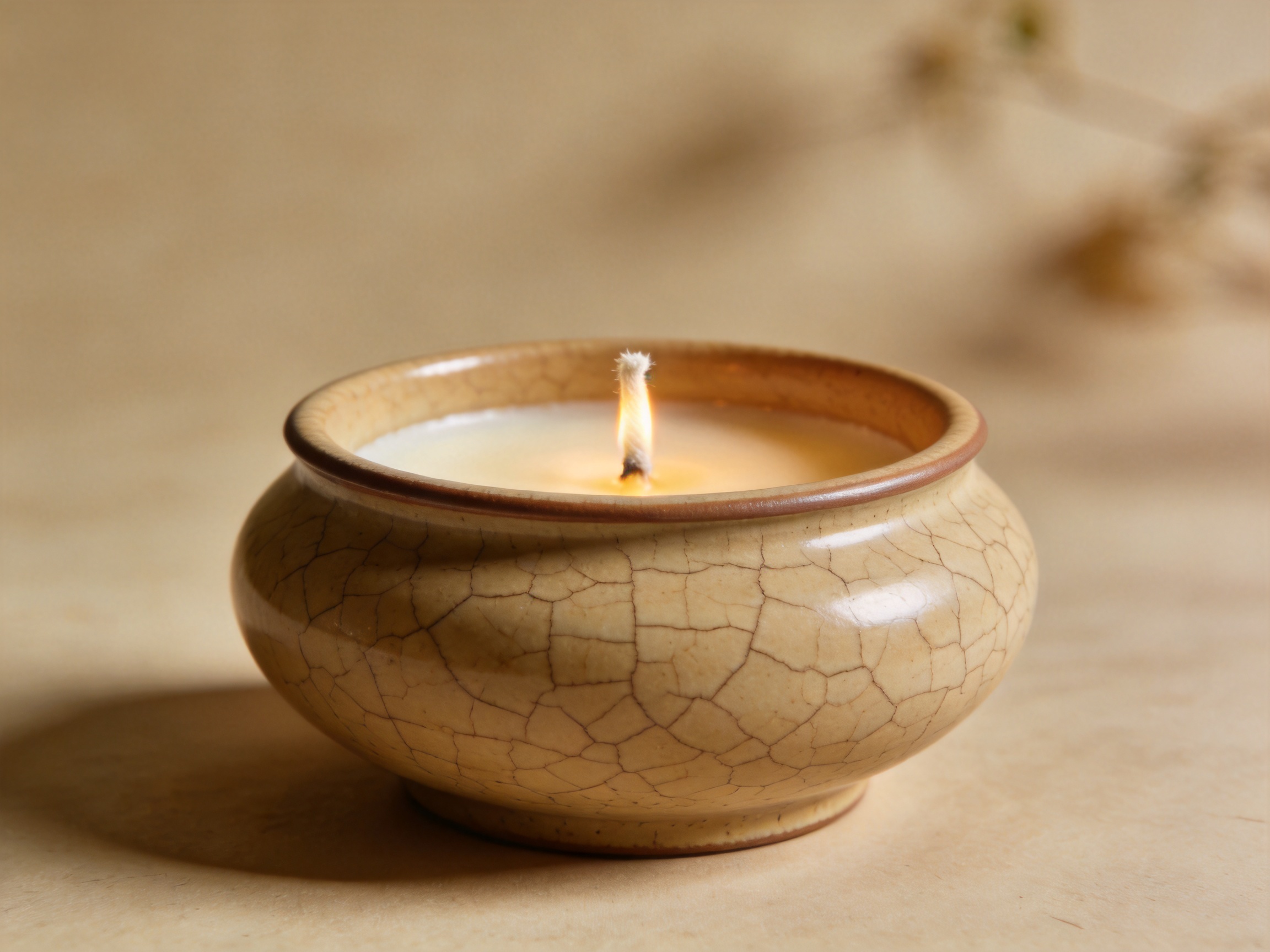
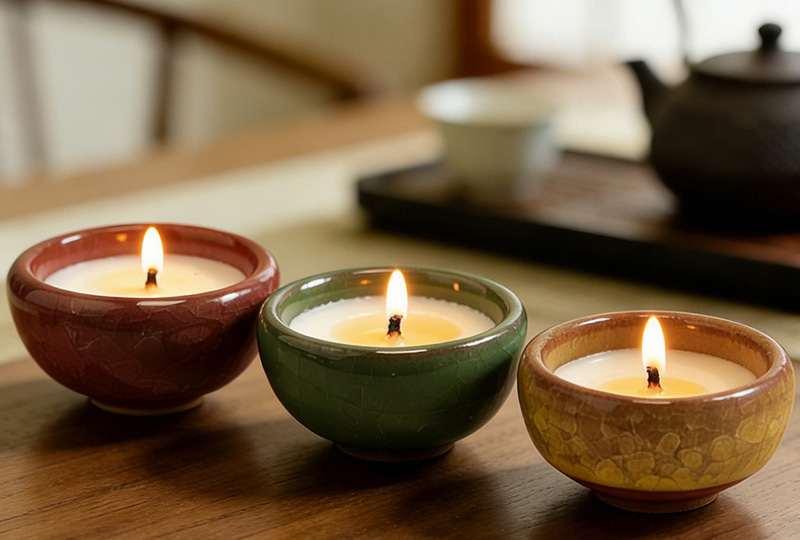
The Crackle-Glaze Bowl-Shaped Ceramic Jar Candle is built around three key product ideas: visual warmth, practical burning performance, and post-use value. The ceramic jar features a warm-toned finish that feels natural, calm, and inviting. Unlike shiny metallic containers or plain transparent glass jars, the crackle-glaze ceramic surface creates subtle irregularity and depth. Each jar has a handcrafted appearance because the glaze pattern forms organic lines and textures during processing, giving the product a unique character.
The bowl-shaped silhouette is another defining feature. Many jar candles use straight cylindrical containers that are easy to stack and produce, but they often lack softness in visual form. This candle adopts a low, wide, gently curved profile that resembles a small ceramic bowl. The smooth curve makes the object feel stable and tactile, while the wide mouth improves accessibility for lighting, trimming, and maintaining the wick. This shape also allows the candle to sit confidently on a flat surface, reducing the visual heaviness sometimes associated with tall candle vessels.
Inside the ceramic container, the single-wick configuration is selected for controlled and steady burning. A single wick is suitable for the bowl format when properly matched with wax composition, vessel diameter, fragrance load, and burn-time expectations. It produces a centered flame that gives off a soft, non-glaring glow. The flame is gentle enough for relaxation, meditation, evening reading, spa-inspired bathrooms, and cozy seasonal settings, while still delivering a meaningful sensory presence.
The product’s reusable ceramic container is one of its most important advantages. After the candle has burned out and the remaining wax is safely removed, the vessel can be used as a small storage container, jewelry bowl, desk accessory, bathroom organizer, or decorative object. This transforms the product from a single-use candle into a longer-lasting home accent. For consumers who care about value and sustainability, this reusability is a persuasive benefit.
The visual identity of this candle is led by its ceramic surface. Crackle glaze is valued because it introduces controlled imperfection. Fine lines form across the glazed surface, creating a network of texture that may vary from piece to piece. This effect gives each container depth and individuality. In a market where many candles look standardized and repetitive, the crackle-glaze finish gives the product a more crafted and collectible feeling.
The warm tone of the ceramic container is especially suitable for contemporary home interiors. Neutral and earthy palettes continue to perform well in global home décor markets because they blend easily with different styles: Nordic minimalism, Japanese-inspired interiors, rustic farmhouse settings, modern apartments, spa-style bathrooms, and boutique hotel spaces. The candle does not demand attention with loud color or exaggerated shape. Instead, it creates quiet elegance through texture, proportion, and finish.
The bowl shape also supports visual harmony. Rounded objects tend to soften interior compositions, balancing the straight lines of books, trays, shelves, furniture, and electronic devices. When placed on a table, the candle introduces a gentle curve and a warm material contrast. When grouped with other home fragrance products such as reed diffusers, incense holders, ceramic vases, or decorative trays, it can form a coordinated lifestyle display.
Compared with printed glass candles, the ceramic body offers a more tactile experience. Consumers can feel the thickness and texture of the container in their hands. This physical quality improves perceived value, especially for gift markets. A ceramic candle feels substantial and permanent. Even before lighting, the object communicates comfort, craftsmanship, and care.
From a product development perspective, the crackle-glaze finish can also be adapted for different collections. Buyers may request variations in tone, glaze intensity, surface finish, label style, outer packaging, scent family, or seasonal presentation. This makes the candle suitable not only as a standalone item but also as part of a broader branded line.
A candle must be beautiful, but beauty alone is not enough. Performance determines whether customers purchase again, leave positive reviews, and recommend the product. The Crackle-Glaze Bowl-Shaped Ceramic Jar Candle is designed with several practical performance advantages that support user satisfaction.
First, the single-wick system supports a steady flame when properly developed and tested. A single wick reduces the complexity of flame management and helps maintain a calm, balanced burn. For many home users, this is preferable to multi-wick candles that may burn too hot, consume wax quickly, or require more careful monitoring. The single flame also creates a more intimate mood, making the product especially suitable for evenings, bedrooms, meditation corners, and quiet living spaces.
Second, the low and wide opening improves ease of use. Lighting a deep narrow jar can be inconvenient, particularly when the candle has burned down. Users may need long matches or lighters, and the vessel may become smoky if the wick is difficult to access. The bowl-shaped opening makes the wick easier to reach. It also simplifies wick trimming and visual inspection of the wax surface.
Third, the ceramic jar provides a stable and heat-resistant container. Ceramic is widely appreciated in candle vessels because it can tolerate heat when designed and processed correctly. It also offers better opacity than clear glass, which can hide wax discoloration or soot marks and preserve a cleaner exterior look throughout the candle’s life cycle. The thermal mass of ceramic can also contribute to a feeling of safety and quality when compared with thin metal tins or fragile lightweight glass.
Fourth, the soft glow generated by the candle is less glaring than direct electric light. Consumers increasingly use candles to create emotional transitions: from work mode to rest mode, from digital activity to personal care, or from daily routine to seasonal celebration. The glow of a small flame can change the perception of a room by adding warmth and movement. In this product, the bowl-like ceramic form frames the flame and makes it feel calm and grounded.
Finally, the product is easy to place and style. It does not require a special holder, stand, or complicated accessory. The stable bowl base rests well on trays, shelves, and tables. For retailers, the same simplicity helps with display: multiple units can be arranged in rows, gift sets, seasonal tables, or lifestyle scenes without visual clutter.
The candle market is highly competitive, with products ranging from inexpensive mass-market tins to luxury handmade ceramics. To succeed, a candle must offer clear value. The Crackle-Glaze Bowl-Shaped Ceramic Jar Candle provides several advantages over common competitors in design, experience, usability, and merchandising potential.
Compared with ordinary glass jar candles, it offers a more decorative and premium appearance. Glass jars are practical and widely used, but they can appear generic unless enhanced with complex printing, labels, or lids. The crackle-glaze ceramic vessel creates built-in visual interest. The material itself becomes part of the product story, reducing dependence on excessive packaging or branding.
Compared with metal tin candles, the ceramic bowl feels more refined and reusable. Tin candles are lightweight and cost-effective, but they may not communicate the same sense of permanence. They are often viewed as travel candles or lower-priced options. A ceramic jar, by contrast, is more likely to be kept after use, which extends brand exposure and improves consumer perception of value.
Compared with shaped novelty candles, this product offers better balance between decoration and functionality. Shaped candles may look attractive but often burn unevenly, drip, lose their form quickly, or require a plate. The ceramic jar candle protects the wax, supports cleaner use, and remains visually attractive after repeated burning sessions.
Compared with premium multi-wick candles, the single-wick bowl candle can be easier to manage, more economical, and better suited for daily use. Multi-wick candles are impressive for large rooms, but they may be too intense for smaller spaces. This candle provides an accessible premium experience without overwhelming fragrance or excessive flame output.
The following table summarizes the competitive position of the product.
| Product Type | Typical Strength | Common Limitation | Advantage of the Crackle-Glaze Bowl-Shaped Ceramic Jar Candle |
|---|---|---|---|
| Clear Glass Jar Candle | Simple, familiar, easy to label | Can look generic and show soot or wax imperfections | Ceramic crackle glaze provides richer texture, stronger decorative value, and better visual warmth |
| Metal Tin Candle | Lightweight and cost-effective | Less premium appearance and limited post-use appeal | Reusable ceramic vessel feels more substantial and giftable |
| Novelty Shaped Candle | Eye-catching display effect | May burn unevenly or require additional holders | Jar structure supports practical burning while retaining decorative style |
| Luxury Multi-Wick Candle | Strong flame presence and larger scent throw | Higher cost and more intense burning | Single-wick design supports calmer daily use and easier maintenance |
| Basic Ceramic Candle | Durable vessel and decorative potential | May lack distinctive surface detail | Crackle-glaze finish adds artisanal uniqueness and visual depth |
This comparison shows that the product is positioned between practicality and premium styling. It is not merely a container for wax. It is a well-considered home accessory that delivers fragrance, light, texture, and reuse potential.
A refined candle depends on more than a good design. It requires coordinated manufacturing, material control, technical testing, packaging planning, and export management. Hangzhou Leo Home Trading Co., Ltd. provides integrated supply chain solutions for household and daily necessities, with a strong focus on home fragrance products such as scented candles, LED candles, and gift sets. Although the company was founded in January 2025, it is built on industry experience, supplier integration, and digital management methods that help overseas clients source and customize dependable products.
The company’s strength lies in combining product development support with practical manufacturing coordination. For a ceramic candle such as this one, several specialist processes must come together: ceramic vessel production, glaze treatment, wax selection, fragrance blending, wick matching, filling, cooling, finishing, inspection, labeling, and packing. Each stage affects the final user experience. If the vessel is poorly made, it may crack or look inconsistent. If the wax formula is not balanced, the fragrance may perform poorly. If the wick is not correctly selected, the candle may tunnel, smoke, or burn too hot. If packaging is weak, breakage can occur during international shipping.
Leo Home addresses these challenges through an integrated network that includes candle factories, jar customization partners, and color box factories. This supplier structure allows the company to manage cost, quality, style variation, and delivery scheduling more effectively. For overseas clients, this means fewer communication barriers and a clearer development pathway from idea to shipment.
The company also supports OEM and ODM customization. Clients can request development based on drawings, samples, fragrance preferences, label concepts, packaging structures, or market positioning. For example, a retailer may want a warm ceramic candle collection for autumn and winter, while a spa brand may prefer a calm, neutral design with lavender, sandalwood, or white tea fragrance. A gift company may need coordinated packaging for seasonal bundles. The same core product can be adapted to these different needs through scent, color, label, and box design.
Manufacturing strength is not only about capacity, although capacity matters. Leo Home reports daily production capability up to 50,000 units through its supply chain, supporting both bulk delivery and replenishment. However, the company also emphasizes flexibility for smaller volumes and trial runs. This is important for modern buyers who may want to test a product line before committing to large-scale orders. Flexible production support helps reduce market risk while still making professional customization possible.
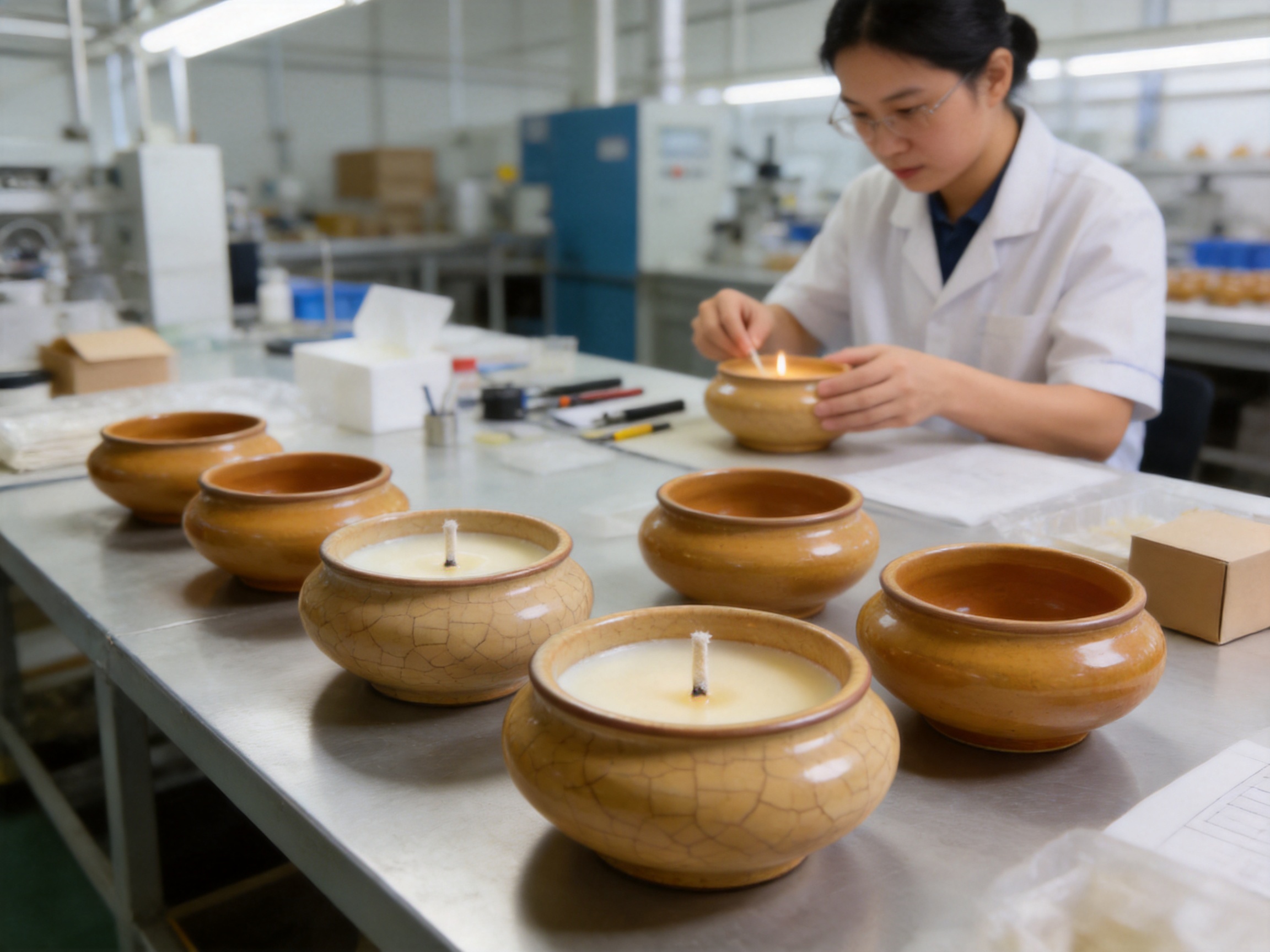
The ceramic jar is the most visible and lasting component of the product. Its quality influences safety, appearance, perceived value, and reusability. Producing a ceramic candle vessel requires attention to clay material, shaping, drying, glazing, firing, sorting, and dimensional control.
In a bowl-shaped candle vessel, proportion is especially important. The container must have enough stability at the base, enough internal space for wax, and a rim design that feels smooth and finished. If the wall is too thin, it may feel fragile or transmit heat too quickly. If it is too thick, the product may become unnecessarily heavy and costly. A balanced ceramic wall gives the vessel a reassuring hand feel while maintaining practical shipping weight.
The crackle-glaze process requires controlled treatment to create an attractive network of fine lines. Because crackle patterns arise from the relationship between glaze and ceramic body during firing and cooling, the production process must maintain consistency while allowing natural variation. The goal is not machine-perfect uniformity but controlled artisanal character. Each piece should look intentional, not defective. This requires experienced factory partners and careful quality sorting.
Heat resistance is another essential requirement. Candle containers must withstand the heat generated during normal burning. The ceramic vessel should be processed and inspected to reduce the risk of cracking under expected use conditions. The wide bowl form helps distribute the wax surface, but proper testing remains necessary. Quality control should consider thermal behavior, vessel integrity, glaze stability, and compatibility with wax filling temperatures.
The vessel must also be suitable for filling. The interior surface should accept wax cleanly and allow adhesion without obvious separation. The base should support wick placement at the correct center point. Inconsistent vessel dimensions can affect wick performance, because even small changes in diameter may influence melt pool formation. For this reason, dimensional checks are part of professional candle development.
Once the candle is finished, the ceramic container becomes the product’s longest-lasting asset. Consumers may discard packaging and eventually burn the wax, but the jar can remain in use. This makes ceramic quality especially important for brand reputation. A well-made reusable vessel continues to represent the product long after the fragrance is gone.
While the ceramic jar creates the first impression, the candle’s wax, fragrance, and wick determine daily performance. A candle that looks beautiful but burns poorly will disappoint users. Professional candle development requires a balance between wax type, fragrance load, wick size, vessel diameter, desired burn time, and safety considerations.
The wax formulation should support clean melting, stable fragrance release, and smooth surface appearance. Different waxes and blends have different characteristics. Some offer excellent scent throw, some create a creamy surface, some improve hardness, and some support lower-temperature burning. For a ceramic bowl candle, the wax must be compatible with the vessel’s width and thermal behavior.
Fragrance selection is equally important. Home fragrance consumers often choose candles based on scent family, emotional association, and season. Warm ceramic styling pairs naturally with fragrances such as vanilla, amber, sandalwood, cedarwood, fig, tea, lavender, white musk, citrus woods, cashmere, cinnamon, or floral herbal blends. For spring collections, lighter scents may be selected. For winter, deeper warm notes may be preferred. For spa or hotel channels, clean and calming fragrance profiles may perform best.
Wick matching is one of the most technical steps. A wick that is too small may cause tunneling, where wax remains on the sides and the candle fails to form a full melt pool. A wick that is too large may create excessive flame height, smoking, overheating, or fast wax consumption. The single-wick design of this candle depends on accurate testing to ensure steady burn behavior. Burn tests should evaluate flame size, melt pool diameter, soot tendency, fragrance throw, container temperature, and wax consumption rate over repeated sessions.
Proper wick placement is also crucial. The wick must be centered so the melt pool develops evenly. In a wide bowl format, off-center placement can lead to uneven wax melting and reduced product satisfaction. Professional filling lines and inspection procedures help control this detail.
Cooling and curing affect appearance and performance as well. After wax is poured, the candle must cool under controlled conditions to reduce surface defects such as cracks, sinkholes, frosting, or uneven adhesion. Some wax and fragrance systems also benefit from curing time before final evaluation. Quality-focused production recognizes that candle making is both a craft and a technical process.
Quality assurance is one of the main strengths emphasized by Hangzhou Leo Home Trading Co., Ltd. The company follows strict quality control across key stages, from raw material selection to finished goods inspection. For scented candles, this is especially important because the final product interacts with heat, fragrance compounds, packaging materials, and consumer environments.
Raw material inspection may include checking ceramic vessels for cracks, chips, uneven glaze, sharp edges, unstable bases, incorrect dimensions, or unacceptable color variation. Wax materials should be checked for consistency and cleanliness. Fragrance oils should meet agreed specifications and be properly stored. Wicks should match the approved standard in size, coating, and structure. Packaging materials should be evaluated for print accuracy, strength, color consistency, and fit.
In-process inspection helps prevent defects before they multiply. During filling, workers or inspectors may check wick centering, wax temperature, fill level, vessel cleanliness, and surface condition. After cooling, candles can be inspected for top appearance, adhesion, fragrance consistency, and labeling accuracy. Burn testing may be conducted on representative samples to verify performance.
Finished goods inspection is critical for export. Products should be checked for visual defects, correct quantity, carton condition, barcode or label requirements, packaging protection, and overall compliance with customer specifications. Since ceramic items are breakable, packing method is particularly important. Protective inserts, dividers, wrapping materials, carton strength, and drop-test considerations help reduce transit damage.
Leo Home’s in-house lab support and QC system help improve reliability for overseas buyers. Many importers face challenges when sourcing candles internationally because small defects can lead to customer complaints, returns, or brand damage. A structured quality process reduces these risks and helps create consistent product experiences across batches.
Quality assurance also supports customization. When a client approves a sample, future production should match the approved reference as closely as possible. This includes color tone, glaze effect, fragrance, label placement, fill weight, and packaging. Professional record keeping and supplier coordination help maintain this consistency.
The Crackle-Glaze Bowl-Shaped Ceramic Jar Candle is highly suitable for OEM and ODM customization. Its core form is versatile enough to adapt to different market segments, while its ceramic texture gives it a premium foundation. This makes it attractive for retailers, private-label brands, subscription boxes, hotel amenities, spa products, holiday collections, and corporate gift programs.
Customization may begin with fragrance. A candle’s scent is often its emotional signature. Clients can develop a fragrance story around relaxation, romance, freshness, nature, warmth, celebration, or luxury. A warm crackle-glaze ceramic jar may be paired with cozy fragrances such as amber vanilla, smoked wood, sandalwood rose, spiced citrus, tonka bean, or cashmere musk. For wellness markets, it can be matched with eucalyptus mint, lavender sage, white tea, hinoki, or chamomile. For festive sales, cinnamon apple, pine forest, gingerbread, cranberry, or orange clove may be appropriate.
Label customization can adjust the product’s market identity. Some brands may choose a minimal paper label in neutral tones. Others may prefer a small metallic label, embossed sticker, hang tag, or no label at all to preserve the ceramic surface. The crackle-glaze finish already provides strong decorative value, so branding should enhance rather than overwhelm the vessel.
Packaging customization is another major opportunity. A ceramic candle benefits from protective and attractive packaging. Options may include color boxes, kraft boxes, rigid gift boxes, window boxes, paper sleeves, molded pulp inserts, foam inserts, or multi-item gift set packaging. A premium gift box can significantly raise perceived value and make the product suitable for seasonal promotions or special occasions.
Vessel color and glaze variation may also be developed. Warm neutral tones can support everyday collections, while deeper colors may suit winter or luxury lines. Soft pastels can work for spring, bridal, or wellness collections. Earthy matte and crackle combinations can appeal to natural living and craft-inspired markets. Because Leo Home integrates jar customization partners, clients can explore these variations while managing cost and feasibility.
Clients may also customize specifications such as wax weight, burn time target, outer carton configuration, set combinations, and matching accessories. For example, the candle can be paired with reed diffusers, candle holders, ceramic trays, matches, or fragrance sachets to create a complete scented set. This cross-category potential aligns well with the company’s product scope in home fragrance and daily lifestyle products.
For international buyers, product quality is only one part of success. Reliable sourcing, clear communication, cost control, production scheduling, documentation, and logistics are equally important. Hangzhou Leo Home Trading Co., Ltd. positions itself as a cross-border trading partner that provides one-stop service for overseas clients. This is particularly valuable in home fragrance, where multiple components and suppliers must be coordinated.
The company integrates 10 candle factories, 8 jar customization partners, and 8 color box factories. This network helps buyers access broader design options and production capacity without having to manage every supplier individually. It also improves flexibility. If one project requires a special ceramic finish, another requires cost-effective packaging, and another requires fast replenishment, the company can coordinate resources according to project needs.
Cost management is a key advantage. By working with multiple specialized factories, Leo Home can help clients compare feasible production methods, select suitable materials, and avoid unnecessary overengineering. For a ceramic candle, cost is influenced by vessel complexity, glaze process, wax type, fragrance load, packaging structure, order quantity, and inspection requirements. Professional sourcing helps balance price and quality.
Export support is also important. The company is located in Hangzhou, Zhejiang Province, with convenient logistics access near Ningbo Port. This supports efficient international shipping to markets in Europe, North America, the Middle East, and other regions. For candles, shipping planning must consider weight, breakage risk, carton strength, labeling, seasonal demand, and delivery deadlines. A dependable logistics structure helps ensure that products arrive in saleable condition and on schedule.
The company’s experience serving more than 10 countries and regions demonstrates its ability to support different market requirements. Buyers in Europe and North America may have specific expectations for packaging quality, labeling clarity, product safety documentation, and consistent finish. Middle Eastern buyers may prefer particular fragrance profiles, luxury packaging, or gift set structures. A flexible export partner can help adapt product development to these preferences.
Digital tools and efficient supply chain management further improve project control. Modern buyers expect timely updates, sample tracking, specification confirmation, production progress reports, inspection feedback, and shipment coordination. By combining trading service with organized supplier management, Leo Home helps reduce uncertainty for overseas clients.
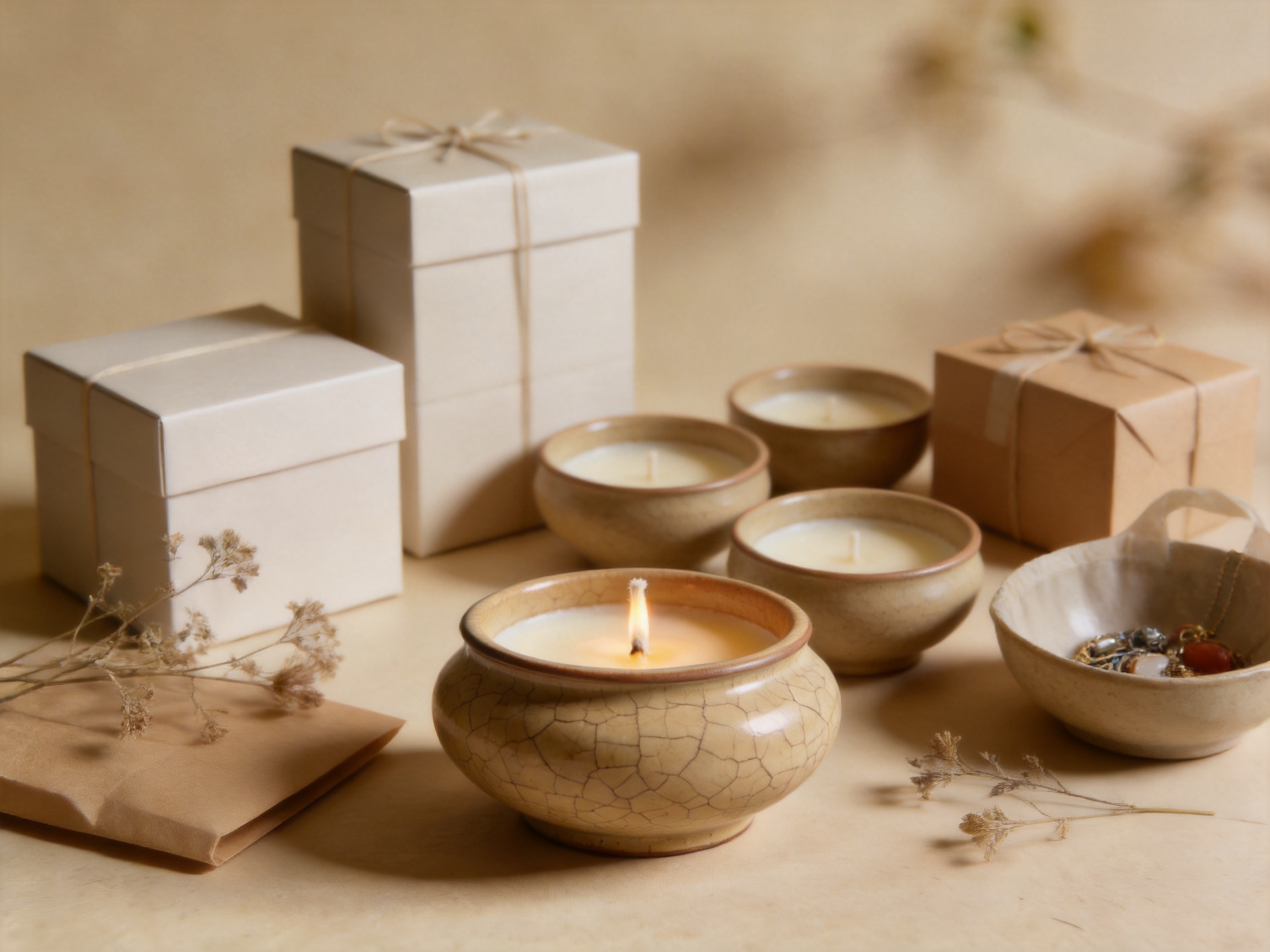
The Crackle-Glaze Bowl-Shaped Ceramic Jar Candle can serve multiple market channels because it combines decorative value with practical fragrance use. Its neutral warm design makes it easy to position across different consumer lifestyles.
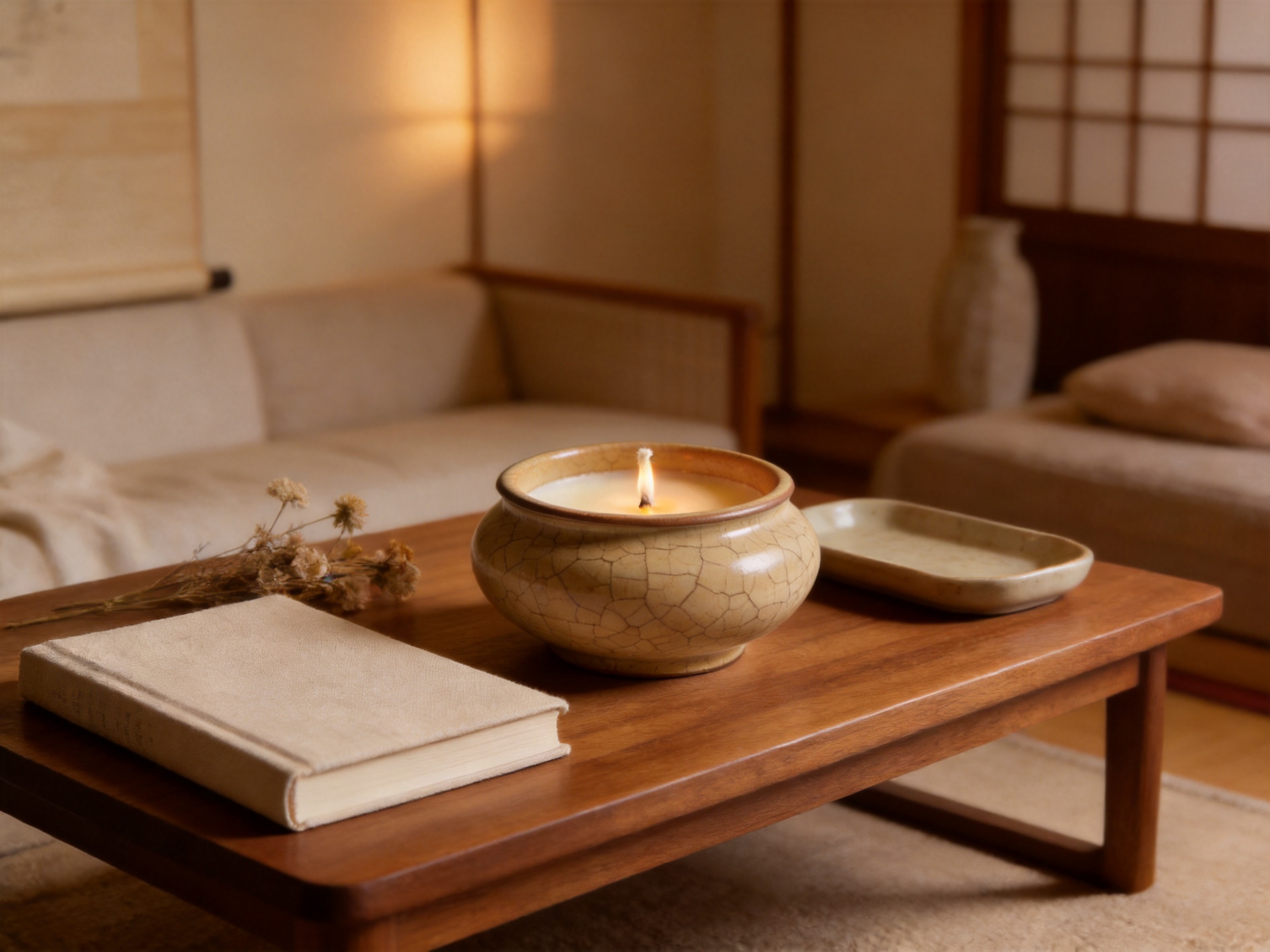
In home settings, the candle works well in living rooms, bedrooms, bathrooms, entryways, reading corners, and dining areas. It can be placed alone for a quiet accent or combined with trays, books, plants, and ceramics for a styled display. The soft flame supports relaxation after work, weekend self-care, slow mornings, or evening routines.
In retail environments, the ceramic candle has strong shelf appeal. Its crackle-glaze surface catches attention without needing bright graphics. Retailers can display it in home décor sections, fragrance areas, seasonal tables, wellness corners, or gift zones. Because the vessel is reusable, sales staff can communicate an easy value story to customers: enjoy the scent first, then keep the ceramic bowl.
For hospitality, the candle can support boutique hotel, spa, resort, and serviced apartment atmospheres. Ceramic vessels feel more refined than disposable containers, and customized scents can become part of a property’s sensory identity. While open flames must always be managed according to local safety policies, candles remain popular for guest gifting, retail shop sales, spa treatment rooms, and decorative staging.
For gift markets, the product is especially suitable. A ceramic candle is easy to understand, easy to appreciate, and suitable for many recipients. It can be developed for birthdays, holidays, housewarming, weddings, thank-you gifts, corporate appreciation, and seasonal promotions. With suitable packaging, it becomes a complete gift product rather than a simple commodity.
For e-commerce, the product’s visual texture and reusable function can support strong product storytelling. Online listings can emphasize crackle glaze, bowl shape, warm ceramic design, single-wick glow, reusable container, and customization options. Since e-commerce customers cannot smell the fragrance before purchase, visual trust and descriptive scent storytelling become important. The ceramic design helps strengthen that trust.
Modern consumers are increasingly aware of waste, packaging, and product longevity. While candles are consumable products, their containers can either become waste or continue serving a purpose. The Crackle-Glaze Bowl-Shaped Ceramic Jar Candle is designed with reuse in mind, giving it an advantage over many single-use candle products.
After the candle is fully burned and the remaining wax is carefully removed, the ceramic jar can be reused in many ways. It may hold jewelry, keys, coins, paper clips, cotton pads, small soaps, incense cones, hair accessories, or decorative stones. It can also serve as a small planter for suitable uses if drainage considerations are addressed separately. On a desk, it can organize small items. In a bathroom, it can hold personal care accessories. On a shelf, it remains a decorative bowl.
This reuse value makes the product more meaningful for consumers. Rather than disappearing after use, the vessel becomes part of the home. From a branding perspective, this extends the emotional life of the purchase. If customized with tasteful branding, the vessel can continue reminding customers of the original brand experience.
Ceramic is also associated with durability and natural materiality. Although it requires energy to produce and must be protected during shipping, its long-lasting nature can make it more appealing than disposable packaging-heavy alternatives. When paired with thoughtful packaging choices, such as recyclable paper boxes or molded pulp inserts, the product can support a more responsible lifestyle message.
For brands developing sustainable product lines, it is important to communicate reuse instructions clearly. Customers should know how to safely discontinue candle use when wax becomes low, how to remove residual wax, and how to clean the vessel. Clear care instructions improve satisfaction and reduce misuse.
The success of a candle product depends not only on manufacturing quality but also on market positioning. The Crackle-Glaze Bowl-Shaped Ceramic Jar Candle can be positioned in several effective ways depending on target customers.
One strategy is to position it as a “warm home ritual” product. Marketing can focus on evening relaxation, calm light, cozy interiors, and comforting fragrance. This works well for lifestyle retailers, home décor shops, and online brands targeting consumers who enjoy slow living and personal comfort.
Another strategy is to position it as an “artisan-inspired ceramic candle.” This emphasizes the crackle-glaze surface, natural texture, and handcrafted appearance. It is suitable for boutiques, design stores, museum shops, and gift retailers that value material stories.
A third strategy is to position it as a “reusable decorative vessel candle.” This highlights the post-use function and sustainability angle. It works well for consumers who dislike disposable products and prefer practical beauty.
A fourth strategy is seasonal merchandising. Warm ceramic candles can sell strongly during autumn, winter, Christmas, New Year, Valentine’s Day, Mother’s Day, and housewarming seasons. Fragrance and packaging can be adjusted for each campaign. For autumn, amber, pumpkin spice, cedar, or fig may be suitable. For winter, pine, vanilla, cinnamon, and smoky woods can perform well. For spring, floral tea, citrus blossom, or herbal scents may refresh the product line.
Retail displays can use natural materials such as wood trays, linen fabric, dried flowers, ceramic accessories, and warm lighting. Because the candle already has texture, simple styling is often most effective. Overly busy packaging or display elements may compete with the crackle-glaze surface.
Every candle product should be used responsibly. Although the ceramic jar is designed to be heat resistant and stable, consumers must follow general candle safety practices. Clear safety labeling and care instructions are essential for professional candle sales.
Users should place the candle on a stable, heat-resistant surface away from curtains, papers, plants, and other flammable materials. The candle should never be left unattended while burning. It should be kept away from children and pets. The wick should be trimmed before each use according to the recommended length, usually around a few millimeters, to help maintain a steady flame and reduce soot.
The first burn is important. Users should allow the wax surface to melt evenly toward the edges as much as possible, depending on candle size and formulation. This helps reduce tunneling and improves future burn performance. Burn sessions should follow recommended time limits to avoid overheating the container or consuming the wax unevenly.
When the remaining wax becomes low, users should discontinue burning to prevent excessive heat at the base. The exact stop point should be provided by the product specification and safety label. After the candle is finished, the vessel should cool completely before wax removal or cleaning.
For international brands and retailers, safety instructions should be adapted to local language and regulatory expectations in the target market. While this article focuses on product features and manufacturing, proper compliance review is always necessary before market launch.
Overseas buyers need products that are attractive, reliable, customizable, and commercially practical. The Crackle-Glaze Bowl-Shaped Ceramic Jar Candle meets these needs through a combination of design and supply chain advantages.
Its visual appeal is immediate. The warm ceramic tone and crackle-glaze texture create a premium impression without requiring complicated decoration. This helps buyers build a product line that looks refined on shelves and in online images.
Its performance structure is practical. The single-wick configuration, wide opening, stable bowl form, and heat-resistant ceramic vessel support convenient daily use. Customers can easily light, maintain, and enjoy the candle.
Its reuse value strengthens the product story. The ceramic container can become a storage vessel or decorative accent, giving consumers a reason to keep it after the wax is finished. This improves perceived value and supports sustainability-oriented messaging.
Its customization potential is broad. Fragrance, label, packaging, vessel tone, and gift set combinations can be adapted for different markets. This is especially useful for private-label clients and seasonal retail programs.
Its manufacturing support is coordinated. Hangzhou Leo Home Trading Co., Ltd. provides supply chain integration, quality assurance, OEM/ODM support, and export service. Instead of sourcing ceramic jars, wax filling, packaging, and inspection separately, buyers can work with one partner that understands the complete product path.
Its delivery flexibility supports both growth and testing. Daily capacity across the supply chain supports large orders, while smaller trial runs can help clients evaluate market response. This flexibility is valuable in a fast-changing retail environment.
Its main difference is the combination of ceramic material, crackle-glaze texture, bowl-shaped form, and reusable design. Ordinary jar candles often rely on simple glass or metal containers, while this candle uses a warm-toned ceramic vessel that functions as both candle container and decorative object. The crackle glaze adds visual depth and artisanal character, making each piece feel more distinctive.
The bowl shape is both decorative and practical. Its low, wide opening makes lighting and wick trimming easier than with deep narrow jars. The stable form sits securely on flat surfaces, and the curved silhouette creates a softer visual presence in home interiors. The wide opening also allows users to monitor the wax surface more easily.
A single wick provides a calm and steady flame suitable for daily relaxation and moderate room ambiance. When correctly matched with the wax, fragrance, and vessel diameter, it can deliver even burning without excessive heat or overly intense flame output. It is easier for many consumers to maintain than multi-wick candles.
Yes. Once the candle is finished, the remaining wax can be safely removed after the vessel has cooled. The ceramic bowl may then be reused for small storage, jewelry, desk items, bathroom accessories, or decorative display. This reuse value is one of the product’s strongest advantages.
The crackle-glaze effect is controlled but naturally variable. This means each piece may show slightly different crackle patterns, which is part of its artisanal appeal. Professional production and inspection help ensure the variation remains attractive and within approved quality standards.
The warm ceramic style pairs well with many fragrance families, including amber, vanilla, sandalwood, cedarwood, fig, lavender, white tea, musk, citrus woods, cinnamon, and herbal blends. Buyers can customize scents according to season, market preference, brand identity, or gift theme.
Yes. Hangzhou Leo Home Trading Co., Ltd. supports OEM and ODM customization, including fragrance selection, label design, packaging structure, color boxes, gift boxes, and related specifications. Buyers can develop private-label products or seasonal collections based on target market needs.
The company applies quality control across key stages, including raw material selection, ceramic vessel inspection, wax and fragrance preparation, wick placement, filling, cooling, finished product checking, and packaging inspection. Its supplier network and in-house lab support help improve consistency and reduce defects.
The product is suitable for home fragrance brands, lifestyle retailers, gift companies, e-commerce sellers, spas, boutique hotels, seasonal retail programs, and private-label distributors. Its premium appearance and customization flexibility make it adaptable to many sales channels.
A tin candle may be cheaper, but the ceramic candle offers stronger decorative appeal, better gift value, a more premium hand feel, and post-use functionality. Consumers are more likely to keep a ceramic vessel after use, which increases perceived value and supports brand memory.
The Crackle-Glaze Bowl-Shaped Ceramic Jar Candle successfully combines design beauty, functional performance, and business practicality. Its warm ceramic body, natural crackle-glaze finish, stable bowl silhouette, single-wick glow, and reusable container create a product that appeals to modern consumers seeking comfort, quality, and meaningful home objects.
In a crowded candle market, differentiation matters. This product stands out from basic glass jars, disposable tins, and purely decorative novelty candles by offering a balanced experience: beautiful enough for display, practical enough for daily use, and durable enough for reuse. Its aesthetic is refined but not excessive, making it suitable for many interior styles and market segments.
For overseas buyers, the product’s value is strengthened by the capabilities of Hangzhou Leo Home Trading Co., Ltd. The company provides supply chain integration, customization support, quality assurance, flexible delivery, and export coordination. With access to candle factories, jar customization partners, packaging suppliers, and quality control resources, it can help clients transform a design concept into a market-ready product.
As consumers continue to invest in home comfort, fragrance rituals, and decorative everyday objects, ceramic jar candles with distinctive surfaces and reusable value are well positioned for growth. The Crackle-Glaze Bowl-Shaped Ceramic Jar Candle is not simply a scented candle. It is a small ceramic atmosphere piece, a giftable lifestyle object, and a practical product platform for brands seeking quality and differentiation.
National Candle Association. Candle Safety and Usage Guidelines.
ASTM International. Standard Guide for Candle Fire Safety Labeling and Candle Performance Considerations.
Rimkus, C. Home Fragrance Product Development and Consumer Experience Principles.
Friedman, K. Ceramic Surface Design: Glaze, Texture, and Firing Effects.
Stone, T. The Retail Value of Reusable Packaging in Lifestyle Consumer Goods.
International Trade Centre. Packaging for Export: Practical Guidance for Consumer Products.
Smith, J. Fundamentals of Wax, Wick, and Fragrance Balance in Container Candles.

Room 1701, Building C1, Wangjing, Xiaoshan District, Hangzhou City, Zhejiang Province, China.

+86-15937257616

Copyright© 2026 Hangzhou Leo Home Trading Co., Ltd. All Rights Reserved.

Luxury Candles Home Fragrance Manufacturers Modern Candles Factory