 English
 Français
News
Home / Author / Catherine Wu — Key Account After-Sales Specialist / Christmas Tree Relief Silicone Candle Mold: A Detailed Guide to Holiday Candle Crafting and Professional Supply
Content
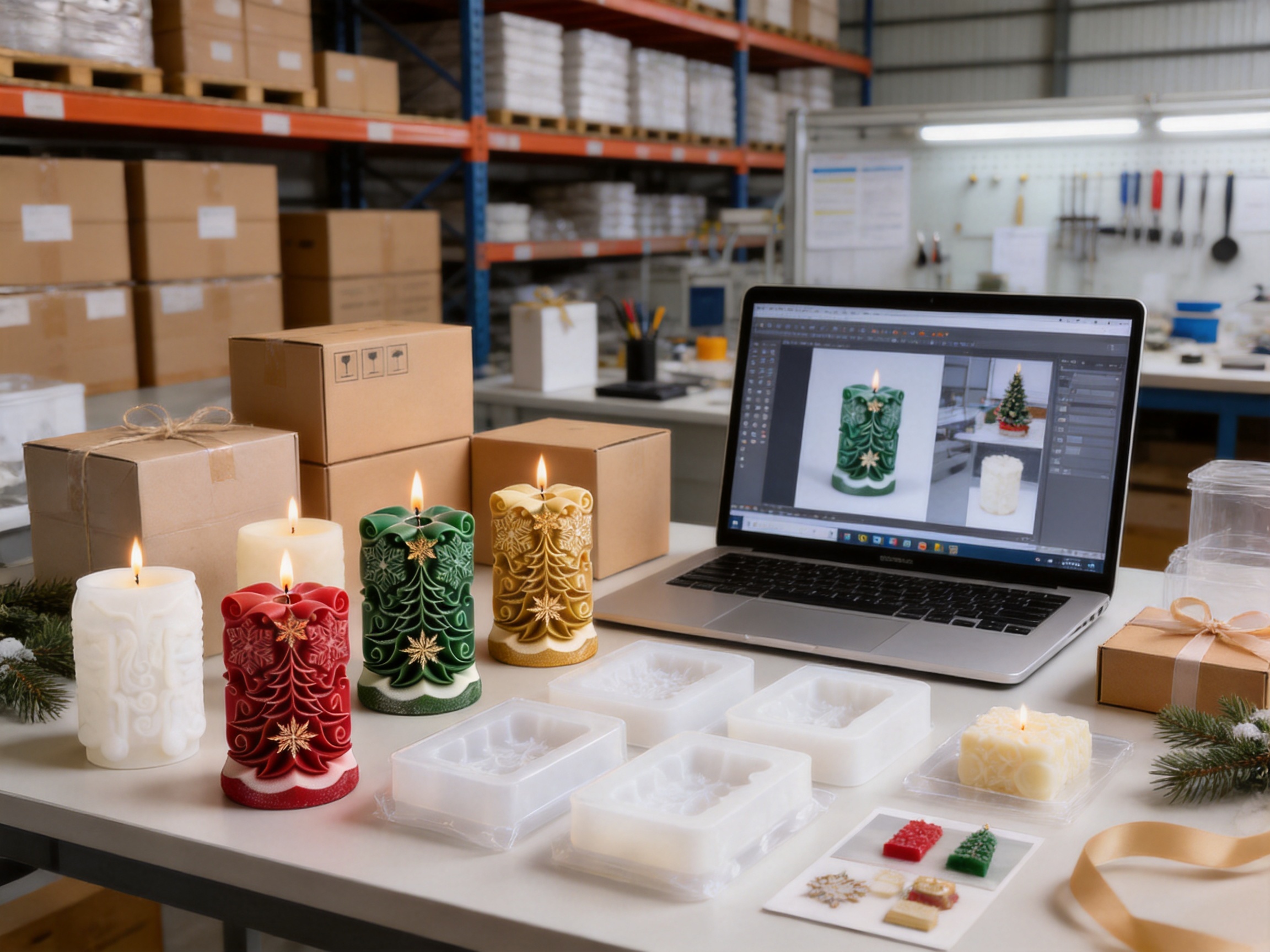
Seasonal candles continue to attract consumers who value atmosphere, decoration, gifting, and creative home styling. Among the many candle-making tools available, the Christmas Tree Relief Silicone Candle Mold stands out for combining a recognizable holiday theme with detailed three-dimensional surface decoration. It is designed to help candle makers create cylindrical candles featuring a layered Christmas tree, snowflake accents, and decorative scroll patterns. The result is a finished candle that functions not only as a source of light and fragrance but also as a decorative seasonal object.
This mold is suitable for independent candle makers, gift businesses, craft retailers, home décor brands, seasonal wholesalers, and online sellers. Its flexible silicone construction supports convenient demolding, while its carved relief structure helps preserve the visual character of the design. Compared with basic smooth candle molds, it offers a more distinctive presentation without requiring the maker to manually carve or decorate every candle.
The product is supplied by Hangzhou Leo Home Trading Co., Ltd., a China-based international trading and supply chain company focused on household, home fragrance, daily-use, and lifestyle products. The company supports product sourcing, quality control, customization coordination, international logistics, and OEM/ODM cooperation across multiple markets. These capabilities are particularly relevant to buyers who need more than a single mold and are looking for a dependable partner for seasonal product development.
The Christmas Tree Relief Silicone Candle Mold is a reusable candle-making accessory identified by specification JZB-0236. It is made from silicone and weighs approximately 165 grams. The mold is packaged in an OPP bag and is intended primarily for candle styling and decorative shaping. Its design creates a balanced cylindrical candle with raised holiday imagery distributed across the surface.
The central design theme is a Christmas tree relief. Layered branches create visual depth, while snowflake details and scroll-style decorative elements add texture around the main motif. This combination gives the finished candle an ornate appearance that can suit traditional Christmas collections, modern seasonal displays, winter gift boxes, hospitality décor, and festive retail presentations.
Unlike a plain pillar mold, this product gives the candle a completed decorative identity as soon as the wax has set. The maker does not need to rely entirely on labels, ribbons, stickers, hand-carved patterns, or additional embellishments to communicate a Christmas theme. This can reduce finishing work and make the production process more consistent, especially when creating multiple candles for a collection or wholesale order.
The product is categorized as a candle mold and is suitable for commercial and home-use scenarios. It may be used by experienced candle makers, hobbyists, craft workshops, seasonal gift businesses, and manufacturers developing small or medium-sized decorative candle lines. Its irregular surface design adds visual complexity while the overall cylindrical structure helps the finished candle remain stable and easy to display.
The strongest feature of this candle mold is the relief effect. Relief decoration differs from a printed image because the pattern is physically integrated into the candle surface. Light and shadow move across the raised areas, allowing the Christmas tree, snowflakes, and scrollwork to remain visible from different viewing angles.
The layered tree design gives the candle a sense of height and dimension. Instead of appearing as a flat seasonal symbol, the tree becomes part of the candle’s sculptural form. This is valuable for consumers who buy decorative candles as centerpieces or gifts, because the product can remain attractive even when it is not burning.
Snowflake accents reinforce the winter theme and help fill the surrounding surface with smaller details. Decorative scroll patterns add an elegant touch that can appeal to buyers seeking a more refined alternative to highly colorful or novelty-style Christmas products. With the right wax color, the mold can support a range of visual identities, from minimalist white winter décor to deep green, red, gold, silver, or warm neutral seasonal collections.
The design also creates opportunities for layered color and finishing techniques. A candle maker may use a single wax color for a clean monochrome effect, or experiment with contrasting highlights on the raised areas. Depending on the wax formula and finishing process, makers may use mica-compatible surface decoration, carefully applied wax accents, or packaging to emphasize the relief. The mold therefore supports both straightforward production and more creative product development.
Because the decorative design is formed during casting, the result can be more uniform than hand-applied decorations. Manual carving and embellishment often depend on worker skill, time, and concentration. A reusable relief mold helps standardize the appearance of each unit, which is especially useful for online sellers who need product photos and customer orders to reflect a consistent design.

Christmas Tree Relief Silicone Candle Mold
Silicone is widely used in candle-making molds because it combines flexibility, resilience, and the ability to reproduce fine surface details. When a candle has raised patterns, narrow grooves, or curved decorative elements, a rigid mold may make removal more difficult. Flexible silicone can generally be separated from the finished candle with less force, reducing the risk of damaging delicate relief features.
The flexibility of this mold is particularly important for the Christmas tree branches and snowflake details. These areas may include edges and recesses that require careful release. By gently flexing the mold after the wax has cooled and solidified, the maker can help loosen the candle while preserving the intended shape.
Silicone also supports repeated use when it is handled, cleaned, and stored correctly. A durable mold can help spread tooling costs across multiple production runs, making it more practical for seasonal businesses. Reusability is an important advantage over disposable or short-life forming solutions, particularly for sellers who plan to repeat the product each year or adapt it to different collections.
The material can also maintain the clarity of fine details over multiple uses when exposed to appropriate candle-making temperatures and treated according to good production practices. Buyers should still confirm the compatibility of their wax, fragrance, dye, and pouring temperature with the mold before beginning full-scale production. Appropriate testing is essential for achieving reliable results.
Many standard candle molds create smooth cylinders, simple pillars, or basic geometric forms. These products can be useful, but they often require additional decoration to create a strong seasonal identity. The Christmas Tree Relief Silicone Candle Mold integrates the visual theme directly into the candle structure, giving it a stronger point of difference at the retail level.
A smooth candle may need a printed label, a sleeve, a bow, or an applied ornament to communicate that it belongs to a Christmas collection. These additions can increase labor, packaging complexity, and material consumption. A relief candle can communicate the occasion through its form, allowing the product itself to contribute to the visual presentation.
Compared with fully hand-sculpted candles, the mold can improve repeatability. Hand-sculpted products may be appealing because of their individual character, but they usually require more time and skilled labor. For businesses serving wholesale customers or online demand, a repeatable mold-based process can make production planning easier and reduce variation between units.
Compared with flat-print decoration, a three-dimensional relief has stronger tactile value. Customers can see and feel the pattern, which may increase the perceived craftsmanship of the product. The raised design also interacts with lighting in photographs and retail displays, helping the candle appear more dimensional than a product decorated only with surface graphics.
Compared with highly complex multi-part molds, this cylindrical design can offer a more practical balance between decoration and production convenience. Extremely intricate molds may produce dramatic shapes but can be difficult to fill, release, clean, package, and transport. The Christmas tree relief format preserves a stable candle silhouette while adding enough detail to support a premium seasonal appearance.
| Comparison Point | Basic Smooth Mold | Hand-Decorated Candle | Christmas Tree Relief Silicone Mold |
|---|---|---|---|
| Surface appearance | Plain and adaptable | Highly individualized | Consistent three-dimensional seasonal relief |
| Production repeatability | Generally high | May vary by worker | High when pouring conditions are controlled |
| Decoration labor | Often requires added finishing | Usually labor-intensive | Decoration is formed during molding |
| Demolding convenience | Depends on material and shape | Not applicable to a fixed mold process | Flexible silicone supports easier release |
| Seasonal identity | Must be added separately | Can be customized manually | Built into the Christmas tree and winter relief |
| Retail positioning | Entry-level or minimalist | Artisan or premium | Seasonal decorative and gift-oriented |
For candle makers, the mold provides a straightforward way to expand a seasonal catalog. A business that already produces jar candles, smooth pillars, or scented wax melts can add a shaped Christmas product without developing an entirely new decorative process. The mold may be used as part of a dedicated Christmas collection or as a limited-edition product for the final quarter of the year.
For retailers, the finished candle can support multiple merchandising concepts. It may be sold as a standalone seasonal candle, included in a scented gift set, placed in a Christmas centerpiece display, or combined with other home fragrance products. Its decorative form allows it to appeal to customers who want a visual ornament as well as those looking for a functional candle.
For online sellers, the relief design can improve product photography. A candle with raised branches, snowflakes, and scrollwork creates visible highlights and shadows under studio lighting. Different wax colors can produce a varied image library while using the same mold, allowing sellers to test consumer preferences without redesigning the core tool.
For gift businesses, the product may be paired with fragrance, seasonal packaging, greeting cards, ribbons, or small accessories. The mold itself does not determine the final commercial positioning. Instead, it provides a recognizable base that can be adapted to different price points and target markets.
For craft instructors and workshops, the design offers an engaging project with a clear seasonal outcome. Participants can learn about wax preparation, fragrance loading, temperature control, mold filling, cooling, demolding, and finishing while creating a product that is immediately relevant to the holiday season.
For wholesalers and distributors, the product can help fill a seasonal assortment with a relatively compact and lightweight accessory. The supplied weight is approximately 165 grams, and the OPP bag packaging is simple for storage and distribution. Buyers should confirm carton configuration, order quantities, and export packaging requirements before placing a commercial order.
Before pouring, inspect the silicone mold for dust, wax residue, deformation, or damage. The interior should be clean and dry. If the mold has been stored for an extended period, gently clean it with a suitable mild method and allow it to dry completely. Avoid sharp tools that could cut or scratch the silicone surface.
Place the mold on a stable, level surface. Because the finished candle has a cylindrical structure, keeping the mold upright is important for producing a balanced base and even vertical walls. If necessary, use a supportive holder or container around the outside of the mold, provided that the support does not compress the decorative pattern.
A properly centered wick is important for both appearance and burning performance. Before pouring, position the wick through the center of the mold and secure it at the top and bottom as appropriate for the chosen candle-making method. The wick size should be selected according to the candle diameter, wax type, fragrance load, and intended burn behavior.
Wick testing is recommended because a relief candle may have a different surface profile and heat distribution from a smooth pillar. The mold creates the shape, but the final burning performance depends on the complete formulation and construction of the candle.
Select a wax suitable for molded candles. Different waxes have different characteristics concerning hardness, shrinkage, surface finish, fragrance retention, and release behavior. Beeswax, paraffin, soy blends, pillar waxes, and other formulations may perform differently in the same mold.
Heat the wax according to the supplier’s technical guidance. Add fragrance and color at appropriate temperatures, and stir carefully to encourage an even mixture. Excessive heating, insufficient mixing, or incompatible additives may affect the finish of the candle or make demolding more difficult.
Pour slowly and steadily to help the wax reach the recessed portions of the design. A controlled pour can reduce the chance of air pockets around the Christmas tree branches, snowflakes, and scroll patterns. Some makers may choose to precoat or prefill detailed areas with a small amount of wax, but this should be tested with the selected formulation before production.
Leave appropriate space at the top of the mold for leveling and finishing. Avoid moving the mold immediately after pouring. Vibration or accidental contact can affect the surface appearance and may create unwanted marks.
Allow the candle to cool gradually in a stable environment. Rapid cooling may increase the risk of surface defects, cracking, sinkholes, or uneven shrinkage, depending on the wax formula. The candle should be sufficiently firm before demolding, but the ideal timing may vary by wax type and room temperature.
To remove the candle, gently flex the silicone and release the outer surface step by step. Do not pull aggressively on the wick or force narrow decorative areas. If the candle does not release easily, allow additional cooling time and inspect the mold edges rather than applying excessive pressure.
After removal, trim the wick to the desired length and inspect the candle under good lighting. Look for incomplete relief, air bubbles, cracks, surface marks, uneven bases, or areas where wax did not fully reach the design. Minor imperfections may be acceptable in handmade products, but commercial sellers should establish a consistent quality standard.
Finished candles should be allowed to cure when required by the wax and fragrance system. Burning tests should be completed before sale, particularly when launching a new fragrance, wick, or wax combination. Product safety information and appropriate warning labels should be included according to the destination market.

Quality control begins with the mold itself. Buyers should inspect the silicone for consistency, clean molding lines, accurate pattern formation, and adequate flexibility. The relief design should be clearly defined across the relevant surface. Any distortion in the tree branches or snowflake accents may appear repeatedly in every candle produced from the mold.
Incoming inspection should also verify the specification, packaging, quantity, and weight where applicable. The supplied product information identifies the specification as JZB-0236 and the reference weight as 165 grams. Commercial buyers may request additional dimensional drawings, sample approval, packaging details, and inspection standards as part of the purchasing process.
During candle production, quality checks should cover wax temperature, fragrance percentage, color dispersion, wick alignment, pouring speed, cooling conditions, demolding technique, and finished appearance. A documented process helps reduce variation between batches and makes it easier to identify the cause of defects.
For export orders, packaging inspection is also important. An OPP bag provides a simple individual packaging solution, but buyers may require additional protection for bulk transport or retail presentation. Options such as branded sleeves, color boxes, inserts, barcode labels, warning labels, and protective cartons may be discussed through customization or OEM/ODM services.
Product testing should be appropriate to the target market. Buyers may need to evaluate material documentation, packaging compliance, labeling requirements, candle safety, fragrance documentation, and shipping restrictions. Regulations vary by country and product category, so importers remain responsible for confirming the requirements applicable to their sales region.
Hangzhou Leo Home Trading Co., Ltd. operates as an international trading and supply chain partner for household and daily-use products. Its product scope includes home fragrance, scented candles, LED candles, gift sets, personal care products, home and garden items, and daily tools. This broader category experience can help buyers coordinate related product development instead of sourcing every item from a separate supplier.
The company was founded in January 2025 and is based in Hangzhou, Zhejiang Province, China. Its operating model combines product development, international sourcing, cross-border marketing, and delivery coordination. For buyers developing a Christmas collection, this integrated approach may simplify communication across product selection, packaging, quality requirements, and shipment planning.
According to the provided company information, Leo Home works with a network that includes 10 candle factories, 8 jar customization partners, and 8 color box factories. This network-based structure can provide access to different production capabilities and help match a project with an appropriate factory resource. It may also support cost management, format expansion, and the development of coordinated product families.
The company reports daily capacity of up to 50,000 units across its supply network while also supporting smaller volumes and trial runs. Capacity figures should be confirmed for each product, material, packaging format, and order schedule. Nevertheless, the combination of bulk production coordination and smaller trial support is useful for buyers who want to test a seasonal mold before committing to a larger program.
Quality assurance is described as covering the process from raw material selection to finished goods inspection. The company also reports access to an in-house laboratory and strict quality control at key stages. For a mold-based candle product, this approach can include inspection of incoming silicone products, evaluation of samples, production monitoring, packaging checks, and pre-shipment verification.
The company’s customization capabilities include support for specifications, fragrance selection, labels, packaging, drawings, and samples. Although the Christmas Tree Relief Silicone Candle Mold is presented as a finished standard product, buyers may use it as a starting point for a wider seasonal development program. For example, a buyer may request coordinated candles, packaging, fragrances, gift sets, or additional seasonal shapes.
Access to logistics near Ningbo Port can also support international shipment planning. Efficient port access may be valuable for seasonal goods because Christmas products operate within a limited selling window. Early forecasting, sample approval, production scheduling, inspection, and shipment booking are important for ensuring that products arrive before the intended retail period.
OEM and ODM cooperation can extend the commercial potential of the mold beyond a single standard listing. Buyers may consider developing an entire holiday assortment based on the same visual language. A collection could include relief pillar candles, scented jar candles, LED alternatives, reed diffusers, gift boxes, and small decorative accessories.
Fragrance customization is one possible direction. Seasonal fragrances may include pine, cedar, cinnamon, vanilla, orange, clove, winter berries, or unscented options for customers who prefer decorative candles without fragrance. Any fragrance choice should be evaluated for compatibility with the wax, target market, packaging, and intended burning performance.
Color customization can also create different retail tiers. White or ivory wax may emphasize the sculptural winter character of the design. Green can reinforce the Christmas tree theme, while red and gold can create a traditional festive appearance. Neutral colors may suit modern interiors and customers who prefer subtle seasonal décor.
Packaging can be adapted for different channels. A simple OPP bag may suit craft supply distribution or economical bulk packaging. A printed sleeve or color box may be better for gift retail. A premium rigid box with an insert can support higher-value positioning, while a recyclable paper package may appeal to environmentally conscious customers where appropriate materials and claims are properly verified.
Private label opportunities should be discussed separately because the supplied information identifies this item as not supporting a licensable private label. Buyers should confirm whether custom packaging, product labels, or brand presentation are available for a specific order and whether minimum quantities, artwork requirements, and compliance documents apply.
In Europe and North America, the mold may be positioned as a seasonal home décor product, a Christmas gift item, or a premium craft-making accessory. Consumers in these markets often value products that combine function and decoration. A finished relief candle can be presented as part of an advent display, dining table arrangement, mantel decoration, or holiday gift basket.
In Southeast Asia and Northeast Asia, the product may appeal to consumers interested in seasonal styling, gifting, handmade goods, and social-media-friendly home décor. Product photography should show the relief clearly and demonstrate how the candle appears in different settings.
In the Middle East, Africa, and South America, opportunities may vary by local Christmas traditions, retail calendars, climate, and consumer preferences. Buyers should consider shipping temperatures, warehouse conditions, fragrance expectations, and packaging durability. Regional adaptation can help the same mold serve different markets without changing the core tooling.
Online marketplaces such as Amazon, eBay, AliExpress, Wish, Lazada, and independent e-commerce stores may be suitable sales channels. Marketplace listings should include accurate dimensions, material information, usage guidance, safety notices, packaging details, and clear images. If the product is sold as a mold rather than a finished candle, the listing should explain the intended candle-making applications and expected production process.
The relief structure should be a central part of the visual presentation. Images should show the front and side surfaces, the overall cylindrical form, the depth of the decoration, and the flexibility of the silicone material. Close-up images can help customers understand the detail of the Christmas tree and snowflake elements.
Finished candle photography should use lighting that creates gentle shadows without hiding the pattern. A neutral background can emphasize the shape, while seasonal settings may show the product in a gift or home décor context. Multiple wax colors can communicate the range of creative results achievable with the same mold.
For wholesale catalogs, technical images should be combined with lifestyle images. Buyers need to understand both the product’s physical attributes and its commercial possibilities. A clear specification section can include material, model number, reference weight, packaging, intended use, and available customization support.
Merchandising can group the candle with complementary products such as candle holders, gift boxes, matches, room sprays, reed diffusers, or seasonal ornaments. Since the company also supplies home fragrance and related household products, buyers may be able to coordinate a broader assortment through one supply chain partner.

Proper care can help preserve the mold’s flexibility and surface detail. After use, allow residual wax to cool and remove it gently. Avoid cutting hardened wax directly from the silicone with sharp blades. If cleaning is necessary, use a mild method suitable for silicone and ensure the mold is completely dry before storage.
Store the mold away from direct sunlight, extreme heat, and heavy objects that could deform its shape. Do not fold it sharply for long periods, especially across detailed areas. Keeping the mold in a relaxed position can help it retain its intended structure.
Do not use the same mold for incompatible materials without confirming material suitability. Candle waxes, soap bases, resin systems, food materials, and other casting substances may have different safety and compatibility requirements. This product is presented for candle styling and should be used within its intended application.
Repeated production should be accompanied by periodic inspection. Check whether the relief remains sharp, whether the silicone has developed tears, and whether the mold remains stable during pouring. Replacing a worn mold at the appropriate time can protect the consistency of the finished candle collection.
Christmas products require careful timing because demand is concentrated around a specific retail season. Buyers should plan backward from the desired delivery date. The schedule may include product selection, sample approval, fragrance testing, packaging artwork, compliance review, production, inspection, international transportation, customs clearance, warehousing, and marketplace preparation.
Starting with a small trial order can help assess the mold’s performance with the buyer’s chosen wax, wick, fragrance, and packaging. Trial production can reveal issues that are not visible during visual sample review, such as cooling behavior, relief clarity, burn performance, or packaging fit.
Forecasting should account for both finished candles and replacement or repeat orders. A seasonal item that performs well may require rapid replenishment. Buyers should discuss production lead times, material availability, packaging minimums, and shipping options before the peak period.
Cost planning should include more than the mold purchase price. Relevant costs may include wax, fragrance, dye, wick, labor, packaging, inspection, freight, import duties, storage, marketplace fees, and marketing. The decorative relief may support a higher retail price, but the final positioning should be based on the complete landed cost and target customer.
The mold is a production tool and should not be treated as a finished candle. Candle makers must follow safe practices when melting wax, handling fragrance oils, using dyes, and operating heating equipment. Work areas should be ventilated and equipped with appropriate fire-safety measures.
Finished candles should be burn-tested before commercial sale. Testing should consider wick size, wax type, fragrance concentration, colorants, vessel or support surface, burn duration, flame height, melt pool, soot, heat, and end-of-life behavior. A decorative shape does not replace the need for technical candle testing.
Customers should receive clear instructions concerning trimming the wick, placing the candle on a heat-resistant surface, keeping it away from flammable materials, and never leaving it unattended while burning. Safety information should be adapted to the destination market and the final product format.
Buyers should also confirm whether any local regulations apply to candle molds, candle-making supplies, fragrance materials, or finished candles. Documentation requirements may differ between countries. A responsible supply chain includes accurate product information, appropriate labeling, and careful communication between supplier, importer, retailer, and end customer.
It is used to form decorative candles with a cylindrical shape and a raised Christmas tree, snowflake, and scroll-pattern surface. It is suitable for home crafting, workshops, seasonal product development, gift businesses, and commercial candle production.
The mold is made from silicone. Its flexible construction is intended to support easier demolding and help preserve detailed surface patterns during repeated candle-making use.
A smooth pillar mold creates a plain surface that may require additional decoration. This mold forms the seasonal relief directly into the candle, helping create a more distinctive and decorative product with less post-casting embellishment.
Yes, silicone molds are generally designed for repeated use when handled and stored properly. The actual service life depends on wax compatibility, pouring conditions, cleaning methods, storage, and frequency of use.
Yes. The Christmas tree and winter relief make the finished candle suitable for seasonal gifting, holiday décor, Christmas collections, and gift-box presentation. Packaging can be upgraded according to the target market and retail channel.
Different wax colors may be used, provided they are compatible with the selected wax and production process. White, ivory, green, red, gold, silver, and neutral shades may create different visual effects. Testing is recommended before a large production run.
The mold itself does not prevent the use of fragrance. Candle makers should select fragrance materials designed for candles and follow the recommended usage rate for the chosen wax. Burn testing is necessary whenever the fragrance or formulation changes.
It can be used by beginners, although new makers should learn basic candle-making practices before production. Beginners should pay particular attention to wick centering, wax temperature, air release, cooling time, and gentle demolding.
The listed specification is JZB-0236, with a reference weight of approximately 165 grams. Buyers should confirm dimensions, tolerance, packaging quantity, and other technical details before placing a commercial order.
The listed packaging specification is an OPP bag. Buyers requiring retail-ready presentation, additional protection, branded packaging, or bulk export cartons should discuss the packaging plan during quotation and sample approval.
Hangzhou Leo Home Trading Co., Ltd. reports a supply network involving candle factories, jar customization partners, and color box factories, as well as daily network capacity of up to 50,000 units. Actual capacity and lead time should be confirmed according to the order design, quantity, materials, packaging, and delivery schedule.
The company provides OEM/ODM support involving specifications, fragrance selection, labels, packaging, drawings, and samples. Buyers should confirm the available options, minimum quantities, artwork requirements, and development timeline for each project.
The company identifies sales coverage across Africa, Europe, South America, Southeast Asia, North America, Northeast Asia, the Middle East, and other regions. Buyers remain responsible for checking the local requirements of their intended destination market.
Store it clean and dry, away from direct sunlight, extreme heat, and heavy pressure. Avoid sharp folds and keep the silicone in a relaxed position to help preserve the shape and fine decorative details.
The Christmas Tree Relief Silicone Candle Mold provides a practical way to create visually distinctive seasonal candles. Its main advantages are the integrated three-dimensional Christmas design, flexible silicone construction, repeatable production potential, stable cylindrical form, and suitability for both home and commercial use.
Its relief surface helps differentiate finished candles from plain molded products and can reduce the need for additional decoration. The design is suitable for a variety of wax colors, fragrances, packaging styles, and retail concepts. It can serve as a standalone holiday product or as the foundation of a broader Christmas home fragrance collection.
For buyers seeking international sourcing support, Hangzhou Leo Home Trading Co., Ltd. contributes supply chain coordination, quality control, customization support, access to candle and packaging partners, and export-oriented logistics planning. The company’s reported capabilities can assist customers with both trial projects and larger seasonal programs, subject to product-specific confirmation.
Successful results will depend on more than the mold alone. Wax selection, wick testing, pouring conditions, cooling, demolding, packaging, safety information, and market compliance all influence the final product. When these elements are managed carefully, the mold can help candle makers produce elegant, consistent, and commercially appealing holiday candles for a wide range of customers.
1. Product specification and supplied technical information for Christmas Tree Relief Silicone Candle Mold, model JZB-0236.
2. General candle-making practice concerning wax preparation, wick selection, fragrance blending, cooling, demolding, and burn testing.
3. General silicone mold handling guidance covering cleaning, storage, repeated use, and protection of fine surface details.
4. Company profile and supply chain information supplied for Hangzhou Leo Home Trading Co., Ltd.
5. General international product development practices for seasonal home fragrance, gift packaging, quality control, and export coordination.

Room 1701, Building C1, Wangjing, Xiaoshan District, Hangzhou City, Zhejiang Province, China.

+86-15937257616

Copyright© 2026 Hangzhou Leo Home Trading Co., Ltd. All Rights Reserved.

Luxury Candles Home Fragrance Manufacturers Modern Candles Factory