 English
 Français
News
Home / Author / Catherine Wu — Key Account After-Sales Specialist / Christmas Delight Handmade Candles: A Complete Guide to Festive Design, Quality, and Custom Home Fragrance
Content
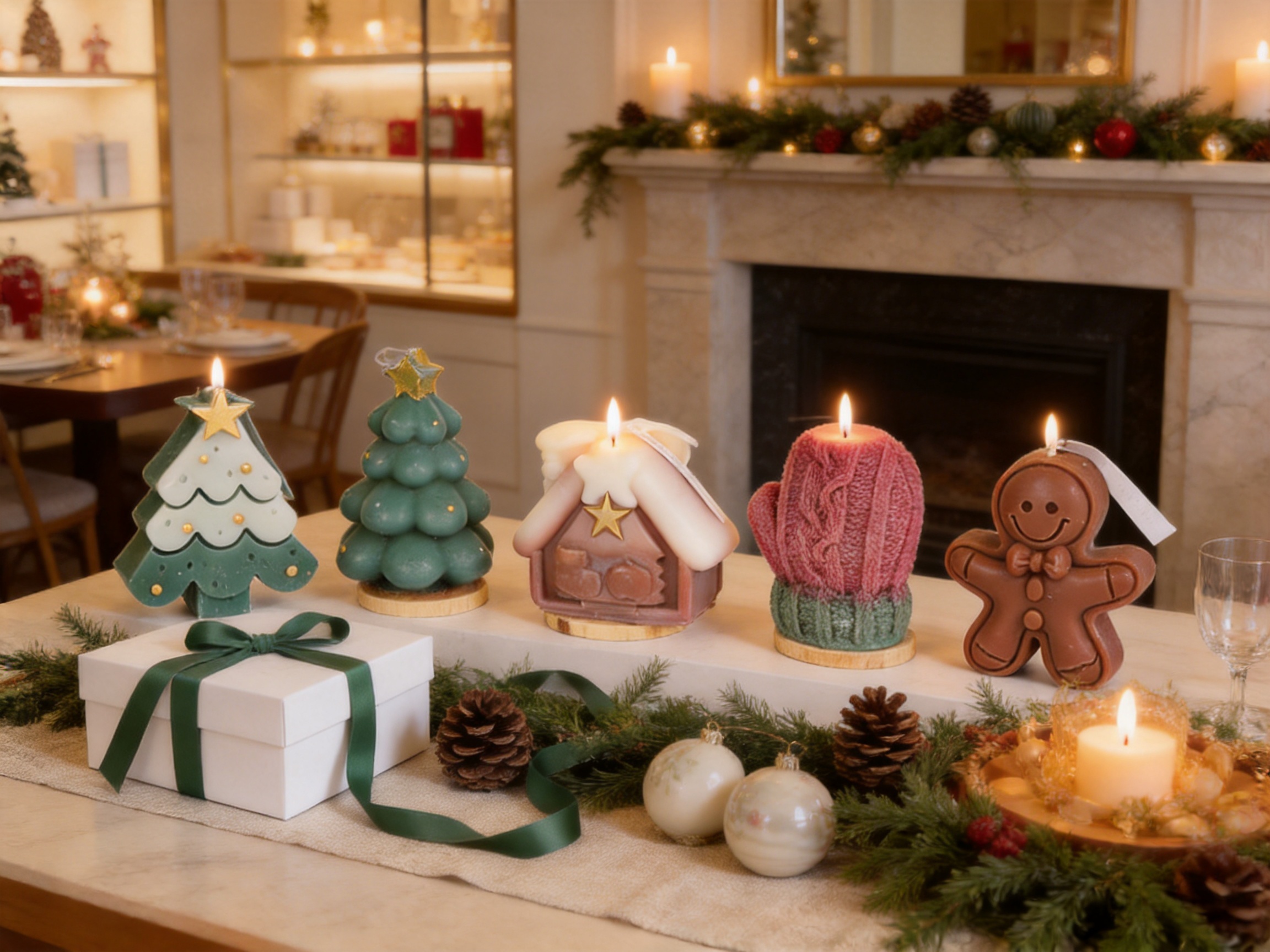
Seasonal home fragrance has become an important part of modern interior styling, gifting, hospitality, and retail collections. Consumers increasingly look for products that offer more than a pleasant scent. They want attractive objects that create atmosphere, communicate emotion, and fit naturally into seasonal decorating themes. The Christmas Delight Festival Series Handmade Candle responds to this demand by combining sculptural holiday designs, handcrafted character, decorative versatility, and the warm visual language associated with winter celebrations.
Designed around familiar Christmas motifs, the collection includes shapes such as Christmas trees, gingerbread figures, cozy mittens, and festive houses. These forms transform the traditional candle into a small decorative artwork. Rather than functioning only as a source of illumination or fragrance, each piece can become part of a dining table arrangement, fireplace display, gift basket, seasonal shop window, or holiday centerpiece.
The collection is supplied by Hangzhou Leo Home Trading Co., Ltd., a China-based international trading and supply chain company focused on household and daily-use products. Its capabilities include product sourcing, development support, quality control, packaging coordination, and OEM/ODM customization. Through a network of candle factories, jar partners, and packaging suppliers, the company supports customers seeking distinctive home fragrance products for retail, gifting, hospitality, and private-label programs.
This article examines the Christmas Delight Festival Series Handmade Candle in detail. It explores its design concept, decorative benefits, potential market applications, quality and manufacturing considerations, customization possibilities, and the supply chain strengths that help distinguish it from ordinary seasonal candles.
Many standard holiday candles rely on a simple cylindrical or jar format. While these formats are practical and commercially proven, they may offer limited visual storytelling. The Christmas Delight Festival Series Handmade Candle takes a different approach by using recognizable sculptural forms. The candle itself becomes part of the decoration, allowing the product to communicate a festive theme even before it is lit.
The collection is inspired by classic winter holiday elements. A Christmas tree suggests celebration, renewal, and family tradition. A gingerbread figure introduces a playful and nostalgic quality. A mitten conveys warmth and comfort, while a festive house recalls the welcoming atmosphere of a holiday home. Together, these motifs create a collection with broad seasonal appeal and strong visual recognition.
The design language is especially suitable for consumers who want decorative products that feel personal and expressive. A shaped candle can be displayed as an individual accent, but it can also be grouped with other forms to create a small holiday scene. Retailers may present the designs as a mixed collection, a gift assortment, or a coordinated seasonal range.
Unlike mass-produced decorative items with highly uniform surfaces, handmade candles often retain subtle signs of the production process. Slight variations in texture, edges, or surface appearance can contribute to a natural artisanal finish. These details help communicate authenticity and make each piece feel less mechanical. For many customers, this handcrafted quality is an advantage because it supports the current preference for products that appear thoughtful, tactile, and individually made.
The most immediate advantage of the Christmas Delight series is its ability to tell a seasonal story through shape. A standard candle may depend mainly on color, label design, or fragrance to express a theme. A sculptural candle communicates its identity through its silhouette as well. This makes the product easy to understand at a glance in a retail display or online product image.
Visual storytelling is valuable in competitive home fragrance markets. Customers often make quick purchasing decisions based on appearance, especially when buying gifts or seasonal decorations. A recognizable tree, mitten, gingerbread figure, or house can create an emotional response more quickly than a generic vessel. The product therefore has the potential to attract attention before the customer reads detailed specifications.
Many candles are primarily purchased for use and become less relevant after burning. A carefully designed shaped candle can have decorative value throughout its lifecycle. Before use, it enhances a seasonal display. During use, it contributes light and atmosphere. Even after use, its sculptural form may remain part of a styling arrangement, depending on the customer’s preferred use and candle condition.
This dual role gives the product a meaningful advantage over purely functional fragrance formats. It can appeal to customers who enjoy home decoration as much as they enjoy scent. It also creates opportunities for retailers to position the candle within more than one category, including home fragrance, seasonal décor, giftware, and tabletop accessories.
Gift buyers often seek products that look complete and thoughtful without requiring extensive explanation. The holiday motifs in this collection provide an immediate gifting message. They are suitable for Christmas gatherings, winter celebrations, host gifts, employee gifts, stocking-style gift selections, and seasonal surprises for friends or family members.
The product can also be combined with complementary items such as reed diffusers, room fragrance, decorative trays, gift boxes, greeting cards, or other candle formats. This makes it suitable for curated gift sets and seasonal promotional campaigns. Retailers can sell individual pieces for accessible purchases or group several designs into a premium assortment.
A collection built around multiple motifs offers more merchandising options than a single-shape candle. Retailers can display all designs together to create a complete festive scene, or they can separate the products by theme, price point, or gift occasion. Different shapes can also be assigned to different sales channels, such as online gift shops, department stores, lifestyle boutiques, hotel gift stores, and holiday markets.
For private-label customers, the collection concept can be adapted to a retailer’s preferred color palette, packaging format, fragrance direction, or regional holiday positioning. The underlying idea is flexible enough to support both traditional and contemporary visual identities.
The Christmas tree is one of the most recognizable symbols of the season. As a candle form, it immediately communicates celebration and winter tradition. It can be used as a centerpiece accent, placed on a mantel, or grouped with smaller seasonal objects.
The tree design is also commercially versatile. It can appeal to families, traditional holiday decorators, hospitality businesses, and customers seeking a simple seasonal gift. When produced in soft or neutral tones, it can fit both classic and modern interiors. When paired with stronger festive colors, it can contribute to a more playful holiday display.
The gingerbread figure introduces warmth, nostalgia, and a sense of play. It can be especially attractive to customers who enjoy baking traditions, family-oriented Christmas décor, or charming illustrated-style displays. The shape works well in gift assortments because it feels approachable and visually expressive.
For retailers, the gingerbread motif can support themed merchandising with kitchen textiles, mugs, baking accessories, confectionery products, or family gift items. Its friendly appearance may also help broaden the collection’s appeal beyond customers who normally purchase luxury fragrance products.
The mitten design conveys the comfort of cold-weather living. It connects naturally with winter clothing, fireplaces, warm beverages, and cozy interiors. This makes it appropriate for lifestyle stores and seasonal campaigns focused on comfort and relaxation.
A mitten-shaped candle can also provide contrast within a collection. While the tree and house communicate seasonal scenery, the mitten emphasizes personal warmth and everyday winter life. This variation gives the assortment a richer emotional range.
The house motif represents shelter, hospitality, and togetherness. It is well suited to displays centered around family gatherings, dining rooms, entryways, and living spaces. As a decorative object, a small house-shaped candle can help create a miniature village or winter scene when arranged with other holiday elements.
The house shape may also be attractive for real estate gifts, hospitality programs, interior boutiques, and corporate seasonal gifting. Its symbolism is broad and welcoming, making it suitable for a variety of audiences and occasions.
The product description emphasizes careful handcrafting, delicate textures, and a natural artisanal finish. These characteristics are important in a market where customers increasingly value visible craftsmanship. Handmade appearance does not necessarily mean that every production stage is performed manually; rather, it indicates that the final product is developed with attention to sculptural detail, surface quality, and decorative presentation.
For shaped candles, surface treatment is especially important. A poorly finished surface can make a detailed form appear crude, while a carefully controlled finish can make the same design appear refined. Texture, edges, contours, and color consistency all influence the perceived value of the finished candle.
The natural artisanal finish also helps differentiate the product from highly standardized factory-made decorations. Minor variations may reinforce the impression that each piece has its own character. At the same time, professional production and quality control remain necessary to ensure that variations stay within acceptable commercial limits.
Hangzhou Leo Home Trading Co., Ltd. supports this balance by coordinating product development, factory production, raw material selection, and finished-goods inspection. The objective is to preserve the visual appeal of handcrafted products while maintaining dependable quality for international customers.

Christmas Delight Festival Series Handmade Candle
The soft color palette described for the collection is one of its practical strengths. Strongly colored seasonal décor can be attractive but may be difficult to integrate into contemporary homes. Softer colors provide greater flexibility. They can be combined with wood, stone, ceramic, glass, linen, metal, and other neutral interior materials.
Soft tones can also extend the product’s appeal across different decorating styles. In a traditional setting, they can complement evergreen branches, warm lights, and classic ornaments. In a modern setting, they can support minimalist winter arrangements with white, beige, gray, muted green, or natural wood accents.
Texture adds another layer of visual interest. A sculptural candle with detailed contours can catch light and create shadows even when it is not burning. This means the product can contribute to a display through form and surface, not merely through color.
For retailers, a soft palette may reduce the risk of seasonal inventory becoming too visually specific. The candles can remain relevant in a wide range of photographs, gift displays, and home styling concepts. This is useful for e-commerce listings, where products must appear attractive against different backgrounds and in different campaign themes.
Christmas dining tables often require decorative elements that create atmosphere without taking up excessive space. Shaped candles can be placed along the center of a table, arranged around greenery, or used as part of a place-setting concept. Their visual forms can help establish a holiday theme before guests sit down.
When used on a dining table, appropriate candle safety practices are essential. The candles should be placed on stable, heat-resistant surfaces and kept away from table linens, paper decorations, food packaging, and other flammable objects. A suitable holder or tray may be recommended depending on the candle’s design and burning characteristics.
A fireplace mantel is a natural location for seasonal decorative candles. The tree, house, mitten, and gingerbread forms can be arranged with garlands, ornaments, small figurines, or seasonal foliage. Because the candles are decorative even when unlit, they can remain part of the arrangement throughout the day and evening.
Customers should always follow safety instructions when placing candles near fireplaces or other heat sources. Adequate distance, stable positioning, and careful supervision are necessary. Retail packaging and product instructions should communicate these requirements clearly.
The collection is well suited to centerpieces because it combines recognizable forms with a compact decorative format. Several designs can be arranged on a tray or low platform, allowing the assortment to serve as the focal point of a table or sideboard.
For professional stylists, event planners, hotels, and restaurants, the candles can contribute to a consistent seasonal atmosphere across multiple spaces. Matching arrangements may be placed in reception areas, dining rooms, guest lounges, and retail corners.
One candle can serve as a small gift, while several candles can form a more substantial holiday set. Businesses can combine the products with tea, chocolate, hand care products, home textiles, or fragrance accessories. This creates opportunities for cross-category promotions and curated gift programs.
The shaped format also gives gift baskets a strong visual focal point. A candle that is visible through an open box or transparent packaging can help communicate the theme of the entire gift.
The quality of a shaped candle depends on more than its appearance. Production must consider wax behavior, mold accuracy, surface finish, wick positioning, color consistency, fragrance performance where applicable, packaging protection, and final inspection. Detailed forms require careful process control because small defects may be more visible on sculptural surfaces than on plain cylinders.
According to the supplied company information, Hangzhou Leo Home Trading Co., Ltd. works with an integrated network that includes 10 candle factories, 8 jar customization partners, and 8 color box factories. This network gives the company access to different production capabilities and packaging resources. It also allows projects to be matched with suitable partners according to product structure, volume, finish, and delivery requirements.
The company describes a quality process that covers raw material selection and finished goods inspection. For a seasonal shaped candle, this type of process may include checking the integrity of the molded form, surface appearance, dimensional consistency, color, wick placement, packaging condition, and labeling accuracy.
An in-house laboratory and strict quality control at key stages can help support consistency. Laboratory and inspection activities should be aligned with the product’s intended market and relevant customer requirements. Depending on the destination, buyers may request documentation related to materials, labeling, burning performance, packaging, or transportation.
Quality assurance is especially important for international buyers because the product may pass through several stages between factory and end customer. Reliable inspection helps reduce the risk of damaged goods, inconsistent batches, incorrect packaging, or avoidable retail complaints.
Raw materials influence the candle’s appearance, performance, and stability. Buyers may have specific requirements regarding wax type, fragrance, pigment, wick, additives, or packaging materials. The appropriate selection depends on the product design, intended market, target price, and customer preferences.
For a sculptural candle, the material must support adequate shape retention and a clean decorative finish. The production team may need to evaluate how the formulation performs in detailed molds and under different storage conditions. Fragrance addition, if requested, must also be considered in relation to surface finish, scent strength, and burning behavior.
The mold is central to a shaped candle’s identity. A well-designed mold captures the intended contours of the Christmas tree, gingerbread figure, mitten, or house while allowing the candle to be removed without damaging delicate details.
Consistent mold maintenance is important for repeat orders. Over time, wear or handling can affect edges and surface details. Production partners with experience in shaped candles can help improve mold durability, dimensional repeatability, and overall efficiency.
After demolding, candles may require visual finishing and inspection. Operators can check for air marks, uneven edges, incomplete details, surface imperfections, or color differences. The objective is to preserve the handmade character while ensuring that each unit meets agreed commercial standards.
Inspection criteria should be established before mass production. Reference samples, approved color standards, packaging mockups, and acceptable defect limits can help align the buyer, supplier, and factory.
Decorative candles require packaging that protects both the surface and the silhouette. A package that is too loose may allow movement and abrasion, while a package that is too tight may press against fragile details. Color boxes, inserts, sleeves, windows, and protective materials can all be selected according to the sales channel.
Packaging also performs an important marketing function. A well-designed box can communicate the product’s seasonal identity, gift suitability, care information, and brand positioning. Through its network of color box factories, Leo Home can support packaging development alongside product sourcing.
Customization is a significant advantage for buyers who want to develop their own seasonal collections. The company provides OEM/ODM support across specifications, fragrance selection, labels, and packaging. This allows customers to adapt the product to their target market rather than purchasing a completely standardized item.
Customers may request modifications to existing holiday motifs or propose new forms based on drawings, references, or samples. Possible directions may include snowflakes, stockings, bells, stars, snowmen, winter animals, houses, or regional festive symbols. A product development team can evaluate whether a proposed design is suitable for candle production and packaging.
Although the supplied product description focuses on decorative design rather than a specific fragrance profile, home fragrance buyers may wish to develop scents that support the Christmas theme. Potential directions can include warm spice, vanilla, baked goods, evergreen, citrus, woods, or soft amber. The final selection should consider the target market, regulatory requirements, intended product positioning, and compatibility with the candle formulation.
Fragrance customization can help retailers create a stronger emotional identity. A particular scent may become associated with a seasonal campaign, a private-label collection, or a hospitality experience. Buyers should request fragrance samples and evaluate scent quality both before burning and during use.
The soft colors of the existing collection can serve as a starting point for customization. Customers may select a more traditional red and green palette, a Scandinavian-inspired neutral range, metallic accents, pastel tones, or an upscale monochrome scheme.
Color development should be confirmed through physical samples because digital images may not accurately represent wax color, surface texture, or packaging print. Batch consistency should also be discussed in advance, especially for large seasonal orders.
Private-label customers can use customized labels, sleeves, boxes, inserts, and care cards to build a consistent product identity. Packaging may be designed for individual candles, mixed sets, or larger gift assortments. A clear presentation of product information can improve customer confidence and reduce misuse.
Packaging design should balance appearance, protection, cost, storage efficiency, and shipping requirements. International buyers may also need multilingual labeling or market-specific information.
Product quality is only one part of a successful international sourcing program. Buyers also need communication, sampling, documentation, production coordination, packaging control, and delivery planning. A supplier with broader supply chain capabilities can help reduce the number of separate contacts required during development.
Hangzhou Leo Home Trading Co., Ltd. was founded in January 2025 and focuses on international trading and supply chain solutions for household and daily necessities. Its product scope includes personal care, home and garden, daily tools, and home fragrance products such as scented candles, LED candles, and related gift sets.
The company reports experience serving more than 10 countries and regions across North America, Europe, and the Middle East. Its location in Hangzhou, together with logistics access near Ningbo Port, supports export coordination. The company also states that it has more than 10 years of related experience through its team and operating network, which contributes to sourcing and logistics management.
Daily production capacity is described as reaching up to 50,000 units, while smaller trial volumes and replenishment orders are also supported. This combination can be useful for businesses with different purchasing stages. A buyer may begin with samples or a smaller test order, evaluate market performance, and then move toward larger seasonal procurement.
Flexible delivery is especially valuable for seasonal products. Christmas candles must often arrive before a narrow selling window. Delays can result in missed promotions, excess inventory, or reduced sales opportunities. Production planning, packaging readiness, inspection timing, and shipping coordination therefore need to be handled early.
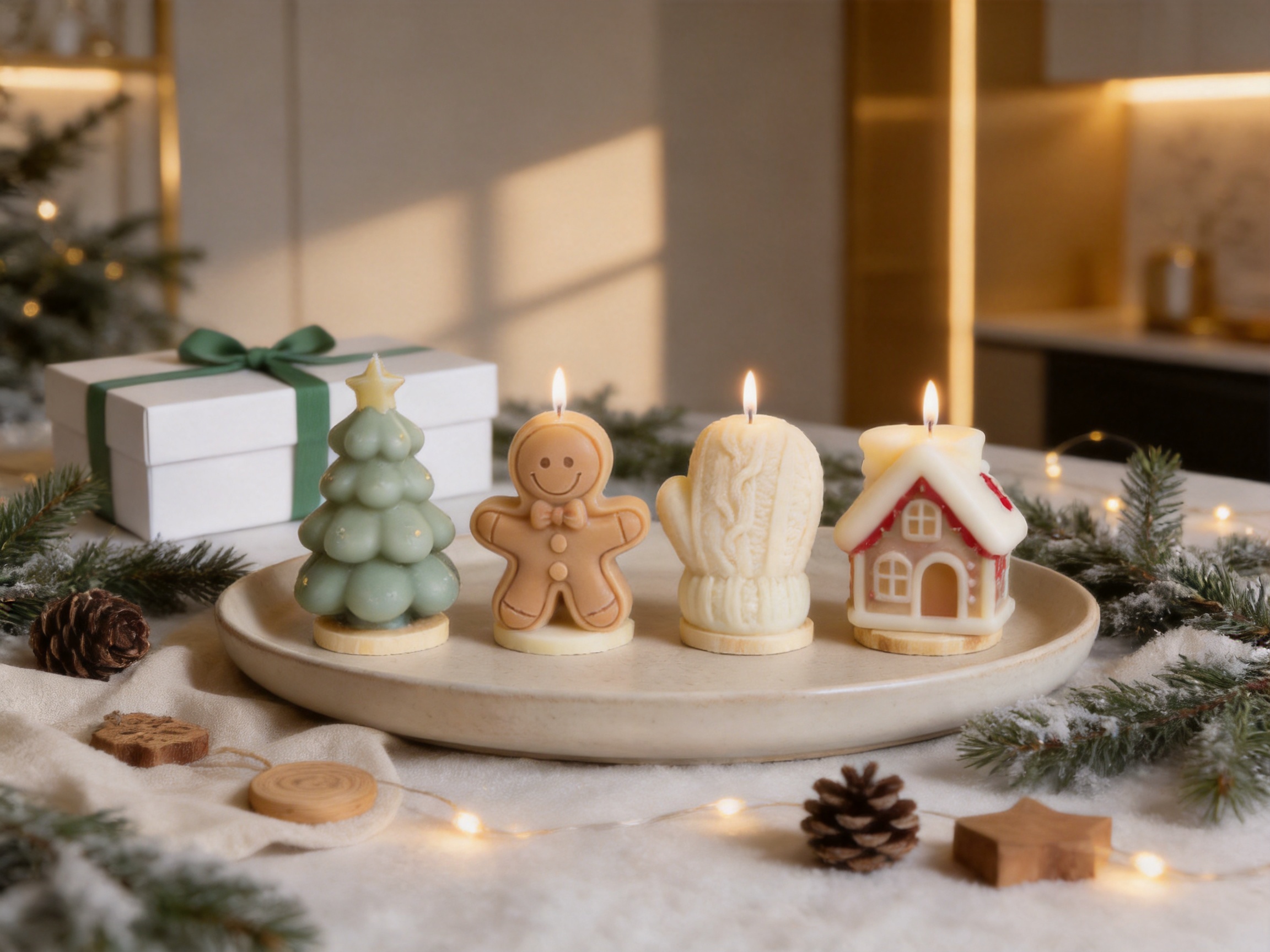
The Christmas Delight Festival Series Handmade Candle can be positioned against several types of competing products: ordinary jar candles, mass-market molded candles, decorative non-fragrance ornaments, and premium artisan candles. Its competitive strengths are not limited to one feature but arise from the combination of shape, handmade appearance, seasonal storytelling, customization, and supply chain support.
| Product characteristic | Christmas Delight series | Standard jar candle | Basic decorative candle |
|---|---|---|---|
| Visual identity | Recognizable Christmas forms with sculptural detail | Usually depends on vessel, label, and color | May have a simple shape with limited storytelling |
| Decorative use | Suitable for displays, centerpieces, mantels, and gifting | Often used primarily as a fragrance or lighting product | Usually decorative but may have fewer styling options |
| Handcrafted appeal | Natural artisanal finish and detailed form | Typically standardized vessel presentation | Varies according to production method |
| Seasonal recognition | Directly communicates holiday themes through shape | Usually requires seasonal labeling or fragrance names | May communicate a general theme rather than a complete story |
| Customization potential | Can support shape, color, fragrance, label, and packaging development | Often focuses on fragrance and vessel customization | May be limited by existing molds or designs |
| Retail flexibility | Suitable for home fragrance, décor, gifting, and seasonal collections | Primarily positioned within candle and fragrance categories | Usually positioned as décor or a low-cost seasonal item |
This comparison does not suggest that one format is suitable for every customer. Jar candles remain valuable for fragrance performance, longer burn formats, and everyday use. However, shaped seasonal candles can occupy a distinct position by delivering stronger decorative impact and more immediate emotional communication.
Compared with inexpensive decorative candles, the Christmas Delight series benefits from its coordinated collection concept and professional supply chain support. Compared with premium artisan products, it may offer greater scalability and customization potential for commercial buyers. The final competitive position will depend on materials, fragrance, packaging, order quantity, and market requirements, but the product concept provides a strong foundation.
Retailers can display the candles together with greenery, ribbons, ornaments, warm lighting, trays, and natural materials. The goal is to show customers how the product can be used in their own homes. A complete scene can increase perceived value and encourage multiple-item purchases.
A set containing a tree, gingerbread figure, mitten, and house can communicate variety and completeness. The mixed format is appropriate for family gifting, corporate gifts, and holiday entertaining. It also allows customers to share different designs with several recipients.
Product descriptions and packaging should explain the handcrafted character, detailed textures, and seasonal inspiration. Customers are more likely to appreciate artisanal qualities when they understand what makes the product different from a generic molded candle.
Because shaped candles may have irregular contours, retailers should provide appropriate burning instructions. The information should cover placement, supervision, wick trimming, heat-resistant surfaces, and keeping the candle away from flammable materials. Clear safety communication supports responsible use and strengthens customer trust.
Holiday retail planning often begins months before the selling season. Buyers should prepare photography, packaging approval, product descriptions, samples, and inventory schedules well in advance. Early planning also gives suppliers more time to develop customized forms or packaging.
Every candle should be used according to the instructions supplied with the final product. The candle should stand on a stable, heat-resistant, level surface. It should not be left unattended or placed near curtains, paper, decorations, children, pets, or other flammable materials.
Users should avoid moving a candle while it is lit or while wax remains hot. The wick should be maintained according to the supplier’s recommendations, and the candle should not be burned beyond the recommended time. If the candle produces excessive smoke, an unstable flame, or unexpected behavior, it should be extinguished and reviewed before further use.
For buyers, safety should be considered during product development rather than only after production. Product testing, packaging instructions, labeling, and market-specific compliance requirements should be reviewed before commercial launch. The exact requirements depend on the destination market and product specifications.
Responsible product development also includes appropriate packaging and transportation. Candles should be protected from excessive heat, impact, moisture, and pressure during storage and shipping. Seasonal inventory may be held for months, so warehouse conditions and carton design should be considered carefully.
Although the supplied information does not make specific environmental claims about the candle’s wax, packaging, or components, buyers can include sustainability questions in the development process. These may cover wax sourcing, fragrance ingredients, packaging materials, recyclable components, carton efficiency, and shipping volume.
The sculptural design can support long-term product value because it is not tied only to a printed seasonal label. A well-made decorative object may be displayed as part of a collection year after year. This can encourage customers to treat the product as a seasonal keepsake rather than a disposable purchase.
Packaging optimization can also reduce unnecessary material use while protecting the candle effectively. A supplier with access to multiple packaging partners can compare different box structures, inserts, and printing methods. Buyers may select the most appropriate balance between presentation, protection, cost, and material efficiency.
For businesses developing a broader home fragrance range, the Christmas Delight series can be included in a seasonal rotation alongside everyday candles, reed diffusers, LED candles, and other home fragrance products. This supports a product strategy that combines limited seasonal designs with core products sold throughout the year.
Before requesting samples, buyers should define the intended customer, sales channel, price range, market region, and expected order quantity. A product for a premium lifestyle boutique may require different packaging and finishing from a product for a large promotional campaign.
Buyers can choose existing Christmas motifs or develop a customized collection. They should decide whether to sell individual shapes, mixed sets, or both. The desired collection size will influence sampling, packaging, and production planning.
The wax, wick, color, fragrance, and any additional components should be reviewed with the supplier. Buyers should request samples and compare the visual result, scent quality, burning behavior, and overall product feel.
Packaging should be designed around the candle’s actual dimensions and fragility. The buyer should approve artwork, language, barcodes, care instructions, warning information, and carton specifications before mass production.
A physical pre-production sample provides an important reference for shape, color, surface finish, fragrance, wick position, and packaging. Any required changes should be recorded clearly and approved by all relevant parties.
Acceptance criteria should define acceptable variations and unacceptable defects. These criteria may cover appearance, dimensions, scent, packaging, labeling, and functional performance. Clear standards reduce confusion during inspection.
Seasonal orders should be scheduled early enough to allow for sampling, production, inspection, packing, and transportation. The company’s factory and packaging network can help coordinate these stages, but buyers should still confirm timelines and responsibilities in writing.
For wholesalers, the collection provides multiple designs that can be distributed across different retail accounts. For e-commerce sellers, the unusual shapes offer strong visual content for product pages and social media campaigns. For gift companies, the candles can become part of holiday boxes and corporate programs. For hotels and restaurants, they can support seasonal atmosphere and guest gifting.
Interior retailers may value the candles as small decorative accents that complement larger home collections. Event planners can use them in winter weddings, corporate functions, and holiday gatherings. Specialty boutiques can emphasize the handcrafted character and limited seasonal availability.
The product is also suitable for businesses testing a new home fragrance category. The company supports smaller volumes and trial runs, allowing customers to assess demand before committing to larger production. This can be useful for emerging brands and retailers that want to reduce initial inventory risk.
At the same time, reported daily capacity of up to 50,000 units provides a path toward larger orders when a product performs well. This combination of trial flexibility and scalable sourcing is one of the practical strengths of the supply chain model.
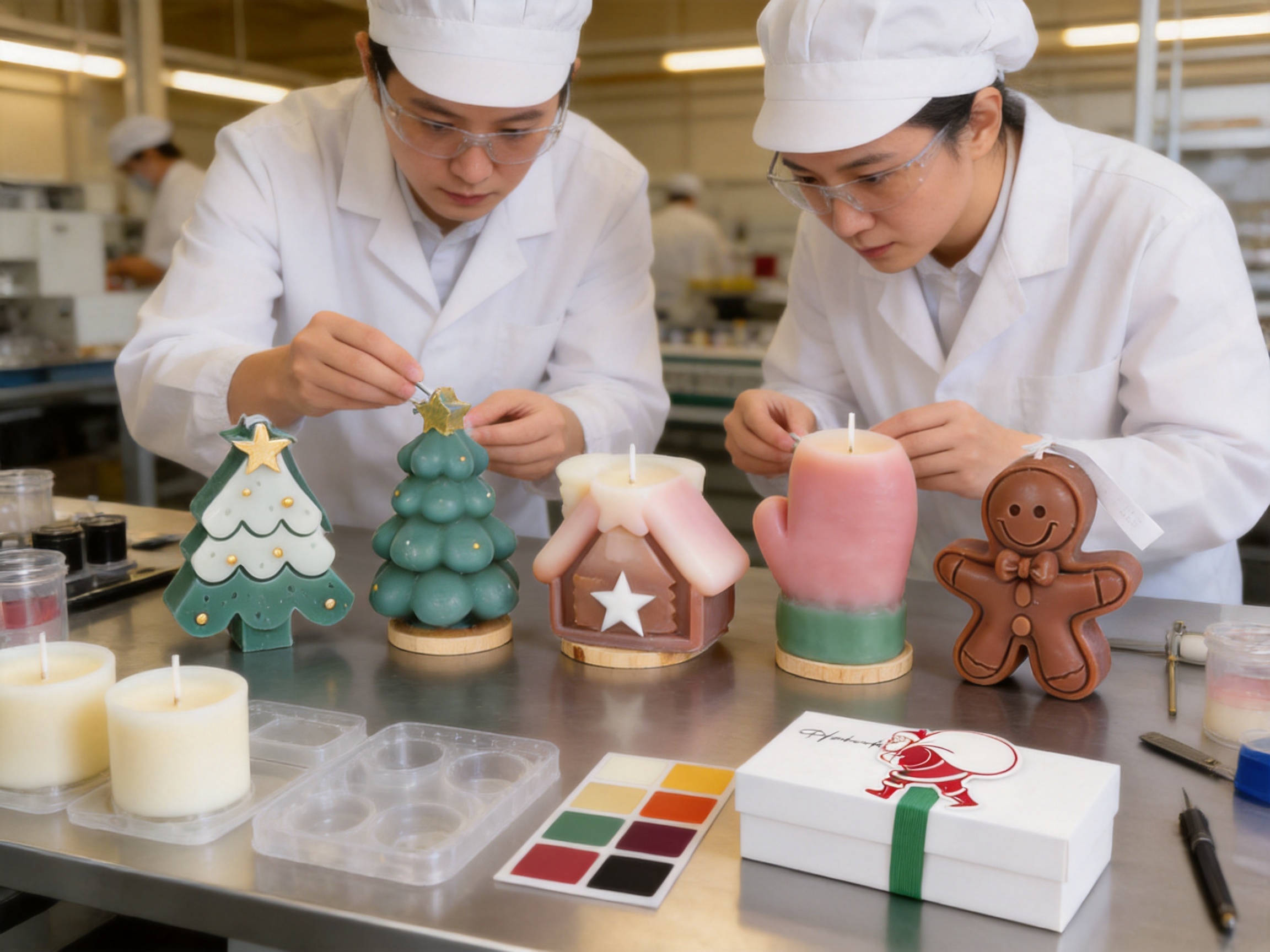
It is a seasonal decorative candle collection inspired by classic Christmas and winter motifs. The designs include Christmas trees, gingerbread figures, mittens, and festive houses. Each candle combines sculptural decoration with the functional qualities of a candle.
The main difference is the shaped design. Instead of relying primarily on a jar, label, or fragrance name to communicate a theme, the candle itself forms a recognizable holiday object. This gives it stronger decorative and gifting value.
The collection is carefully produced for commercial consistency, but its handcrafted character may allow subtle differences in texture or surface appearance. Buyers should confirm specific tolerances and quality standards during product development.
Customization support is available through OEM/ODM services. Depending on the project, buyers may discuss shapes, colors, fragrances, labels, packaging, specifications, and gift-set formats.
Yes. The company supports customized labels and packaging, including color boxes and other presentation formats. Artwork, language, labeling details, and packaging structure should be confirmed before production.
The supplied product description emphasizes the decorative design and does not specify one fragrance profile. Buyers interested in scented versions should discuss fragrance options, formulation, scent strength, testing, and market requirements with the supplier.
They can be used on dining tables, fireplace mantels, sideboards, shelves, gift tables, retail displays, and festive centerpieces. They should always be positioned on stable, heat-resistant surfaces and kept away from flammable materials.
Yes. Their recognizable Christmas forms and handcrafted appearance make them suitable for individual gifts, mixed sets, host gifts, corporate programs, family celebrations, and seasonal gift baskets.
Support includes international sourcing, product development, customization coordination, factory matching, packaging development, quality control, and delivery support. The company works with candle, jar, and color-box production partners.
The company states that it supports smaller volumes and trial runs as well as larger orders. Minimum quantities, sampling fees, lead times, and production conditions should be confirmed for each project.
The company reports supplying more than 10 countries and regions across North America, Europe, and the Middle East. Specific market compliance, labeling, and documentation requirements should be reviewed for each destination.
Buyers should begin as early as possible because customized shapes, fragrances, packaging, sampling, inspection, and international delivery all require time. The ideal schedule depends on order volume, customization level, destination, and selling season.
Yes. The candles can be merchandised with scented candles in other formats, reed diffusers, LED candles, fragrance accessories, gift boxes, and seasonal home décor. This can help retailers develop a broader holiday collection.
They should inspect the shape, texture, color, size, wick placement, fragrance if applicable, packaging fit, label information, carton protection, and any agreed functional or safety requirements. A signed production sample is recommended as a reference.
The Christmas Delight Festival Series Handmade Candle offers a compelling combination of decorative charm, seasonal recognition, handcrafted appearance, and commercial flexibility. Its Christmas tree, gingerbread, mitten, and festive house designs create a visual story that ordinary candles may not provide. The product can function as a candle, a decorative accent, a gift item, and a component of a broader holiday collection.
Its advantages are strengthened by the capabilities of Hangzhou Leo Home Trading Co., Ltd. The company provides access to a coordinated network of candle factories, jar customization partners, and color box factories. It supports raw material control, product development, quality inspection, OEM/ODM customization, flexible ordering, and international delivery coordination.
For buyers, the most valuable feature may be the balance between artistic presentation and scalable supply. The collection has the visual appeal needed for seasonal retail, while the supply chain structure supports customization and commercial implementation. Buyers can develop new shapes, color directions, fragrance profiles, labels, and gift formats to suit different markets.
As consumers continue to seek products that make the home feel warm, personal, and celebratory, sculptural seasonal candles have an important role to play. The Christmas Delight series is well positioned for retailers, wholesalers, gift companies, hospitality businesses, and private-label brands looking for a distinctive addition to their winter product lines.
1. Product information supplied for the Christmas Delight Festival Series Handmade Candle, including product concept, holiday motifs, handcrafted appearance, decorative applications, images, and category classification.
2. Company profile information supplied for Hangzhou Leo Home Trading Co., Ltd., including sourcing capabilities, OEM/ODM services, product scope, quality control, factory network, export markets, and logistics support.
3. General candle product development and retail merchandising principles concerning decorative design, packaging protection, seasonal planning, quality inspection, and responsible candle use.
4. General home fragrance industry practices relating to private-label development, fragrance selection, packaging customization, supply chain coordination, and seasonal product launches.

Room 1701, Building C1, Wangjing, Xiaoshan District, Hangzhou City, Zhejiang Province, China.

+86-15937257616

Copyright© 2026 Hangzhou Leo Home Trading Co., Ltd. All Rights Reserved.

Luxury Candles Home Fragrance Manufacturers Modern Candles Factory