 English
 Français
News
Home / Author / Sophia Lin — Product Sales Executive / Heart-Shaped Peony Bloom Candle: A Sculptural Floral Gift for Modern Home Fragrance Collections
Content

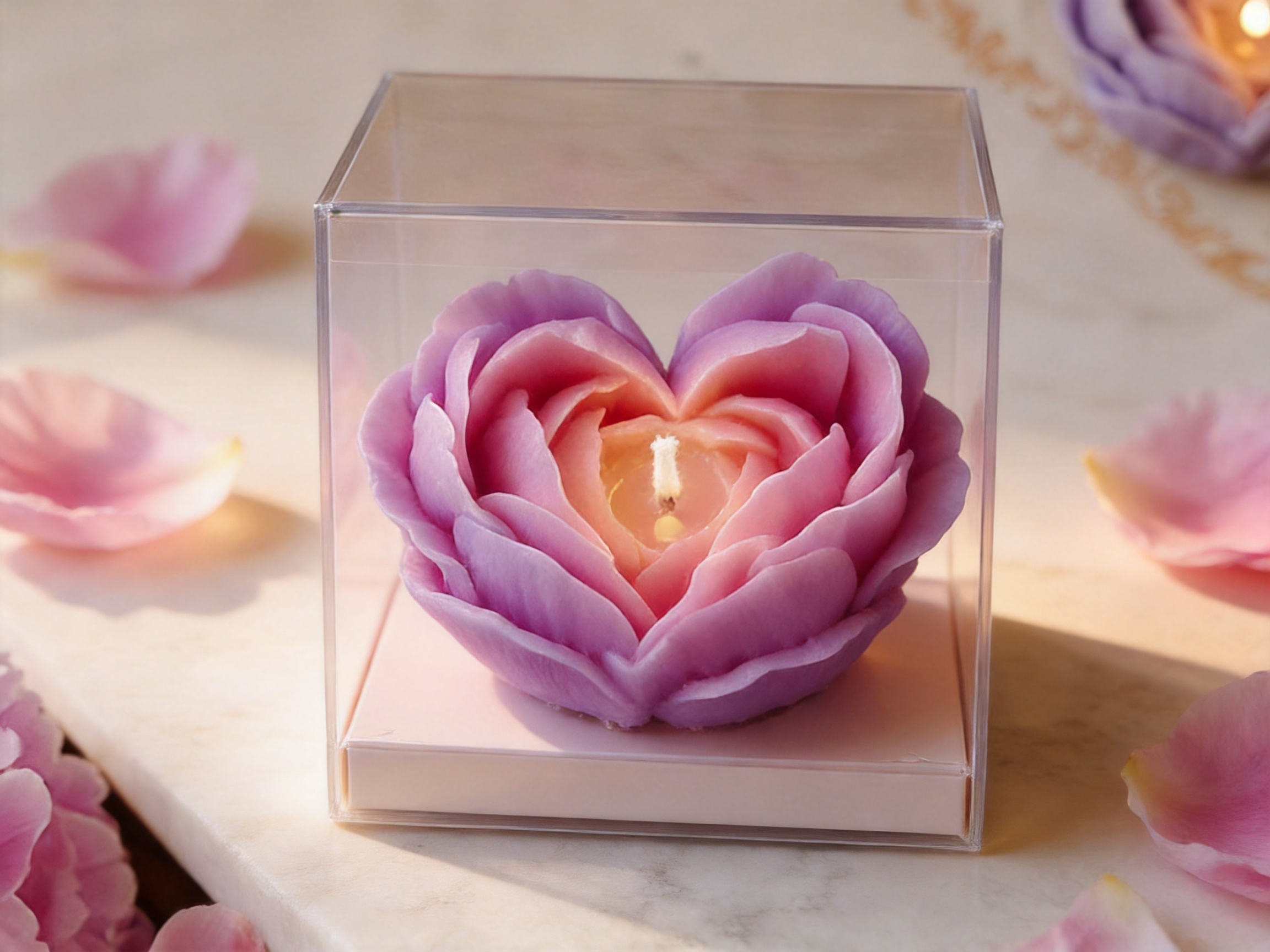
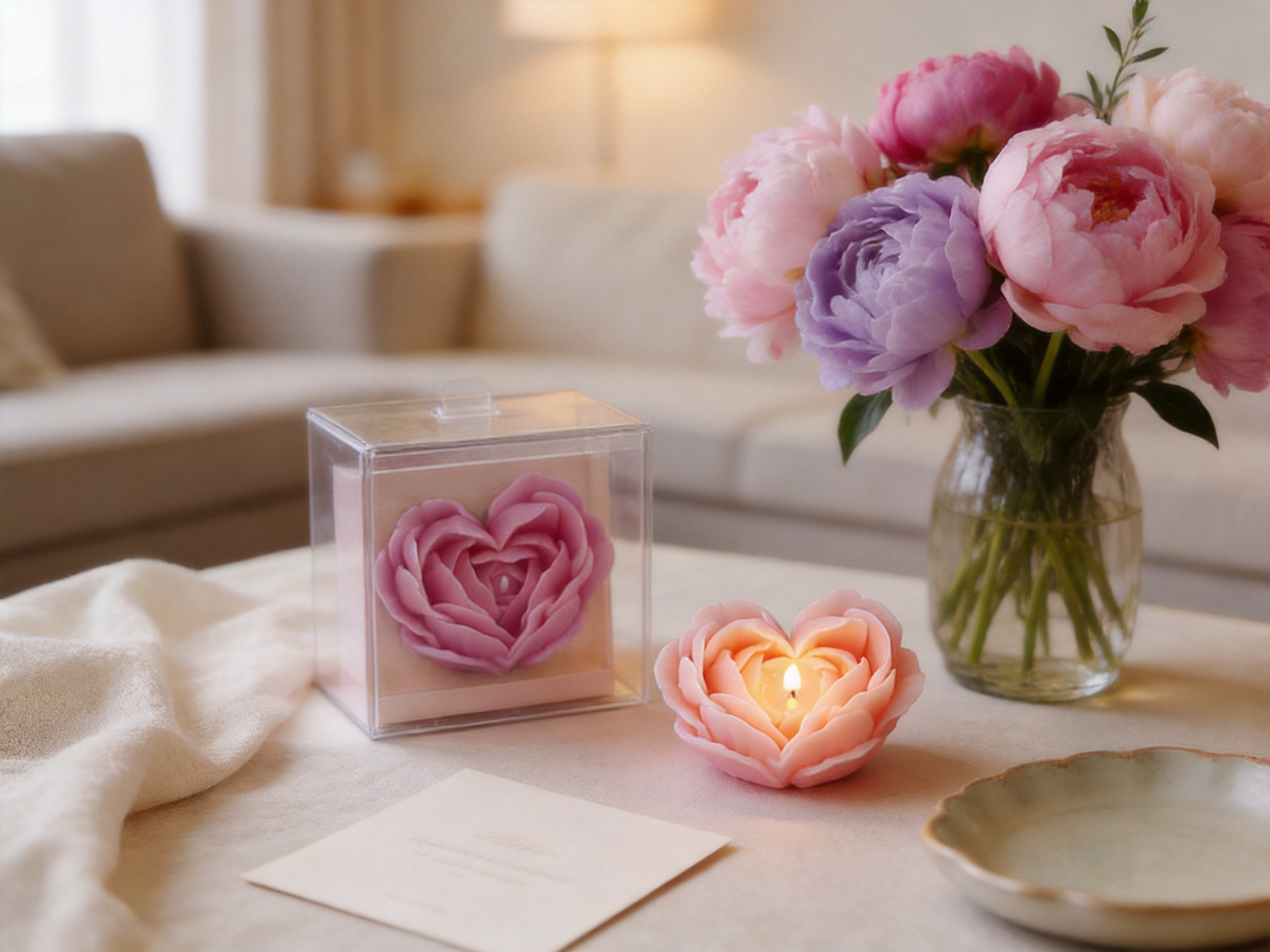
The Heart-Rose Peony Bloom Flower Series Handmade Candle brings together floral artistry, romantic symbolism, and practical gift appeal in one distinctive wax design. Formed as a blooming peony with a heart-shaped hollow at its center, the candle is designed to communicate emotion immediately while also functioning as a decorative object for home fragrance, floral lifestyle, and seasonal gift collections.
Unlike conventional cylindrical candles, this product uses the entire candle body as a sculptural surface. Concentric layers of petals extend outward from the central heart cavity, creating the impression of a flower in full bloom. The result is a product with strong shelf presence, clear visual storytelling, and broad suitability for occasions such as Valentine's Day, Mother's Day, birthdays, anniversaries, weddings, and everyday expressions of affection.
For importers, retailers, gift companies, and private-label brands, the candle offers more than an attractive appearance. It combines a recognizable symbolic shape, customizable fragrance and color options, transparent gift-ready packaging, and access to an organized supply chain capable of supporting product development, quality control, and international delivery.
The product’s central concept is easy to understand: a flower in bloom surrounding a heart. This direct visual language gives the candle an emotional advantage in retail environments where shoppers often make quick decisions based on appearance, symbolism, and gifting relevance.
The blooming peony shape communicates softness, affection, beauty, and celebration. The heart-shaped hollow reinforces those associations without requiring extensive packaging copy or complicated product education. A customer can identify the intended mood from a short distance, making the candle suitable for display tables, seasonal endcaps, flower shops, gift boutiques, lifestyle stores, and online product pages.
Many decorative candles rely on abstract forms, geometric silhouettes, or simple molded patterns. Those products can be attractive, but their meaning may be less immediate. The Heart-Rose Peony Bloom candle is different because its form connects three familiar ideas: flowers, hearts, and warm light. This combination helps the product occupy both the home décor category and the sentimental gifting category.
The candle is also designed to work before it is lit. Its layered petals and color transitions create an ornamental appearance suitable for shelves, bedside tables, dining areas, dressing tables, and gift displays. This dual role is important for modern consumers, who increasingly purchase candles as decorative objects as well as fragrance products.
When lit according to appropriate candle-use instructions, the wick positioned within the heart cavity allows the flame to appear from the center of the bloom. This creates a more intimate visual effect than a wick placed on a flat top surface. The light is visually connected to the heart-shaped center, reinforcing the product’s romantic identity.
The candle is formed as a peony rather than as a flat flower motif applied to a basic candle body. Its petals are modeled in layered, concentric rings that extend from the center toward the outside. This construction gives the product dimensionality from multiple viewing angles and makes it look more like a small floral sculpture than a standard wax candle.
The heart cavity is an important part of the design. It provides a recognizable focal point and gives the central area a sense of depth. Instead of presenting a conventional flat upper surface, the product creates an interior space where the wick is positioned. This helps establish a visual relationship between the flame, the heart, and the surrounding petals.
The layered petal structure also gives the candle a more naturalistic appearance. Individual petal forms can catch highlights and shadows differently as the product is moved or illuminated. Under retail lighting, the raised details create visual variation across the surface. In home settings, the same details can make the candle appear refined even when it is not burning.
From a product-development perspective, sculptural construction creates opportunities for a broader collection. The same design language can be adapted to different colorways, fragrance profiles, sizes, packaging formats, and seasonal editions. Retailers can therefore use the peony candle as a hero item or as part of a coordinated flower-themed series.

Heart-Rose Peony Bloom Flower Series Handmade Candle
The standard color options include deep pink and soft lavender. These colors support the product’s emotional and floral positioning while allowing retailers to target different customer preferences.
Deep pink creates a more expressive and romantic appearance. It is particularly suitable for Valentine's Day displays, anniversary gifts, romantic celebrations, and collections built around roses, peonies, or passionate floral themes. Its stronger color presence can also help the product stand out in gift-store merchandising.
Soft lavender offers a calmer and more elegant alternative. It can appeal to customers who prefer subdued home décor, gentle color palettes, spa-inspired interiors, and contemporary lifestyle products. Lavender can also support gifting occasions that are less explicitly romantic, including birthdays, housewarming events, self-care collections, and Mother's Day assortments.
The color treatment is not limited to a single flat tone. The transition between lighter inner petals and deeper outer petals creates a sense of botanical depth. This tonal progression helps the flower appear more dimensional and visually refined. Instead of looking like a uniformly colored molded object, the candle presents a graduated effect that resembles the natural variation found in flower petals.
For private-label and OEM/ODM programs, the colorway may be adapted to suit a retailer’s brand identity or a specific seasonal palette. Buyers may request colors that coordinate with packaging, store interiors, holiday campaigns, wedding themes, or regional preferences. The ability to adjust color expands the product’s commercial usefulness without requiring a completely new design concept.
The candle is typically associated with rose or peony fragrance profiles, which match the visual design and reinforce its botanical character. Floral fragrances can help create a coherent sensory experience: the customer sees a flower, recognizes the floral theme, and experiences a corresponding scent.
Rose fragrance is a familiar option with broad consumer recognition. It can support classic romantic collections and traditional floral gift lines. Peony fragrance provides a softer and more contemporary interpretation, helping the candle appeal to customers who enjoy modern floral products with a delicate, elegant character.
Fragrance customization gives buyers the opportunity to position the same sculptural product in different ways. A retailer might choose a classic rose scent for a Valentine's range, a light peony profile for a spring collection, or another compatible fragrance for a general home-fragrance assortment. This flexibility allows the product to be adapted to commercial strategy rather than being limited to one fixed market narrative.
Fragrance selection should be evaluated together with wax formulation, wick performance, packaging requirements, and target-market regulations. During product development, buyers can discuss the desired scent direction, intensity, packaging communication, and testing expectations with the supplier. This helps ensure that the final item is developed as a complete product rather than as a shape with fragrance added at the end.
For brands developing a broader collection, fragrance customization can help create a recognizable product family. A deep pink peony candle with rose fragrance may serve as a romantic hero product, while a soft lavender version with a gentle peony profile can form part of a relaxing home or self-care range.
The candle is presented in a clear-lid gift box. This packaging format allows the sculptural form to remain visible while providing a finished presentation suitable for direct gifting.
Visibility is especially important for a product whose main advantage is its three-dimensional appearance. Opaque packaging would hide the layered petals and central heart cavity. A clear lid allows consumers to inspect the color, shape, petal construction, and overall finish before purchase. It also helps retailers display the candle without opening individual packages.
The gift box supports several retail advantages. First, it reduces the need for additional wrapping for many purchase occasions. Second, it helps protect the candle during handling and transportation. Third, it creates a more polished presentation for online photography, retail shelving, and seasonal display tables.
Packaging can also be customized for private-label programs. Buyers may discuss printed labels, inserts, color boxes, logo placement, fragrance information, product instructions, and gift messaging. These options allow the candle to be aligned with a retailer’s visual identity while retaining the distinctive peony-heart design.
For online retail, the transparent presentation can be supported by product photography that shows the candle from multiple angles. The product’s shape is highly visual, so images should communicate the depth of the petals, the central hollow, the color transition, and the scale of the gift box. A well-presented listing can help customers understand why the candle is different from a standard floral-scented candle.
The competitive value of the Heart-Rose Peony Bloom candle comes from the combination of shape, symbolism, customization, and presentation rather than from one isolated feature.
Conventional jar candles often depend on fragrance, label design, and vessel appearance to communicate their value. They are practical and familiar, but their form may not be strongly associated with a particular occasion. The peony-heart candle communicates its decorative and emotional purpose through its physical silhouette before the customer reads the label.
Basic pillar candles can offer strong burning performance and simple styling, but they may have less visual differentiation on a crowded retail shelf. The layered flower construction provides a stronger point of recognition and can help a retailer build a more distinctive assortment.
Flat flower-shaped candles may provide a floral outline, but the layered petal structure and heart cavity create greater depth and a more sculptural effect. The product looks intentionally crafted rather than merely stamped with a decorative motif.
Low-cost novelty candles may attract attention through unusual shapes, but they do not always provide a clear gifting narrative or coordinated packaging. This product combines novelty with an established emotional theme, making it easier to merchandise around recognizable occasions.
Another advantage is the balance between visual impact and customization. A brand does not need to create a completely new mold for every campaign. The same core form can be adapted through color, fragrance, label design, packaging, and seasonal presentation. This can reduce the complexity of building multiple product lines while still creating meaningful assortment variation.
| Product Attribute | Heart-Rose Peony Bloom Candle | Conventional Jar Candle | Basic Pillar Candle |
|---|---|---|---|
| Primary visual identity | Layered peony with heart-shaped center | Container, label, and wax surface | Simple cylindrical or geometric form |
| Emotional communication | Immediate association with love, flowers, and gifting | Usually communicated through label and fragrance | Generally neutral unless supported by packaging |
| Decorative use before burning | Strong sculptural and floral display value | Dependent on vessel and label design | Usually dependent on color and surface finish |
| Customization potential | Color, fragrance, packaging, labels, and specifications | Fragrance, vessel, label, and packaging | Color, fragrance, size, and packaging |
| Gift positioning | Strong suitability for romantic and floral occasions | Suitable for general gifting and home fragrance | Suitable for décor and general candle collections |
| Shelf differentiation | High because of the flower-and-heart silhouette | Moderate and often dependent on branding | Variable depending on shape and finish |
The product is positioned as a handmade candle, and its appeal is closely connected to the visible character of its sculptural form. A handmade or hand-finished appearance can help communicate care, craft, and individuality, qualities that are increasingly valuable in gift and lifestyle retail.
Consumers often respond positively to products that appear considered rather than mass-generic. The layered petals, central heart, tonal color progression, and floral silhouette contribute to this perception. Even when produced through organized manufacturing systems, the item can retain a crafted visual identity.
For retailers, handmade positioning can support higher perceived value when it is paired with appropriate packaging and clear product communication. The product should be described accurately, with attention to its sculptural construction, floral inspiration, fragrance, color, and intended use. This creates a complete value story rather than relying only on the word “handmade.”
Handmade appearance can also support boutique retail channels. Flower shops, wedding suppliers, independent gift stores, home décor boutiques, and curated online shops may prefer products that have a more personal and decorative character than standard commodity candles.
At the same time, the product benefits from the supplier’s organized quality-control and supply-chain capabilities. This combination is commercially useful: the candle can present a crafted appearance while being supported by repeatable production, inspection, customization management, and international logistics.
Hangzhou Leo Home Trading Co., Ltd. operates as an international trading and supply-chain partner based in Hangzhou, China. Founded in January 2025, the company focuses on sourcing, product development, customization, and delivery support for overseas clients.
Its business model connects product development with a network of manufacturing and packaging resources. The company integrates 10 candle factories, 8 jar customization partners, and 8 color box factories. This structure gives buyers access to broader production resources than a single-product workshop may provide.
For the Heart-Rose Peony Bloom candle, this network is important because a successful finished product requires more than wax forming. It involves mold or shape development, wax and fragrance coordination, color control, wick placement, surface inspection, packaging production, labeling, assembly, and shipment preparation.
A coordinated supply chain can help reduce communication gaps between these stages. Instead of treating the candle and packaging as unrelated purchases, the supplier can help manage the relationship between product dimensions, gift-box construction, display visibility, labeling, and shipping requirements.
The company also supports product development based on drawings or samples. This is valuable for buyers who have a specific reference product, target size, color standard, fragrance direction, or packaging concept. Professional development support can help transform an initial idea into a specification that is suitable for production.
Where appropriate, the company can assist with modifications to shape, scent, labeling, and packaging. The exact development process depends on the project, but the underlying capability allows brands to create a more tailored product instead of selecting only from fixed stock designs.
Quality consistency is particularly important for sculptural candles. A product with layered petals and a heart cavity requires attention to shape definition, surface condition, color consistency, wick positioning, packaging fit, and overall presentation.
Leo Home describes a quality-control process that covers raw-material selection through finished-goods inspection. The company also maintains an in-house laboratory for relevant quality work. This indicates a structured approach to product control rather than relying only on visual inspection at the final stage.
Raw-material control is the foundation of finished-product consistency. Wax, fragrance materials, colorants, wick components, and packaging materials should be evaluated according to the requirements of the target product and market. Consistent inputs can help reduce differences between production batches.
During production, attention should be given to the clarity of the petal structure and the definition of the heart cavity. The product’s commercial value depends heavily on the sculptural details remaining recognizable. Any deformation, incomplete forming, uneven surface, or inconsistent color transition can affect the perceived quality of the candle.
Wick placement is another key consideration. Because the wick is positioned within the central heart cavity, it must be integrated into the design in a way that supports the intended visual effect and appropriate candle performance. Development and testing should consider the relationship between wick, wax body, fragrance, color, and the shape of the burning area.
Finished-goods inspection can include appearance, dimensions, color, fragrance, packaging condition, labeling, and quantity verification. The exact inspection plan may be adjusted according to the buyer’s specifications and destination-market requirements.
For international buyers, a structured quality-control process can reduce the risk associated with importing decorative products. It also provides a basis for discussing acceptance standards before production begins. Clear specifications help both the buyer and supplier understand what constitutes an acceptable finished item.
The company reports a daily capacity of up to 50,000 units across its supply capabilities. This scale can support larger seasonal programs, replenishment orders, and multi-product home-fragrance collections.
Capacity is especially important for gift occasions with concentrated demand. Valentine's Day, Mother's Day, Christmas, and spring floral campaigns can create narrow selling windows. Buyers need confidence that products can be produced, packed, and shipped according to a planned schedule.
At the same time, the company supports smaller volumes and trial runs. This is useful for brands that want to test customer response before committing to a large order. A retailer may begin with one color and fragrance, compare sales performance, and then expand into additional combinations if the product performs well.
Flexible order support also benefits online sellers and boutique retailers. These businesses may require limited initial quantities, custom packaging, or a focused seasonal launch rather than a large standardized program. Trial production can help reduce the risk of introducing an unfamiliar sculptural candle to the market.
For larger buyers, the same product can be scaled into a broader program with multiple colorways, fragrances, label designs, and packaging versions. The supply-chain network provides a foundation for coordinating these variations while maintaining a consistent product concept.
The Heart-Rose Peony Bloom candle is suitable for both OEM and ODM collaboration.
OEM projects can focus on producing the candle according to a buyer’s specifications. These may include product dimensions, fragrance choice, color references, packaging artwork, labeling, carton requirements, and inspection standards.
ODM projects can involve more active product development support. A buyer may bring a general concept such as a romantic flower candle, a wedding favor, a Mother's Day gift, or a floral self-care product. The supplier can then help refine the shape, fragrance direction, color palette, packaging structure, and commercial presentation.
Customization based on drawings or samples can be helpful when a brand has an established design language. It may also support product differentiation for retailers that do not want to compete with identical stock items found across multiple marketplaces.
Customization should be managed through clear development stages. These may include confirming the product brief, selecting materials, reviewing color and fragrance options, evaluating a sample, confirming packaging, establishing quality standards, and approving the production version. Written confirmation of key details is important for reducing misunderstandings during bulk manufacturing.
For brands building a collection, customization can extend beyond the individual candle. Coordinated gift boxes, hangtags, inserts, outer cartons, and display materials can help create a unified retail identity. The same flower-inspired theme can also be developed across different candle forms, gift sets, reed diffusers, and related home-fragrance products.
The product is suitable for several sales channels because it combines decorative appeal with clear gifting relevance.
Flower shops can use the candle as a long-lasting alternative or complement to fresh flowers. It can be offered as an add-on gift with bouquets, floral arrangements, or event orders. The peony shape naturally supports the language of flowers while avoiding the short lifespan of fresh arrangements.
Gift boutiques can place the candle in romantic, seasonal, birthday, and self-care sections. Its transparent box allows it to function as a ready-to-display gift product without extensive repacking.
Home décor stores can position the candle as a sculptural accent. In this setting, the product’s value is not limited to its fragrance. Its color, floral shape, and heart center make it suitable for decorative styling in bedrooms, living rooms, dressing areas, and hospitality environments.
Online retailers can use the product in curated collections built around occasions, colors, or scents. Possible collection themes include romantic gifts, spring florals, pastel home décor, Mother's Day selections, wedding gifts, and small luxury home accessories.
Wedding and event suppliers may also consider the candle for table settings, guest favors, bridal-party gifts, or proposal-related packages. Custom packaging and color matching can help the product coordinate with a particular event palette.
Corporate and hospitality buyers may use the candle for client gifts, hotel welcome amenities, seasonal room packages, or promotional gift boxes. In these applications, packaging customization and logo presentation may be especially important.
The candle has strong seasonal potential because the flower-and-heart design can be communicated through several annual occasions.
For Valentine's Day, deep pink and rose fragrance create an immediately recognizable romantic combination. Merchandising can emphasize affection, celebration, couples, and thoughtful personal gifts.
For Mother's Day, soft lavender and peony fragrance can support a gentler floral presentation. The product can be paired with bath items, hand creams, diffusers, greeting cards, or other home-fragrance goods.
For birthdays, the candle can be positioned as a decorative personal gift. Color variation allows the retailer to provide alternatives for different ages and preferences.
For weddings and anniversaries, the heart cavity and flower form communicate love and partnership without requiring an overtly seasonal package. Neutral or customized colors can make the candle appropriate for coordinated event themes.
For spring and summer collections, the peony design supports botanical and garden-inspired merchandising. It can be displayed with floral textiles, vases, decorative trays, and light-colored home accessories.
For year-round sales, the product can be described as a small sculptural home-fragrance gift. This positioning helps reduce dependence on a single holiday and allows retailers to maintain sales beyond peak seasonal periods.
Decorative candles require careful packaging because their value depends on both appearance and physical condition. The clear-lid gift box provides an initial layer of protection while keeping the product visible.
For export programs, packaging should be evaluated for internal fit, movement control, moisture considerations, carton strength, labeling, and outer-case handling. The product and box dimensions should be coordinated to reduce unnecessary space while helping protect the petal structure during transportation.
Leo Home’s location in Hangzhou and its logistics access near Ningbo Port support international shipping coordination. The company reports experience serving customers in more than 10 countries and regions across North America, Europe, and the Middle East.
Export preparation may include commercial documentation, carton information, product specifications, packaging requirements, and coordination with the buyer’s appointed logistics provider. International clients should confirm destination-market requirements in advance, especially for fragrance products and candles that may be subject to labeling, safety, or transport rules.
The company’s cross-border trading focus is relevant to buyers that need more than a factory contact. A trading and supply-chain partner can help coordinate multiple production resources, communicate with overseas customers, and support delivery planning across different product categories.
A clear product brief helps the buyer and supplier move efficiently from concept to production. For the Heart-Rose Peony Bloom candle, the brief should begin with the intended market and sales occasion.
Important questions include whether the product is intended for Valentine's Day, Mother's Day, general home décor, wedding gifting, or a multi-season collection. The answer will influence color, fragrance, packaging language, quantity, and delivery timing.
The brief should also specify the preferred color direction. Buyers may select deep pink, soft lavender, or a customized palette. If exact brand colors are required, physical color references or approved standards should be discussed during development.
Fragrance direction should be described clearly. A buyer may request rose, peony, a lighter floral profile, or another compatible scent. It is useful to define the desired character, such as fresh, soft, powdery, elegant, or strongly floral, while recognizing that final fragrance selection should be evaluated through samples.
Packaging requirements should include the clear-lid gift box, label design, insert information, barcode needs, master-carton specifications, and any private-label details. If the product will be sold online, the packaging should also be considered from a photography and unboxing perspective.
Quality expectations should be written in measurable or reviewable terms wherever possible. These may cover color consistency, petal definition, acceptable surface variation, fragrance presentation, wick position, box condition, and carton packing.
Finally, the buyer should establish target quantities, trial-order expectations, delivery dates, shipping terms, and inspection arrangements. Early clarification of these details can help prevent delays later in the project.
As with all candles, the Heart-Rose Peony Bloom candle should be used responsibly and according to the final product instructions. It should be placed on a stable, heat-resistant surface away from flammable materials, drafts, children, and pets.
Because the product has a sculptural petal design and a central cavity, buyers should ensure that the final packaging includes suitable usage guidance. Instructions may cover wick trimming, burn-time limits, placement, supervision, and safe extinguishing.
Product testing should be considered during development, particularly when fragrance, color, wax composition, wick type, and dimensions are customized. Changes to any of these elements may influence how the candle burns. Testing should therefore be conducted on the approved production version rather than relying only on results from a visually similar item.
Importers and retailers are responsible for confirming the requirements applicable to their destination markets. These requirements may concern candle labeling, fragrance materials, packaging, consumer warnings, documentation, and transportation. Working with the supplier early can help identify the information needed for a compliant launch.
A successful home-fragrance collection usually benefits from a mix of familiar products and distinctive hero items. The Heart-Rose Peony Bloom candle can serve as the visual centerpiece of such a collection.
Its shape provides immediate differentiation, while its fragrance and color options allow it to connect with more conventional products such as jar candles, reed diffusers, wax melts, gift sets, and room accessories.
A retailer could build a coordinated romantic collection around rose fragrance and deep pink packaging. Another retailer could create a soft botanical range using lavender, peony fragrance, pastel boxes, and complementary diffuser products. The candle remains recognizable while adapting to the collection’s overall identity.
The product can also create opportunities for tiered pricing. A single candle may serve as an accessible gift, while a larger package or coordinated set can provide a higher-value option. This allows retailers to address different budgets without changing the central design concept.
Its gift-ready box helps simplify merchandising, while its decorative form supports impulse purchases. Consumers may enter a store looking for a small gift and choose the candle because the visual message is immediately clear. Online, the same effect can be created through strong product images and occasion-based product titles.
Long-term product development requires more than one successful shipment. Buyers need a partner able to support repeat orders, new variations, quality continuity, packaging updates, and changing market requirements.
Leo Home’s stated strengths include customization support, supply-chain integration, an in-house laboratory, quality control, flexible delivery, and access to multiple product styles. These capabilities can support clients that are developing a broader home and lifestyle assortment rather than purchasing one isolated item.
The company’s product scope includes home fragrance, scented candles, LED candles, gift sets, and related household products. This wider range may make it possible for a buyer to develop complementary categories through one supply-chain relationship.
The company also emphasizes execution, warmth, and refinement as core values. In practical terms, these values can be reflected in responsive communication, attention to specifications, careful handling of details, and a service approach designed for overseas customers.
For the Heart-Rose Peony Bloom candle, refinement matters at every stage. It can be seen in the petal structure, central heart cavity, tonal color transition, fragrance coordination, clear-lid box, and final inspection. These details collectively determine whether the product feels like a premium gift item or an ordinary novelty candle.
The candle is shaped as a blooming peony with a heart-shaped hollow at the center. Layered petals extend outward in concentric rings, creating a three-dimensional floral appearance.
The standard color options are deep pink and soft lavender. Custom colors may also be discussed for private-label, seasonal, wedding, or brand-specific programs.
Rose and peony are typical fragrance directions because they match the floral appearance. Fragrance customization is available for buyers seeking a different scent profile or a collection-specific fragrance strategy.
Yes. The product is supplied in a clear-lid gift box that displays the sculptural flower while providing a finished presentation. It is suitable for Valentine's Day, Mother's Day, birthdays, anniversaries, weddings, and general floral gifting.
Yes. OEM and ODM support can include specifications, fragrance selection, color, labels, packaging, and other product-development requirements.
Its primary differentiation comes from the sculptural peony form, the heart-shaped center, the layered petals, and the direct emotional message. It functions as a decorative floral object even before it is lit.
The cotton wick is positioned within the heart cavity. This allows the flame to appear from the center of the flower when the candle is burning, subject to proper use and the performance of the approved production specification.
Sample development or trial production can be discussed according to the project. Samples are useful for reviewing color, fragrance, shape, packaging, and overall product presentation before bulk production.
The supplier describes quality control from raw-material selection through finished-goods inspection and operates an in-house laboratory. Buyers can also establish project-specific inspection standards for appearance, fragrance, dimensions, wick position, packaging, and shipment condition.
The company supports smaller volumes and trial runs in addition to larger production programs. Exact order quantities and conditions should be confirmed for each project.
The company reports daily capacity of up to 50,000 units across its supply capabilities. Actual capacity for a particular design depends on specifications, customization, packaging, order quantity, and production scheduling.
The candle can serve gift shops, flower shops, home décor retailers, online stores, wedding suppliers, lifestyle boutiques, hospitality businesses, and seasonal promotional programs. The company reports export experience in North America, Europe, the Middle East, and other regions.
Buyers should confirm the final shape, size, wax and wick specifications, color, fragrance, packaging, labeling, quality standards, quantity, lead time, shipping terms, and destination-market requirements.
The Heart-Rose Peony Bloom Flower Series Handmade Candle is a strong example of how a home-fragrance product can combine visual design, emotional symbolism, and commercial flexibility. Its layered peony petals create a sculptural identity, while the heart-shaped center gives the candle an immediate gifting message.
Deep pink and soft lavender colorways support different retail moods, and tonal transitions add depth to the floral form. Rose and peony fragrance options reinforce the botanical concept, while customization allows the product to fit seasonal collections, private-label programs, and diverse target markets.
The clear-lid gift box improves presentation and allows customers to see the product before purchase. This makes the candle suitable for direct gifting, boutique retail, online merchandising, floral shops, and home décor collections.
Behind the product is a supply-chain structure that includes candle factories, packaging partners, customization resources, laboratory support, quality-control procedures, flexible order options, and international logistics coordination. These strengths help bridge the gap between a visually attractive concept and a dependable commercial product.
For brands seeking a distinctive floral candle with strong occasion-based appeal, the Heart-Rose Peony Bloom candle offers a practical platform for product differentiation. With thoughtful customization, clear quality standards, and coordinated packaging, it can become a memorable hero item within a modern home-fragrance and gifting collection.
1. Product specification and descriptive materials for the Heart-Rose Peony Bloom Flower Series Handmade Candle.
2. Company profile and supply-chain information provided by Hangzhou Leo Home Trading Co., Ltd.
3. Internal product-development information concerning customization, fragrance selection, packaging, and OEM/ODM services.
4. General candle product-development principles covering wax materials, wick placement, fragrance coordination, packaging, inspection, and responsible use.
5. General retail merchandising practices for home fragrance, floral gifts, seasonal products, and lifestyle accessories.

Room 1701, Building C1, Wangjing, Xiaoshan District, Hangzhou City, Zhejiang Province, China.

+86-15937257616

Copyright© 2026 Hangzhou Leo Home Trading Co., Ltd. All Rights Reserved.

Luxury Candles Home Fragrance Manufacturers Modern Candles Factory