 English
 Français
News
Home / Author / Emily Chen — After-Sales Service Supervisor / Yellow Jar-Shaped Elegant Style Ceramic Jar Candle: A Modern Statement in Home Fragrance
Content
The Yellow Jar-Shaped Elegant Style Ceramic Jar Candle combines decorative appeal, practical performance, and adaptable home-fragrance potential in one carefully designed product. With its bright yellow finish, ribbed surface, ceramic construction, wooden wick, and clean jar silhouette, it is positioned for consumers who want more from a candle than a temporary source of fragrance. It functions as an ambient accessory, a giftable lifestyle product, and a reusable-looking decorative vessel that can contribute to the visual identity of a room even when it is not lit.
Today’s candle market is highly competitive. Consumers can choose from glass container candles, metal tins, molded candles, sculptural candles, soy candles, luxury candles, seasonal gift sets, and many other formats. Retailers therefore need products that are visually distinctive, reliable in quality, commercially flexible, and suitable for different sales channels. The Yellow Jar-Shaped Elegant Style Ceramic Jar Candle responds to these needs through a balanced combination of color, texture, material, and sensory experience.
Its most immediate advantage is visual recognition. The yellow ceramic exterior creates a lively focal point, while the jar-shaped body and ribbed texture add depth and sophistication. Many ordinary candles rely primarily on printed labels or fragrance names to attract attention. This candle, by contrast, uses the vessel itself as a major part of the product story. Its appearance can support contemporary interiors, cheerful seasonal collections, gift assortments, boutique displays, hospitality settings, and curated home-accessory ranges.
The candle is supplied by Hangzhou Leo Home Trading Co., Ltd., a China-based international trading and supply-chain company specializing in household and daily necessities, including home fragrance products. The company supports sourcing, product development, quality control, customization, international delivery, and OEM/ODM cooperation. Its supply network includes candle factories, ceramic jar customization partners, and color-box manufacturers, giving overseas buyers access to a more integrated development process.
This article examines the product’s design, material advantages, user experience, commercial potential, customization possibilities, manufacturing support, quality approach, and suitability for international markets. It also compares the product concept with common competing candle formats and explains why the combination of ceramic, yellow coloring, ribbed texture, jar styling, and a wooden wick can create a strong value proposition.

Yellow Jar-shaped elegant style Ceramic Jar Candle
The Yellow Jar-Shaped Elegant Style Ceramic Jar Candle is built around a simple but effective design idea: transform a functional candle into a decorative object with a recognizable visual personality. The product has a jar-shaped ceramic container, a vibrant yellow exterior, an elegant ribbed texture, and a wooden wick. Together, these features create an object that communicates warmth, brightness, and refinement before the candle is even lit.
The jar silhouette is particularly versatile. Unlike highly specialized sculptural candles, a jar candle can fit naturally on coffee tables, bedside tables, bathroom shelves, office desks, entryway consoles, restaurant counters, and retail displays. Its familiar format also makes it easy for consumers to understand and use. The shape suggests stability and practicality, while the ceramic body gives the item a more substantial and premium presence than many lightweight disposable containers.
The yellow color is another important part of the product identity. Yellow can suggest sunlight, optimism, energy, comfort, and creativity. In home décor, it can be used as an accent color in neutral rooms or coordinated with warm palettes such as beige, cream, terracotta, brown, orange, and soft green. It may also support seasonal merchandising for spring, summer, celebrations, housewarming gifts, and cheerful everyday collections.
The ribbed surface adds visual rhythm and tactile interest. A completely smooth vessel may appear clean and modern, but a ribbed vessel can catch light differently across its surface and create a more crafted appearance. The texture also helps the product stand out when several candles are displayed together. From a merchandising perspective, textured containers can make a collection look richer without requiring highly complicated shapes or excessive decorative printing.
The product’s elegant style is achieved through restraint rather than visual overload. There is no need for an overly elaborate external form when the yellow ceramic, ribbed details, and balanced jar structure already provide a strong decorative foundation. This makes the candle suitable for consumers who prefer contemporary design, minimalist styling, or refined home accessories.
| Feature | Product Benefit | Commercial Relevance |
|---|---|---|
| Yellow ceramic jar | Creates a bright, substantial, and decorative appearance | Supports premium presentation and color-based collections |
| Ribbed exterior | Adds texture, light variation, and tactile appeal | Improves shelf recognition and visual differentiation |
| Jar-shaped format | Offers a familiar and versatile candle presentation | Suitable for home décor, gifts, boutiques, and hospitality |
| Wooden wick | Produces a distinctive burning experience with a pleasant crackling sound | Creates a stronger sensory story than a standard wick alone |
| Ceramic construction | Provides a durable, premium-feeling vessel | Supports higher perceived value and coordinated collections |
| OEM/ODM potential | Allows adaptation of scent, packaging, labels, and specifications | Helps buyers develop market-specific product lines |
The available product information does not specify the exact wax type, fragrance profile, net weight, dimensions, burn time, wick size, or packaging configuration. These details can be confirmed during sampling and quotation. This flexibility is useful for buyers because different markets and sales channels may require different fill weights, fragrance strengths, warning labels, carton configurations, or retail presentations.
Ceramic is one of the most useful materials for creating an elevated candle product. Compared with thin glass, ceramic often gives a candle a more solid and crafted appearance. The weight and surface finish can communicate quality at the point of purchase, while the material provides a broad canvas for color development, texture, and shape customization.
For the Yellow Jar-Shaped Elegant Style Ceramic Jar Candle, ceramic supports the product’s central design language. The yellow finish appears as part of the vessel rather than merely as a paper label. This creates a more integrated look and allows the product to remain visually attractive from different viewing angles. A printed label can be damaged, obscured, or removed, but the ceramic body remains the primary decorative element.
Ceramic also works well with the concept of long-term home use. Once the candle has been fully consumed, many consumers may choose to clean and repurpose the vessel for small decorative items, provided the vessel is cleaned safely and is suitable for the intended use. Possible secondary uses may include holding small accessories, organizing desk items, displaying dried botanicals, or storing non-food household objects. Any reuse recommendation should be validated according to the final vessel design and safety guidance.
From a design-development perspective, ceramic enables the creation of coordinated collections. The same jar form could potentially be produced in different colors, finishes, textures, and sizes. A buyer might develop a yellow version for a bright collection, a neutral version for minimalist interiors, a green version for botanical themes, or a darker version for autumn and winter merchandising. Such flexibility can help retailers build a recognizable family of products rather than relying on a single isolated SKU.
Ceramic vessels also create opportunities for differentiated finishes. Depending on the manufacturing process, buyers may explore glossy, matte, satin, textured, speckled, or other surface treatments. The final finish must be evaluated through samples, because color appearance, texture consistency, glaze behavior, and heat performance are all important. The company’s network of jar customization partners can support discussions around these requirements.
Glass remains popular because it is transparent, widely available, and suitable for many price levels. However, a transparent glass vessel often places greater visual emphasis on the wax and label. Ceramic shifts attention toward the container as a designed object. This can be an advantage for buyers seeking a more decorative or gift-oriented product.
Metal tins are lightweight, stackable, and practical for travel or entry-level collections. They are usually associated with convenience and affordability. The ceramic candle presents a different value proposition: greater visual presence, a more substantial feel, and stronger compatibility with interior décor. It may therefore be more suitable for premium everyday collections, gift sets, and display-led retail environments.
Glass and metal can be highly efficient for large-volume basic lines, but ceramic can help a product avoid direct comparison based only on fragrance and price. When the vessel has a distinct color and texture, the buyer is evaluating the whole object rather than only the wax fill. This can support stronger storytelling and create opportunities for premium positioning.
Compared with molded wax candles, a ceramic jar candle offers a protective container and a more controlled visual presentation. Molded candles can create impressive shapes, but they may be more vulnerable to surface damage, dust accumulation, or changes in appearance during handling. The jar format is generally easier to package, display, and integrate into a broader home-fragrance range.
The wooden wick gives the candle an additional sensory dimension. When properly selected, sized, and tested for the chosen wax and fragrance system, a wooden wick can create a gentle crackling sound during burning. This sound contributes to the atmosphere of the product and can make the lighting ritual feel more distinctive and immersive.
A conventional wick primarily performs a functional role by supporting the flame. A wooden wick can perform that role while also contributing to the overall experience. The soft crackle may remind users of a small fireplace or a burning piece of natural wood. This association can reinforce the candle’s purpose as a relaxation product, particularly when it is used in the evening, during reading, bathing, meditation, or quiet social gatherings.
The wooden wick also supports product differentiation. Many candles in the marketplace use similar vessel shapes, wax colors, and fragrance claims. A clearly communicated wooden-wick feature can provide an additional reason for consumers to select one product over another. It gives retailers a sensory benefit that is easy to explain in product descriptions, packaging copy, and showroom demonstrations.
Wooden-wick performance depends on several technical variables. These include the wood type, wick thickness, wax formulation, fragrance load, vessel diameter, wick placement, and trimming instructions. A wick that is too small may struggle to maintain a stable flame or create an adequate melt pool. A wick that is too large may produce excessive flame height, soot, or heat. Therefore, the final product should undergo burn testing under controlled conditions before mass production.
The vessel and wick must be considered together. Ceramic thickness, internal diameter, wax fill level, fragrance composition, and airflow can all affect performance. A professional development process should evaluate ignition, flame stability, melt-pool formation, vessel temperature, scent release, and end-of-life behavior. The company’s quality-control approach and cooperation with manufacturing partners can support this testing process.
Consumers should receive clear care instructions with the final product. These may include trimming the wick before each use, burning the candle on a stable heat-resistant surface, keeping it away from drafts and flammable objects, and never leaving a burning candle unattended. Exact instructions should be based on the final formulation and tested product configuration.
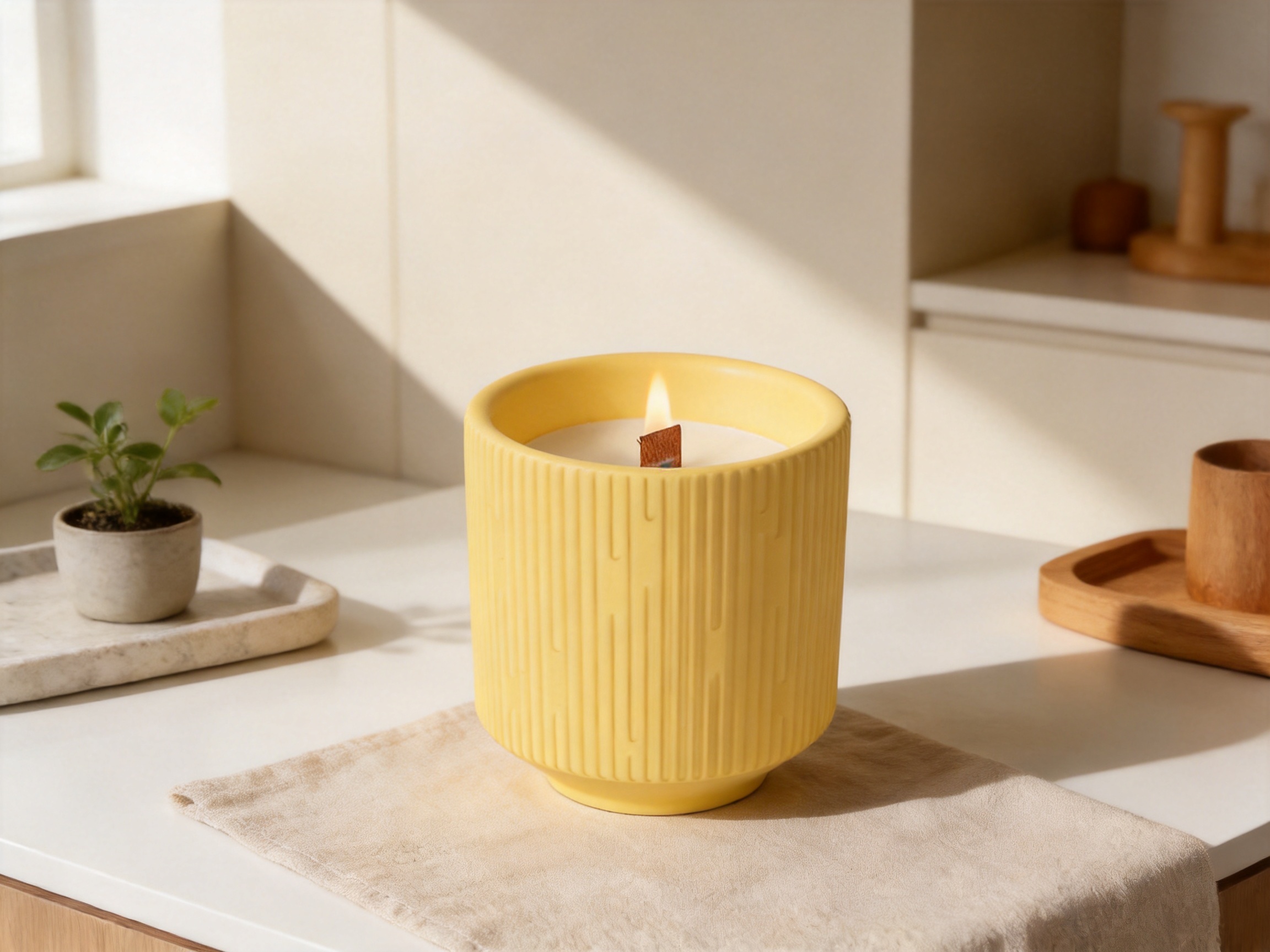
The candle’s main competitive strength is not one isolated feature but the way several design elements work together. Yellow color, ceramic material, ribbed texture, jar shape, and wooden wick create a layered experience. A competitor may offer a ceramic vessel without texture, a yellow candle in glass, or a wooden wick in a plain tin. This product combines multiple attention points in a coherent design.
Color is one of the fastest ways for a consumer to recognize a product. Yellow can be especially useful in a category where many products use white, black, beige, clear glass, or muted earth tones. A yellow jar can brighten a display and create contrast when placed among more neutral home accessories.
Color also supports collection planning. A retailer can display the yellow candle as a single accent product or combine it with complementary shades. For example, yellow can be paired with cream for a soft look, green for a botanical presentation, blue for a lively contrast, or terracotta for a warm seasonal arrangement. This gives buyers flexibility in visual merchandising without changing the fundamental jar design.
The ribbed texture can improve perceived craftsmanship. Consumers often associate tactile details with greater design attention, particularly when the texture is consistent and well-finished. Under retail lighting, the ribs can create highlights and shadows that make the candle more visually dynamic than a completely flat container.
Texture also creates a better unboxing experience. The customer can feel the vessel while removing it from the package, reinforcing the difference between a standard utility candle and a decorative lifestyle item. The tactile element is particularly relevant for gift products, where the recipient may evaluate the product through touch and appearance before experiencing the fragrance.
The candle can fit a wide range of interiors. In a modern living room, it can function as a colorful accent. In a bedroom, it can support a calm evening routine. In a home office, it can add warmth to an otherwise practical space. In a boutique or hotel setting, it can contribute to a carefully designed guest experience.
Its versatility also reduces dependence on one narrow consumer segment. The product may appeal to fragrance enthusiasts, home décor shoppers, gift buyers, consumers interested in sensory rituals, and customers searching for a small decorative upgrade. A broad appeal can support different sales channels, including online retail, department stores, lifestyle boutiques, gift shops, hospitality procurement, and seasonal promotions.
Although the product description focuses on the vessel and wooden wick, fragrance remains central to the candle category. The right scent can change the product’s emotional positioning and target audience. A fresh citrus fragrance may reinforce the yellow color and energetic appearance. A floral fragrance may support spring merchandising. A vanilla, amber, or warm spice profile may make the product more suitable for cozy seasonal collections.
Because the company provides OEM/ODM services, buyers can discuss fragrance selection as part of the product-development process. Possible areas for customization may include fragrance direction, intensity, essential-oil or fragrance-oil selection where appropriate, wax system, label language, warning information, and packaging design. The exact options depend on production capabilities, regulatory requirements, minimum order quantities, and target-market standards.
Fragrance customization can help buyers avoid competing only through appearance. A distinctive scent profile can create a more complete brand story. For example, a yellow ribbed ceramic candle might be positioned around “sunlit citrus,” “bright floral morning,” “golden honey,” or another concept that connects color, fragrance, and mood. These names are examples of marketing directions rather than fixed claims about the current product.
Scent performance should be assessed through both cold throw and hot throw. Cold throw refers to the fragrance experienced when the candle is unlit. This is important in retail settings, where customers may handle or smell the product before purchase. Hot throw refers to the fragrance released during burning. It depends on the wax system, fragrance composition, wick performance, burn-pool development, vessel size, and room conditions.
Professional testing is necessary before a fragrance is selected for bulk production. The fragrance should be evaluated for stability, compatibility with the wax, color impact, burn behavior, and market suitability. Packaging materials should also be checked for odor interaction and resistance to fragrance migration. A well-organized development process can reduce the risk of inconsistent fragrance performance between samples and production batches.
Hangzhou Leo Home Trading Co., Ltd. operates as an international trading and supply-chain partner for household, personal-care, home, garden, and daily-use products. Its home-fragrance scope includes scented candles, LED candles, and related gift sets. This broader category experience can be valuable for buyers seeking a coordinated assortment rather than a single product.
The company was founded in January 2025 and has developed an operating structure covering product development, international sourcing, cross-border marketing, and delivery support. Its approach combines digital tools with supply-chain management, allowing overseas clients to communicate product requirements and coordinate sourcing through one commercial partner.
A notable strength is the company’s network structure. According to the supplied company information, the business integrates 10 candle factories, 8 jar customization partners, and 8 color-box factories. This network can provide buyers with more options for candle formulation, ceramic-vessel development, and packaging production. It may also help compare production routes, evaluate cost structures, and select partners according to product complexity and order requirements.
A candle project often involves more than filling wax into a container. It may require vessel selection, color matching, surface treatment, wax and wick testing, fragrance approval, label design, inner packaging, export cartons, compliance information, and logistics planning. When these elements are handled through disconnected suppliers, communication delays and specification errors can occur.
An integrated sourcing model can simplify coordination. The buyer can discuss the desired appearance, fragrance direction, target price, quantity, packaging requirements, and destination market with one main partner. The trading company can then coordinate the relevant manufacturing resources. This does not eliminate the need for buyer approval, testing, or documentation, but it can make the process more organized.
The company states that it supports customization based on drawings or samples. This is important for retailers and brands that already have a defined visual identity. A buyer may provide a reference jar, a color standard, a sketch, a packaging concept, or a sample from an existing collection. The supplier can then evaluate feasibility and propose adjustments.
For the Yellow Jar-Shaped Elegant Style Ceramic Jar Candle, customization discussions could cover vessel dimensions, rib depth, color tone, finish, wick style, wax color, fragrance, label treatment, packaging structure, and carton markings. Not every request will be technically or commercially suitable, so sample development and production review remain essential.
The company reports daily capacity of up to 50,000 units for stable bulk delivery and replenishment, while also supporting smaller quantities and trial runs. Capacity figures should always be confirmed for the exact product, vessel, fragrance, packaging configuration, and production period. Nevertheless, the stated capability indicates that the supplier is structured to serve both testing-stage buyers and larger commercial programs.
Trial runs are valuable for new products because they allow buyers to examine consumer response before committing to a large quantity. A smaller initial order can help evaluate fragrance preference, color acceptance, packaging performance, retail sell-through, customer reviews, and repeat-purchase potential. If the product performs well, the buyer can move toward larger replenishment orders with improved forecasting.
The company also notes convenient logistics near Ningbo Port. Proximity to a major export port can support efficient shipping planning, although actual transit times and costs depend on destination, season, shipping method, booking conditions, customs requirements, and order volume. Buyers should obtain a formal logistics quotation for each shipment.
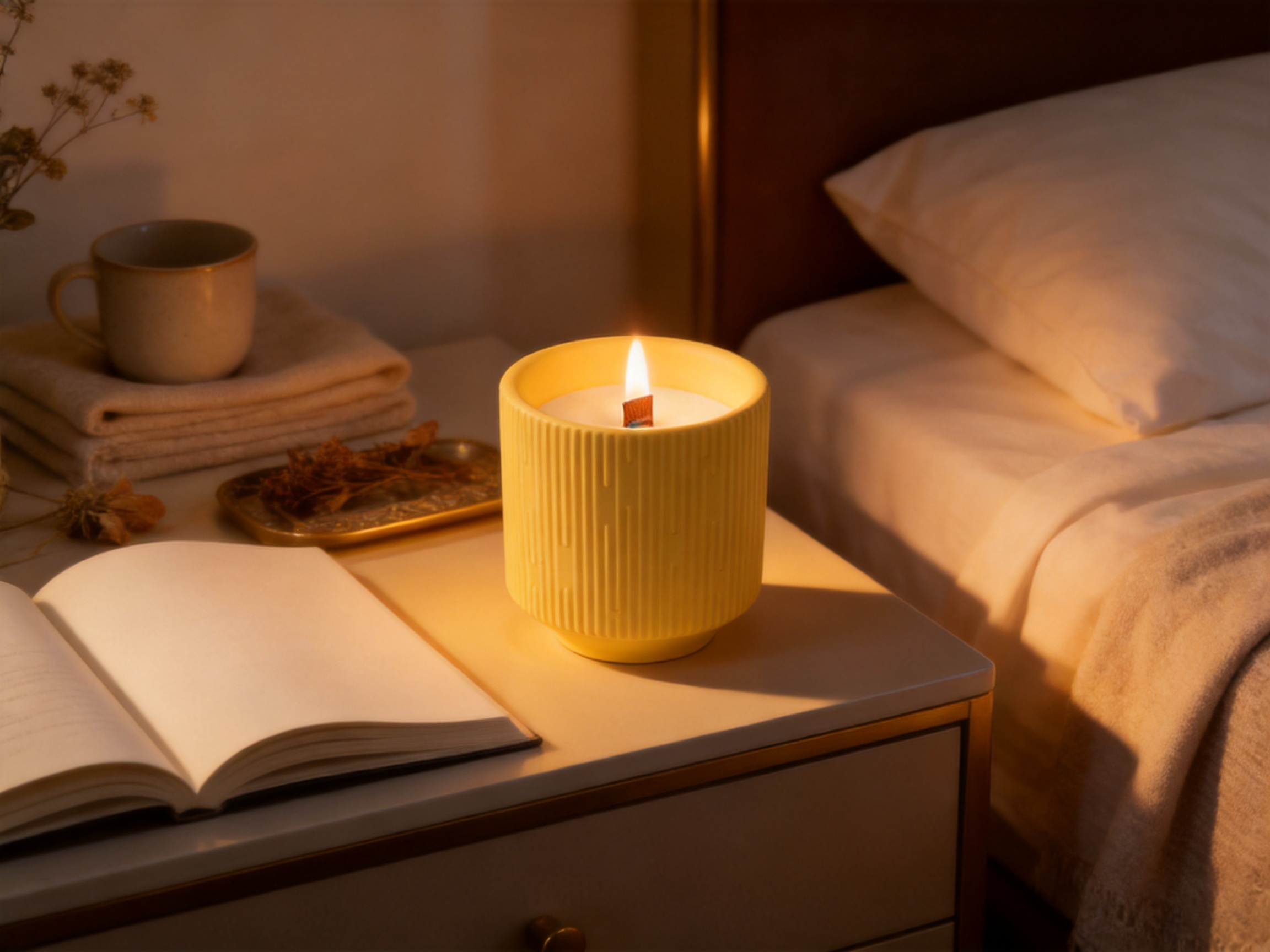
Consistency is critical for ceramic candles. A product may look attractive in a prototype but lose commercial value if production batches show large variations in color, rib alignment, glaze, vessel shape, wick position, fragrance, or packaging. Quality control must therefore begin with raw materials and continue through finished-goods inspection.
The company describes an in-house laboratory and strict quality control across key production stages. For this candle, an effective quality system should include supplier assessment, incoming material checks, vessel inspection, wax and fragrance verification, wick testing, filling control, cooling inspection, packaging review, and final sampling.
Ceramic raw materials and surface treatments should be selected according to the required appearance and heat-use application. The yellow finish must be evaluated for color consistency, surface smoothness, gloss or matte level, rib definition, and resistance to ordinary handling. The vessel should be checked for cracks, chips, pinholes, deformities, uneven bases, and other defects that could affect appearance or performance.
Wax and fragrance materials should be controlled according to the approved formulation. Changes in wax source, fragrance supplier, fragrance load, or additive system may affect burning behavior and scent performance. A controlled approval sample can serve as a reference for production inspection.
The wick should be centered and secured according to the approved design. Burn tests should evaluate ignition, flame stability, melt-pool development, soot, smoke, vessel temperature, fragrance release, and the behavior of the candle near the end of its usable life. Testing should be performed with the final vessel, wax, fragrance, wick, and fill weight rather than with a separate substitute configuration.
Wooden wicks may require specific trimming and lighting instructions. The development team should confirm whether the wick needs pre-trimming, how it behaves after the first burn, and how the consumer should remove excess charred material. These instructions should be communicated clearly on the label, carton, or insert.
Ceramic products require protective packaging because the vessel can be damaged by impact during handling and transportation. Packaging design should balance protection, cost, sustainability goals, storage efficiency, and retail presentation. Depending on the sales channel, the product may require an individual color box, protective insert, outer carton, barcode, batch marking, warning label, or multilingual instruction panel.
Before shipment, finished goods should be inspected for appearance, quantity, packaging integrity, carton strength, label accuracy, and random performance checks. Export documents must match the actual product and destination-market requirements. Buyers should discuss labeling, candle-safety information, packaging materials, and any applicable compliance documentation early in the project.
| Comparison Area | Yellow Ceramic Jar Candle | Basic Glass Jar Candle | Metal Tin Candle | Molded Wax Candle |
|---|---|---|---|---|
| Visual identity | Strong color and ribbed ceramic design | Often depends on wax color and label | Usually depends on print and lid design | Depends on sculptural wax shape |
| Decorative presence | High, suitable for interior display | Moderate to high depending on design | Practical and compact | Potentially high but often more specialized |
| Tactile experience | Substantial ceramic body with ribbed texture | Smooth and familiar | Lightweight metal surface | Direct wax texture |
| Gift suitability | Strong due to vessel and sensory features | Strong when packaging is elevated | Suitable for accessible gift ranges | Strong for novelty or sculptural themes |
| Collection flexibility | Can vary color, fragrance, and packaging | Highly flexible but visually common | Flexible and cost-conscious | Requires more specialized shape development |
| Primary differentiation | Ceramic, yellow color, ribbing, wooden wick | Fragrance, label, wax, and glass profile | Portability and affordability | Shape and visual novelty |
This comparison does not mean that one format is universally better than another. Each format serves different commercial purposes. The ceramic candle is particularly competitive when the buyer wants a decorative product with premium visual cues, sensory interest, and a strong retail presence. It may not replace travel tins or low-cost promotional candles, but it can occupy a different and potentially higher-value position.
The product is suitable for a variety of retail environments. In a home-accessory store, it can be displayed with vases, trays, textiles, and decorative objects. In a fragrance boutique, it can be placed alongside reed diffusers, room sprays, essential-oil products, and gift sets. In a department-store environment, the yellow color can help create a visible accent within a larger candle wall.
Giftability is another significant advantage. The product’s appearance communicates value without requiring the buyer to understand complex technical specifications. A consumer can select it as a birthday gift, housewarming present, holiday item, thank-you gift, or small personal indulgence. The wooden wick provides an additional talking point, while the ceramic jar makes the product feel more substantial than a basic disposable candle.
Corporate and hospitality buyers may also use the candle for welcome gifts, room amenities, event favors, seasonal displays, or branded collections. Custom packaging and labeling can help adapt the product to hotels, restaurants, spas, interior-design studios, and lifestyle subscription programs. Any branded use should be supported by appropriate testing, packaging development, and quantity planning.
Online retailers can emphasize the candle through lifestyle photography, close-up texture images, color-focused collection pages, fragrance descriptions, and videos that demonstrate the wooden-wick experience. Product pages should clearly state the confirmed dimensions, weight, fragrance, burn instructions, and safety information once these details have been finalized.
OEM and ODM services allow buyers to develop a product that is more closely aligned with their own market position. OEM projects may involve applying a buyer’s branding, packaging, fragrance selection, or labeling to an existing product structure. ODM projects may involve more extensive development of the vessel, color, surface, wax, wick, fragrance, and retail presentation.
For the yellow ceramic candle, customization can be organized into several stages. The first stage is concept confirmation, including target market, price range, sales channel, preferred style, fragrance direction, expected quantity, and delivery schedule. The second stage is sample development, including vessel, color, finish, wick, wax, fragrance, and packaging. The third stage is testing and approval. The final stage is production, inspection, shipment, and replenishment planning.
Color matching deserves special attention. Yellow has many possible variations, from pale cream-yellow and soft lemon to golden, mustard, saffron, and vivid primary yellow. The buyer should approve a physical sample under relevant lighting conditions rather than relying only on a digital image. The approved color standard should then be used for production control.
Packaging can also be tailored to the intended market. A minimalist kraft box may suit a natural lifestyle collection, while a rigid color box may support a premium gift line. A window box can show the yellow vessel, whereas a fully printed box can provide more space for brand storytelling. Protective inserts must be designed carefully so that the ceramic jar remains secure without compromising the unboxing experience.
Consumers increasingly consider the life cycle of home-fragrance products. The ceramic vessel can support a more durable-looking product concept than a thin disposable container, and its potential for secondary use may be included in responsible product communication if supported by appropriate safety guidance. However, buyers should avoid making broad environmental claims without evidence.
Responsible positioning can begin with practical decisions. These may include selecting packaging materials that provide adequate protection without unnecessary excess, evaluating recyclable or responsibly sourced packaging components, reducing avoidable plastic where feasible, and providing clear disposal or reuse guidance. The final approach must balance safety, transport protection, regulatory requirements, and sustainability objectives.
Fragrance and wax choices should also be reviewed according to the destination market and buyer expectations. Documentation, ingredient information, safety data, allergen considerations, and labeling requirements may vary by country or region. A professional supplier should help buyers identify the information needed for the intended market, while the buyer remains responsible for confirming applicable legal obligations.
A structured development process can help buyers achieve consistent results and avoid preventable delays. The process should begin with a written product brief. This brief can include the desired jar appearance, color reference, ribbed texture, target capacity, fragrance direction, wick type, packaging style, target market, expected order quantity, and planned launch date.
After the brief is reviewed, the supplier can recommend suitable manufacturing routes and provide preliminary cost information. Buyers should request samples that represent the proposed final configuration. If multiple fragrances or colors are under consideration, it is useful to compare them in a controlled sample review rather than approving each one informally.
Testing should cover both aesthetic and functional criteria. Aesthetic checks include color, texture, vessel shape, finish, label placement, and packaging. Functional checks include ignition, flame behavior, burn duration, scent release, wick performance, vessel temperature, and consumer-use instructions. The final approval should be documented with reference samples and written specifications.
Production planning should account for ceramic lead times, fragrance procurement, packaging printing, quality inspection, and shipping schedules. Buyers should allow sufficient time for corrections if the first production sample does not meet expectations. Early planning is particularly important for seasonal products, because retail launch windows may be fixed.
After shipment, feedback should be collected from distributors, retailers, and end users. Information about fragrance preference, packaging damage, wick behavior, product appearance, and repeat purchases can guide future improvements. The company’s ability to support customized product lines and replenishment can be particularly valuable when a successful product requires ongoing supply.
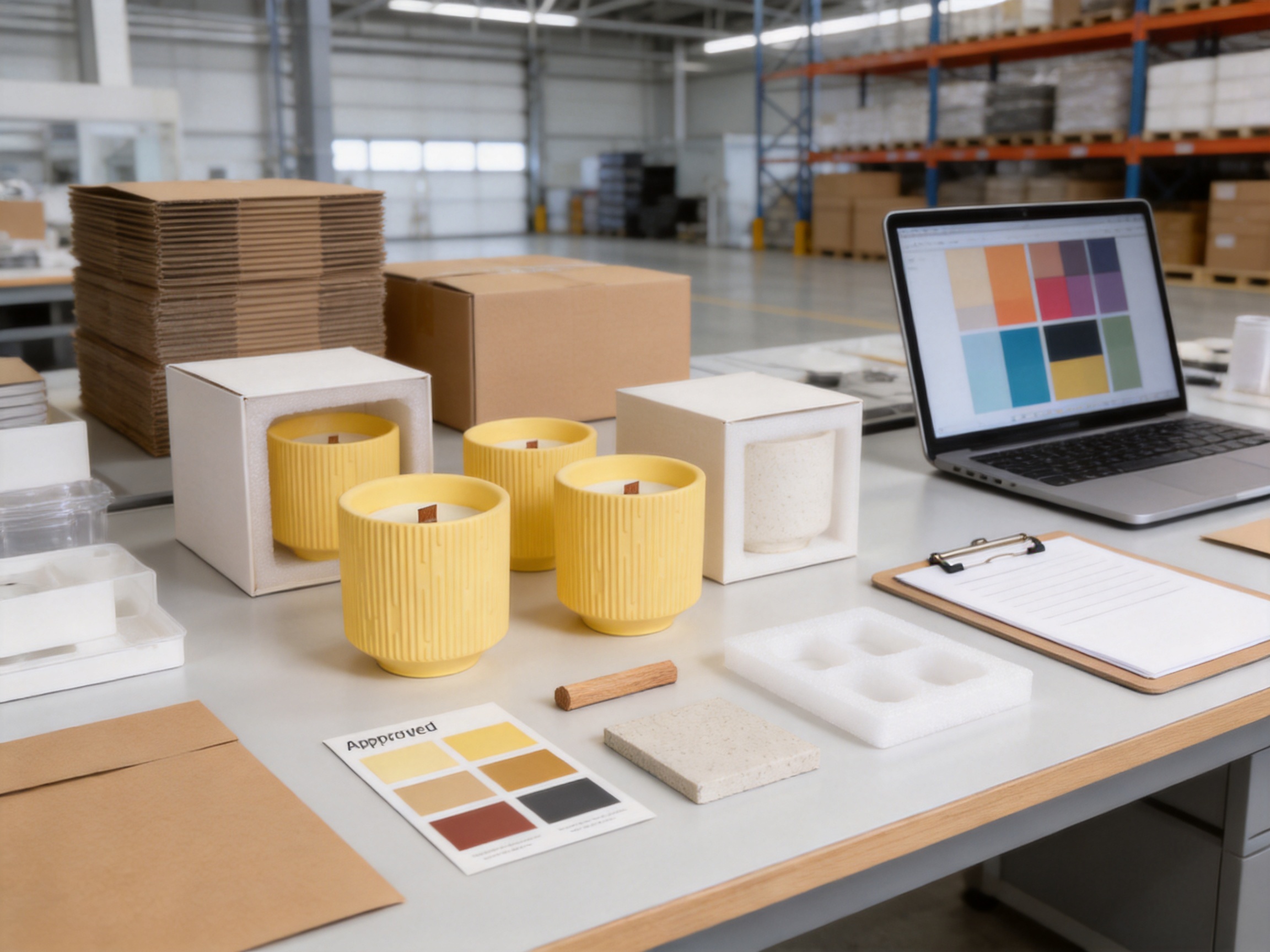
The value of this candle comes from more than its wax content. It offers a combination of visual decoration, fragrance, light, sound, texture, and gifting potential. Consumers may purchase it because it looks attractive on a shelf, smells appealing, creates a relaxing atmosphere, or complements an interior. A strong product can satisfy several motivations at once.
The yellow ceramic vessel provides immediate visual value. The ribbed texture adds a sense of detail. The wooden wick creates an audible element during use. The fragrance can influence mood and atmosphere. The flame adds warmth and movement. These layers of experience help explain why home-fragrance products are often purchased as lifestyle accessories rather than purely functional goods.
For retailers, the product can provide a strong balance between accessibility and differentiation. It is understandable to consumers because it is a familiar jar candle, yet it has enough design character to avoid appearing generic. This makes it easier to present in both broad-market and curated retail environments.
For brands, the product can serve as a foundation for a wider collection. The same ceramic design language may be extended into different fragrances, colors, sizes, or gift formats. Such a collection approach can support repeat purchases and encourage customers to buy multiple products for different rooms or occasions.
The main design features are the yellow jar-shaped ceramic vessel, elegant ribbed exterior, and wooden wick. These elements combine decorative appeal with a distinctive sensory experience.
Yellow creates a bright visual accent and can help the candle stand out among products using neutral colors or clear glass. It can support spring, summer, cheerful everyday, gift, and color-coordinated home-decor collections.
The ceramic vessel provides a substantial, premium-feeling presentation and offers a strong surface for color and texture. It can make the candle function as a decorative object as well as a fragrance product.
When correctly selected and tested, a wooden wick can produce a pleasant crackling sound during burning. The exact sound and burn performance depend on the final wick, wax, fragrance, vessel, and manufacturing specifications.
Fragrance selection can be discussed through the company’s OEM/ODM service. Buyers may explore different fragrance directions, strengths, and market-specific concepts, subject to formulation review, testing, minimum quantities, and destination-market requirements.
Customization discussions may include ceramic color, surface finish, label design, color-box structure, printed information, barcode placement, and outer-carton requirements. Physical samples should be approved before mass production.
Buyers should confirm the wax type, fragrance, net weight, dimensions, burn time, wick specifications, packaging configuration, carton quantity, warning labels, testing documents, minimum order quantity, production lead time, and shipping terms.
Yes. Its bright ceramic vessel, ribbed texture, and wooden wick create a strong gift-oriented presentation. It can be combined with complementary candles, reed diffusers, room accessories, or other home-fragrance items after packaging and compatibility are confirmed.
Important checks include color consistency, surface finish, rib alignment, cracks, chips, pinholes, base stability, internal cleanliness, wick centering, and resistance to expected heat during a controlled burn test.
The supplied company information states that the business supports smaller volumes and trial runs as well as bulk delivery. Exact minimum quantities should be confirmed for the chosen vessel, fragrance, packaging, and customization level.
The company reports experience serving more than 10 countries and regions across North America, Europe, and the Middle East. Buyers should discuss destination-specific requirements, documentation, labeling, shipping, and compliance before placing an order.
The final product should include approved safety instructions. General good practice includes placing the candle on a stable heat-resistant surface, keeping it away from flammable materials and drafts, trimming the wick as instructed, and never leaving a burning candle unattended.
The Yellow Jar-Shaped Elegant Style Ceramic Jar Candle is a strong example of how thoughtful product design can elevate a familiar home-fragrance format. Its yellow ceramic vessel creates immediate visual recognition, the ribbed exterior adds texture and refinement, the jar shape provides everyday versatility, and the wooden wick introduces a pleasant auditory element to the burning experience.
Compared with basic glass jars, metal tins, and standard molded candles, the product offers a different balance of decorative presence, tactile quality, giftability, and sensory storytelling. It is especially well suited to retailers, importers, hospitality buyers, and lifestyle brands seeking a candle that can occupy a more distinctive position in the market.
The product is further strengthened by the supplier’s integrated sourcing capabilities. Hangzhou Leo Home Trading Co., Ltd. supports product development, international sourcing, quality control, packaging coordination, OEM/ODM customization, and delivery planning. Its reported network of candle factories, ceramic jar partners, and color-box factories can help buyers coordinate the major components of a finished candle collection.
For the best commercial outcome, buyers should treat the product as a complete system rather than focusing on the vessel alone. Fragrance, wax, wick, ceramic construction, packaging, safety information, inspection standards, and logistics all influence customer satisfaction. With careful sampling and testing, the candle can become a versatile addition to modern home-fragrance collections, seasonal assortments, premium gift ranges, and customized international product lines.
1. Product information supplied for the Yellow Jar-Shaped Elegant Style Ceramic Jar Candle, including design, material, color, ribbed texture, jar form, and wooden-wick features.
2. Company profile and capability information supplied for Hangzhou Leo Home Trading Co., Ltd., including product development, sourcing, OEM/ODM services, quality control, manufacturing network, and logistics support.
3. General candle product-development principles concerning wax, fragrance, wick selection, vessel compatibility, burn testing, packaging, and consumer safety.
4. General home-fragrance merchandising principles concerning color, texture, product differentiation, giftability, collection planning, and retail presentation.
5. General ceramic-container quality considerations concerning surface finish, color consistency, structural inspection, packaging protection, and finished-goods control.

Room 1701, Building C1, Wangjing, Xiaoshan District, Hangzhou City, Zhejiang Province, China.

+86-15937257616

Copyright© 2026 Hangzhou Leo Home Trading Co., Ltd. All Rights Reserved.

Luxury Candles Home Fragrance Manufacturers Modern Candles Factory