 English
 Français
News
Home / Author / Emily Chen — After-Sales Service Supervisor / Strawberry Parfait Art Candle: A Dessert-Inspired Statement Piece for Modern Home Fragrance Collections
Content
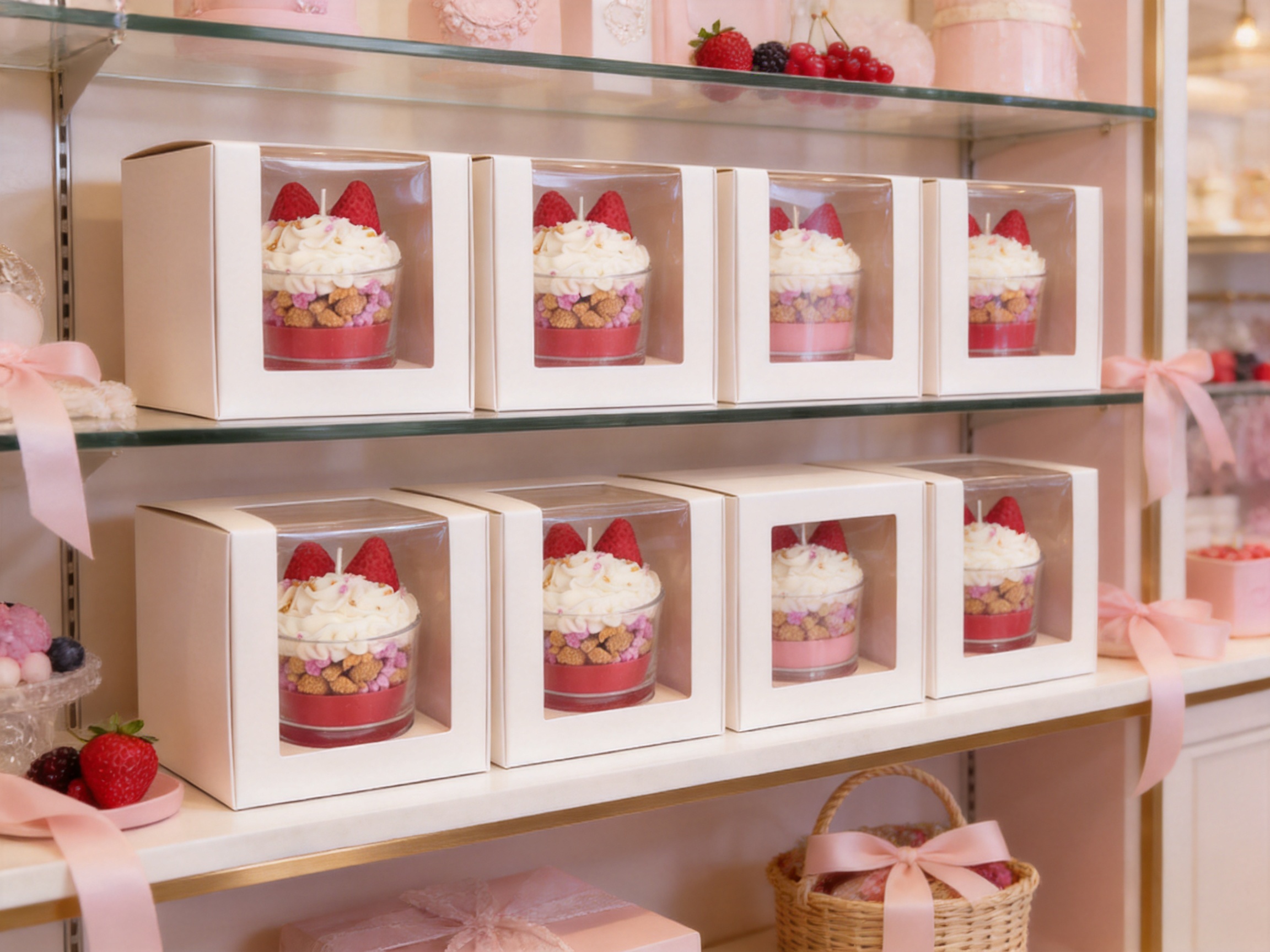
Home fragrance products are no longer limited to conventional jar candles with simple labels and familiar silhouettes. Today’s consumers increasingly look for products that combine atmosphere, visual storytelling, gift appeal, and memorable design. The Strawberry Parfait Art Candle responds to this shift by turning a familiar dessert image into a decorative candle with strong visual character. Rather than functioning only as a source of fragrance and light, it is designed as a miniature display piece that brings color, texture, and playful styling into the home.
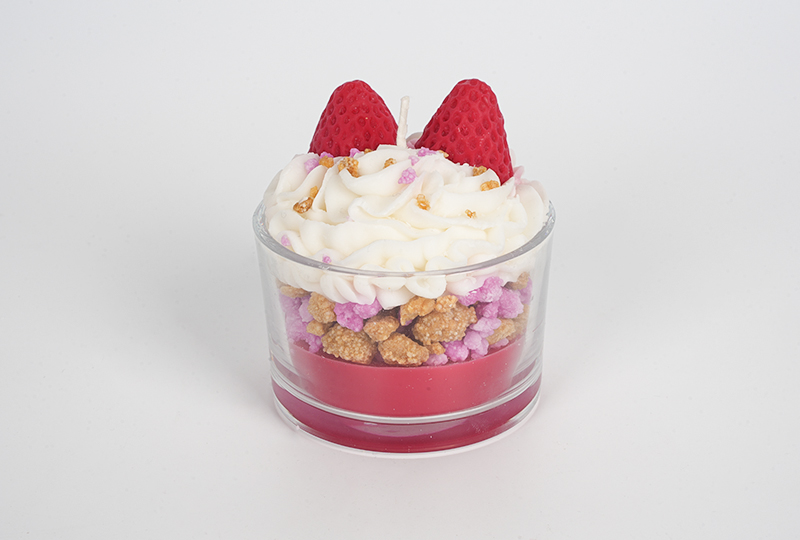
Inspired by a layered strawberry parfait, this art candle uses a transparent container to reveal a carefully arranged internal composition. A vivid red lower layer suggests strawberry jam or fruit sauce, while the textured middle section evokes crunchy granola and dessert toppings. Above these layers sits a creamy whipped-cream-style design finished with two strawberry decorations. The result is a product that resembles a small dessert while retaining the practical and emotional value associated with home fragrance.
For retailers, distributors, gift companies, lifestyle brands, and private-label buyers, this design offers an opportunity to expand beyond ordinary scented candle collections. Its recognizable theme can support seasonal displays, dessert-inspired gift ranges, social-media campaigns, boutique assortments, and impulse purchases. Its clear container also allows customers to appreciate the product before opening the package, making the candle particularly suitable for visual merchandising.
Behind this product is a supply and customization system developed by Hangzhou Leo Home Trading Co., Ltd. The company specializes in home fragrance, household products, international sourcing, customization, and cross-border delivery. Its business structure connects product development with a network of candle factories, jar customization partners, color box suppliers, quality control procedures, and export logistics. This combination allows buyers to evaluate not only the appearance of a single candle but also the manufacturing and commercial support available for larger product programs.
Strawberry Parfait Art Candle
The central strength of the Strawberry Parfait Art Candle is its ability to communicate its theme instantly. A consumer does not need a long explanation to understand the product. The red fruit-colored layer, pale cream-like top, textured middle, and strawberry decorations collectively create a recognizable dessert image. This immediate visual communication is valuable in retail environments, where products often have only a few seconds to attract attention.
Traditional candles generally depend on fragrance, color, label design, or container shape to distinguish themselves. The Strawberry Parfait Art Candle adds another layer of differentiation through sculptural presentation. Its interior resembles a finished dessert, creating a sense of abundance and craftsmanship. The product can therefore appeal to customers who buy candles for decoration, gifting, collection, or personal enjoyment, in addition to those who primarily seek fragrance.
The design also benefits from emotional familiarity. Strawberries, cream, jam, and parfait desserts are commonly associated with freshness, sweetness, celebration, and comfort. These associations can make the product suitable for romantic gifts, birthday collections, hospitality displays, seasonal launches, and everyday self-care ranges. The theme is playful without being overly complicated, which allows it to fit both youthful lifestyle stores and more refined home décor assortments.
The candle presents a visual narrative from the bottom upward. The red base establishes the fruit component and gives the product a strong color foundation. The middle layer introduces texture and visual contrast, suggesting granola, crumbs, or crunchy dessert elements. The top layer creates softness through its whipped-cream-style appearance, while the two strawberry decorations add focal points and reinforce the concept.
This vertical arrangement is especially effective because it resembles the structure of a real parfait served in a transparent glass. The container is not simply a vessel; it becomes part of the product story. By preserving visibility from the outside, the glass allows shoppers to understand the product’s layered construction without opening the package.
Many consumers use decorative candles as interior accessories even when they are not burning them. A visually distinctive candle can sit on a bedside table, vanity, coffee table, shelf, dessert-themed display, or gift basket. The Strawberry Parfait Art Candle is designed to maintain this decorative role because its appearance does not depend on an active flame.
This broader usage increases the product’s commercial flexibility. Retailers can position it within home fragrance, kitchen-inspired décor, giftware, seasonal merchandise, or novelty lifestyle collections. It can also be displayed alongside ceramic desserts, pastel accessories, bakery-themed packaging, floral arrangements, or other sweet-inspired products.
The product’s appeal comes from the relationship between its materials, colors, textures, and proportions. Each visual element supports the dessert-inspired concept while contributing to the candle’s overall shelf presence.
The transparent container is one of the most important design features. It exposes the internal layers and allows natural light to pass through the product. The clear surface helps the red base appear brighter, makes the textured center easier to notice, and gives the creamy top a stronger contrast. Compared with an opaque container, the transparent format communicates more product information before purchase.
For retailers, visibility can reduce the need for extensive explanatory packaging. The product itself performs much of the communication. A shopper can see the layered design, recognize the strawberry theme, and understand that the candle is a decorative art piece. This can support clean packaging concepts in which the box protects the candle without hiding its primary selling point.
The red bottom layer forms the visual foundation of the candle. Its fruit-inspired color suggests strawberry jam, compote, or sauce and immediately establishes the dessert identity. Strong red coloring can also improve shelf visibility, especially when displayed beside neutral, white, or pastel products.
The base gives the candle visual weight and helps anchor the softer cream-colored topping. This color contrast is important because it prevents the product from appearing visually flat. It also creates an appealing relationship between warm fruit tones and clean creamy tones, a combination widely associated with strawberry desserts.
The middle layer adds depth and tactile interest. Its crunchy, decorative appearance suggests granola, biscuit crumbs, or other parfait ingredients. This layer is particularly valuable because it breaks up the transition between the dense red base and the pale decorative top. The change in texture gives the product a more realistic and carefully assembled appearance.
From a manufacturing perspective, textured layers require attention to placement, consistency, adhesion, and overall balance. Decorative elements must create an attractive effect without damaging the visual clarity of the container. The finished appearance should feel abundant and handcrafted while remaining stable enough for packaging, transport, storage, and retail handling.
The top section uses soft piping details to imitate whipped cream. This feature provides height and a sense of movement, making the candle look more like a plated dessert than a conventional flat-topped candle. The raised pattern also creates highlights and shadows that remain visible under store lighting or photography.
The cream-colored topping provides a gentle visual contrast to the red base and the textured center. It also gives the product a delicate, indulgent character. The overall impression is decorative rather than industrial, which can help the candle stand apart from standardized mass-market products.
Two vivid strawberry decorations complete the composition. They function as immediate visual identifiers and reinforce the product’s theme even when viewed from a distance. Small decorative details such as these can have a major effect on perceived value because they demonstrate that the design has been considered as a complete scene.
The strawberries also create a focal point at the top of the candle. When the product is photographed, displayed in a gift set, or placed on a retail shelf, these decorations help guide the viewer’s attention toward the upper portion of the design. Their vivid color works with the red base while remaining distinct because of their elevated position.
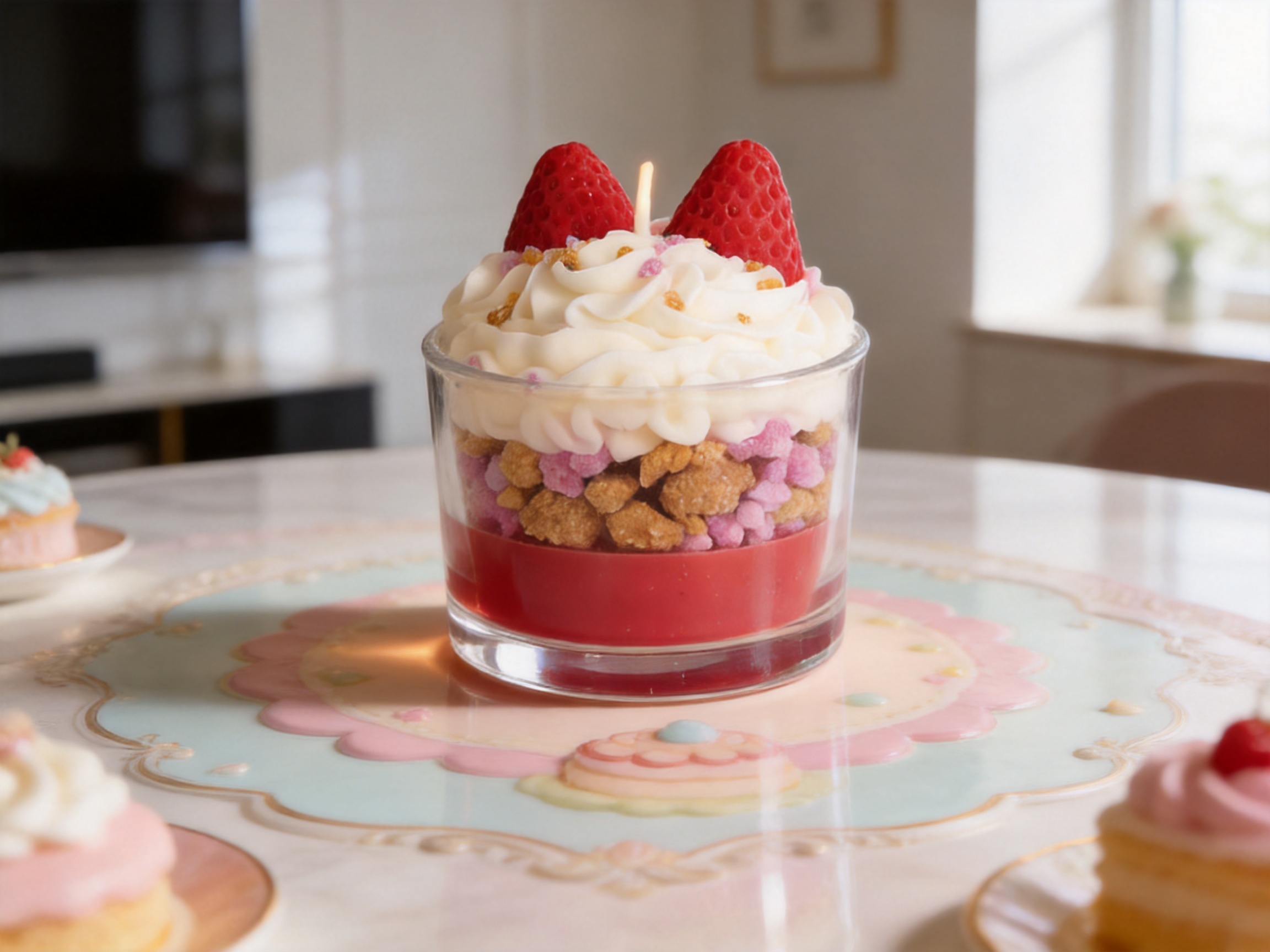
The scented candle market includes many products with similar jars, labels, and fragrance claims. Competing successfully therefore requires more than offering a basic candle in a different color. The Strawberry Parfait Art Candle has several advantages that can help it occupy a distinctive position.
The most direct advantage is its dessert-inspired appearance. A standard candle may rely on branding to create distinction, whereas this product communicates its identity through its physical form. Its layered structure and decorative top can be understood immediately, making it suitable for visual merchandising and online product photography.
This visual differentiation may improve click-through appeal in digital retail environments. Consumers scrolling through a product page or social-media feed are more likely to pause when an item resembles an attractive dessert or miniature artwork. The product’s appearance can also support short-form video content, unboxing presentations, gift recommendations, and seasonal styling posts.
Giftability is another important advantage. A dessert-themed art candle can be presented as a cheerful and distinctive gift without requiring the buyer to know the recipient’s exact interior style. Its playful appearance makes it appropriate for birthdays, housewarming occasions, friendship gifts, holiday assortments, and small celebration moments.
Gift products benefit from a clear theme because the buyer can understand the emotional message quickly. A strawberry parfait suggests sweetness, care, indulgence, and celebration. This can make the product easier to recommend and easier to combine with complementary items such as bath products, confectionery-inspired accessories, greeting cards, ceramic dishes, or small home décor pieces.
The product can serve several sales channels. In lifestyle boutiques, it can be displayed as a decorative candle. In gift shops, it can become a novelty present. In home fragrance stores, it can introduce an art candle segment. In online marketplaces, its unusual appearance can support strong thumbnail performance. In hotel, café, or event settings, it may be used as part of a themed visual arrangement, subject to appropriate safety and usage requirements.
This flexibility reduces dependence on a single retail format. Buyers can introduce the product through independent stores, online channels, curated subscription boxes, seasonal pop-up shops, or private-label gift programs. The transparent container and recognizable theme also make it easier to create coordinated product photography across different platforms.
A conventional candle may be judged primarily by its container, fragrance, and label. The Strawberry Parfait Art Candle adds perceived value through the appearance of multiple components. The customer can see the base, middle layer, topping, and decorations as separate visual features. This can create the impression of a more elaborate product and support premium positioning when paired with suitable packaging and quality control.
Perceived value does not replace actual product quality, but it can strengthen the connection between craftsmanship and price. When decorative details are neat, stable, and consistent, the candle can appear more carefully made than a basic single-color product. For buyers building a collection, the layered art format can also help create a higher-value assortment.
The parfait concept can provide a foundation for a larger dessert-inspired collection. Similar formats could be developed around other fruits, creams, pastries, beverages, or seasonal desserts. A buyer may use the strawberry version as an introductory item and later add complementary designs to encourage repeat purchases and collecting behavior.
This collection potential is commercially valuable because it allows a retailer to build a visual family rather than relying on one isolated product. Coordinated dimensions, packaging, photography, and display fixtures can increase the impact of a full assortment while allowing each design to maintain its own flavor and color story.
A visually attractive candle must also be supported by dependable manufacturing. Decorative products can involve more production steps than simple jar candles, including wax preparation, color control, layer formation, decorative placement, surface finishing, container handling, inspection, and protective packaging. A supplier’s ability to coordinate these stages is essential for consistent commercial results.
Hangzhou Leo Home Trading Co., Ltd. supports its home fragrance business through an integrated supply chain model. According to the supplied company information, the company works with ten candle factories, eight jar customization partners, and eight color box factories. This network gives buyers access to multiple manufacturing resources while allowing the supplier to coordinate product development, packaging, sourcing, and delivery.
A network-based production structure can provide flexibility when a product requires a particular candle format, container, finish, or packaging solution. Rather than limiting buyers to one production line, the supplier can evaluate available capabilities and match projects with appropriate partners.
For the Strawberry Parfait Art Candle, this coordination may be especially important because the product combines a clear container with multiple visible decorative layers. A suitable production partner must be able to handle the desired visual effect, maintain stable presentation, and meet the buyer’s packaging and delivery requirements.
The company’s stated daily capacity can reach up to 50,000 units, supporting both stable bulk delivery and replenishment programs. Capacity alone does not guarantee quality, but sufficient production resources can help reduce supply pressure when a product performs well or when a retailer needs to prepare for seasonal demand.
The container is a central part of this product, so jar customization capabilities can be commercially significant. Buyers may need to adjust container size, shape, wall thickness, labeling area, closure style, or packaging compatibility according to their market and price position.
The company’s access to multiple jar customization partners can help support these discussions. A buyer developing a private-label line may evaluate whether the existing transparent format is suitable or whether a modified version would better match its branding. Potential changes should be reviewed through samples, technical assessment, safety evaluation, and cost analysis before mass production.
Decorative candles need packaging that protects the top details and prevents visual damage during transport. The color box is also an important branding tool. A well-designed package can preserve the dessert concept while providing usage instructions, safety information, product identification, barcode space, and market-specific compliance details.
Because the supplier works with color box factories, packaging development can be coordinated with the candle itself. This helps reduce the risk of designing a box that is attractive but unsuitable for the product’s dimensions or fragile decorative elements. Buyers can also explore packaging formats for individual units, gift sets, multi-piece assortments, or seasonal promotional bundles.
The company states that its quality process begins with raw material selection and continues through finished goods inspection. For an art candle, material control affects more than burn performance. It can influence the appearance of wax layers, color consistency, surface smoothness, decorative stability, container clarity, and the overall visual impression.
Material selection should be aligned with the intended market and product specification. Buyers may need to confirm wax type, wick design, fragrance compatibility, colorant suitability, container specifications, decorative material safety, and packaging performance. The exact technical specification for each order should be documented and approved through samples before production.
The company also identifies an in-house laboratory and strict quality control at key stages as part of its strengths. Laboratory support can assist with product evaluation, sample comparison, formulation review, and quality verification. For a product with multiple visual layers, testing and inspection can help identify issues such as color variation, separation, deformation, fragrance inconsistency, or packaging damage.
Quality control should cover incoming materials, in-process production, finished candles, packaging, and pre-shipment inspection. A structured process makes it easier to identify problems early rather than discovering them after the goods have reached a distribution center or retail store.
| Evaluation Area | Importance for the Product | Recommended Buyer Review |
|---|---|---|
| Layer appearance | Maintains the visual identity of the parfait design | Compare approved samples with production units for color, texture, and layer position |
| Decorative topping | Protects the whipped-cream-style form and strawberry details | Check shape consistency, attachment, surface finish, and resistance to handling |
| Glass container | Provides visibility and supports the premium presentation | Review clarity, dimensions, edge condition, labeling area, and packaging fit |
| Fragrance performance | Supports the home fragrance function | Confirm fragrance profile, strength, compatibility, and market requirements |
| Wick and burning behavior | Supports safe and consistent candle use | Conduct testing based on the final wax, container, fragrance, and wick combination |
| Packaging protection | Reduces damage during export and retail handling | Review inner support, drop resistance, carton strength, and storage conditions |
| Label and compliance | Helps meet destination-market expectations | Verify warnings, instructions, material information, barcode, and language requirements |
The Strawberry Parfait Art Candle can be supplied as a finished design or used as a starting point for a customized program. Hangzhou Leo Home Trading Co., Ltd. offers OEM and ODM support covering specifications, fragrance selection, labels, and packaging. This is useful for buyers that want to create a product aligned with their own brand identity rather than selling a completely standard item.
The dessert-inspired appearance naturally suggests fragrance directions such as strawberry, berry, cream, vanilla, jam, sugar, or a blended gourmand profile. However, the final fragrance should be selected according to the target market, intended price, customer preferences, and technical compatibility with the candle system.
A fragrance that smells attractive in a blotter test may perform differently in wax. Buyers should therefore assess fragrance samples in the final candle format. Evaluation may include cold throw, hot throw, balance, sweetness, clarity, and performance over the expected burn cycle. It is also useful to compare the fragrance with the visual identity so that the scent and appearance tell a coherent story.
Private-label buyers can use labels to introduce their own identity while preserving the recognizable parfait design. Label development may involve logo placement, typography, color palette, product naming, ingredient or material information, safety messaging, and barcode requirements.
The transparent container provides opportunities for restrained labeling. A small front label may preserve visibility of the layers, while a larger package panel can carry the brand story and usage information. The appropriate solution depends on the buyer’s positioning, regulatory obligations, and desired shelf presentation.
Packaging can be adapted for different commercial purposes. An individual box may suit boutique retail and online fulfillment. A windowed box may emphasize the dessert-like appearance. A premium rigid box may support gifting. A multi-unit set may encourage collection and increase average order value. Seasonal sleeves or inserts may allow the same candle to be sold for different occasions without changing the core product.
Packaging customization should consider product protection as well as aesthetics. Raised decorative toppings require sufficient clearance, and glass containers need internal support. Export cartons should be assessed for stacking, vibration, humidity, and handling conditions. A coordinated packaging process helps preserve the product from factory to final customer.
The company states that its professional research and development support can work from drawings or samples. This can benefit brands that have a specific creative direction but need assistance converting an idea into a manufacturable candle. A buyer may provide reference images, sketches, color targets, packaging concepts, or an existing sample for evaluation.
The development process should proceed through clear stages: concept review, technical feasibility, preliminary sample, design adjustment, fragrance and material confirmation, packaging sample, testing, pre-production approval, and mass production. Written approval at each stage can help minimize misunderstandings and protect consistency across future orders.
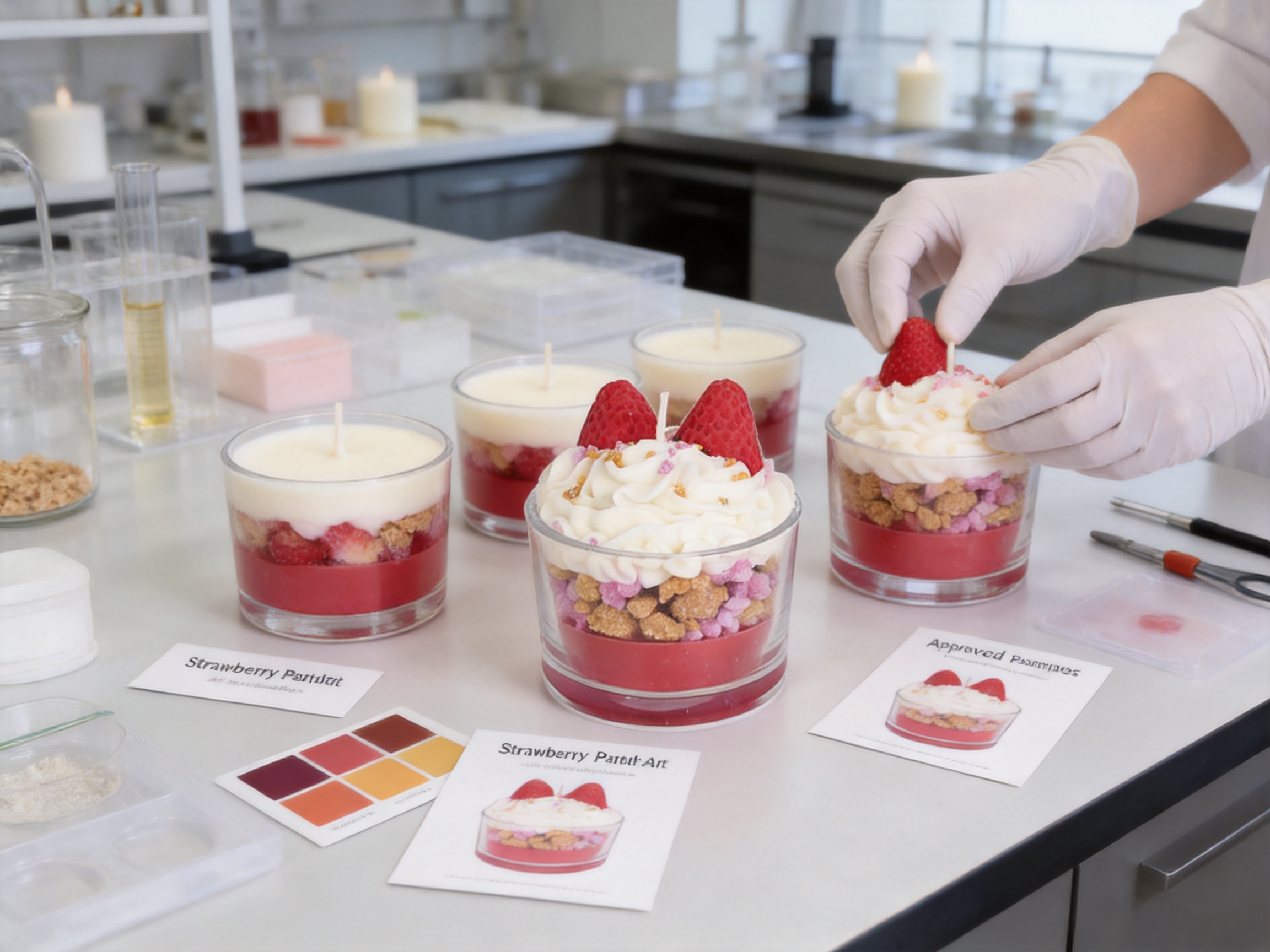
Because the Strawberry Parfait Art Candle is both decorative and functional, quality must be assessed from several perspectives. A visually attractive design is not sufficient if the candle is difficult to package, inconsistent in appearance, or unsuitable for its intended use. Buyers should establish a detailed product specification that covers the finished appearance, materials, fragrance, dimensions, weight, packaging, labeling, and inspection criteria.
Hand-finished or highly decorative products may naturally show minor variation. The commercial question is whether such variation remains within an acceptable range. Buyers should define the required color tone, layer height, decorative position, topping shape, and overall appearance through approved reference samples and inspection standards.
Consistency is particularly important when multiple units are displayed together. A collection of candles can look premium when the products share a common visual language. Excessive variation in red tone, topping height, or decoration placement may make the assortment appear uncontrolled.
Burn testing should be performed on the final production configuration rather than on a different sample. The wax, wick, fragrance, container, colorants, and decorative construction work together, so changing one element may affect the performance of the entire candle.
Testing may examine ignition, flame stability, melt pool development, soot, container temperature, fragrance release, extinguishing behavior, and end-of-life performance. Buyers should also consider how the decorative top and layered interior respond during use. Appropriate safety instructions should be provided with the finished product, and all applicable destination-market requirements should be reviewed.
The transparent container and raised dessert-style topping require adequate protection. Packaging should prevent movement inside the box, reduce impact against the glass, and maintain enough space around decorative details. Transport testing can help identify weak points before a large shipment is released.
International distribution may involve multiple handling stages, changes in temperature, humidity, vibration, and extended storage. Packaging should therefore be evaluated under realistic conditions. A strong supply chain partner can coordinate packaging development and inspection with the production schedule, helping reduce avoidable damage and claims.
Commercial buyers may request product specifications, sample approvals, packing details, inspection records, carton information, and shipment documentation. A clear documentation system supports traceability and makes repeat orders easier to manage.
For private-label programs, documentation is also useful when products are sold across several channels or regions. The buyer can maintain consistent records for approved fragrance, artwork, packaging, carton configuration, and quality standards. This creates a more dependable basis for replenishment and future product extensions.
A candle design may be excellent, but commercial success often depends on the supplier’s ability to support the entire process. Hangzhou Leo Home Trading Co., Ltd. combines product sourcing, customization, quality control, packaging coordination, and export support. This one-stop approach can simplify communication for buyers who would otherwise need to manage several separate vendors.
The company was founded in January 2025 and operates from Hangzhou, China. Its stated business scope includes personal care, home and garden products, daily tools, home fragrance, LED candles, and related gift sets. This wider product range may be useful for buyers seeking coordinated lifestyle assortments rather than a single isolated item.
The company reports experience serving more than ten countries and regions across North America, Europe, and the Middle East. International experience can support communication around market preferences, packaging formats, shipping procedures, and documentation. Buyers should still confirm the specific requirements of each destination and product category before placing an order.
The company identifies execution as a core value, emphasizing that instructions are treated as commitments and outcomes as responsibilities. In a customized candle program, execution includes accurate sample development, timely artwork confirmation, production coordination, inspection, packing, and shipment follow-up.
Warmth reflects both the company culture described in the supplied information and the emotional character of home fragrance products. A reliable supplier relationship should include communication, support, and practical problem solving. This is especially valuable when a buyer is developing a new art candle and needs multiple rounds of sample review.
Refinement is central to the Strawberry Parfait Art Candle because small details determine whether the product appears polished. Layer balance, color harmony, piping definition, strawberry placement, glass clarity, and box fit all contribute to the final impression. Attention to detail should extend from product formulation and craftsmanship to export documentation.
The product can be positioned as a decorative gourmand candle, a strawberry-themed gift, a miniature dessert artwork, or a premium novelty home fragrance item. The best positioning depends on the target audience and the surrounding product range.
Boutique retailers can use the candle as a visual anchor in a home fragrance display. Its strong color contrast and clear container can attract attention from across the store. Pairing it with neutral candles, pastel home accessories, or gift wrapping materials can create an appealing display rhythm.
Online sellers should emphasize the product’s layered construction through photography. Images can show the full front view, top details, container transparency, scale, packaging, and a close-up of the decorative elements. Product copy should explain that the candle is inspired by a strawberry parfait while also providing clear information about fragrance, size, materials, care, and safety.
The candle can become part of a dessert or self-care gift collection. Complementary items may include berry-scented room sprays, bath products, hand creams, tea accessories, small trays, or greeting cards. The visual theme makes it easier to create coordinated packaging without requiring complex explanations.
Strawberry-themed products can work across spring and summer assortments, Valentine’s Day promotions, birthday gifting, bridal events, and cheerful everyday collections. Seasonal sleeves, stickers, or gift boxes may refresh the presentation while preserving the core candle design.
The dessert resemblance gives the product strong content potential. Short videos can show the candle from different angles, reveal the transparent layers, demonstrate packaging, or present it beside real dessert styling. However, marketing materials should clearly identify the product as a candle and should not encourage consumers to mistake it for food.
Before confirming a production order, buyers should review the product from creative, technical, commercial, and logistical perspectives. A structured checklist can reduce uncertainty and support a smoother launch.
Confirm the final appearance of the red base, textured middle, whipped-cream-style top, strawberry decorations, and transparent container. Approve color references, dimensions, decoration placement, and acceptable variation.
Confirm the wax system, wick, fragrance, colorants, container specifications, decorative materials, net weight, and expected performance. Request relevant samples and testing information for the final configuration.
Approve the box structure, artwork, label information, inner protection, carton quantity, barcode position, and shipping marks. Check that the packaging protects the raised topping and glass container throughout the intended logistics route.
Discuss minimum order quantities, sample costs, production lead time, payment terms, pricing at different volumes, replenishment plans, and the cost impact of customization. Buyers should also consider whether the product will be sold individually or as part of a broader collection.
Confirm the destination-market requirements for candle safety, labeling, warnings, packaging materials, fragrance documentation, and import procedures. Requirements may vary by country and sales channel, so professional compliance review is recommended where necessary.
It combines home fragrance with a dessert-inspired art design. The transparent container reveals a red fruit-like base, a textured middle layer, and a whipped-cream-style topping with strawberry decorations. This gives the candle a stronger decorative and gifting identity than a basic single-layer jar candle.
No. It is designed as a decorative art candle that can also serve as a home fragrance product. The final burning instructions, fragrance performance, and usage details should be confirmed according to the approved production specification.
Yes, the supplier provides fragrance selection and OEM/ODM support. Buyers can discuss strawberry, berry, cream, vanilla, jam, or other suitable fragrance directions. Final selection should be tested in the actual wax and container combination.
Yes. The company supports customized labels and packaging. Buyers can develop branded artwork, product information, gift boxes, sleeves, or other packaging formats according to their market positioning and compliance needs.
Customization may be possible through the supplier’s jar customization and product development network. The feasibility, cost, minimum order quantity, and lead time should be evaluated through technical discussions and samples.
Yes. Its recognizable dessert theme and decorative presentation make it suitable for individual gifts, seasonal assortments, self-care collections, and coordinated home fragrance sets. Packaging should be designed to protect the glass container and raised decorative top.
It allows customers to see the layered structure before purchase. This improves product communication, strengthens shelf appeal, and supports photography for online stores and social-media marketing.
The company describes quality control from raw material selection through finished goods inspection and identifies an in-house laboratory as part of its quality system. Buyers should request the specific inspection plan, approved sample standards, and testing documentation relevant to their order.
The company states that it supports smaller volumes and trial runs in addition to bulk production. Buyers should confirm the applicable minimum order quantity, sampling process, and pricing for their specific customization requirements.
The company reports exports to more than ten countries and regions, particularly in Europe, North America, and the Middle East. Destination-specific packaging, labeling, and safety requirements should still be confirmed for each order.
The product should use packaging with adequate clearance, internal support, and cushioning around the glass and decorative top. Carton strength and transport performance should be evaluated before mass shipment, especially for international logistics.
Yes. The strawberry parfait concept can serve as the first item in a broader collection inspired by fruits, creams, pastries, beverages, and seasonal desserts. Coordinated designs can encourage repeat purchases and strengthen a retailer’s visual identity.
The Strawberry Parfait Art Candle represents a modern direction in home fragrance: a product that combines decorative storytelling, gift appeal, visible craftsmanship, and scent-based atmosphere. Its layered red base, textured middle section, whipped-cream-style top, strawberry decorations, and transparent container create a miniature dessert composition that is easy to recognize and difficult to confuse with an ordinary candle.
Its competitive advantages include immediate visual communication, strong shelf presence, broad gifting potential, online content value, collection-building opportunities, and compatibility with several retail channels. These features can help retailers and brands create a more distinctive home fragrance assortment while offering consumers a product that feels playful, decorative, and emotionally engaging.
The commercial value of the product is strengthened by the supplier’s broader capabilities. Hangzhou Leo Home Trading Co., Ltd. provides access to candle factories, jar customization partners, color box factories, product development resources, quality control procedures, OEM/ODM services, and export support. Its stated in-house laboratory, supply chain network, flexible delivery approach, and experience in international markets provide a foundation for customized product programs.
For buyers, the best results will come from treating the candle as both a design product and a technical product. Appearance, fragrance, burn performance, packaging, labeling, inspection, and transport protection should all be developed together. With careful sample approval and clear specifications, the Strawberry Parfait Art Candle can serve as a memorable centerpiece for modern home fragrance collections, seasonal gift programs, boutique assortments, and private-label lifestyle ranges.
1. Product information supplied for the Strawberry Parfait Art Candle, including its layered dessert-inspired design, transparent container, decorative topping, and strawberry elements.
2. Company information supplied for Hangzhou Leo Home Trading Co., Ltd., including its product development, sourcing, OEM/ODM, quality control, packaging, and export capabilities.
3. General principles of candle product development, including sample approval, wick evaluation, fragrance compatibility, container assessment, packaging protection, and finished-goods inspection.
4. General retail merchandising principles for home fragrance, giftware, decorative products, transparent packaging, and visually differentiated lifestyle goods.
5. General international product development practices relating to customization, supply chain coordination, quality documentation, and destination-market review.

Room 1701, Building C1, Wangjing, Xiaoshan District, Hangzhou City, Zhejiang Province, China.

+86-15937257616

Copyright© 2026 Hangzhou Leo Home Trading Co., Ltd. All Rights Reserved.

Luxury Candles Home Fragrance Manufacturers Modern Candles Factory