 English
 Français
News
Home / Author / Emily Chen — After-Sales Service Supervisor / Crackle-Glaze Bowl-Shaped Ceramic Jar Candle: Craftsmanship, Performance, and Custom Supply Advantages
Content

In the home fragrance market, a candle must do more than release a pleasant scent. Modern buyers increasingly expect a product to combine visual character, dependable performance, safe materials, convenient use, and lasting value. Retailers and distributors are also looking for products that can support attractive collections, flexible customization, reliable replenishment, and consistent quality across large orders. The Crackle-Glaze Bowl-Shaped Ceramic Jar Candle responds to these expectations through a balanced combination of artisanal appearance, practical design, and professional supply-chain support.
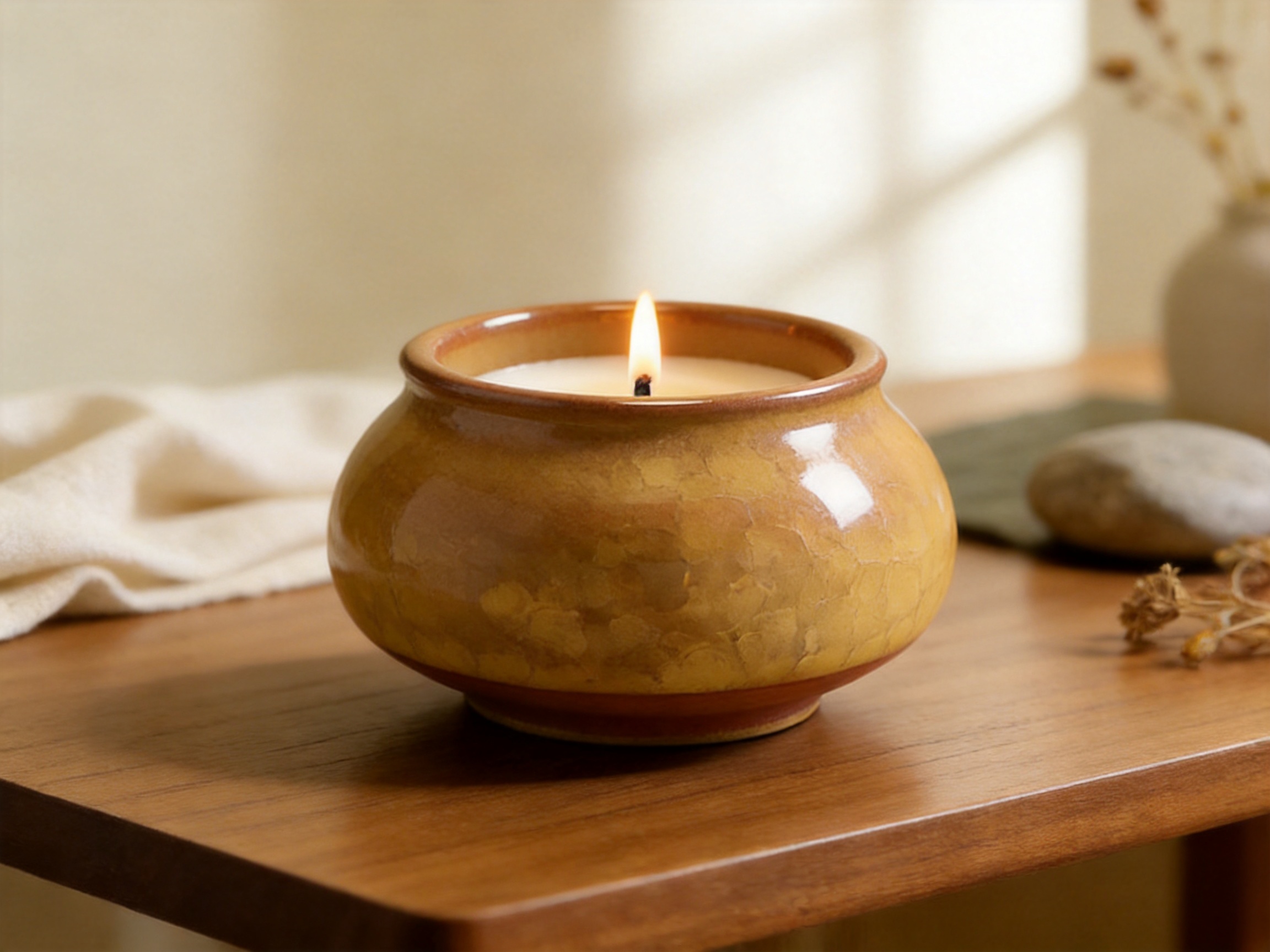
The candle is presented in a warm-toned ceramic container with a delicate crackle-glaze finish. Instead of appearing completely uniform, the surface displays naturally varied textured patterns that create depth and individuality. Its low, bowl-shaped silhouette introduces smooth curves and a stable visual presence, making it suitable for living rooms, bedrooms, meditation spaces, hospitality settings, gift collections, and seasonal home décor lines.
Although its appearance is distinctive, the design is not based on decoration alone. The single-wick configuration is intended to provide an even and steady burn, while the low and wide opening makes lighting, monitoring, and routine maintenance more convenient. Once the candle has been consumed, the heat-resistant ceramic vessel can be reused as a small storage container or decorative accessory. This combination of fragrance, light, decorative value, and secondary use gives the product a broader life cycle than a conventional disposable candle container.
For wholesale buyers, the product is also supported by the capabilities of Hangzhou Leo Home Trading Co., Ltd. The company focuses on sourcing, product development, customization, quality control, and international delivery for household and daily-use products. Its home fragrance portfolio includes scented candles, LED candles, related gift sets, and associated accessories. Through coordinated manufacturing resources, laboratory support, inspection procedures, and OEM/ODM services, the company can help clients develop products suited to different markets and sales channels.
The Crackle-Glaze Bowl-Shaped Ceramic Jar Candle belongs to the ceramic jar candle category, but it is designed to occupy a more refined position than an ordinary straight-sided candle vessel. Its visual identity comes from the interaction between shape, glaze, color, and flame. The warm ceramic tone creates a comfortable and approachable impression, while the crackle-glaze pattern adds an artisanal quality that can make the candle appear more distinctive on a shelf or tabletop.
Many standard jar candles rely on a simple cylindrical container and printed labeling to create product differentiation. That approach can be effective, but it often places most of the burden on the label, packaging, fragrance name, or promotional photography. A shaped ceramic vessel offers another route to differentiation. The container itself becomes part of the product story, helping the candle communicate craft, warmth, and decorative value before it is lit.
The bowl-shaped profile is especially suitable for consumers who prefer soft, rounded forms in their interiors. Sharp-edged or highly geometric vessels can create a modern appearance, but they may not fit every room style. The smooth curves of this design can complement natural, rustic, contemporary, transitional, and hospitality-oriented environments. The shape also gives the candle a visually grounded appearance, helping it remain stable and noticeable without appearing overly tall or intrusive.
From a merchandising perspective, the vessel can support several product narratives. It may be positioned as a relaxation candle, a meditation accessory, a decorative home fragrance item, a gift product, or part of a coordinated ceramic collection. Its warm color and textured glaze are compatible with autumn and winter assortments, while the simple silhouette can also work in year-round home décor programs.
The crackle-glaze finish is one of the product’s most recognizable advantages. Crackle effects create fine, irregular lines across the ceramic surface, producing a pattern that appears naturally developed rather than mechanically printed. This variation helps each vessel convey an individual character. Even when products are manufactured to a consistent standard, the subtle differences in the glaze pattern can strengthen the handmade-inspired impression valued by many home fragrance consumers.
In a competitive market, surface treatment can influence perceived value significantly. A basic container may be functional, but a carefully developed glaze can make the same category of candle feel more premium. The tactile and visual qualities of the finish encourage customers to examine the product more closely. The surface can catch changing light during the day and reflect the candle flame at night, allowing the container to contribute to the atmosphere rather than simply holding the wax.
The finish also provides a useful alternative to heavily printed packaging. Brands seeking a quieter, more elegant appearance may prefer a vessel that communicates quality through material and form. A minimal label, a small logo, or a restrained packaging design can work effectively with the textured ceramic surface. This may appeal to retailers specializing in home décor, wellness, lifestyle gifts, boutique interiors, and elevated everyday products.
Compared with ordinary smooth ceramic vessels, the crackle-glaze treatment offers greater visual depth. Compared with highly ornate containers, it remains sufficiently versatile for broad merchandising. This balance is important for distributors that need products with a clear identity but without an overly narrow decorative style.
Ceramic offers a substantial and refined appearance that can make a candle feel more substantial than a lightweight container. The material is associated with craftsmanship, permanence, and home décor. Its surface can be developed in different colors and glaze directions, providing a foundation for future variations or coordinated collections.
The warm-toned finish is also commercially useful because warm neutrals are easy to integrate into many interior environments. They can complement wood, stone, woven textiles, metal accents, and natural greenery. The candle does not need to be placed in a highly stylized setting to appear attractive. Its visual language is accessible enough for mainstream home décor while retaining qualities that can support a premium presentation.
The bowl-shaped silhouette gives the candle a low, wide profile. This creates a stable visual and physical presence on a tabletop, shelf, bedside table, coffee table, vanity, or display unit. A low vessel can be particularly useful in spaces where users want candlelight without a tall object dominating the surrounding décor.
The smooth curves help soften the product’s outline. Rather than presenting a rigid vertical wall, the vessel introduces a more fluid transition between the base, sides, and opening. This shape can make the candle feel comfortable and approachable, which is consistent with its intended uses in relaxation, meditation, and cozy home ambiance.
The wide opening has practical advantages as well. It can make the wick easier to reach when lighting the candle, particularly when the candle is placed inside a decorative arrangement. The opening also supports clearer visibility of the wax surface, allowing users to observe the burn and remove wick debris more conveniently. After the candle is finished, the same opening makes the container easy to access when repurposed for storage or decoration.
A broad opening can also improve the visual relationship between the flame and the vessel. Instead of a flame appearing deeply enclosed inside a narrow jar, the low bowl-like form allows the glow to remain visible from multiple viewing angles. This helps the candle contribute to a warm, open ambiance while preserving the sense of containment expected from a jar candle.
| Design consideration | Crackle-glaze bowl-shaped ceramic jar candle | Common conventional jar candle |
|---|---|---|
| Visual identity | Textured glaze and sculptural low profile create a distinctive decorative impression | Often depends mainly on labels, color, or packaging for differentiation |
| Surface character | Crackle pattern adds depth and artisanal appeal | Frequently smooth and visually uniform |
| Flame visibility | Low, wide opening supports an open view of the flame | Taller vessels may visually enclose the flame more strongly |
| Placement flexibility | Rounded, stable form suits tables, shelves, bedrooms, and display settings | Use depends more heavily on the height and proportions of the jar |
| After-use potential | Heat-resistant ceramic can be reused as storage or décor | Reuse depends on the material, shape, and condition of the container |
| Collection potential | Glaze and shape can support coordinated color or fragrance collections | Collection development may rely more on labels and packaging changes |
The comparison does not mean that every conventional jar candle is inferior. Different vessels suit different markets. However, this ceramic design provides a combination of decorative differentiation and practical usability that can help retailers create a more compelling assortment.
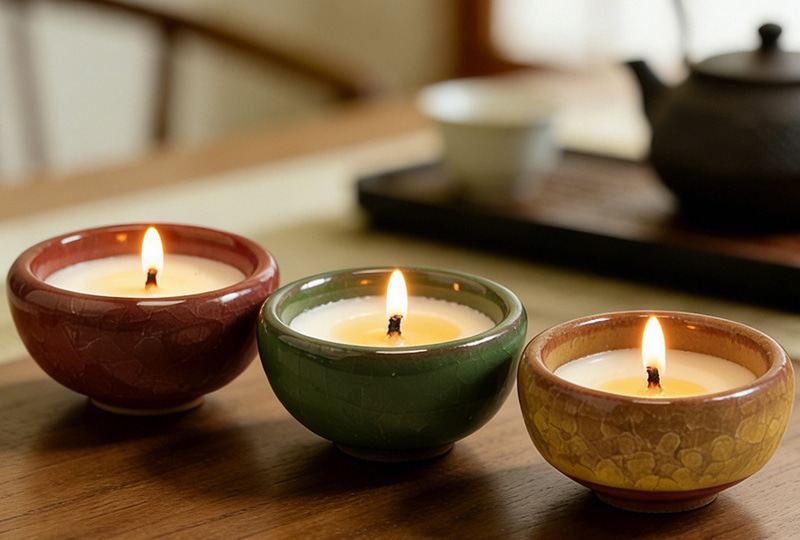
Crackle-Glaze Bowl-Shaped Ceramic Jar Candle
The candle uses a single-wick configuration. A single wick is often selected for products that prioritize a calm, controlled visual experience and a clean presentation. When appropriately matched to the wax blend, fragrance load, vessel dimensions, and intended burn behavior, one wick can produce a steady flame and an even pool of melted wax.
The product description emphasizes even and steady burning, making it suitable for quiet environments such as bedrooms, reading corners, meditation areas, and relaxation spaces. The resulting light is described as soft and non-glaring rather than harsh or overly bright. This quality is important for consumers who use candles to create a mood instead of seeking strong illumination.
A soft flame can help support several common home fragrance rituals. It may be lit during an evening bath, while reading, during gentle stretching, before meditation, or while preparing a room for rest. In hospitality settings, it can contribute to a welcoming impression in guest rooms, treatment rooms, reception spaces, or dining areas, subject to the venue’s safety policies and applicable regulations.
The single-wick format may also simplify the visual language of the product. Multiple wicks can create a dramatic flame effect, but they can also make a candle appear more active or intense. A single flame is more closely associated with simplicity and calm. This supports the product’s positioning as a refined ambient accessory rather than only a decorative centerpiece.
Like all candles, this product should be used responsibly. The candle should be placed on a stable, heat-resistant surface and kept away from curtains, paper, textiles, children, pets, and other flammable materials. Users should follow the supplier’s recommended burn instructions, avoid leaving a lit candle unattended, and extinguish the flame before leaving the room or going to sleep.
The wick should be maintained according to the product’s care guidance. Removing excessive carbon buildup and keeping the wick at an appropriate length can support a more controlled flame. Users should also avoid burning the candle all the way to the ceramic base. When only a small amount of wax remains, the candle should be extinguished and allowed to cool before the vessel is cleaned and reused.
These usage principles are not limitations specific to this product. They are standard practices for responsible candle ownership. For professional buyers, clear care instructions can be included on labels, cartons, inserts, or packaging artwork as part of the customization process.
One of the strongest advantages of the ceramic jar format is the potential for secondary use. After the wax has been consumed, the heat-resistant ceramic container can be cleaned and used as a small storage vessel or decorative accent. Possible applications may include holding small accessories, office items, jewelry, wrapped candies, dried flowers, or other lightweight household objects, depending on the vessel’s final condition and the user’s needs.
Reuse expands the product experience beyond the initial fragrance period. A disposable container typically loses its functional value after the candle is finished. A reusable ceramic vessel can remain visible in the home, extending the product’s decorative presence and reinforcing the customer’s perception of value. For brands, this quality can support messaging around thoughtful design, longevity, and practical beauty.
The potential for reuse also creates opportunities for repeat engagement. A customer may purchase another candle in a different fragrance or glaze color while continuing to use the original vessel. Retailers can develop refill concepts or complementary collections where feasible, although any refill program must be evaluated for compatibility, safety, dimensions, and manufacturing requirements.
From a merchandising standpoint, reusability can strengthen gift appeal. Buyers often prefer gifts that feel useful after the primary function is complete. The ceramic jar can become part of the recipient’s home rather than being immediately discarded. This makes the product suitable for housewarming gifts, seasonal gift boxes, wellness bundles, corporate gift programs, and lifestyle subscription assortments.
Once the candle has been fully extinguished and the remaining wax has cooled, the container should be cleaned carefully. Any method used to remove wax should be appropriate for the ceramic vessel and should avoid sudden temperature changes that could damage the material. The container should be dried thoroughly before being used for storage or display.
When repurposed, the vessel should be used according to its intended secondary function. If the product has not been specifically tested and approved for food contact, it should not automatically be used for unpackaged food. This distinction is useful for retailers and end users because it preserves the practical benefits of reuse while encouraging responsible product communication.
The quality of a finished candle depends on more than the appearance of its vessel. It requires coordination among ceramic development, glaze treatment, wax formulation, wick selection, fragrance integration, filling, finishing, packaging, inspection, and delivery. Hangzhou Leo Home Trading Co., Ltd. supports this type of coordination through an integrated supply-chain approach designed for household and daily-use products.
The company was founded in January 2025 and is based in Hangzhou, China. Its business model combines international trading, product development, sourcing, cross-border marketing, and supply-chain management. Within the home fragrance field, the company works with scented candles, LED candles, gift sets, and related products. This focus allows it to support buyers that need more than a single stock item and are seeking a dependable partner for broader product development.
According to the supplied company information, the company coordinates 10 candle factories, 8 jar customization partners, and 8 color box factories. This network can provide flexibility in matching product requirements with suitable manufacturing resources. It can also help buyers compare production options, manage costs, develop packaging, and organize bulk delivery.
A ceramic jar candle requires the container and candle filling to function together. The vessel must be compatible with the heat generated during use, while the wick and wax system must be selected with consideration for the vessel’s shape and opening. A low, wide bowl-shaped container has different requirements from a tall cylindrical jar. Its surface area, opening, visual exposure, and heat behavior all influence product development.
A coordinated supply process can reduce the risk of treating the jar as an isolated decorative component. The design, color, glaze, candle fill, wick, label, and packaging can be reviewed as a complete product. This is particularly important for OEM and ODM projects, where the buyer may want to adjust the fragrance, surface finish, carton design, product dimensions, or collection theme.
The company’s sourcing model also supports development based on drawings or samples. Buyers can communicate a desired appearance, provide a reference sample, or describe a target market concept. The product development process can then focus on refining the specification, scent direction, labeling, and packaging to create a commercially coherent result.
The company states that it maintains an in-house laboratory and applies quality control at key stages, from material selection through finished-goods inspection. For a home fragrance product, this type of oversight is important because quality is determined by multiple components rather than by appearance alone.
Material checks may involve reviewing ceramic quality, surface finish, wax consistency, fragrance characteristics, wick condition, and packaging materials. In-process controls can help identify issues during filling, setting, labeling, or packing. Finished-product inspections can then verify general appearance, workmanship, presentation, and order conformity before shipment.
The exact testing program for any specific order should be confirmed with the buyer and matched to the destination market. Requirements can vary according to product classification, labeling rules, packaging standards, transportation conditions, and retailer expectations. A professional supplier should be able to discuss the applicable quality documentation and inspection scope during project development.
The company reports daily capacity of up to 50,000 units for stable bulk delivery and replenishment, while also supporting smaller volumes and trial runs. This range is valuable for different types of buyers. An established retailer may need regular high-volume shipments, while a new brand may first require a smaller order to test consumer response.
Flexible capacity can also support seasonal planning. Home fragrance demand may rise around holidays, housewarming periods, wedding seasons, promotional events, and changes in weather. A supplier with access to multiple manufacturing resources may be better positioned to organize production and replenishment than a supplier dependent on one narrow facility.
The company’s location near Ningbo Port is another logistical advantage noted in its profile. Efficient access to export infrastructure can support international shipping coordination, although final delivery times will depend on order specifications, production schedules, documentation, transport methods, customs procedures, and destination conditions.
The Crackle-Glaze Bowl-Shaped Ceramic Jar Candle can be supplied as a finished product or used as a foundation for customization. OEM and ODM services allow buyers to create a product line that reflects their own market positioning instead of relying entirely on generic stock designs.
Customization may involve fragrance selection, glaze color, label design, logo application, packaging structure, carton artwork, gift-set configuration, and collection planning. A buyer may choose a warm neutral palette for a minimalist home décor line, several muted colors for a seasonal collection, or contrasting shades for a gift assortment. The crackle-glaze surface can become a recognizable visual theme across multiple fragrances.
Fragrance customization is another important opportunity. Different markets may prefer floral, woody, citrus, gourmand, herbal, fresh, or clean fragrance profiles. A professional development process should consider not only the fragrance description but also the intended consumer, product positioning, regulatory requirements, packaging language, and consistency across production batches.
Packaging can be developed to reinforce the vessel’s premium appearance. A simple folding carton, rigid gift box, protective insert, belly band, or multi-piece set may be appropriate depending on the sales channel. E-commerce products may require additional protection against impact and movement during transit, while boutique retail products may prioritize shelf presentation and unboxing experience.
For buyers launching a new collection, it may be useful to define a product architecture. The ceramic bowl candle could serve as a premium centerpiece, while smaller jar candles, reed diffusers, LED candles, or scented sets create accessible companion products. This approach allows a retailer to offer different price points while maintaining a consistent fragrance or visual story.
A typical development process begins with a brief covering the target market, preferred price range, product dimensions, fragrance direction, order quantity, packaging needs, and delivery expectations. The supplier can then review available materials, manufacturing resources, and possible production routes.
Next, the buyer and supplier can confirm the ceramic appearance, glaze direction, candle specification, and packaging concept. Samples or pre-production references may be used to evaluate color, surface texture, label placement, fragrance impression, wick behavior, and overall presentation. Any adjustments should be documented clearly so that the final order can be produced consistently.
Before bulk manufacturing, the buyer should approve the agreed specifications and artwork. The supplier can then coordinate production, inspections, packaging, and shipping. This staged process helps reduce misunderstanding and gives both parties an opportunity to address practical issues before a large quantity is committed.
Retailers need products that attract attention, communicate value quickly, and fit their existing assortment. This ceramic candle supports those objectives through a recognizable surface treatment and a versatile silhouette. It can be merchandised in home fragrance displays, ceramic décor sections, wellness collections, seasonal tables, or gift-oriented presentations.
Wholesalers may value the product’s ability to serve multiple customer types. Boutique stores can use it as a decorative premium candle, while larger lifestyle retailers can include it in a broader home fragrance program. Interior-focused buyers may appreciate the ceramic vessel, and wellness-oriented buyers may emphasize its soft glow and suitability for relaxation routines.
Distributors often require consistency and replenishment more than novelty alone. The company’s manufacturing network and supply-chain coordination can help support repeat orders, product variations, and larger purchasing programs. The availability of customization also allows distributors to develop exclusive lines for regional customers or private-label clients.
The product may be particularly effective in markets where consumers are drawn to tactile materials, neutral colors, handmade-inspired details, and multifunctional décor. It can also appeal to buyers who want a candle that remains useful after the fragrance experience ends.
The product can be considered for specialty home décor stores, gift shops, wellness retailers, lifestyle boutiques, department-store home sections, hotel and hospitality suppliers, online marketplaces, subscription boxes, corporate gifting programs, and seasonal promotional collections.
For online sales, high-quality photography should show the vessel from several angles and communicate the texture of the glaze. Product copy should explain the bowl-shaped design, single-wick format, intended ambiance, ceramic construction, and potential for reuse. Packaging should be designed to protect the vessel during transport and should present a professional unboxing experience.
For physical retail, the candle can be displayed with complementary ceramics, textiles, books, bath products, fragrance accessories, or natural decorative materials. The low profile makes it suitable for grouped displays where multiple vessels can be arranged without blocking one another. Color or fragrance variations can be presented as a coordinated collection.
For buyers, quality is not limited to whether one sample looks attractive. It also includes whether production remains consistent across hundreds or thousands of units. Ceramic products naturally require attention to shape, glaze coverage, surface texture, color, edge finishing, and base stability. Candle products require attention to fill level, wick placement, wax appearance, fragrance consistency, and packaging cleanliness.
The company’s stated quality-control approach is designed to address these stages. By managing supplier relationships and coordinating inspections from raw materials to finished goods, Leo Home can help buyers establish a clearer quality process. This is especially important for customized products, where the production standard must be translated from a drawing, sample, or brand specification into repeatable manufacturing instructions.
Quality assurance also supports brand reputation. A customer may forgive a minor variation in an artisanal glaze, but inconsistent labeling, damaged packaging, an unstable vessel, or poorly aligned components can undermine trust. A structured inspection process helps separate acceptable material variation from defects that should be corrected.
For international buyers, documentation and communication are equally important. Product specifications, packaging details, carton marks, inspection requirements, and shipping information should be confirmed before production. The company’s international trading experience and cross-border logistics focus can help organize these details as part of a one-stop supply service.
Crackle glaze is valued partly because it does not look completely mechanical. However, commercial production still needs clear boundaries. Buyers should define the acceptable range of color variation, crackle density, glaze coverage, surface marks, and dimensional tolerance. This allows the product to maintain an artisanal appearance while preserving overall collection consistency.
A thoughtful specification can state which variations are inherent to the finish and which conditions are considered unacceptable. For example, natural differences in the crackle pattern may be accepted, while sharp edges, structural damage, unstable bases, severe glaze defects, or incorrect colors may require rejection. This distinction helps protect the product’s character without lowering quality standards.
Consumers are paying closer attention to the life cycle of home fragrance products. While no single product can solve every environmental concern, a reusable ceramic vessel offers a practical way to extend material utility. Instead of treating the container as packaging that immediately becomes waste, users can continue to use it as a small household object.
The product’s durable ceramic construction supports this concept. The vessel can remain part of the home after the wax is gone, creating a longer relationship between the buyer and the product. Reuse may also increase perceived value, because customers receive both the candle experience and a decorative container with a possible second function.
Brands should communicate sustainability claims carefully and accurately. The product can be described as reusable when the container is suitable for secondary use, but broad environmental claims should be supported by appropriate evidence. Packaging materials, shipping protection, fragrance components, wax selection, and manufacturing practices should all be evaluated separately when developing a complete sustainability statement.
For wholesale programs, reuse can be incorporated into product storytelling. Packaging inserts may offer ideas for cleaning and repurposing the ceramic vessel. Retail displays can show the product before and after use, emphasizing that the container can continue to serve a decorative or organizational purpose. Such communication may encourage customers to keep the vessel rather than discard it.
Although the product has a strong appearance in its standard form, presentation can be adapted to different brand identities. A refined logo mark and neutral carton may support a minimalist collection. A botanical label and natural paperboard may suit a wellness or botanical theme. A more colorful design may be appropriate for seasonal gifting or younger lifestyle audiences.
Label content should clearly identify the product, fragrance, net contents, usage instructions, safety guidance, and any information required by the destination market. The design should respect the visual quality of the ceramic surface rather than covering too much of the textured vessel. A small, carefully positioned label may be more effective than an oversized graphic treatment.
Gift packaging can increase the product’s commercial potential. The candle may be paired with a smaller candle, reed diffuser, fragrance sachet, candle accessory, or decorative object. The company’s wider product scope includes scented sets and related home fragrance items, allowing buyers to explore coordinated combinations.
For private-label programs, the most effective approach is usually to maintain a consistent relationship among product name, fragrance story, color palette, packaging, and photography. The ceramic jar can serve as the visual anchor, while the other elements explain why the product is distinctive and who it is designed for.
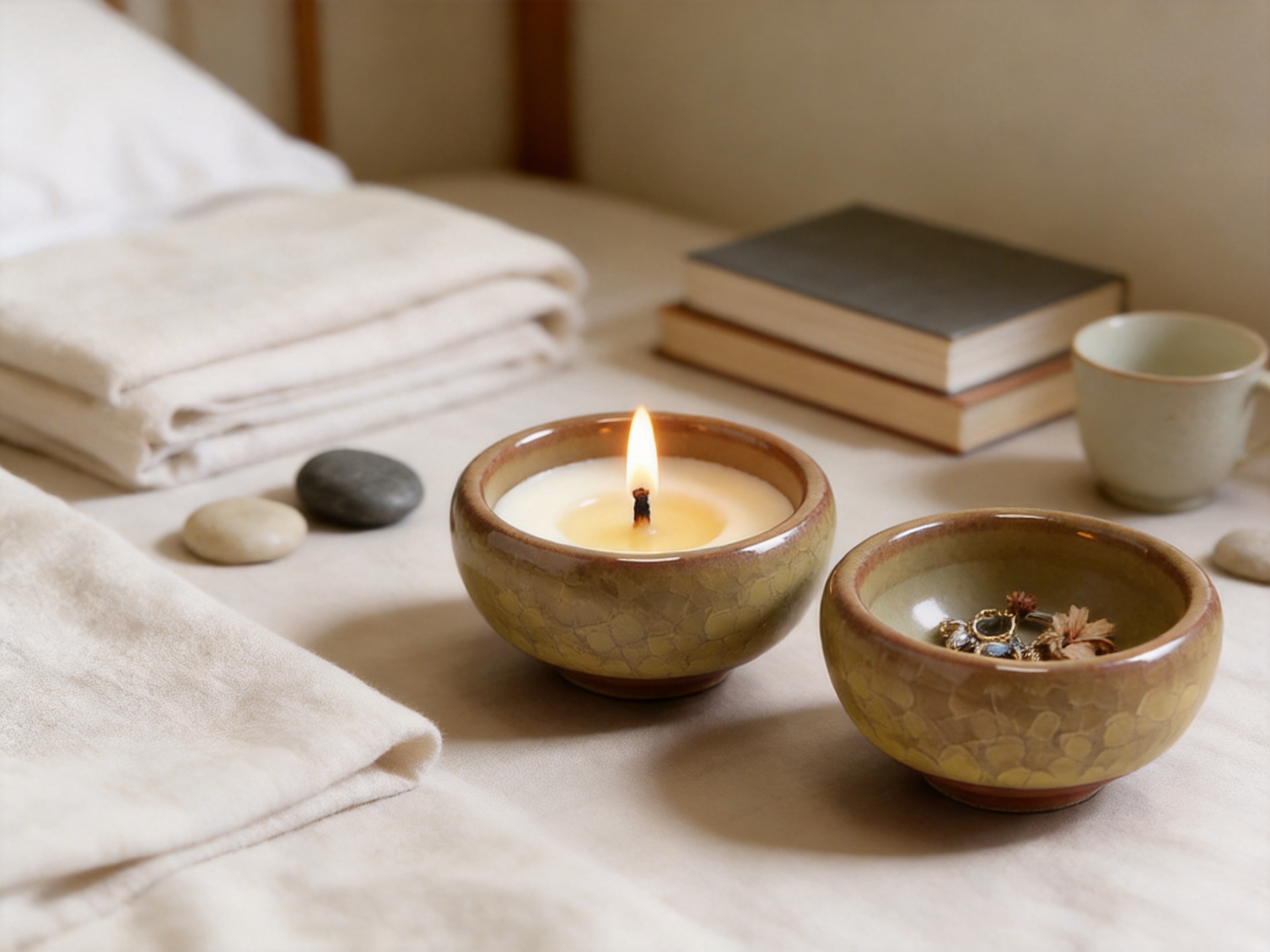
Product messaging should focus on tangible features and realistic benefits. Suitable themes may include textured ceramic craftsmanship, warm-toned décor, soft single-wick illumination, comfortable bowl-shaped proportions, and the possibility of reuse after the candle has finished.
For a relaxation collection, messaging can emphasize the gentle glow and quiet atmosphere. For a home décor collection, the crackle-glaze finish and sculptural silhouette may take priority. For a gifting program, the reusable ceramic vessel and premium presentation may be highlighted. For a wholesale catalog, buyers may need more detail about customization, inspection, packaging, capacity, and delivery support.
Clear messaging avoids overpromising. The candle should not be presented as a substitute for lighting systems, medical treatment, or therapeutic care. It is best described as an ambient home fragrance product that can support a calming environment when used responsibly.
The Crackle-Glaze Bowl-Shaped Ceramic Jar Candle combines warm ceramic texture with a soft, steady flame. Its naturally patterned crackle-glaze finish adds artisanal depth, while the low bowl-shaped profile offers a stable and elegant presence on tables, shelves, and bedside surfaces. Designed with a single wick for an even burn, it creates a gentle atmosphere for relaxation, meditation, or quiet evenings. After use, the heat-resistant ceramic vessel can be cleaned and reused as a small storage container or decorative accent.
Before placing a bulk order, buyers should confirm the complete product specification. Important points include the ceramic dimensions, color direction, glaze finish, wick format, wax type, fragrance, fill weight, label details, packaging structure, carton quantity, sampling procedure, inspection standard, order quantity, lead time, and shipping terms.
Buyers should also confirm whether the product is intended for a specific regulatory market. Candle labeling and safety expectations can vary between regions. Packaging may need warnings, care instructions, ingredient or allergen information, barcode details, importer information, or other market-specific content. The supplier and buyer should review these requirements early rather than waiting until the packaging stage.
Sampling is especially valuable for this product because the visual and functional qualities are closely connected. A sample can be used to assess the crackle pattern, color warmth, vessel proportions, wick position, fragrance impression, flame behavior, label placement, and packaging protection. If several colors or fragrances are planned, each variation should be reviewed as necessary.
For larger programs, a pre-production sample or approved reference standard can help control consistency. The approved reference should be retained by both parties when possible. It can serve as a comparison point during production and inspection, especially when glaze variation is part of the intended design.
Can the ceramic color or crackle-glaze finish be customized? Can the fragrance be developed for a particular market? What packaging options are available for retail and e-commerce? What is the minimum order quantity for custom artwork or custom colors? Which inspection procedures are included? Can smaller trial orders be supported before a larger program? How are cartons protected during international transport? These questions should be discussed during the quotation and development stages.
The home fragrance market includes a wide range of candles, from low-cost promotional products to luxury vessels and artisan collections. A product must therefore establish a clear reason for purchase. This ceramic candle creates differentiation through several connected features rather than relying on one isolated benefit.
First, the crackle-glaze surface gives the product an immediate visual signature. Second, the bowl-shaped profile offers a softer and more decorative alternative to the standard cylindrical jar. Third, the single-wick format supports a calm, uncluttered flame presentation. Fourth, the heat-resistant ceramic container can be reused after the candle is finished. Fifth, the product can be integrated into OEM/ODM programs involving fragrance, color, labeling, and packaging customization.
These qualities create a layered value proposition. A customer may first notice the texture, then appreciate the shape, enjoy the fragrance and glow, and finally keep the vessel for another purpose. A retailer may first select the product for its appearance, then value its collection potential, packaging flexibility, and supply support.
Competitors may offer attractive fragrances, decorative containers, or customization independently. The opportunity here is to combine these elements in one coherent product concept. The result is not merely a candle in a ceramic jar; it is a home décor object with a fragrance function and an extended-use possibility.
The main visual feature is the warm-toned ceramic container with a crackle-glaze finish. The glaze creates naturally varied textured patterns that add depth, character, and artisanal appeal to the surface.
The container has a low, wide profile with smooth curves rather than a tall, narrow form. This gives it a stable and refined presence and helps the flame remain visually open from different viewing angles.
The product uses a single-wick configuration. It is designed to provide an even and steady burn with a soft, non-glaring glow when used according to the appropriate care instructions.
It is suitable for living areas, bedrooms, reading corners, meditation spaces, relaxation routines, gift displays, and other settings where a warm home fragrance atmosphere is desired. It should always be used on a stable, heat-resistant surface and never left unattended.
Yes. Once the candle has been completely extinguished, cooled, and properly cleaned, the heat-resistant ceramic vessel can be reused as a small storage container or decorative accent. Buyers should follow appropriate cleaning practices and should not assume that the vessel is approved for unpackaged food unless specifically confirmed.
Its differentiation comes from the combination of crackle-glaze texture, bowl-shaped proportions, soft single-wick illumination, ceramic durability, and potential secondary use. A basic jar candle may rely primarily on its fragrance and label, while this product makes the container itself part of the value proposition.
Customization may be available for fragrance, ceramic appearance, labels, logos, packaging, and gift-set configuration. The exact options, minimum quantities, and development procedures should be confirmed for each project.
The supplier supports product development based on drawings or samples and can assist with specifications, scent selection, labels, packaging, sourcing, and delivery coordination. This enables buyers to create private-label or market-specific collections.
The company states that it uses an in-house laboratory and applies quality control from raw material selection to finished-goods inspection. The final inspection scope should be confirmed according to the product specification, order requirements, and destination market.
The company profile indicates support for smaller volumes and trial runs in addition to bulk delivery. Buyers should confirm the applicable minimum order quantity, customization conditions, sampling costs, and production schedule for their specific project.
Crackle-glaze finishes may show natural visual variation. This variation is part of the artisanal character, but buyers should establish an acceptable range for color, texture, and surface consistency during sample approval and production planning.
Buyers should confirm dimensions, ceramic color, glaze finish, wax and fragrance specifications, wick configuration, labeling, packaging, order quantity, inspection requirements, delivery schedule, shipping terms, and market-specific compliance information.
The Crackle-Glaze Bowl-Shaped Ceramic Jar Candle offers a carefully balanced answer to the needs of modern home fragrance buyers. Its warm-toned ceramic body provides a substantial and decorative foundation, while the crackle-glaze finish creates the textured individuality that helps it stand apart from ordinary smooth jars. The low bowl-shaped silhouette gives it stability, softness, and flexible placement across a range of interior settings.
Its single-wick design supports an even, steady burn and a gentle glow suited to relaxation, meditation, reading, and comfortable evening routines. The wide opening improves access for lighting and maintenance, while the heat-resistant ceramic vessel can continue to serve a practical or decorative function after the candle has been used.
For wholesale and private-label customers, the product is strengthened by Hangzhou Leo Home Trading Co., Ltd.’s sourcing network, manufacturing coordination, laboratory support, quality-control procedures, customization services, and international logistics experience. Access to multiple candle factories, jar customization partners, and color box factories can provide flexibility for buyers developing stock products, exclusive collections, seasonal lines, or trial programs.
The greatest commercial strength of this candle is its combination of qualities. It is a fragrance product, an ambient lighting product, a ceramic décor object, a gift option, and a potential reusable container. Supported by coordinated OEM/ODM development and supply-chain management, it can help retailers and distributors build product lines that are visually distinctive, practical, and adaptable to changing market needs.
1. Product specification and descriptive materials for the Crackle-Glaze Bowl-Shaped Ceramic Jar Candle, including design, finish, wick configuration, intended ambiance, and reuse information.
2. Hangzhou Leo Home Trading Co., Ltd. company profile, including sourcing capabilities, home fragrance product scope, OEM/ODM services, quality-control approach, manufacturing network, capacity, and international logistics information.
3. General candle-use and fire-safety principles for residential and commercial environments, including responsible placement, supervision, wick maintenance, and extinguishing practices.
4. General home fragrance merchandising principles relating to vessel design, gift presentation, collection development, product differentiation, and retail communication.
5. General ceramic product-care guidance concerning temperature changes, cleaning, surface protection, and responsible secondary use.

Room 1701, Building C1, Wangjing, Xiaoshan District, Hangzhou City, Zhejiang Province, China.

+86-15937257616

Copyright© 2026 Hangzhou Leo Home Trading Co., Ltd. All Rights Reserved.

Luxury Candles Home Fragrance Manufacturers Modern Candles Factory