 English
 Français
News
Home / Author / Catherine Wu — Key Account After-Sales Specialist / Matte White Engraved-Illustration Lidded Metal Jar Candle: A Refined Format for Modern Home Fragrance
Content

The modern home fragrance market is increasingly shaped by products that combine sensory performance, visual restraint, practical usability, and customization flexibility. Consumers want candles that create a welcoming atmosphere, but they also expect the vessel to complement the room when it is not being burned. Retailers and brand owners, meanwhile, need products that are attractive on the shelf, dependable in production, and adaptable to different fragrance collections, seasonal programs, and target markets.
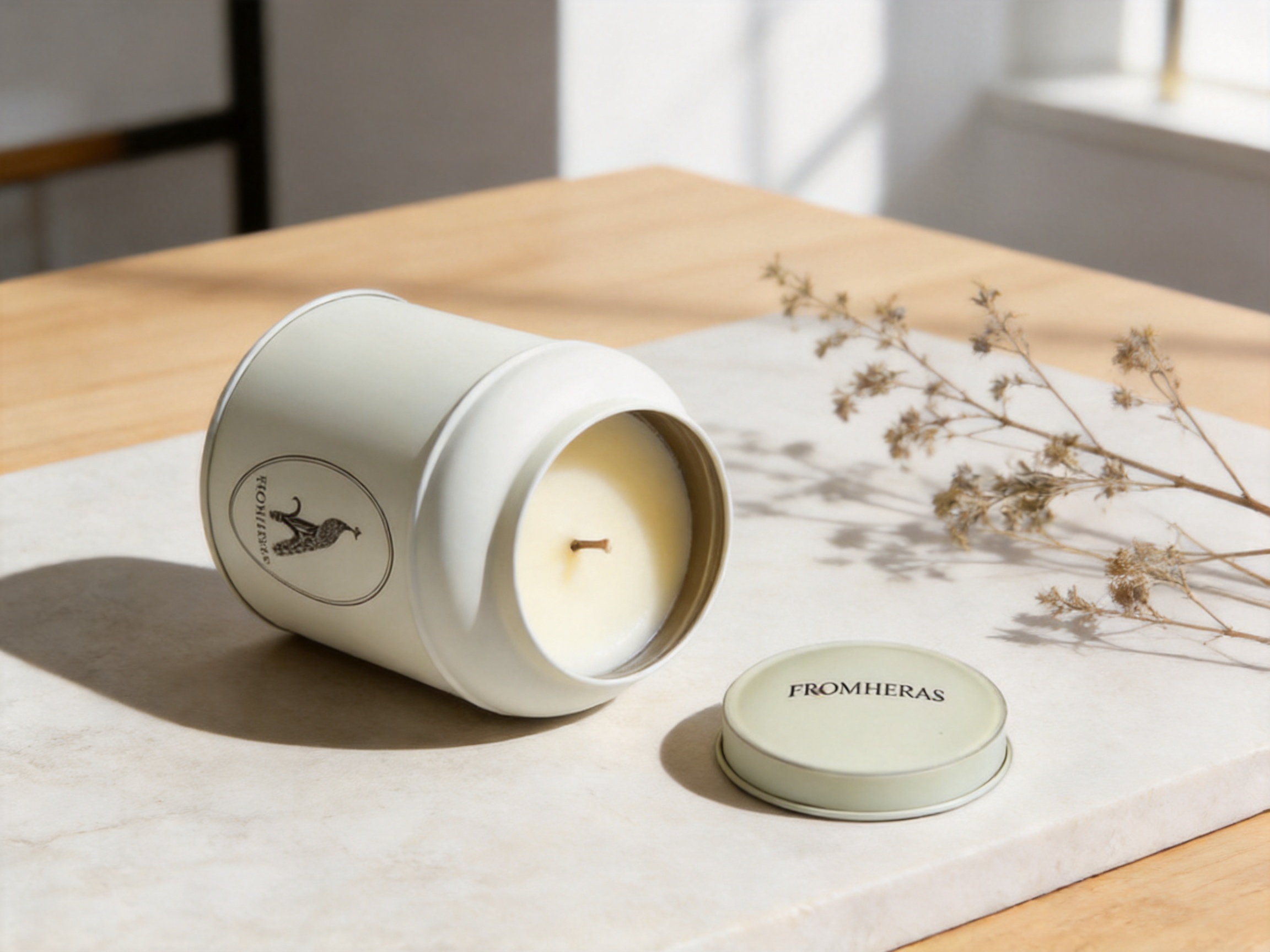
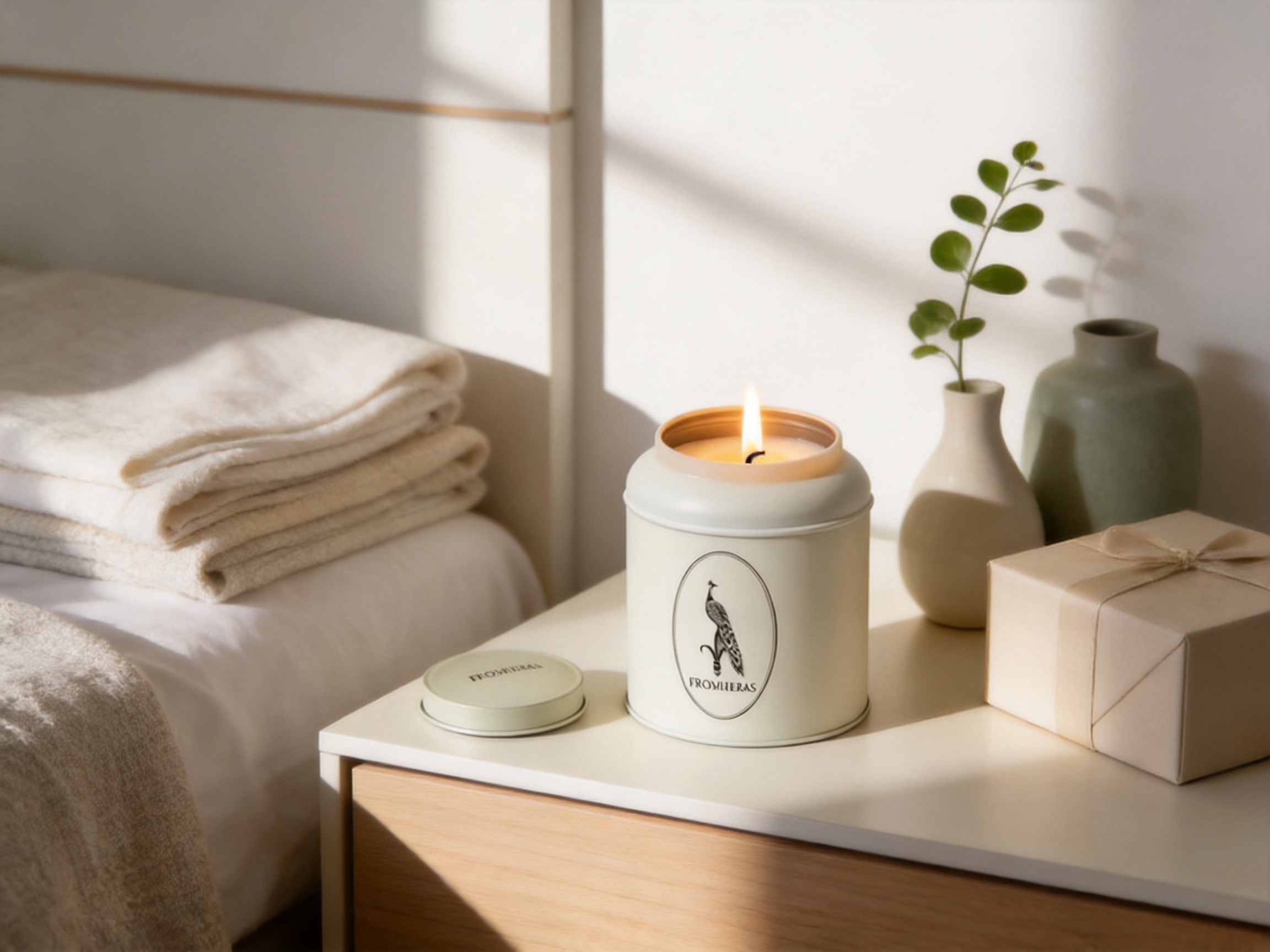
The Matte White Engraved-Illustration Lidded Metal Jar Candle responds to these requirements through a compact but generous cylindrical format. Its matte white metal vessel presents a clean, contemporary foundation, while the engraved-style botanical illustration introduces a refined decorative element. The matching lid protects the wax and helps preserve fragrance between uses, making the candle suitable for both everyday home fragrance and gift-oriented product lines.
With an approximate diameter of 90 millimeters and height of 120 millimeters, the candle offers a balanced presence. It is large enough to communicate value and support a meaningful wax fill, yet compact enough for bedside tables, bathroom counters, shelving, desks, and other areas where space may be limited. The metal construction, powder-coated surface, customizable decoration, and supply chain support behind the product make it a practical candidate for private-label, OEM, and ODM development.
Home fragrance products compete on more than scent alone. A candle must appeal to the eye before it is purchased, feel well made when handled, perform consistently during use, and remain attractive throughout its display life. The Matte White Engraved-Illustration Lidded Metal Jar Candle addresses these expectations through a combination of material selection, surface treatment, proportion, and customization potential.
The white exterior creates an uncluttered visual base that can work across many interior styles. It complements Scandinavian-inspired rooms, modern apartments, boutique hotel spaces, wellness collections, gift shops, and lifestyle retailers. Unlike heavily patterned vessels that may be difficult to coordinate with changing décor, the restrained botanical graphic adds character without overwhelming the surrounding environment.
The design also provides a useful foundation for branding. A logo can be integrated into the existing visual composition, placed on the front, applied to a label, or developed as part of a custom print program. The botanical illustration can remain as a signature design, be replaced with another line-art concept, or be adapted to match a particular collection. This gives importers and brand owners the freedom to create a coherent product family rather than simply purchasing a generic candle.
Metal is a highly practical material for candle vessels because it combines relatively low weight with useful structural strength. Compared with many fragile glass formats, a metal jar is less vulnerable to breakage during routine handling, packing, and transportation. This can be valuable for e-commerce sellers, distributors, gift companies, and retailers that move products through multiple logistics stages before they reach the consumer.
The cylindrical tin construction also supports efficient use of shelf and carton space. Round vessels can be arranged in protective packaging with predictable dimensions, while the matching lid provides an additional layer of protection for the wax surface. The result is a format that is easy to display, stack, pack, and incorporate into larger gift sets.
Metal vessels can also provide a distinctive tactile experience. The surface feels firm and durable in the hand, while the matte coating creates a soft visual and physical finish. This helps the product communicate quality without depending on excessive decoration, metallic gloss, or complex structural details.
The tin construction supports even heat distribution during normal candle use. A stable thermal environment can help the wax melt in a more consistent manner, supporting the formation of an even wax pool and reliable fragrance release when the formulation and wick are correctly matched to the vessel.
Burning performance depends on several variables, including wax type, fragrance load, wick selection, wick placement, fill weight, vessel dimensions, and testing conditions. No vessel alone can guarantee identical results across every formula. However, the metal jar provides a practical foundation for product development because its dimensions are defined, its structure is consistent, and its cylindrical shape is suitable for systematic wick and burn testing.
For professional product development, the vessel should be tested with each selected wax and fragrance combination. This allows the manufacturer and customer to assess melt-pool development, flame behavior, scent diffusion, vessel temperature, burn time, soot formation, and end-of-life performance. A controlled testing process helps turn the attractive exterior into a reliable finished product rather than treating appearance as the only priority.
The matching lid is an important functional feature. When fitted after the candle has cooled, it helps protect the wax from dust, fibers, and incidental contact. It also helps reduce the exposure of the fragrance surface to the surrounding environment between uses.
For consumers, a lid contributes to a more orderly storage experience. The candle can remain on a shelf or countertop without leaving the wax fully exposed. For retailers, the lid helps the product maintain a clean presentation during display. For gift packaging, it creates a more complete and finished impression than an open vessel alone.
A lid can also support collection design. The same basic closure may be used across several fragrance variants, allowing a brand to create a unified shelf appearance. Alternatively, the lid finish, printed mark, or packaging treatment can be adjusted for premium, seasonal, hospitality, or promotional programs.

Matte White Engraved-Illustration Lidded Metal Jar Candle
The product’s visual identity is built around contrast. The matte white surface is quiet and modern, while the engraved-style botanical illustration provides a fine decorative layer. This balance gives the vessel enough visual interest to stand out, while preserving the clean appearance expected from contemporary home accessories.
Botanical imagery is particularly adaptable in the home fragrance category. Leaves, stems, flowers, and natural line drawings can suggest freshness, calm, wellness, purity, or connection with nature. The same design language can be used for floral, herbal, citrus, green, woody, and spa-inspired fragrance collections. This makes the format suitable for a broad range of scent positioning.
The illustration is described as engraved-style rather than necessarily physically engraved into the metal. This distinction is useful for brands planning their artwork and production specifications. A printed fine-line graphic can offer flexibility in color, placement, and revisions, while an actual engraving process would involve different tooling, depth, and surface requirements. During customization, the final decorative technique should be confirmed according to the desired appearance, order volume, artwork complexity, and budget.
A matte white candle vessel can be positioned in several ways. A natural lifestyle brand may pair it with botanical names and essential-oil-inspired scent stories. A premium interior brand may use restrained typography and monochrome labeling. A gift company may introduce soft seasonal colors through the lid, carton, or fragrance naming. A hotel or spa supplier may use a simple logo and a calm, neutral presentation.
This adaptability is one of the format’s advantages over vessels with highly specific decorative themes. A strongly colored or ornate jar may be memorable, but it can also limit the number of collections it supports. The white cylindrical tin offers a longer product-development runway because the core vessel can be refreshed through fragrance, artwork, label design, and packaging updates.
The following overview summarizes the principal characteristics of the product and the areas that can be discussed during development.
| Item | Specification or Option | Commercial Relevance |
|---|---|---|
| Product type | Lidded metal jar candle | Suitable for everyday use, gifting, retail, and private-label collections |
| Vessel color | Matte white | Supports modern, minimalist, natural, and premium visual positioning |
| Decoration | Engraved-style botanical illustration | Adds visual distinction while retaining a clean overall appearance |
| Approximate diameter | 90 millimeters | Provides a visible shelf presence while remaining space efficient |
| Approximate height | 120 millimeters | Allows a generous vertical profile and meaningful wax capacity |
| Lid | Matching fitted lid | Protects the wax and supports storage, display, and gifting |
| Exterior finish | Matte powder-coated surface | Helps reduce the appearance of fingerprints and minor scuffs |
| Logo | Customizable | Supports private-label and branded product development |
| Illustration | Customizable | Allows adaptation to different collections and markets |
| Fragrance | Customizable | Enables scent development for target consumers and sales channels |
| Wax type | Customizable | Allows testing according to performance, positioning, and cost objectives |
| Packaging | Custom development available | Supports retail presentation, gift sets, and shipping requirements |
These specifications should be treated as a development framework rather than a substitute for an approved technical specification sheet. Final dimensions, wax fill, decoration method, fragrance concentration, wick configuration, packaging dimensions, and testing standards should be confirmed before production.
An undecorated tin may offer a low-cost entry point, but it often requires additional branding work to appear distinctive. The botanical illustration on this product provides an initial level of design development, helping the candle look considered before labels or cartons are added. It can therefore reduce the visual gap between a basic container and a finished lifestyle product.
At the same time, the design remains sufficiently restrained to allow further customization. A customer can retain the illustration and add a logo, modify the graphic, or replace it with a collection-specific concept. This is more flexible than a fixed, highly themed pattern that may not suit every brand identity.
Glass candles can provide a luxurious appearance, but they may require more protective packaging and careful handling throughout distribution. A metal jar offers a different value proposition: it is lightweight, durable in routine transport, and less likely to shatter if dropped during ordinary handling. This can be advantageous for online fulfillment, travel-oriented gift collections, subscription boxes, and export shipments.
Metal also offers a distinctive appearance that can be used to differentiate a product line from the large number of candles presented in transparent glass. The matte white tin can look soft, contemporary, and decorative while remaining practical.
Some candle vessels rely on elaborate colors, textures, metallic effects, or sculptural elements to attract attention. These treatments can be effective for particular collections, but they may also increase production complexity, restrict visual compatibility, and make it more difficult to create a consistent range.
The matte white vessel uses controlled decoration rather than visual excess. This gives the product a broad commercial appeal and allows the fragrance, packaging, and brand story to share attention with the container. It is especially suitable for businesses that want an elevated appearance without making the vessel the sole focus of the product.
An open-topped candle may be simpler to produce, but it leaves the wax surface exposed during storage and display. The fitted lid on this product provides an additional practical benefit and creates a stronger sense of completion. This feature can help the candle feel more suitable for gifting and premium retail presentation.
Hangzhou Leo Home Trading Co., Ltd. presents the product through a supply chain model that combines sourcing, customization, quality control, and export support. The company was founded in January 2025 and is based in Hangzhou, China. Its stated product scope includes household and daily necessities, personal care, home and garden products, daily tools, and home fragrance items such as scented candles, LED candles, and related gift sets.
The company’s role is not limited to presenting a finished candle. Its development model is designed to connect customer requirements with manufacturing resources. This can be important when a buyer needs more than a standard stock product, particularly when the project involves artwork adaptation, fragrance selection, wax changes, packaging development, or coordinated production across multiple components.
According to the provided company information, Leo Home integrates 10 candle factories, 8 jar customization partners, and 8 color box factories. This network gives the company access to specialized resources at different stages of the product process.
A multi-partner structure can provide several benefits. Candle factories can focus on wax preparation, wick assembly, filling, curing, and burn testing. Jar customization partners can handle vessel colors, surface decoration, and structural variations. Color box factories can develop cartons and printed packaging that match the candle’s dimensions and visual identity.
When these resources are coordinated by one trading and supply chain partner, the customer may reduce the need to manage separate communications for every component. The effectiveness of this model depends on clear specifications, sample approval, production scheduling, and quality documentation. Nevertheless, access to multiple specialized partners can improve flexibility when a project has specific requirements.
The company states that it provides R&D support based on drawings or samples. For the Matte White Engraved-Illustration Lidded Metal Jar Candle, this can involve reviewing artwork, confirming printable areas, selecting the decorative process, and ensuring that the logo and botanical illustration remain legible at the intended scale.
Customization should begin with a clear product brief. A useful brief may identify the target market, planned retail price, fragrance direction, desired wax type, color references, logo files, package dimensions, target order quantity, delivery schedule, and applicable compliance requirements. Providing this information early allows the manufacturer and customer to identify practical constraints before the sampling stage.
Artwork should be supplied in suitable professional formats whenever possible. Vector files are generally useful for logos and line illustrations because they can be scaled without losing definition. The final proof should show the artwork in relation to the cylindrical vessel, since curvature can affect visual placement and apparent proportion.
Leo Home describes an in-house laboratory and strict quality control across key stages, from raw materials to finished goods inspection. For a candle product, quality management may include checking the metal vessel, coating consistency, lid fit, wax appearance, wick placement, fragrance characteristics, fill level, labeling, carton quality, and finished-product appearance.
Quality control is most effective when requirements are measurable. A project may define acceptable limits for vessel diameter, height, color variation, coating defects, print position, lid fit, wax weight, wick centering, carton dimensions, and barcode readability. The exact inspection plan should be agreed with the customer before mass production.
Finished candles should also undergo appropriate performance evaluation. Burn tests can examine the behavior of the selected wax, fragrance, and wick combination in the final vessel. Packaging tests may assess protection during handling and shipment. These steps are especially important for export orders, where a product can pass factory inspection yet face additional stresses during long-distance logistics.
The process begins with a discussion of the customer’s objectives. The buyer may want a minimalist candle for a lifestyle collection, a botanical product for a wellness brand, a seasonal gift item, or a hospitality amenity. Each application can influence the fragrance, artwork, carton, wax type, and target price.
At this stage, the approximate 90-by-120-millimeter format provides a starting point. The customer and supplier can then confirm whether the standard dimensions are appropriate or whether a variation is required. Other early decisions include candle fill, lid finish, decoration area, wick style, fragrance family, and packaging structure.
The botanical illustration and logo are reviewed for technical feasibility. Fine lines must remain visible at the selected print size, and important details should not be placed too close to seams, curves, or edges. The matte white ground can support dark line art, soft neutral graphics, or carefully selected colors, but the actual appearance should be evaluated through a physical sample.
Color matching is also important. A brand may require a specific tone for the lid, illustration, carton, or label. Digital screens do not always reproduce physical colors accurately, so a printed proof or production sample is preferable for approval. The customer should approve the sample before mass production begins.
The vessel is only one part of candle performance. The selected wax must be compatible with the fragrance, wick, container dimensions, and intended burn profile. A floral fragrance may behave differently from a woody or resinous fragrance. Higher fragrance loads can affect melt-pool formation and flame behavior. Different wax bases can alter appearance, texture, adhesion, and scent release.
Wick selection should be based on testing rather than assumption. The supplier can evaluate different wick sizes and constructions to find a combination that supports a stable flame and satisfactory melt-pool development. Testing should consider both the first burn and later stages of the candle’s life.
A development sample allows the customer to evaluate the complete product rather than individual components in isolation. The sample should be assessed for vessel appearance, illustration clarity, logo placement, lid fit, wax color, fragrance character, wick position, and overall presentation.
For a serious commercial launch, more than one sample may be necessary. A first sample may confirm the general appearance, while a revised sample can address artwork, scent strength, wax color, or packaging details. Early revisions are usually more efficient than correcting problems after mass production.
Once the specification is approved, production can proceed through the relevant supply chain partners. The process may include vessel preparation, powder coating, decoration, wax preparation, fragrance blending, wick assembly, filling, cooling, curing, lid fitting, labeling, packing, and inspection.
Production scheduling is particularly important when several suppliers are involved. Vessel decoration, candle filling, carton printing, and final packing must be coordinated so that no single component delays the complete order. A supply chain partner with experience in cross-border projects can help align these stages and organize shipping documentation.
Before shipment, finished goods can be inspected according to the approved sample and quality standard. Visual checks may cover color, print alignment, coating, lid fit, wax surface, wick placement, and packaging. Quantity verification and carton inspection help reduce discrepancies during receiving.
Leo Home’s location in Hangzhou, together with logistics access near Ningbo Port, supports export planning for overseas customers. The company states that it serves markets across North America, Europe, and the Middle East and has delivered products to more than 10 countries and regions. Specific shipping arrangements, lead times, documentation, and trade terms should be confirmed for each order.
The candle’s understated appearance makes it suitable for stores that sell home accessories, textiles, ceramics, furniture, and decorative objects. The matte white vessel can sit comfortably among neutral interiors and does not require a highly themed merchandising environment.
Retailers can build a fragrance assortment around botanical names, seasonal stories, or mood-based descriptions. For example, a collection might include green leaf, white flower, cedar, citrus herb, and soft musk variations. Consistent vessel design helps customers recognize the collection while fragrance names provide differentiation.
The fitted lid and compact cylindrical profile make the candle a practical component for gift sets. It can be paired with reed diffusers, room sprays, bath products, hand care items, or decorative accessories. The company’s broader home fragrance scope may allow customers to coordinate several product forms under one visual identity.
Seasonal collections can be developed without changing the complete vessel structure. New fragrances, printed cartons, sleeve colors, or limited-edition illustrations can refresh the assortment for holidays, housewarming events, weddings, corporate gifting, or promotional campaigns.
Hotels and spas often seek products that communicate calm, cleanliness, and quality. The white tin and botanical illustration can support a wellness-oriented atmosphere, particularly when paired with subtle fragrance profiles and restrained branding.
For hospitality applications, the manufacturer and buyer should pay close attention to safety instructions, labeling, packaging durability, and consistent replenishment. The candle can be developed for guest rooms, reception areas, spa retail counters, or branded gift programs, depending on the intended use and approved specifications.
Online brands need product photography, packaging protection, recognizable identity, and dependable replenishment. The clean vessel photographs well against light or neutral backgrounds, while the botanical illustration provides a distinctive visual feature for product pages and social media content.
The metal format can also be useful for subscription services and direct-to-consumer shipping. It remains important to test the complete packed unit, because the candle may experience vibration, compression, temperature changes, and repeated handling during fulfillment.
The candle should be treated as part of a complete product system. The vessel, lid, carton, insert, label, fragrance naming, and photography should communicate the same positioning. A premium candle can lose impact if its carton is poorly fitted or its label does not align with the vessel artwork.
Packaging design can emphasize the botanical concept through line drawings, textured paper, natural colors, or carefully controlled typography. Alternatively, it can create contrast through a bold contemporary carton around the quiet white vessel. The appropriate approach depends on the brand’s target customer and retail environment.
Protection is equally important. The packaging should prevent the lid from separating during shipment, reduce movement inside the carton, and protect the printed surface from rubbing. When the product is intended for export, packaging should be reviewed in relation to carton stacking, palletization, container loading, and handling conditions.
Clear product information can strengthen customer confidence. Packaging may include fragrance notes, burn guidance, safety instructions, wax information where appropriate, net contents, origin details, batch information, and recycling or disposal guidance according to the target market’s requirements.
Responsible candle development involves more than selecting an attractive vessel. The formulation, wick, decoration, packaging, and consumer instructions should all be reviewed as part of the finished product. The final specification should identify the materials used and the tests completed before release.
Metal vessels may offer useful durability during logistics, but they should still be packed responsibly and assessed for end-of-life handling. Packaging designers can evaluate opportunities to reduce unnecessary inserts, use appropriately sized cartons, and select materials that align with the customer’s sustainability objectives.
Fragrance selection should consider the requirements of the intended market and the documentation available from the fragrance supplier. Customers may request information about ingredients, allergen declarations, safety documentation, or regulatory compliance. These requirements vary by destination and product positioning, so they should be addressed before production.
Consumer safety communication is also essential. The finished product should carry suitable candle-care guidance, including instructions about trimming the wick, keeping the candle away from combustible materials, avoiding unattended burning, and allowing the vessel to cool before handling. Exact wording and labeling requirements should be verified for the destination market.
Developing a customized candle can involve several independent decisions: vessel selection, surface treatment, illustration, logo placement, wax formulation, fragrance sourcing, wick testing, packaging, inspection, and export logistics. Managing each part independently can increase communication time and create inconsistencies between components.
A supply chain partner can help connect these stages. Hangzhou Leo Home Trading Co., Ltd. emphasizes one-stop service, customization support, and coordination across multiple manufacturing resources. This approach may be particularly valuable for overseas buyers who need a single point of contact in China while developing a product for their own market.
The company’s stated strengths include professional R&D support, integrated candle and jar resources, color box production access, in-house laboratory capability, quality control, flexible order support, and export experience. It also states that daily capacity can reach up to 50,000 units while supporting smaller volumes and trial runs. Actual capacity, minimum order quantity, lead time, and inspection arrangements should be confirmed according to the project.
Another advantage is the ability to develop more than one candle style. The company identifies jar, shaped, and jelly candles among its supported formats. A buyer beginning with the matte white metal jar could later expand into complementary formats while maintaining a coordinated fragrance or gift collection.
The product’s competitive value comes from the way several moderate advantages work together. The vessel is not dependent on a single dramatic feature. Instead, it combines an attractive neutral color, fine-line decoration, protective lid, durable metal body, customizable components, and access to coordinated manufacturing support.
This combination can help brands occupy a premium-but-approachable position. The candle can look more developed than a blank commodity tin while remaining more practical and potentially more logistics-friendly than a delicate decorative glass vessel. Its design is refined without being limited to one narrow consumer segment.
The product may also support a better lifecycle for a collection. Because the artwork, fragrance, wax, and logo can be customized, a brand can create launch editions, seasonal variations, and coordinated gift programs without changing the fundamental vessel concept. This can help build recognition and simplify visual merchandising.
For buyers, the strongest competitive advantage may be flexibility. The final product can be adjusted to the intended market rather than forcing the brand to accept a fixed fragrance, fixed artwork, or fixed packaging arrangement. This is especially useful for international customers whose consumers may have different scent preferences, labeling expectations, and price points.
Before placing a production order, buyers should confirm the following points with the supplier:
1. The final vessel dimensions, material, wall construction, and approved color.
2. Whether the botanical illustration is printed, engraved, or produced through another decorative method.
3. The approved artwork, logo position, print colors, and tolerance for alignment variation.
4. The selected wax type, fragrance, fragrance load, wick specification, and finished fill weight.
5. Burn-test results for the approved candle combination.
6. Lid fit, closure performance, and protection of the wax during storage and transport.
7. Packaging structure, carton dimensions, inner protection, shipping marks, and palletization.
8. Quality inspection procedures, sampling levels, defect standards, and approval responsibilities.
9. Minimum order quantities, sampling charges, production lead time, and payment terms.
10. Export documents, shipping arrangements, destination-market requirements, and delivery terms.
11. Label content, safety instructions, fragrance documentation, and any required compliance information.
12. Procedures for handling revisions, production deviations, replenishment orders, and future artwork changes.
A detailed checklist reduces ambiguity and creates a shared reference for the buyer, manufacturer, packaging supplier, and inspection team.
The product combines a matte white powder-coated vessel, an engraved-style botanical illustration, and a matching lid. These features give it a more considered visual identity than an undecorated stock tin while preserving the practical advantages of metal construction.
The vessel measures approximately 90 millimeters in diameter and 120 millimeters in height. Final dimensions and wax fill should be confirmed in the approved technical specification before production.
Yes. Logo placement and design can be customized. The buyer should provide suitable artwork and approve a physical sample to confirm scale, positioning, color, and legibility on the cylindrical surface.
Yes. The illustration can be retained, adapted, or replaced according to the customer’s brand identity and collection concept. The final decorative method and artwork feasibility should be reviewed during sampling.
Yes. Fragrance selection is available for customization. Buyers can discuss fragrance families, scent intensity, target markets, seasonal concepts, and documentation requirements with the supplier.
Yes. The wax type can be selected according to the desired appearance, performance, positioning, and cost objectives. Every wax and fragrance combination should be tested with the selected vessel and wick.
The fitted lid helps protect the wax surface from dust and incidental contact between uses. It also supports a cleaner display and more complete gift presentation. The candle should be cooled before the lid is applied after burning.
The metal vessel is practical for international handling, and the company states that it supports customers in North America, Europe, the Middle East, and other regions. Export suitability also depends on packaging, labeling, documentation, shipping conditions, and the requirements of the destination market.
Yes. Customizable artwork, logo placement, fragrance, wax, and packaging make the format suitable for private-label, OEM, and ODM programs. The customer can develop a product aligned with its own retail identity.
Yes. Its compact profile, matching lid, and adaptable visual design make it suitable for gift sets with reed diffusers, room fragrance products, bath items, or other lifestyle accessories.
Recommended checks include vessel dimensions, coating consistency, artwork placement, lid fit, wax fill, wick centering, fragrance identity, burn performance, carton quality, quantity, and shipping protection. The exact inspection plan should be agreed before mass production.
A buyer should provide the desired quantity, target market, fragrance direction, wax preference, artwork or logo files, packaging expectations, delivery destination, target schedule, and any special compliance or documentation requirements. More complete information allows the supplier to prepare a more accurate proposal.
The Matte White Engraved-Illustration Lidded Metal Jar Candle offers a balanced solution for brands seeking a modern, adaptable, and commercially practical home fragrance product. Its matte white cylindrical body creates a clean foundation, while the botanical illustration adds a refined decorative signature. The matching lid improves protection and presentation, and the metal construction supports efficient handling, storage, and product development.
Its value is strengthened by the customization options available across logo, artwork, fragrance, wax, and packaging. These options allow the same basic format to serve minimalist lifestyle collections, botanical wellness ranges, gift programs, hospitality applications, and private-label retail lines.
Behind the product, Hangzhou Leo Home Trading Co., Ltd. provides access to a coordinated supply chain involving candle factories, jar customization partners, color box factories, laboratory and quality-control resources, and export support. This manufacturing and sourcing structure can help overseas buyers move from concept to sample and from approved sample to finished delivery with fewer disconnected suppliers.
For the best result, buyers should approach the product as a complete development project. Clear artwork, confirmed dimensions, fragrance and wax testing, approved packaging, measurable quality standards, and destination-market requirements should all be addressed before production. When these elements are managed together, the candle can become more than a container of fragrance: it can serve as a durable, visually coherent, and customizable product within a wider home lifestyle collection.
1. Product specification and descriptive materials supplied for the Matte White Engraved-Illustration Lidded Metal Jar Candle.
2. Company profile and manufacturing capability information supplied by Hangzhou Leo Home Trading Co., Ltd.
3. General candle product development principles covering wax selection, fragrance compatibility, wick matching, burn testing, and finished-goods inspection.
4. General packaging and export planning principles for metal vessels, retail cartons, gift products, and cross-border shipment preparation.
5. General home fragrance merchandising principles relating to vessel design, collection consistency, consumer presentation, and private-label development.

Room 1701, Building C1, Wangjing, Xiaoshan District, Hangzhou City, Zhejiang Province, China.

+86-15937257616

Copyright© 2026 Hangzhou Leo Home Trading Co., Ltd. All Rights Reserved.

Luxury Candles Home Fragrance Manufacturers Modern Candles Factory